Kirjahaku
Etsi kirjoja tekijän nimen, kirjan nimen tai ISBN:n perusteella.
1000 tulosta hakusanalla Russell E. Richey
During the nineteenth century, camp meetings became a signature program of American Methodists and an extraordinary engine for their remarkable evangelistic outreach. Methodism in the American Forest explores the ways in which Methodist preachers interacted with and utilized the American woodland, and the role camp meetings played in the denomination's spread across the country. Half a century before they made themselves such a home in the woods, the people and preachers learned the hard way that only a fool would adhere to John Wesley's mandate for preaching in fields of the New World. Under the blazing American sun, Methodist preachers found a better outdoor sanctuary for larger gatherings: under the shade of great oaks, a natural cathedral, where they held forth with fervid sermons. The American forests, argues Russell E. Richey, served the preachers in another important way. The remote, garden-like solitude provided them with a place to seek counsel from the Holy Spirit, serving as a kind of Gethsemane. As seen by the American Methodists, the forest was also a desolate wilderness, and a means for them to connect with Israel's wilderness years after the Exodus and Jesus's forty days in the desert after his baptism by John. Undaunted, the preachers slashed their way through, following America's expanding settlement, and gradually sacralizing American woodlands as cathedral, confessional, and spiritual challenge-as shady grove, as garden, and as wilderness. The threefold forest experience became a Methodist standard. The meeting of Methodism's basic governing body, the quarterly conference, brought together leadership of all levels. The event stretched to two days in length and soon great crowds were drawn by the preaching and eventually the sacraments that were on offer. Camp meetings, if not a Methodist invention, became the movement's signature, a development that Richey tracks throughout the years that Methodism matured, becoming a central denomination in America's religious landscape.
Offering a revisionist reading of American Methodism, this book goes beyond the limits of institutional history by suggesting a new and different approach to the examination of denominations. Russell E. Richey identifies within Methodism four distinct "languages" and explores the self-understanding that each language offers the early Methodists. One of these, a pietistic or evangelical vernacular, commonly employed in sermons, letters, and journals, is Richey's focus and provides a way for him to reconsider critical interpretive issues in American religious historiography and the study of Methodism. Richey challenges some important historical conventions, for instance, that the crucial changes in American Methodism occurred in 1784 when ties with John Wesley and Britain were severed, arguing instead for important continuities between the first and subsequent decades of Methodist experience. As Richey shows, the pietistic vernacular did not displace other Methodist languagesWesleyan, Anglican, or the language of American political discoursenor can it supplant them as interpretive devices. Instead, attention to the vernacular severs to highlight the tensions among the other Methodist languages and to suggest something of the complexity of early Methodist discourse. It reveals the incomplete connections made among the several languages, the resulting imprecisions and confusions that derived from using idioms from different languages, and the ways the Methodists drew upon the distinct languages during times of stress, change, and conflict.
In the Methodist lexicon, 'conference' refers to a body of preachers (and later, of laity as well) that exercises legislative, judicial, and executive functions for the church or some portion thereof. 'Conference, ' says Richey, defined Methodism in more than political ways: on conference hinged religious time, religious space, religious belonging, religious structure, even religiosity itself. Methodist histories uniformly recognize, typically even feature, conference's centrality, but describe that in primarily constitutional and political terms. The purpose of this volume is to present conference as a distinctively American Methodist manner of being the church, a multifaceted mode of spirituality, unity, mission, governance, and fraternity that American Methodists have lived and operated better than they have interpreted.
Formation for Ministry in American Methodism
Russell E. Richey
United Methodist General Board of Higher Educ
2014
nidottu
Methodist Connectionalism: Historical Perspectives
Russell E. Richey
United Methodist General Board of Higher Educ
2009
nidottu
Extension Ministers: Mr. Wesley's True Heirs
Russell E. Richey
United Methodist General Board of Higher Educ
2008
nidottu
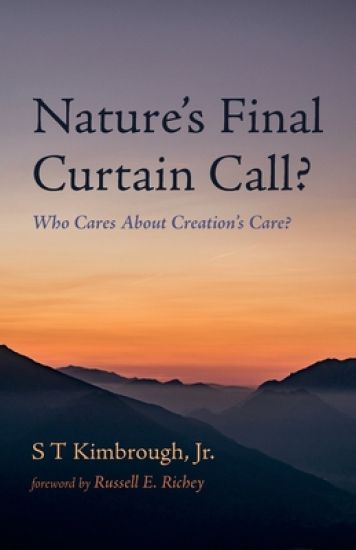
A fresh way to look at the ministry of The United Methodist Church. United Methodism is often accused of having an incoherent theological center. By examining the history and salient features of the church, this book says that United Methodist theology is actually appropriated from its experience as a missional corporate body. This allows United Methodist to do theology in new ways and to better adapt to its multivalent contexts.
The essential guide to American Methodism revised and updated through 2020. Four of Methodism's most respected teachers give us a vivid picture of 260 years of Methodist experience in America. The revised edition updates the Methodist movement's story through 2020, including the social, political, economic, technological, and global disruptions that cause faith communities and denominations to pull apart. American Methodism Revised and Updated begins with the explosion of evangelical Pietism and revolutionary Methodism, the First Great Awakening, as an independent nation was formed. It then highlights key 19th century themes and Methodist contributions, such as spreading scriptural holiness through missions and literature, planting tens of thousands of Sunday schools and churches by Circuit Riders, the pivotal Methodist schism between abolitionists and enslavers, the innovative building of schools and hospitals into the next century, and the revivalism of the Second Great Awakening. Finally it explores the movements of 20th century Methodism, including the expansion of home and foreign missions, the Methodist drive for Prohibition, the decision for nationwide reunification on the cusp of World War II, reunification with the United Brethren during the Vietnam War, the Methodist ordination of women during the 1950s, Black Methodist leadership in the 1960s Civil Rights movement, and the liturgical renewal or reformation of worship (ancient and future).
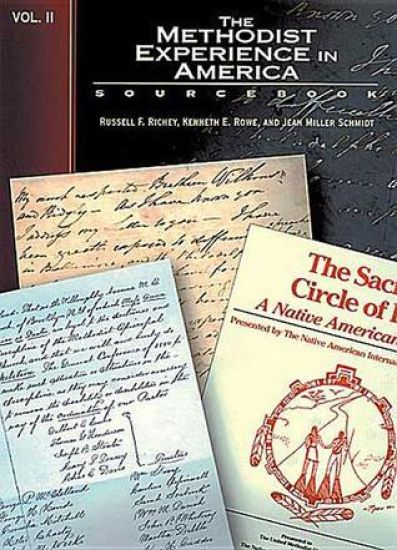
The Methodist Experience in America
Russell E. Richey; Richey Rowe; Kenneth E. Rowe; Jean Miller Schmidt
Abingdon Press
2000
pokkari
Commissioned by the General Board of Higher Education and Ministry for use in United Methodist doctrine/polity/history courses. From a Sunday school teacher's account of a typical Sunday morning to letters from presidents, from architects' opinions for and against the Akron Plan to impassioned speeches demanding full rights for African Americans, women, homosexuals, and laity in the Church, this riveting collection of documents will interest scholars, clergy, and laity alike. This Sourcebook, part of the two-volume set The Methodist Experience in America, contains documents from between 1760 and 1998 pertaining to the movements constitutive of American United Methodism. The editors identify over two hundred documents by date, primary agent, and central theme or important action. The documents are organized on a strictly chronological basis, by the date of the significant action in the excerpt. Charts, graphs, timelines, and graphics are also included. The Sourcebook has been constructed to be used with the Narrative volume in which the interpretation of individual documents, discussions of context, details about events and individuals, and treatment of the larger developments can be found.
Perspectives on American Methodism
Russell E. Richey; Kenneth E. Rowe; Jean Miller Schmidt
Abingdon Press
1993
pokkari
These 32 essays (over 500 print pages) accent United Methodism in the United States and the traditions contributory to it. They provide new perspectives and fresh readings on important Methodist topics, including how Methodism appealed to the common folk and how it configured itself as a folk movement. Similar findings derive from the number of essays that explore gender and family. Here also are new readings on spirituality, worship, the diaconate, stewardship, organization, ecumenism, reform, and ordination (male/female; black/white). Less conventional subjects include the relation of Methodism to the American party system and Methodist accumulation of wealth and the wealthy.
Marks of Methodism
Russell E. Richey; Dennis M. Campbell; William B. Lawrence
Abingdon Press
2005
pokkari
The title of this volume is as old as the Wesleyan movement and apt for the very latest Methodist theological self-designation.Marks of Methodism points back to John Wesley himself and to his efforts to define the movement.Such marks or hallmarks prescribe a basis for Methodist identity, purpose, and unity.They also serve to differentiate Methodists from other Christians, to sketch the boundaries of our movement, and to mark us off.Marks also invite attention to the conjunction of precept and practice, to the considerable recent affirmation of practices as the traditioning and corporate bearers of Christian faithfulness and witness; and therefore as the ground of theology and doctrine, and to Methodist embodiment of and featuring of traditioning practices long before that became fashionable. These marks point to an understanding of church, a doctrine of the church, an ecclesiology, embedded in the everyday structures, policies, organizations, and patterns of Methodist life."
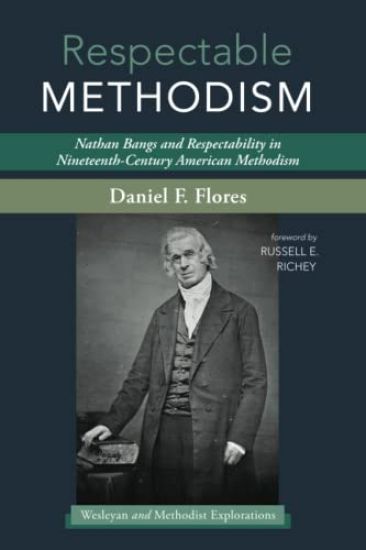
The Wesleyan-Methodist movement entered American history as a fragment of British Methodism. It quickly took on a new identity in the early republic and grew into a vibrant denomination in the nineteenth century. The transitions from the rugged pioneer religion modeled by Bishop Francis Asbury to the urbane religion of industrial America was by design the goal of influential leaders of the Methodist Episcopal Church. Nathan Bangs was perhaps one of the most significant of such leaders. He rose from obscurity to the ranks of power and influence by refining patterns of worship, expanding denominational publishing, and structuring ministerial education. This study is concerned with the development of respectability in American Methodism. It also explores questions on how Bangs and other leaders dealt with in-house conflicts on issues related to race, slavery, and the poor.
Nature's Final Curtain Call?
S T Kimbrough; Russell E Richey
Resource Publications (CA)
2022
pokkari
Nature's Final Curtain Call?
S T Kimbrough; Russell E Richey
Resource Publications (CA)
2022
sidottu
The Methodist Experience in America
Kenneth E. Rowe; Russell E. Richey; Jean Miller Schmidt
Abingdon Press
2010
pokkari
Beginning in 1760, this comprehensive history charts the growth and development of the Methodist and Evangelical United Brethren church family up and through the year 2000. Extraordinarily well-documented study with elaborate notes that will guide the reader to recent and standard literature on the numerous topics, figures, developments, and events covered. The volume is a companion to and designed to be used with THE METHODIST EXPERIENCE IN AMERICA: A SOURCEBOOK, for which it provides background, context and interpretation. Contents include: Launching the Methodist Movements 1760-1768 Structuring the Immigrant Initiatives 1769-1778 Making Church 1777-1784 Constituting Methodism 1784-1792 Spreaking Scriptural Holiness 1792-1816 Snapshot I- Methodism in 1816: Baltimore 1816 Building for Ministry and Nuture 1816-1850s Dividing by Mission, Ethnicity, Gender, and Vision 1816-1850s Dividing over Slavery, Region, Authority, and Race 1830-1860s Embracing the War Cause(s) 1860-1865 Reconstructing Methodism(s) 1866-1884 Snapshot II- Methodism in 1884: Wilker-Barre, PA 1884 Reshaping the Church for Mission 1884-1939 Taking on the World 1884-1939 Warring for World Order and Against Worldliness Within 1930-1968 Snapshot III- Methodism in 1968: Denver 1968 Merging and Reappraising 1968-1984Holding Fast/Pressing On 1984-2000"
Reimagining Denominationalism
Robert Bruce Mullin; Russell E. Richey
Oxford University Press Inc
2012
nidottu
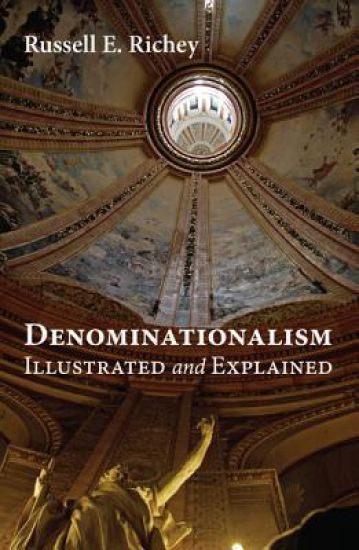
Denominationalism--that ''free market'' mode of organizing religious life which, some say, manages to combine traditional religious claims with a free society in a peculiarly American way--is the subject of the previously unpublished papers in this collection. No institution, the editors argue, is as crucial for the understanding of American religious life, yet so much in need of reassessment as the denomination. In a wide-ranging collection of articles, a distinguished set of commentators on American religion examine the denomination's past and present roles, its definable nature, and its evolution over time. The study of denominations, the authors show, sheds light on broader understandings of American religious and cultural life. The contributors--scholars of the Roman Catholic, Protestant, Jewish, Mormon, and African-American traditions--explore the state and history of denominational studies in America, suggesting new models and approaches drawn from anthropology, sociology, theology, history, and history of religions. They offer provocative case studies that reimagine denominational studies.
Pensieri educativi di Bertrand Russell e del Dr. S. Radhakrishnan
Asha Rani Anto
Edizioni Sapienza
2023
pokkari
La filosofia la disciplina intellettuale originale. stata definita "la madre di tutte le arti" e "la scienza di tutte le scienze". L'arte dell'educazione non raggiunger mai la completezza senza la filosofia. Possiamo quindi dire che la filosofia la spina dorsale dell'educazione. L'esigenza di questo studio fondamentalmente quella di mettere le idee dei due pensatori, Bertrand Russell e S. Radhakrishnan, nel contesto mentale pi semplice. Lo scopo principale di questo studio comprendere, analizzare e interpretare il pensiero educativo di questi due grandi filosofi dell'educazione.