Kirjojen hintavertailu. Mukana 11 244 527 kirjaa ja 12 kauppaa.

Kirjahaku

Etsi kirjoja tekijän nimen, kirjan nimen tai ISBN:n perusteella.

1000 tulosta hakusanalla Russell Magnaghi

Herbert E. Bolton and the Historiography of the Americas

Herbert E. Bolton and the Historiography of the Americas

Russell Magnaghi

Praeger Publishers Inc
1998
sidottu
The comparative approach to the understanding of history is increasingly popular today. This study details the evolution of comparative history by examining the career of a pioneer in this area, Herbert E. Bolton, who popularized the notion that hemispheric history should be considered from pole to pole. Bolton traced the study of the history of the Americas back to 16th century European accounts of efforts to bring civilization to the New World, and he argued that only within this larger context could the histories of individual nations be understood. After American entry into the Spanish-American War in 1898, historians such as Bolton promoted the idea of comparative history, and it remains to this day a significant historiographical approach.Consideration of the history of the Americas as a whole dates back to 16th century European treatises on the New World. Chapter one of this study provides an overview of pre-Bolton formulations of such history. In chapter two one sees the forces that shaped Bolton's thinking and brought about the development of the concept. Chapters three and four focus upon the evolution of the approach through Bolton's history course at the University of California at Berkeley and the reception of the concept among Bolton's contemporaries. Unfortunately, Bolton never fully developed the theoretical side of his arguement; thus, chapter five chronicles the decline of his ideas after his death. The final chapter reveals the survival of the concept, which is now embraced by a new generation of historians who are largely unfamiliar with Bolton's instrumental role in the promotion of comparative history.

Feeding the Furnaces

Feeding the Furnaces

Russell Magnaghi

Lulu.com
2013
pokkari
Feeding the Furnaces: A History of Marquette Ore Dock No. 6 informs the reader of the long and varied human history of the architectural wonder on Lake Superior known as the Ore Dock No. 6. An exciting history full of economic prosperity coupled with death and tragedy. It is easy to see how the monumental structure is still a major tourist attraction nearly a century later. From the construction workers who erected the dock during the Great Depression, to the roaring steam engines hauling ore, this fascinating story is a must read.
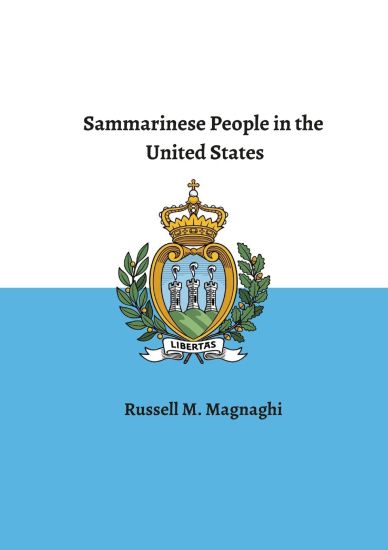
Sammarinesi in Michigan and Beyond

Sammarinesi in Michigan and Beyond

Russell M Magnaghi

Lulu.com
2021
pokkari
The story of the Sammarinese people in the United States is told here for the first time. The idea for the book was initiated by Livio Capicchioni. Joseph Putti guided the direction of the book from its start. The base of the book are the numerous interviews that were gathered over the years. The book concentrates on Metro Detroit, where the largest number of Sammarinese immigrants are to be found but also includes the story in neighboring Sandusky, Ohio. Metro New York is also featured along with a number of stories from across the country.
Upper Peninsula of Michigan

Upper Peninsula of Michigan

Russell M Magnaghi

Lulu.com
2017
pokkari
For the first time in over a century, a complete history of the U.P.-from prehistoric origins to the present-is available. Drawing on oral histories, newspapers, census data, archives and libraries, Russell M. Magnaghi has written the seminal history of a very ""special place"" as seen through the eyes of the men and women who have lived here-the famous and not so famous.
Classic Food and Restaurants of the Upper Peninsula
Author and award-winning historian Russell M. Magnaghi delves into the delectable food history of the Upper Peninsula.Michigan's Upper Peninsula is a veritable cornucopia of delicious dishes. Over the centuries, the shared food knowledge and passion Native Americans and immigrant of all kinds produced the region's iconic foods and beloved restaurants. Mackinac Island remains the epicenter for fine food. Here one can dine on freshly caught trout and whitefish at the Grand Hotel before tracking down the island's celebrated fudge for dessert. Afield of the island, visitors and residents alike can attend a Friday night fish fry virtually anywhere in the area, savor a juicy Big C burger at one of the many Clyde's Drive-In locations, or just have a refreshing glass of beer at Tahquamenon Brew Pub in aptly-named Paradise.
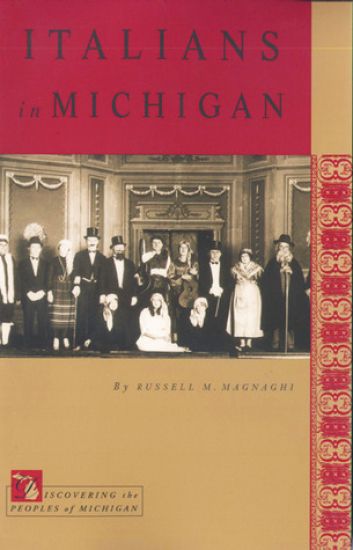
Italians in Michigan

Italians in Michigan

Magnaghi Russell M.

Michigan State University Press
2001
nidottu
For more than 350 years, Italian immigrants have played important roles in the opening and development of the land that is now Michigan, from their participation in the French fur trade up to the present day. Through an emphasis on the family as the essential institution in ethnic group success Russell M. Magnaghi celebrates the accomplishments of Michigan's famous and not-so-famous Italian sons and daughters as he documents their struggles and achievements. Through the tenacity and hard work of the immigrants and their descendants, Italians in Michigan have progressed from unskilled labourers to some of the highest positions in business, politics, culture, and education.
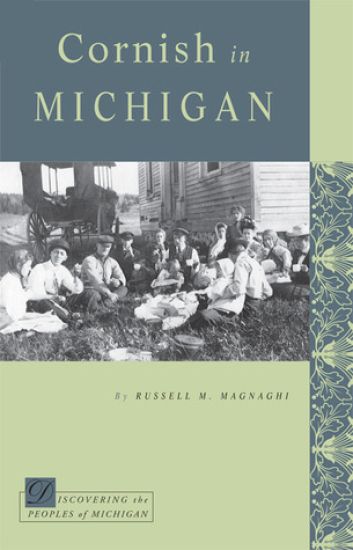
Cornish in Michigan

Cornish in Michigan

Magnaghi Russell M.

Michigan State University Press
2007
nidottu
Several ethnic groups have come to Michigan from the British Isles. Each group of immigrants from this region - the Cornish, English, Irish, and Welsh - has played a significant role in American history. Historic records show that some early nineteenth-century Cornish immigrants were farmers and settled in the Lower Peninsula of Michigan. However, the majority of early Cornish immigrants were miners, and much of their influence was felt in the Upper Peninsula of the state. Many of the underground miners from Cornwall got their start in this region before they migrated to other mining regions throughout the United States. Hard-working families came from throughout the peninsula of Cornwall, bringing their history, recipes, songs, religions, and other traditions to Michigan's northern mining country. This nineteenth-century migration brought them to new homes in Keweenaw County, Houghton County, Copper Harbor, Eagle Harbor, and Presque Isle. In the 1830s, newly arrived immigrants also settled in the lower parts of Michigan, in Macomb, Washtenaw, Lenawee, and Oakland counties. The automobile boom of the 1920s sent many of these immigrants and their children to Metro Detroit from the Upper Peninsula, where their traditions are perpetuated today.
Tsu-Ming Han

Tsu-Ming Han

James F Shefchik; Russell M Magnaghi

Lulu.com
2016
pokkari
Over the centuries the Upper Peninsula has grown and developed due to many immigrants who arrived. Some of their stories are known but most have been lost to time. One of these stories belongs to Tsu-Ming Han, a Chinese immigrant, a geologist and senior research laboratory scientist at Cleveland-Cliffs Iron Company (now Cliffs Natural Resources). He came to the Upper Peninsula in the 1950s and was instrumental in the development of lower grade iron ore refinement processes and pelletization, which had a direct impact on the region and its people. In his spare time as a geologist, he identified an ancient fossil, Grypania Spiralis. Additionally important to the story is his family: Joy his wife and his children; Dennis, Timothy, and Lisa. This is another major effort of Northern Michigan University's Center for Upper Peninsula Studies to shed new light and ideas on the history of the U.P.
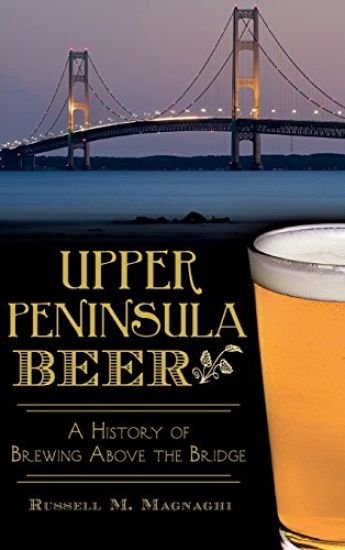
Upper Peninsula Beer: A History of Brewing Above the Bridge

Upper Peninsula Beer: A History of Brewing Above the Bridge

Russell M. Magnaghi

History Press Library Editions
2015
sidottu
Brewing came to the Upper Peninsula in the 1600s, when French fur traders substituted pine needles for hops in batches of spruce beer. Promoted as a health drink, the evergreen suds remained in favor with the British army when it occupied the region. German immigrants drawn in by the mining boom introduced more variety to the area's fermented beverage selection, and the first of many commercial breweries opened in Sault Ste. Marie in 1850. Today, Keweenaw, Blackrocks and Ore Dock Brewing Companies are a few of the local craft brewers canning, bottling and shipping the malty flavor of the Peninsula throughout Michigan, Wisconsin and beyond.
French in Michigan

French in Michigan

Russell M. Magnaghi

Michigan State University Press
2016
nidottu
Compared to other nationalities, few French have immigrated to the United States, and the state of Michigan is no exception in that regard. Although the French came in small numbers, those who did settle in or pass through Michigan played important roles as either permanent residents or visitors. The colonial French served as explorers, soldiers, missionaries, fur traders, and colonists. Later, French priests and nuns were influential in promoting Catholicism in the state and in developing schools and hospitals. Father Gabriel Richard fled the violence of the French Revolution and became a prominent and influential citizen of the state as a U.S. Congressman and one of the founders of the University of Michigan. French observers of Michigan life included Alexis de Tocqueville. French entrepreneurs opened copper mines and a variety of service-oriented businesses. Louis Fasquelle became the first foreign-language instructor at the University of Michigan, and François A. Artault introduced photography to the Upper Peninsula. As pioneers of the early automobile, the French made a major contribution to the language used in auto manufacturing.
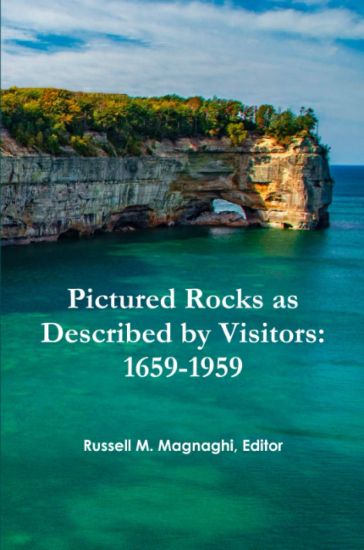
Pictured Rocks as Described by Visitors: 1659-1959
This book contains mentions of the Pictured Rocks as described by various writers beginning with local Native American history, the French in 1659, up through statehood, and to the tourism era of 1950s. Editor Russell M. Magnaghi has carefully curated the selected writings of explorers, travel writers, and anonymous citizens. A welcome addition to your National Park library.
Bishop Frederic Baraga: The Man, His Legacy, and the House
Biography of Bishop Fredric Baraga, a short history of his legacy, and architectural history of Baraga's house in Marquette Michigan. Chapter one covers Father Edward Jacker's eulogy and biography of Baraga. Chapter two details Baraga's lasting legacy in the mid-west. Chapter three describes the history of Baraga's house in Marquette Michigan.
Danes and Icelanders in Michigan

Danes and Icelanders in Michigan

Howard L. Nicholson; Anders J. Gillis; Russell M. Magnaghi

Michigan State University Press
2013
pokkari
Immigration of Danes and Icelanders to Michigan began in the 1850s and continued well into the twentieth century. Beginning with their origins, this book takes a detailed look at their arrival and settlement in Michigan, answering some key questions: What brought Danes and Icelanders to Michigan? What challenges did they face? How did they adjust and survive here? Where did they settle? What kind of lasting impact have they had on Michigan's economic and cultural landscape? Extensively researched, this book examines the public and private lives of Danish and Icelandic immigrants in Michigan, drawing from both individual and institutional histories. Shedding new light on the livelihood, traditions, religion, social life, civic organisations, and mutual benefit societies, this thorough, insightful book highlights a small but important population within Michigan's borders.
Russell

Russell

A. C. Grayling

Oxford University Press
2002
nidottu
Bertrand Russell (1872-1970) is one of the most famous and important philosophers of the twentieth century. In this account of his life and work A.C. Grayling introduces both his technical contributions to logic and philosophy, and his wide-ranging views on education, politics, war, and sexual morality. Russell is credited with being one of the prime movers of Analytic Philosophy, and with having played a part in the revolution in social attitudes witnessed throughout the twentieth-century world. This introduction gives a clear survey of Russell's achievements across their whole range. ABOUT THE SERIES: The Very Short Introductions series from Oxford University Press contains hundreds of titles in almost every subject area. These pocket-sized books are the perfect way to get ahead in a new subject quickly. Our expert authors combine facts, analysis, perspective, new ideas, and enthusiasm to make interesting and challenging topics highly readable.
Russell

Russell

Gregory Landini

Routledge
2010
sidottu
Bertrand Russell (1872–1970) was renowned as one of the founding figures of "analytic" philosophy, and for his lasting contributions to the study of logic, philosophy of language, philosophy of mathematics and epistemology. He was also famous for his popular works, where his humanism, ethics and antipathy towards religion came through in books such as The Problems of Philosophy, Why I am Not A Christian, and The Conquest of Happiness.Beginning with an overview of Russell’s life and work, Gregory Landini carefully explains Russell’s philosophy, to show why he ranks as one of the giants of British and Twentieth century philosophy. He discusses Russell’s major early works in philosophy of mathematics, including The Principles of Mathematics, wherein Russell illuminated and developed the ideas of Gottlob Frege; and the monumental three volume work written with Alfred North Whitehead, Principia Mathematica, where the authors attempted to show that all mathematical theory is part of logic, understood as a science of structure.Landini discusses the second edition of Principia Mathematica, to show Russell’s intellectual relationship with Wittgenstein and Ramsey. He discusses Russell’s epistemology and neutral monism before concluding with a discussion on Russell’s ethics, and the relationship between science and religion.Featuring a chronology and a glossary of terms, as well as suggestions for further reading at the end of each chapter, Russell is essential reading for anyone studying philosophy, and is an ideal guidebook for those coming to Russell for the first time.
Russell

Russell

Gregory Landini

Routledge
2010
nidottu
Bertrand Russell (1872–1970) was renowned as one of the founding figures of "analytic" philosophy, and for his lasting contributions to the study of logic, philosophy of language, philosophy of mathematics and epistemology. He was also famous for his popular works, where his humanism, ethics and antipathy towards religion came through in books such as The Problems of Philosophy, Why I am Not A Christian, and The Conquest of Happiness.Beginning with an overview of Russell’s life and work, Gregory Landini carefully explains Russell’s philosophy, to show why he ranks as one of the giants of British and Twentieth century philosophy. He discusses Russell’s major early works in philosophy of mathematics, including The Principles of Mathematics, wherein Russell illuminated and developed the ideas of Gottlob Frege; and the monumental three volume work written with Alfred North Whitehead, Principia Mathematica, where the authors attempted to show that all mathematical theory is part of logic, understood as a science of structure.Landini discusses the second edition of Principia Mathematica, to show Russell’s intellectual relationship with Wittgenstein and Ramsey. He discusses Russell’s epistemology and neutral monism before concluding with a discussion on Russell’s ethics, and the relationship between science and religion.Featuring a chronology and a glossary of terms, as well as suggestions for further reading at the end of each chapter, Russell is essential reading for anyone studying philosophy, and is an ideal guidebook for those coming to Russell for the first time.