

Kirjahaku
Etsi kirjoja tekijän nimen, kirjan nimen tai ISBN:n perusteella.
1000 tulosta hakusanalla Russell S Copen

Essential Reads on Family Offices
Amelia Renkert-Thomas; Antoaneta Proctor; Asher Noor; Carl Sjöström; Carly E Doshi; Carolina Cintra; Caroline Underwood; Charlie Bain; Christian Stewart; David Werdiger; Dennis T Jaffe; Fabrizio Arengi Bentivoglio; Franklin J Parker; Guillermo Barandalla; Jeremy Cheng; Jessica McGawley; Kecia Barkawi; Maya Prabhu; Melissa Cowley Wolf; Michael S Schwartz; Nicola Saccardo; Peter Brock; Philip Marcovici; Philippe J Weil; Raimund Kamp; Rodolfo J Paiz Rodolfo Paiz; Roger King; Russell Cohen; Sue Nickason; Susan R Schoenfeld
Globe Law and Business Ltd
2023
nidottu
Essential Reads on Family Offices is your essential resource featuring insights from the world’s foremost experts on the most pressing topics facing family offices and their advisers today. Containing a collection of authoritative materials dedicated to providing family offices and their advisers with the most informative and thought-provoking contributions on key themes, the content focuses on: • Family office profiles: profiles of leading family offices from around the world, highlighting their unique structures, strategies and values. • Governance: best practices for developing and implementing effective governance structures and processes for family offices. • NextGen planning: expert insights on how to prepare the next generation of family members and manage the family’s wealth and legacy. Family offices have complex and unique needs, and Globe Law and Business is committed to providing family offices and their advisers with the resources they need to thrive. Contributions have been carefully curated from the prestigious archive of The International Family Offices Journal, co-published with STEP, and the Special Report, Family Business and Responsible Wealth Ownership in order to provide you with the core knowledge needed to manage a family’s wealth, relationships and legacy for generations to come.

When Santa and his broken sleigh are stranded in Firefly Wood, Santa is sure that Christmas will have to be canceled. That is, until Russell the Sheep comes to the rescue With a clatter and a bang, Russell shows that hard work and a little imagination can make a magic that is all his own.Everyone's favorite woolly sheep is baaaack in a Christmas story perfect for any eager child awaiting Santa's arrival.

This book explores an important central thread that unifies Russell's thoughts on logic in two works previously considered at odds with each other, the Principles of Mathematics and the later Principia Mathematica. This thread is Russell's doctrine that logic is an absolutely general science and that any calculus for it must embrace wholly unrestricted variables. The heart of Landini's book is a careful analysis of Russell's largely unpublished "substitutional" theory. On Landini's showing, the substitutional theory reveals the unity of Russell's philosophy of logic and offers new avenues for a genuine solution of the paradoxes plaguing Logicism.

* Two important new books on Russell Modern analytic philosophy was born around the turn of the century, largely through Bertrand Russell's and G. E. Moore's reaction against the neo-Hegelianism which dominated British philosophy in the last decades of the nineteenth century. It is well known that Russell had himself been a neo-Hegelian, but hitherto little has been known about his work during that period. Yet this work was important, not only for Russell's development as a philosopher, but also for the development of analytic philosophy. Based mainly on unpublished papers held in the Bertrand Russell Archives at McMaster University, this book is the first detailed study of this early period of Russell's philosophical career. The first three chapters are concerned with Russell's philosophical education at Cambridge in the early 1890s and his conversion to neo-Hegelianism. The remaining chapters outline his ambitious plans for a neo-Hegelian dialectic of the sciences, and the problems which ultimately led him to reject it.
David Bostock presents a critical appraisal of Bertrand Russell's philosophy from 1900 to 1924--a period that is considered to be the most important in his career. Russell developed his theory of logic from 1900 to 1910, and over those years wrote the famous work Principia Mathematica with A. N. Whitehead. Bostock explores Russell's development of 'logical atomism', which applies this logic to problems in the theory of knowledge and in metaphysics, and was central to his philosophical work from 1910 to 1924. This book is the first to focus on this important period of Russell's development, examining the three key areas of logic and mathematics, knowledge, and metaphysics, and demonstrating the enduring value of his work in these areas.

In this excellent book Sebastien Gandon focuses mainly on Russell's two major texts, Principa Mathematica and Principle of Mathematics , meticulously unpicking the details of these texts and bringing a new interpretation of both the mathematical and the philosophical content. Winner of The Bertrand Russell Society Book Award 2013.
Russell's Theory of Perception
Sajahan Miah
Continuum International Publishing Group Ltd.
2006
sidottu
In Russell's Theory of Perception, Sajahan Miah re-examines and evaluates the development of Russell's concept of perception and the relation of perception to our knowledge of the external world. With the introduction of logical construction (in which physical objects are constructed from actual and possible sense-data) Russell's theory of perception seems to become a causal theory with phenomenalist overtones. The book argues that there is a consistency of purpose and direction which motivated Russell to introduce logical construction. The purpose was to strike a compromise between his empiricism and his realism and to establish a bridge between the objects of perception and the objects of physics and common sense.
This systematic and historical treatment of Russell's contributions to analytic philosophy, from his embrace of analysis in 1898 to his landmark theory of descriptions in 1905, draws important connections between his philosophically motivated conception of analysis and the technical apparatus he devised to facilitate analyses in mathematics
In this excellent book Sebastien Gandon focuses mainly on Russell's two major texts, Principa Mathematica and Principle of Mathematics , meticulously unpicking the details of these texts and bringing a new interpretation of both the mathematical and the philosophical content. Winner of The Bertrand Russell Society Book Award 2013.
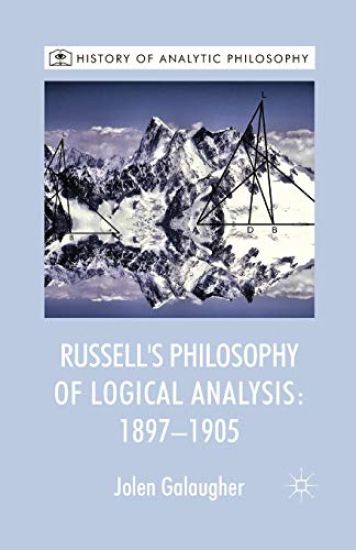
This systematic and historical treatment of Russell's contributions to analytic philosophy, from his embrace of analysis in 1898 to his landmark theory of descriptions in 1905, draws important connections between his philosophically motivated conception of analysis and the technical apparatus he devised to facilitate analyses in mathematics

Russell's History of Modern Europe, Epitomized
George Henry (EDT) Townsend; William Russell
Kessinger Pub
2007
pokkari
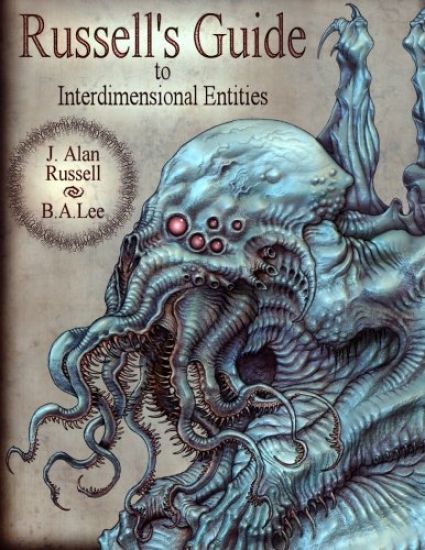
Russell's Guide to Interdimensional Entities
J. Alan Russell
Createspace Independent Publishing Platform
2015
nidottu

Russell's Guide to Interdimensional Entities, Artefacts, and Incantations
B. a. Lee; J. Alan Russell
Createspace Independent Publishing Platform
2016
nidottu
Russell's Metaphysical Logic
Bernard Linsky
Centre for the Study of Language Information
1999
sidottu
This study reconciles distinct aspects of Russell's thought long thought to be incompatible, the metaphysics of universals and facts from Russell's Logical Atomism period and the philosophical justification of the ramified theory of types in the Introduction to Principia Mathematica. This account, which interprets Russell as being a realist about both universals and propositional functions, while distinguishing the two, provides a defense of some problematic features of the logic of PM including the Axiom of Reducibility and the Vicious Circle Principle. Russell's seemingly ambivalent attitude towards propositions and functions is explained by interpreting both with a broadened notion of logical construction. Contrary to other recent interpretations, this account follows Alonzo Church's technical formulation of the ramified theory of types and interprets the quantifiers as objectual, ranging over functions as entities, while being consistent with the 'multiple relation' theory of judgment.
Russell's Metaphysical Logic
Bernard Linsky
Centre for the Study of Language Information
1999
pokkari
This study reconciles distinct aspects of Russell's thought long thought to be incompatible, the metaphysics of universals and facts from Russell's Logical Atomism period and the philosophical justification of the ramified theory of types in the Introduction to Principia Mathematica. This account, which interprets Russell as being a realist about both universals and propositional functions, while distinguishing the two, provides a defense of some problematic features of the logic of PM including the Axiom of Reducibility and the Vicious Circle Principle. Russell's seemingly ambivalent attitude towards propositions and functions is explained by interpreting both with a broadened notion of logical construction. Contrary to other recent interpretations, this account follows Alonzo Church's technical formulation of the ramified theory of types and interprets the quantifiers as objectual, ranging over functions as entities, while being consistent with the 'multiple relation' theory of judgment.