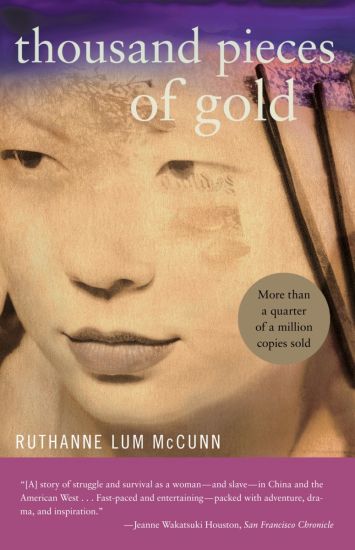
The extraordinary biographical novel about a Chinese-American woman who fought for independence and dignity in the American West A limited Beacon Classics edition, with a gorgeous spot gloss cover and retro, classic palette "Fast-paced and entertaining-packed with adventure, drama, and inspiration." --San Francisco Chronicle Lalu Nathoy's father called his thirteen-year-old daughter his treasure, his "thousand pieces of gold"--yet when famine strikes northern China in 1871, he is forced to sell her. Polly, as Lalu is later called, is sold to a brothel, sold again to a slave merchant bound for America, auctioned to a saloonkeeper, and offered as a prize in a poker game. Celebrated author Ruthanne Lum McCunn traces the gripping narrative of Lalu's courageous attempts to escape captivity and then enslavement, and her unflagging efforts to live free in the American West as Polly, despite devastating losses. With over a quarter of a million copies sold, Thousand Pieces of Gold remains an enduring classic of biographical historical fiction, starring an unforgettable Chinese-American heroine whose struggles put a human face on the anti-immigration policies of the past and present.
Lalu Nathoy's father called his thirteen-year-old daughter his treasure, his "thousand pieces of gold," yet when famine strikes northern China in 1871, he is forced to sell her. Polly, as Lalu is later called, is sold to a brothel, sold again to a slave merchant bound for America, auctioned to a saloonkeeper, and offered as a prize in a poker game. This biographical novel is the extraordinary story of one woman's fight for independence and dignity in the American West.
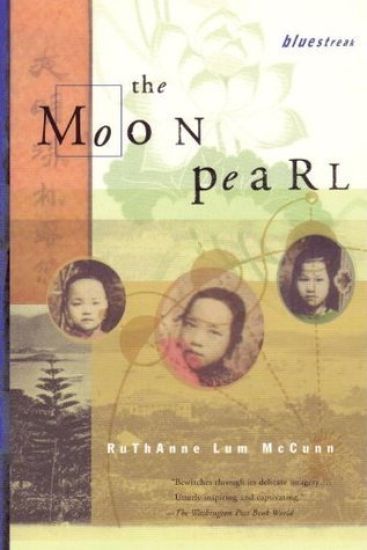
In the tradition of "Thousand Pieces of Gold" comes "The Moon Pearl, " the story of Rooster, Shadow, and Mei Ju, who become fast friends while members of a girls' house, where young daughters are taught to become daughters-in-law. These girls, however, want neither to marry nor become nuns (the only options open to them at this time). They choose instead to support themselves through their skills in embroidery and silk production. Though ostracized by their families, attacked, and barely able to find sustenance and shelter, these sze saw, or self-combers as they will come to be called, manage to create lives that they alone control. An amazing true-life story, "The Moon Pearl" offers an empowering vision of womanhood in China.
"Wooden fish songs" were the laments sung by Chinese women left behind by husbands, sons, and brothers who, in the nineteenth century, sailed to America in quest of the good life – and found instead years of indentured servitude and racial discrimination. This novel focuses on Lue Gim Gong, a real-life Chinese pioneer, who seized the opportunity to go to America's "Gold Mountain." The story of his attempt to assimilate the new culture, his few successes and his frequent setbacks, is told not by himself but by the women who cared most about him: his mother in China, a New England spinster who loved him, and a friend and coworker who was the daughter of slaves. Ruthanne Lum McCunn brings her characters to life against a backdrop that ranges from China, with its deep roots in tradition, to the stern imperatives of a New England mill town and to 1870s Florida, where Lue developed the new species of frost-hardy oranges for which he is today remembered.First published in 1995, this new edition includes an introduction by King-Kok Cheung, University of California, Los Angeles, and an afterword by the author.For more information about the author go to http://www.mccunn.com/
It’s Not Just A Song by GRAMMY and BRIT nominated Irish singer-songwriter RuthAnne Cunningham is the must-have guide to writing hit songs. The book serves as an essential guide for aspiring songwriters, featuring insights from industry heavyweights and candid discussions on navigating the music business and sustaining a career. RuthAnne explores the psychology of the writing room, building relationships, production, what makes a good (or bad) deal, royalties and revenue, and the art of staying inspired. Her experience navigating the traditional music industry “Boys’ Club” offers young female artists, in particular, some invaluable tools to get a step ahead in their early career and be wary of the hidden pitfalls. Featuring high-profile interviews with the likes of GRAMMY-winner Amy Wadge (co-writer with Ed Sheeran), multi-platinum songwriter/producer Julian Bunetta (co-writer with Sabrina Carpenter), co-writer on Dua Lipa’s ‘New Rules’, Emily Warren, and Adele co-writer Dan Wilson. Discover the stories behind Adele’s anthemic ‘Someone Like You’ and Ed Sheeran’s ‘Thinking Out Loud’ and delve into case studies for songs such as Harry Style’s ‘As It Was’. This is the book that hit songwriters wish they had! RuthAnne Cunningham has written for global superstars including Britney Spears, John Legend, Diana Ross One Direction, and Niall Horan, earning her a reputation as one of the most talented and sought-after songwriters of her generation. Her own single ‘The Vow’ broke into the UK Top 40, hit #1 in Ireland twice, and continues to chart globally.
The Pennsylvania Dutch are noted for the beautifully designed and hand-lettered documents known as fraktur. These include birth and marriage certificates, family trees, bookplates, awards, and house blessings. Leading fraktur artist Ruthanne Hartung adapts the craft to modern tastes and needs in this practical how-to book, with information on tools, step-by-step instructions, ideas for design, lettering and coloring techniques, and a variety of projects. An assortment of traditional patterns to apply to personal frakturs are included.
Teaches students how to think like an APRN This book describes an innovative model for helping APRN students develop the clinical reasoning skills required to navigate complex patient care needs andcoordination in advanced nursing practice. This model, the Outcome-Present-State-Test (OPT), encompasses a clear, step-by-step process that students can use to learn the skills of differential diagnosis and hone clinical reasoning strategies. This method facilitates understanding of the relationships among patient problems, outcomes, and interventions that focus on promoting patient safety and care coordination. It moves beyond traditional ways of problemsolving by focusing on patient scenarios and stories and juxtaposing issues and outcomes that have been derived from an analysis of patient problems,evidence-based interventions, and desired outcomes. The model offers a blueprint for using standardized health care languages and provides strategies for developing reflective and complex thinking thatbecomes habitual. It embodies several levels of perspective related to patient-centered care planning, team-centered negotiation, and health care systemconsiderations. Through patient stories and case scenarios, the text highlights care coordination strategies critical in complex patient situations. Itprovides students with the tools to collect patient information, determine priorities for care, and test interventions to reach health care outcomes bymaking clinical judgments during the problem-solving process. Concept maps illustrate complex patient care issues and how they relate to each other. For faculty use, the text provides links to relevant APN competencies and provides guidelines for using the OPT when supervising students in field settings. Key Features: Delivers a concrete learning model for developing creative thinking and problem solving in the clinical setting Offers a blueprint and structure for using standardized health care languages Includes patient stories and case scenarios to illustrate effective use of the OPT model Highlights care coordination strategies associated with complex client situations with the use of the Care Coordination Clinical Reasoning model Reinforces methods of reaching a diagnosis, outcomes, and interventions and how to duplicate the process
A workbook to help you stay safely and happily in your own home as you get older.Aging in place has become a common term these days. Isn't that everyone's dream? Isn't it your dream to be in your own home, go to bed one night and die peacefully in your sleep. But doing so requires some thought and in most cases not a lot of work to accomplish. None the less it is work that needs doing. Major renovations are not necessary, minor modifications are the key and whar make staying in your own home possible.For most people, this is but a dream. Why? Because they haven't made plans for staying in their home as they age, let alone long enough to die there.This book helps you create your plan and prepare your home in a way that will allow you to Stay Home for as long as possible. Staying Home offers practical steps that are easy, doable and that can be instantly actioned. It is not about costly renovations or professional planners. It is about you creating your own environment that addresses your needs as you get older. The steps to be taken can be done gradually over time. Some can be done when with the help of the information in this book as you you become aware of the need to change something.It doesn't matter if you are 50, 60 or 70, now is the time to start preparing your home and your life so it will allow you to age in place as you age. The one thing all of us seem to forget as we get older is what others think about you remaining in your own home. If they are thinking you are not safe living as you do, then their next thought is "if you can't be safe, you can't stay home". This book can help address those safety issues by providing a safety checklist. You can use this list to demonstrate that you are on top of the safety issue, so they need not worry about. Consider this book as one step in the right direction to remaining independent as you age. We are living longer than ever and we are also healthier than ever. Most of which had to do with not only medical breakthroughs but our own awareness and how we look after ourselves. If we could manage to do that we can also learn to do whatever it takes to live longer, and happier in our own home.
Organs, choirs, hand bells, trumpets -- even a brass quartet -- are all possibilities with this versatile service for Easter morning. Appropriate for use as a sunrise service or regular Sunday worship, this celebration of Easter joy will leave you and your congregation exulting in the full meaning and significance of Christ's triumph over death. Ruthanne Kelchner-Cochran is the pastor of Pinnacle Peak Community Church (United Church of Christ) in Scottsdale, Arizona.
The fate of public education and therefore the future of our democracy is at risk. Powerful forces are eroding commitment to public schools and weakening democratic resolve. Yet even in deeply troubling times, it is possible to broaden social imagination and empower efforts toward systemic progressive reform. This book is an invitation for widespread participation in a complex process—re-envisioning education and democracy. To reenvision—to envision and then envision again—is to join with others in imagining new possibilities and bringing these into existence. Re-envisioning is a radically social process. Although distinct and varied individual contributions are required, transformative visions cannot be advanced through the agency of one charismatic person, or bound by one influential perspective. The process of re-envisioning, like all forms of democratic living and learning, draws energy and insight when connection and communion are sustained across dimensions of difference. Re-envisioning is an intensely creative and exploratory process. It is not accomplished through careful construction of “best laid plans” aimed at attaining certainty and control. Re-envisioning is instead experienced and evolved by preparing for, and then acting on, informed and strategic glimpses. These brief and fleeting impressions—multimodal and multi-sensory, incomplete and ambiguous, always in motion—offer potentials, but no definitive answers. Re-envisioning is a profoundly ethical and aesthetic process, centered in prospects for social justice, compassion, reform, and renewal. Social movements are rarely motivated by commitments to narrow objectives aimed at solving specific problems. Across time and cultures we are drawn to persons and processes, to ideas and images, that call us back to remember our highest principles, and move us forward to respond with acts of integrity and grace. Recurrent themes of beauty and power—here mirrored in chapter titles—inspire, guide, and liberate collective vision and principled action. Re-envisioning, although accessible to all, remains largely undeveloped and underutilized. Our collective ability to realize progressive aspirations for education and democracy can be significantly enhanced by integrating the process of re-envisioning with other, more familiar, educational and political reform strategies.
The fate of public education and therefore the future of our democracy is at risk. Powerful forces are eroding commitment to public schools and weakening democratic resolve. Yet even in deeply troubling times, it is possible to broaden social imagination and empower efforts toward systemic progressive reform. This book is an invitation for widespread participation in a complex process—re-envisioning education and democracy. To reenvision—to envision and then envision again—is to join with others in imagining new possibilities and bringing these into existence. Re-envisioning is a radically social process. Although distinct and varied individual contributions are required, transformative visions cannot be advanced through the agency of one charismatic person, or bound by one influential perspective. The process of re-envisioning, like all forms of democratic living and learning, draws energy and insight when connection and communion are sustained across dimensions of difference. Re-envisioning is an intensely creative and exploratory process. It is not accomplished through careful construction of “best laid plans” aimed at attaining certainty and control. Re-envisioning is instead experienced and evolved by preparing for, and then acting on, informed and strategic glimpses. These brief and fleeting impressions—multimodal and multi-sensory, incomplete and ambiguous, always in motion—offer potentials, but no definitive answers. Re-envisioning is a profoundly ethical and aesthetic process, centered in prospects for social justice, compassion, reform, and renewal. Social movements are rarely motivated by commitments to narrow objectives aimed at solving specific problems. Across time and cultures we are drawn to persons and processes, to ideas and images, that call us back to remember our highest principles, and move us forward to respond with acts of integrity and grace. Recurrent themes of beauty and power—here mirrored in chapter titles—inspire, guide, and liberate collective vision and principled action. Re-envisioning, although accessible to all, remains largely undeveloped and underutilized. Our collective ability to realize progressive aspirations for education and democracy can be significantly enhanced by integrating the process of re-envisioning with other, more familiar, educational and political reform strategies.
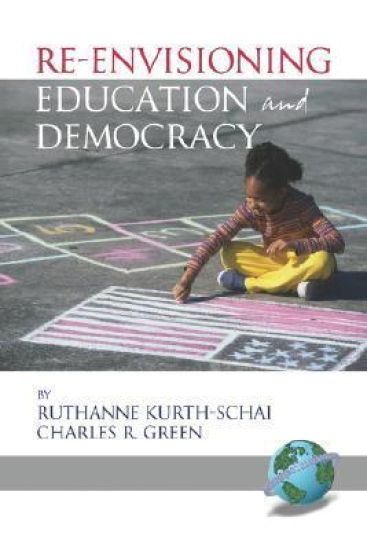
The future of public education and democracy is at risk. Powerful forces are eroding commitment to public schools and weakening democratic resolve. Yet even in deeply troubling times, it is possible to broaden social imagination and empower effective advocacy for systemic progressive reform. Re-envisioning Education and Democracy explores challenges and opportunities for restructuring public education to establish and sustain more broadly inclusive, deeply democratic, and effectively transforming approaches to social inquiry and civic participation.Re-envisioning Education and Democracy adopts a non-traditional format to extend social awareness and imagination. Within each chapter, one episode of an evolving strategic narrative traces the life cycle of a systemic reform initiative. This is followed by an exploratory essay that draws from theory, research, criticism, and practice to prompt consideration of focal issues. Woven through each chapter is a poetically framed meditative stream informed by varied historical and cultural conceptions of oracles. A developmental sequence of social learning strategies (exploratory democratic practices), accompanied by thematic bibliographic references, are included to model democratic teaching and learning applicable in classroom and community settings.
The future of public education and democracy is at risk. Powerful forces are eroding commitment to public schools and weakening democratic resolve. Yet even in deeply troubling times, it is possible to broaden social imagination and empower effective advocacy for systemic progressive reform. Re-envisioning Education and Democracy explores challenges and opportunities for restructuring public education to establish and sustain more broadly inclusive, deeply democratic, and effectively transforming approaches to social inquiry and civic participation.Re-envisioning Education and Democracy adopts a non-traditional format to extend social awareness and imagination. Within each chapter, one episode of an evolving strategic narrative traces the life cycle of a systemic reform initiative. This is followed by an exploratory essay that draws from theory, research, criticism, and practice to prompt consideration of focal issues. Woven through each chapter is a poetically framed meditative stream informed by varied historical and cultural conceptions of oracles. A developmental sequence of social learning strategies (exploratory democratic practices), accompanied by thematic bibliographic references, are included to model democratic teaching and learning applicable in classroom and community settings.