Sophia Gordon and her son Otis hide in a closet. Nazi secret police quickly approach. The Gordons' only potential protection? A chain-smoking janitor named Jacky Bonaparte. By taking his hand and fighting with him in the French Resistance, Sophia and her son might be able to survive. But this sly janitor has shocking secrets.Will Jacky make Sophia question everything and ruin her in the end?
World War III is minutes away. Two boyhood friends from Brooklyn supposedly have information to prevent it. One is now an American spy. The other is Russian.But some in the CIA view its agent as delusional. They even send him on a seemingly suicidal mission to an exotic locale. Upon his return, he is forced into a psych ward so that he can be deemed sane and tried for treason.Meanwhile, the world tips towards the edge.A few minutes before the first missile is shot, Dr. Liam Egan, the treating psychiatrist, makes a shocking discovery.
Blake Stimson bought the world's most expensive wedding rings. In the summer of 1969, Blake stands on the altar. He makes a shocking discovery. The rings have been stolen. Who did it?Ella Gordon's suspecting eyes peer down from the altar onto Mickey Egan, Jr., her best friend. While she glares at him, Mickey nonchalantly thinks back to the first time he saw Blake and Ella together. Mickey knew there was something fake about Blake.Afterwards, anonymous leaks to Ella slowly expose awful secrets about Blake. But Ella's "love" for him blinds her to these red flags and only grows stronger.On the day of the wedding, Ella discovers the ring bandit's identity. She must then decide: is the theft a sign that her love for Blake has been a terrible mirage?
Jiayin Pang; Zhihui Wen; Daniel Kidd; Megan H. Ryan; Rui-Peng Yu; Li Long; Wen-Feng Cong; Kadambot Siddique; Hans Lambers; J. L. Havlin; A. J. Schlegel; Richard J. Simpson; Rebecca E. Haling; Phillip Graham; Andrew N. Sharpley
This collection features four peer-reviewed reviews on phosphorus uptake and use in crops.The first chapter summarises the progress in research on root traits associated with phosphorus acquisition, including root morphology, architecture, biochemistry, colonisation by arbuscular mycorrhizal fungi, and fine root endophytes. The chapter also reviews the recent advances in breeding programmes to improve phosphorus acquisition efficiency.The second chapter discusses interactions between phosphorus management (phosphorus rate, source timing, and placement) and diverse cropping systems and climate and how these interactions are essential to efficient utilization of phosphorus resources.The third chapter assesses the key soil, root and microbial processes that influence phosphorus acquisition with a focus on factors that can be managed to ensure optimal use of fertiliser and development of root systems for improved phosphorus acquisition. A case study from Australia is used to demonstrate how phosphorus efficiency of grasslands can be improved.The final chapter reviews the environmental effects of phosphorus fertilisation in agriculture, primarily its impact on water quality. The chapter considers how future water quality issues can be mitigated and also examines the cycling, fate and transport of phosphorus in agriculture.
"Prefab Architecture . . . is beyond theory, and beyond most of what we think we know about pods, containers, mods, and joints. This book is more than 'Prefabrication 101.' It is the Joy of Cooking writ large for the architecture and construction industries." ?From the Foreword by James Timberlake, FAIA THE DEFINITIVE REFERENCE ON PREFAB ARCHITECTURE FOR ARCHITECTS AND CONSTRUCTION PROFESSIONALS Written for architects and related design and construction professionals, Prefab Architecture is a guide to off-site construction, presenting the opportunities and challenges associated with designing and building with components, panels, and modules. It presents the drawbacks of building in situ (on-site) and demonstrates why prefabrication is the smarter choice for better integration of products and processes, more efficient delivery, and realizing more value in project life cycles. In addition, Prefab Architecture provides: A selected history of prefabrication from the Industrial Revolution to current computer numerical control, and a theory of production from integrated processes to lean manufacturingCoverage on the tradeoffs of off-site fabrication including scope, schedule, and cost with the associated principles of labor, risk, and qualityUp-to-date products featuring examples of prefabricated structure, enclosure, service, and nterior building systemsDocumentation on the constraints and execution of manufacturing, factory production, transportation, and assemblyDozens of recent examples of prefab projects by contemporary architects and fabricators including KieranTimberlake, SHoP Architects, Office dA, Michelle Kaufmann, and many others In Prefab Architecture, the fresh approaches toward creating buildings that accurately convey ature and expanded green building methodologies make this book an important voice for adopting change in a construction industry entrenched in traditions of the past.
Many people today think of Satan as a little red demon with a pointy tail and a pitchfork--but this vision of the devil developed over many centuries and would be foreign to the writers of the Old Testament, where this figure makes his first appearances. The earliest texts that mention the Satan--it is always "the Satan" in the Old Testament--portray him as an agent of Yahweh, serving as an executioner of evildoers. But over the course of time, the Satan came to be regarded more as God's enemy than God's agent and was blamed for a host of problems.Biblical scholar Ryan E. Stokes explains the development of the Satan tradition in the Hebrew scriptures and the writings of early Judaism, describing the interpretive and creative processes that transformed an agent of Yahweh into the archenemy of good. He explores how the idea of a heavenly Satan figure factored into the problem of evil and received the blame for all that is wrong in the world.
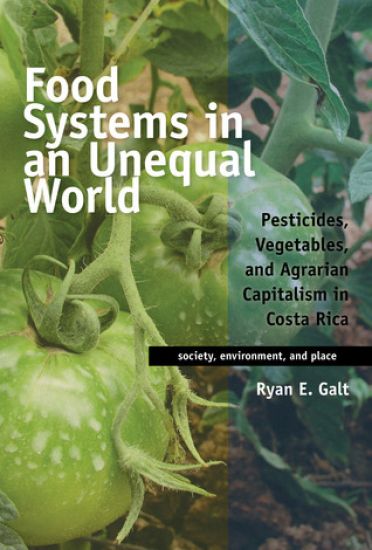
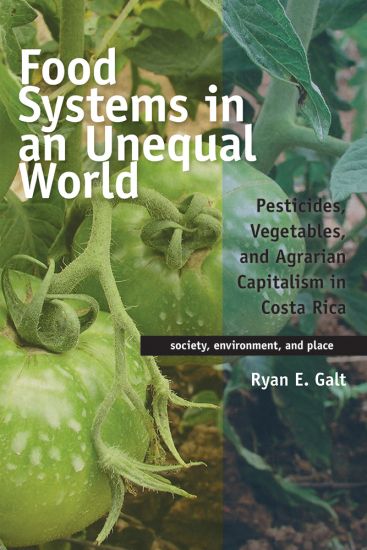
Pesticides, a short-term aid for farmers, can often be harmful, undermining the long-term health of agriculture, ecosystems, and people. The United States and other industrialized countries import food from Costa Rica and other regions. To safeguard the public health, importers now regulate the level and types of pesticides used in the exporters' food production, which creates ""regulatory risk"" for the export farmers. Although farmers respond to export regulations by trying to avoid illegal pesticide residues, the food produced for their domestic market lacks similar regulation, creating a double standard of pesticide use.Food Systems in an Unequal World examines the agrochemical-dependent agriculture of Costa Rica and how its uneven regulation in export versus domestic markets affects Costa Rican vegetable farmers. Examining pesticide-dependent vegetable production within two food systems, the author shows that pesticide use is shaped by three main forces: agrarian capitalism, the governance of food systems throughout the commodity chain, and ecological dynamics driving local food production. Those processes produce unequal outcomes that disadvantage less powerful producers who have more limited choices than larger farmers, who usually have access to better growing environments and thereby can reduce pesticide use and production costs.Despite the rise of alternative food networks, Galt says, persistent problems remain in the conventional food system, including widespread and intensive pesticide use. Facing domestic price squeezes, vegetable farmers in Costa Rica are more likely to supply the national market with produce containing residues of highly toxic pesticides, while using less toxic pesticides on exported vegetables. In seeking solutions, Galt argues for improved governance and research into alternative pest control but emphasizes the process must be rooted in farmers' economic well-being.
Pesticides, a short-term aid for farmers, can often be harmful, undermining the long-term health of agriculture, ecosystems, and people. The United States and other industrialized countries import food from Costa Rica and other regions. To safeguard the public health, importers now regulate the level and types of pesticides used in the exporters’ food production, which creates “regulatory risk” for the export farmers. Although farmers respond to export regulations by trying to avoid illegal pesticide residues, the food produced for their domestic market lacks similar regulation, creating a double standard of pesticide use. Food Systems in an Unequal World examines the agrochemical-dependent agriculture of Costa Rica and how its uneven regulation in export versus domestic markets affects Costa Rican vegetable farmers. Examining pesticide-dependent vegetable production within two food systems, the author shows that pesticide use is shaped by three main forces: agrarian capitalism, the governance of food systems throughout the commodity chain, and ecological dynamics driving local food production. Those processes produce unequal outcomes that disadvantage less powerful producers who have more limited choices than larger farmers, who usually have access to better growing environments and thereby can reduce pesticide use and production costs.Despite the rise of alternative food networks, Galt says, persistent problems remain in the conventional food system, including widespread and intensive pesticide use. Facing domestic price squeezes, vegetable farmers in Costa Rica are more likely to supply the national market with produce containing residues of highly toxic pesticides, while using less toxic pesticides on exported vegetables. In seeking solutions, Galt argues for improved governance and research into alternative pest control but emphasizes the process must be rooted in farmers’ economic well-being.
*Amazon BEST SELLER * Take control of your health and experience the freedom that comes with the Paleo Diet. No more calorie counting or fad diets. Eat the right foods that your body was meant to consume and rediscover your body in a whole new way. In this Paleo diet book, you will discover: -How to drastically increase your energy levels -How to eat in a way that maximizes the nutrients of your food (and makes you feel great) -How to eat out and still stay healthy -How to cook 21 delicious paleo meals (breakfast, lunch, dinner and dessert ) -How to lose body fat and maintain (or gain) muscle -A full shopping list of everything you need to buy -An example paleo plan that you can follow -And much more What Is So Great About Eating Paleo? Living a Paleo diet lifestyle is amazing because you don't have to count calories, or do any of that other boring nonsense that comes with every other diet. As long as you eat the right foods, you can eat as much as you want and still lose body fat. The beauty is in the food you eat and the way they regulate your metabolism and energy levels. It's truly something you have to experience for yourself Take It For A Test Drive And See How You Feel... Say GOODBYE to: -sleepless nights -the feeling of being bloated -lack of energy -feeling lethargic -feeling low or depressed If you are looking to live a more energetic, vibrant, exciting life, then it's time to take your health into your own hands and follow a proven method for shredding fat, maintaining muscle and gaining more energy. You won't be disappointed Download this book RIGHT NOW and get your life back on track. It's not too late - you can do it Topics Covered: paleo, paleo diet, Paleo recipes, paleo for beginners, and more
"Juicing For Weight Loss" is your personal guide into the world of juicing. It was written specifically to help you lose weight and gain more energy Do You Experience Any Of These?: - Are you frustrated with fad diets that don't work? - Have you been wanting to lose some weight lately and haven't been able to do so? - Are you tired of feeling lethargic and low everyday? - Do you actually want to keep the weight off this year? If you are a human being, you probably answered yes to at least one (if not all) of the previous questions. And that's OK Every one of us needs guidance in one or more areas of our lives and this book was meant specifically to help you regain your health and vitality through the ritual of juicing whole, natural delicious fruits and vegetables. In This Book You Will Learn: - Top 20 recipes for weight loss and boosting energy levels - Best fruits and vegetables for juicing - Produce chart with fruits and veggies broken down with best nutritional value - The true benefits of juicing and how often to juice - What type of juicer to buy - And much more... This Book Will Help You If you are looking to lose weight and/or gain more energy, this book has you covered. Some might say it is the only juicing guide you will ever need. Juicing isn't complicated but IT IS important that you know what juicing will do for your life and your energy levels. Once people discover the power of juicing they usually never look back People who juice are typically more energetic and tend to have an easier time losing weight when coupled with a healthy eating plan. It really is quite amazing Get this book and start implementing this stuff into your everyday life and see how you feel. Juicing isn't tough and it actually can be fun It will make a BIG difference in your life - you can count on it Here's to your new body
Written for the upper-level undergraduate and graduate-level courses in exercise psychology and behavioral physical activity, Psychology of Physical Activity and Sedentary Behavior, Second Edition focuses on the psychological effects of physical activity in a diverse array of populations. It emphasizes how physical activity needs to be paired with a reduction in sedentary behavior in order to achieve overall health.With a focus on both the psychology of exercise and sedentary behavior, this first-of-its kind text provides readers with the latest research in both areas, including coverage of sleep, pain, and delayed gratification. This text also applies a critical lens to foundational theories and incorporates applications and interventions throughout.