
Kirjahaku
Etsi kirjoja tekijän nimen, kirjan nimen tai ISBN:n perusteella.
1000 tulosta hakusanalla S Bret Breneman


Los amores de un pr?ncipe
Tom?s Bret?n; Jos? Sala Juli?n; Ramiro Siguert
Outlook Verlag
2024
pokkari
Reimpresi n del original, primera publicaci n en 1881.

Los amores de un pr?ncipe
Tom?s Bret?n; Jos? Sala Juli?n; Ramiro Siguert
Outlook Verlag
2024
sidottu
Reimpresi n del original, primera publicaci n en 1881.

Reimpresi n del original, primera publicaci n en 1876.

Reimpresi n del original, primera publicaci n en 1875.

Reimpresi n del original, primera publicaci n en 1875.

Bret's Little Black Book: The Perfect Dating Companion for a Handsome Man Named Bret. A secret place for names, phone numbers, and addresses.
Wingman Publishing
Independently Published
2019
nidottu
Keep a record of all the girls that catch your eye
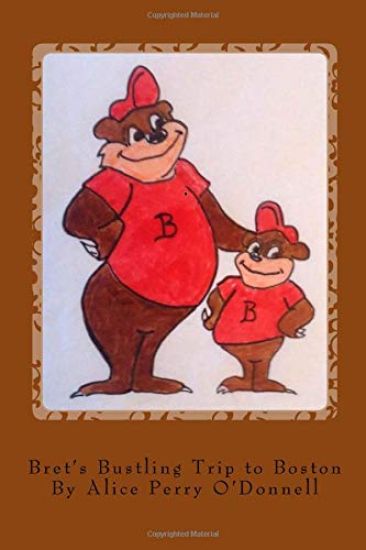
Bret's Bustling Trip to Boston
Alice Perry O'Donnell
Createspace Independent Publishing Platform
2017
nidottu

Organizing Academic Colleges: A Guide for Deans
Anne-Marie McCartan; Bret S. Danilowicz
Ccas
2017
nidottu
Deans are called upon now more than ever to make organizational changes to accommodate the shifting sands of American higher education. How can deans most effectively organize the work of their faculty and of their offices? How can associate and assistant deans and staff be deployed to support the work of faculty? What role can deans play when boards or presidents decide to reorganize or consolidate their college or even their institution? Organizing Academic Colleges uses models and case studies to describe options available to deans and how the literature on change management can guide deans to successfully navigate the change process.

Colonel Starbottle's Client by Bret Harte, Fiction, Westerns, Historical, Short Stories
Bret Harte
Aegypan
2011
sidottu
Activating God's Power in Bret: Overcome and be transformed by accessing God's power.
Michelle Leslie
Michelle Leslie Publishing
2016
nidottu
A Study Guide for Bret Harte's Outcasts of Poker Flat
Cengage Learning Gale
Gale, Study Guides
2017
pokkari


Harte, B: Bret Harte's choice bits
Antigonos Verlag
2024
sidottu
Barker's Luck and Other Stories (1896). By: Bret Harte: Francis Bret Harte (August 25, 1836 - May 5, 1902) was an American short story writer and poet
Bret Harte
Createspace Independent Publishing Platform
2018
nidottu
Francis Bret Harte (August 25, 1836 - May 5, 1902) was an American short story writer and poet, best remembered for his short fiction featuring miners, gamblers, and other romantic figures of the California Gold Rush. In a career spanning more than four decades, he wrote poetry, plays, lectures, book reviews, editorials, and magazine sketches in addition to fiction. As he moved from California to the eastern U.S. to Europe, he incorporated new subjects and characters into his stories, but his Gold Rush tales have been most often reprinted, adapted, and admired. Early life: Bret Harte was born in Albany, New York. He was named Francis Brett Hart after his great-grandfather, Francis Brett. When he was young, his father, Henry, changed the spelling of the family name from Hart to Harte. Henry's father was Bernard Hart, an Orthodox Jewish immigrant who flourished as a merchant, becoming one of the founders of the New York Stock Exchange. Later, Francis preferred to be known by his middle name, but he spelled it with only one "t", becoming Bret Harte. An avid reader as a boy, Harte published his first work at age 11, a satirical poem titled "Autumn Musings", now lost. Rather than attracting praise, the poem garnered ridicule from his family. As an adult, he recalled to a friend, "Such a shock was their ridicule to me that I wonder that I ever wrote another line of verse". His formal schooling ended when he was 13, in 1849.Career in California Harte moved to California in 1853, later working there in a number of capacities, including miner, teacher, messenger, and journalist. He spent part of his life in the northern California coastal town of Union (now Arcata), a settlement on Humboldt Bay that was established as a provisioning center for mining camps in the interior. citation needed] The Wells Fargo Messenger, July 1916, relates that, after an unsuccessful attempt to make a living in the gold camps, he signed on as a messenger with Wells Fargo & Co. Express. He guarded treasure boxes on stagecoaches for a few months, then gave it up to become the schoolmaster at a school near Sonora. He created his character Yuba Bill from his memory of an old stagecoach driver. The 1860 massacre of between 80 and 200 Wiyots at the village of Tuluwat was well documented historically and was reported in San Francisco and New York by Harte. When serving as assistant editor for the Northern Californian, Harte editorialized about the slayings while his boss Stephen G. Whipple was temporarily absent, leaving Harte in charge of the paper. Harte published a detailed account condemning the event, writing: "a more shocking and revolting spectacle never was exhibited to the eyes of a Christian and civilized people. Old women wrinkled and decrepit lay weltering in blood, their brains dashed out and dabbled with their long grey hair. Infants scarcely a span long, with their faces cloven with hatchets and their bodies ghastly with wounds." After he published the editorial, his life was threatened, and he was forced to flee one month later. Harte quit his job and moved to San Francisco, where an anonymous letter published in a city paper is attributed to him, describing widespread community approval of the massacre. In addition, no one was ever brought to trial, despite the evidence of a planned attack and references to specific individuals, including a rancher named Larabee and other members of the unofficial militia called the Humboldt Volunteers.
Bret Easton Ellis's American Psycho
Julian Murphet
Continuum International Publishing Group Ltd.
2002
nidottu
This is part of a new series of guides to contemporary novels. The aim of the series is to give readers accessible and informative introductions to some of the most popular, most acclaimed and most influential novels of recent years from The Remains of the Day to White Teeth. A team of contemporary fiction scholars from both sides of the Atlantic has been assembled to provide a thorough and readable analysis of each of the novels in question.