Kirjojen hintavertailu. Mukana 11 238 005 kirjaa ja 12 kauppaa.

Kirjahaku

Etsi kirjoja tekijän nimen, kirjan nimen tai ISBN:n perusteella.

1000 tulosta hakusanalla S D Clark

The Bott Twins: Birth, Death and Other Jokes

The Bott Twins: Birth, Death and Other Jokes

S D Clark

Austin Macauley Publishers
2022
nidottu
A grotesque, surreal and darkly comic series of tales about the most terrible family on the planet. Mrs Bott, an horrendous "unlanced boil" of a woman and Mr Bott, "a balloon of a man", are very unhappily married. Into this disaster enter two unwanted arrivals: The Bott Twins. Born bad? Or driven bad? It doesn't matter. What you do need to know is that: "If you ever meet the Bott Twins, run. Run and don't look back." Too few people take this advice and the results are not pretty.
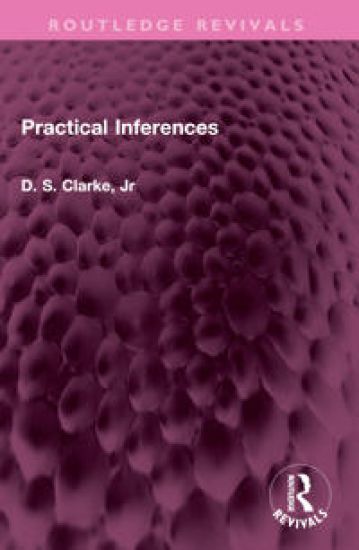
Practical Inferences

Practical Inferences

D S Clarke

TAYLOR FRANCIS LTD
2022
sidottu
First published in 1985, Practical Inferences describes how practical inferences are used. Starting with relatively simple inference patterns exhibited in everyday prudential decisions, the author extends a basic structural framework to the more complex inferences used in assessing probabilities, and finally to moral inferences. In this way what have been regarded as disparate activities are shown to exhibit fundamental similarities. The author argues that at all levels of decision-making the practical inferences used contain at least one premise expressing the desires or preferences of the agent. This is in opposition to the dominant view in Western philosophy that desires must be regulated or evaluated by means of principles of conduct discovered by rational procedures. By examining the premises implied by holders of this view, the author shows that they are inadequate bases for justifying practical decisions. This book will be of interest to students of philosophy, logic and mathematics.
Practical Inferences

Practical Inferences

D S Clarke

TAYLOR FRANCIS LTD
2024
nidottu
First published in 1985, Practical Inferences describes how practical inferences are used. Starting with relatively simple inference patterns exhibited in everyday prudential decisions, the author extends a basic structural framework to the more complex inferences used in assessing probabilities, and finally to moral inferences. In this way what have been regarded as disparate activities are shown to exhibit fundamental similarities. The author argues that at all levels of decision-making the practical inferences used contain at least one premise expressing the desires or preferences of the agent. This is in opposition to the dominant view in Western philosophy that desires must be regulated or evaluated by means of principles of conduct discovered by rational procedures. By examining the premises implied by holders of this view, the author shows that they are inadequate bases for justifying practical decisions. This book will be of interest to students of philosophy, logic and mathematics.
Essays on Pragmatic Naturalism
This collection of four essays argues that pragmatic naturalism provides the most promising way of overcoming the puzzles and controversies of recent philosophy. Pragmatic naturalism maintains that philosophical controversies arise from attempts to extend the scopes of the principal forms of specialized discourse used in the sciences and religion, and in interpretations and evaluations of the arts, beyond their proper boundaries. By relating these specialized forms to everyday conversation, pragmatic naturalism provides the basis for a philosophical system in which these controversies can be resolved. The first essay focuses on the discourse level of signs, the level of sign use and interpretation that is most distinctively human and occupies our waking lives. The remaining three essays apply the central ideas of Essay I to issues raised in the philosophy of religion, aesthetics, and philosophy of education.
Movements of Political Protest in Canada 1640-1840

Movements of Political Protest in Canada 1640-1840

S.D. Clark

UNIVERSITY OF TORONTO PRESS
1959
pokkari
In this volume, Professor Clark shows that for two hundred years Canadian society was subject to the same kind of disturbing and disruptive forces that revealed themselves in the United States in the Revolutionary period. In Canada, as in the United States, there was a frontier element which, economically, socially, and culturally, did not feel itself part of the established political order, and which periodically reacted against that order. In Canada, however, the spirit of the frontier regularly met defeat, and the author analyses the causes of this defeat in a thorough and illuminating manner, dealing in sequence with each area of conflict. The study is divided into four parts: The First American War of Independence, 1660-1760; The War of the United Colonies, 1765-1785; The Struggle for the West, 1785-1815; The Canadian Rebellions, 1815-1840. The author, an economist and sociologist, diverges sharply from the traditional historical interpretation of events in Canada from 1640 to 1840, which has been to emphasize the differences between the two countries rather than similarities. His realistic and penetrating study may prompt many to re-examine and re-assess the bases of their interpretations.
Church and Sect in Canada

Church and Sect in Canada

S.D. Clark

UNIVERSITY OF TORONTO PRESS
1948
pokkari
The need for a third printing of Church and Sect in Canada reflects the continuing interest in this pioneer study of the development of religious organization in Canadian society. It is one of three studies by Professor Clark; the other two, The Social Development of Canada and Movements of Political Protest in Canada show how the opening up of new areas of development in Canadian society led to the growth of new forms of social organization challenging the position and authority of established forms. In the field of religious organization, it was the evangelical religious sect which mounted the opposition to the established church denominations. By examining religious developments in Canada from 1760 to 1914 Professor Clark demonstrates how every move on the part of established church groups to secure, by union and other means, a greater degree of order in religious organization was accompanied by the rise of new forms of religious organization in those areas of society undergoing rapid change. In face of developments in our society today this study gains particular significance. The strong influence of the functionalist school in sociology in the United States and Canada in the 1950s and early 1960s fitted the mood of a society caught up in economic prosperity and ready to accept the comfortable assumption that the troublous upheavals in economic, political, religious, and other forms of social organization experienced in earlier decades would never recur. As a historical sociologist, Professor Clark gives emphasis to the importance of viewing developments in historical perspective. His examination of the basis of protest in religious organization in Canadian society over a period of nearly two centuries helps us understand the basis of protest, whatever form it takes, in society today.
Joseph's Hypocephalus

Joseph's Hypocephalus

Clark D Shaver

Indy Pub
2021
pokkari
A unique nugget of Latter-day Saint scripture is Facsimile 2 in the Book of Abraham. It is a picture-scripture called a hypocephalus and it is overflowing with symbolic meaning. Joseph Smith gave partial explanations of the figures and their meaning and then wrote: "The above translation is given as far as we have any right to give at the present time." Joseph knew there was more to discover He left it for later generations to uncover. The original owners knew the original meaning and could easily describe each scenes. These owners, Abrahamic-believers from Ptolemaic-era, Thebes, Egypt, intentionally obscured the meaning of the symbols to protect their pristine mysteries. The message, obscure to some, was clear to the initiated. This book, Joseph's Hypocephalus, allows the student to read the original message of Facsimile 2. The message of Facsimile 2 is the message of the Path of Souls. It describes the path a dead man takes on his journey to Heaven. Egyptologists have equated this path with the path of the sun. This is incorrect Original sources are consistent on this point. The path of the sun god, Re and the path of the dead man, Osiris, are two distinct and different paths. Facsimile 2 depicts Osiris' path, the path of the dead man. The same message painted on the hypocephalus is also enshrined in rituals and etched in the night's sky.Hugh Nibley said the hypocephalus was only one volume in an ancient sacred library of sacred devices that all had the same purpose. This book, Joseph's Hypocephalus, points out a handful of additional volumes. Early Orphics, Hermetic groups, and an early Christian Gnostic group all had remarkable volumes in this library. One volume added to Nibley's library is from pre-Columbus American Indians. Their volume comes in the form of shell gorgets. A gorget-hypocephalus connection is out-of-place because no historical tie between the ancient Near East and Native Americans from a later time is known. Yet, the traditions behind the shell gorgets outline the Path of Souls in remarkable detail and those details align so intricately with the Path of Souls illustrated on the facsimile that the two must be considered the same type of document. What is wonderful about Native American traditions is the relatively recent nature of their records. This means one is able to glean a more intimate understanding of their traditions. For instance, a few first-hand records of beautiful secret initiation rites into holy orders of Indian priesthoods are extant. The most poignant example is the Osage Songs of the Wa-xo'-be, recorded a hundred years ago with the full blessing of the Osage priesthood. What is uncovered is breathtaking. Rituals and myths of the Native peoples find significant parallels with Egyptian myth and rituals. These both compare snuggly with Joseph Smith's modern rituals. The same Path of Souls found on Facsimile 2 and on Mississippian gorgets is also found in the Hebrew Scriptures. Utilizing Margaret Barker's Temple Theology, Joseph's Hypocephalus points out the Path of Souls as a fundamental part of the ancient Hebrew religion. The Path was attacked by King Josiah. Adherents to pathway beliefs scattered to different areas of the world. Some of these people ended up in the Jordanian wilderness, only to reappear centuries later as the Christians. Others ended up in America and others in Egypt. All tell the story of the Path of Souls. The Path of Souls which Facsimile 2 describes is the esoteric essence of revealed religion. It is the secret of the magi, the shaman, and the prophet. Holding up the Path of Souls as a lantern to the words of the ancient scripture produces new images and gives an augmented sense of what the scriptures are really all about. Reading the scriptures in the light of this prism is delightfully insightful.
Joseph's Hypocephalus

Joseph's Hypocephalus

Clark D Shaver

Indy Pub
2021
sidottu
A unique nugget of Latter-day Saint scripture is Facsimile 2 in the Book of Abraham. It is a picture-scripture called a hypocephalus and it is overflowing with symbolic meaning. Joseph Smith gave partial explanations of the figures and then wrote: "The above translation is given as far as we have any right to give at the present time." Joseph knew there was more to discover The original owners knew the original message. These owners, Abrahamic-believers from Ptolemaic-era, Thebes, Egypt, intentionally obscured the meaning of their symbols to keep their mysteries pristine and hidden. Yet the message was always clear to those who knew the mysteries. This book, Joseph's Hypocephalus, allows the student to read the message of Facsimile 2 once again. The message of Facsimile 2 is the message of the Path of Souls. It describes the path a dead man takes on his postmortem journey to Heaven. Egyptologists have equated this path with the path of the sun. This is incorrect Joseph's Hypocephalus explains why. The message painted on the hypocephalus is also enshrined in rituals and etched in the night's sky.Hugh Nibley said the hypocephalus was only one volume in an ancient sacred library of sacred devices that all had the same purpose. This book, Joseph's Hypocephalus notes additional volumes. Orphics, Hermetic, and early Christian Gnostic groups all had remarkable volumes in this library. One odd volume added to Nibley's library is from pre-Columbus Native Americans. It comes in the form of shell gorgets. A gorget-hypocephalus connection seems absurd. Yet, the traditions behind the shell gorgets outline the Path of Souls in remarkable detail and those details align so intricately with Facsimile 2 that the two must be considered the same type of document.What is wonderful about Native American traditions is the relatively recent nature of their records. Allowing for a more intimate understanding of their traditions. A few first-hand records of beautiful secret initiation rites into holy orders of Indian priesthoods are extant. The best example is the Osage Songs of the Wa-xo'-be, recorded with the full blessing of the Osage priesthood. What is uncovered is breathtaking.The Path of Souls is also found in the Hebrew Scriptures. Utilizing Margaret Barker's Temple Theology, Joseph's Hypocephalus highlights the Path of Souls as a fundamental part of the ancient Hebrew religion. Adherents to pathway beliefs were scattered by Jewish kings. Some of these people reappeared centuries later as the first Christians. Others ended up in America and others in Egypt. All tell the story of the Path of Souls. The Path of Souls, which Facsimile 2 describes, is the esoteric essence of revealed religion. It is the secret of the magi, the shaman, and the prophet. Holding up the Path of Souls as a lantern to the words of the ancient scripture produces new images and gives an augmented sense of what the scriptures are really all about. Reading the scriptures in the light of this prism is delightfully insightful.
Joanella a Faerie's Tale

Joanella a Faerie's Tale

D R Clarke

Lulu.com
2022
pokkari
Joanella is the story of a forest faerie, who falls in love with a mortal man and will stop at nothing to attain the magic she needs to be with him. As she slides into depravity, all around her, conflict erupts in the forest when a religious movement gains momentum and turns violent. A story that reads more like an urban drama than a fantasy, Joanella A Faerie's Tale is unlike any faerie tale ever written and is waiting just for you, my dear reader.
Sign Levels

Sign Levels

D.S. Clarke

Springer-Verlag New York Inc.
2003
sidottu
Since the revolution in philosophic method that began about a century ago, the focus of philosophic attention has been on language as used both in daily conversation and in specialized institutional activities such as science, law, and the arts. But language is an extremely complex and varied means of communication, and the study of it has been increasingly incorporated into such empirical disciplines as linguistics, psycho linguistics, and cognitive psychology. It is becoming less clear what aspects of language remain as proper subjects of philosophical study, what are to be "kicked upstairs" (J. L. Austin's phrase) to the sciences. This work is a study of those logical features of language that remain central to philosophy after completion of kicking up. It conducts this study by describing similarities and differences between signs at differing levels, starting with natural events as primitive signs in the environments of their interpreters, and proceeding to pre­ linguistic signaling systems, elementary forms of language, and finally to the forms of specialized discourse used within social institutions. The investiga­ tion of comparative features requires isolating basic mental capacities that are present in the most primitive forms of organisms capable of sign interpretation. The problem then becomes one of tracing the emergence from these capacities of such categories as substance, attribute or quality, and quantity that we apply to natural languages. The study of sign levels is thus the construction of a genealogy of logical categories marking the develop­ ment of natural languages.
Sign Levels

Sign Levels

D.S. Clarke

Springer-Verlag New York Inc.
2004
nidottu
Since the revolution in philosophic method that began about a century ago, the focus of philosophic attention has been on language as used both in daily conversation and in specialized institutional activities such as science, law, and the arts. But language is an extremely complex and varied means of communication, and the study of it has been increasingly incorporated into such empirical disciplines as linguistics, psycho linguistics, and cognitive psychology. It is becoming less clear what aspects of language remain as proper subjects of philosophical study, what are to be "kicked upstairs" (J. L. Austin's phrase) to the sciences. This work is a study of those logical features of language that remain central to philosophy after completion of kicking up. It conducts this study by describing similarities and differences between signs at differing levels, starting with natural events as primitive signs in the environments of their interpreters, and proceeding to pre­ linguistic signaling systems, elementary forms of language, and finally to the forms of specialized discourse used within social institutions. The investiga­ tion of comparative features requires isolating basic mental capacities that are present in the most primitive forms of organisms capable of sign interpretation. The problem then becomes one of tracing the emergence from these capacities of such categories as substance, attribute or quality, and quantity that we apply to natural languages. The study of sign levels is thus the construction of a genealogy of logical categories marking the develop­ ment of natural languages.
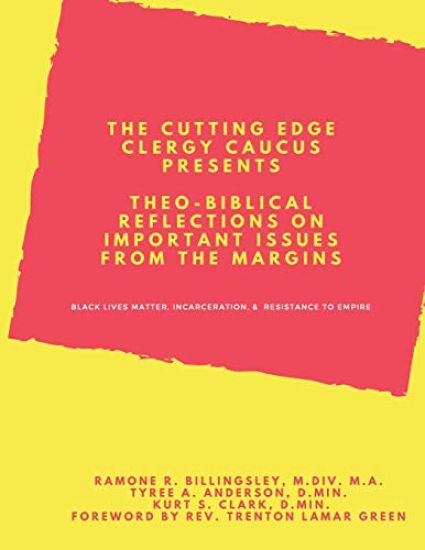
Theo-Biblical Reflections on Important Issues from the Margins: Black Lives Matter, Incarceration, & Resistance to Empire

Theo-Biblical Reflections on Important Issues from the Margins: Black Lives Matter, Incarceration, & Resistance to Empire

Kurt S. Clark D. Min; Ramone R. Billingsley M. DIV; Trenton Lamar Green

Tyree A. Anderson, D.Min.
2019
nidottu
The members of the Cutting-Edge Clergy Caucus of Birmingham, AL recognize the need to inject a fresh voice and different analysis to the national discussion on religion, race, poverty, and inequalities facing people in the margins. This book serves an introduction to those who are looking for an unconventional and compromised interpretation of the biblical text as it applies to those who live in the margins. Theo-Biblical Reflection on Important Issues from the Margins: Black Lives Matter, Incarceration, & Resistance to Empire has been written by ministry practitioners who pastor and work in the margins with those who have been forgotten, abandoned, and purposely ignored by societal power brokers at the local, state, and nation levels.By releasing Theo-Biblical Biblical Reflections on Important Issues from the Margins: Black Lives Matter, Incarceration, & Resistance to Empire into the public sphere, the book begs the question to those who claim to follow Christ, what are you doing to make manifest the Kingdom of God in the margins of society? This work is designed to invoke discussion and transformation. In an age when white supremacy is publicized from the White House to the Church House a resistance must be promoted. In the vein of the eighth century prophets, resistance voices during the antebellum period, and modern prophets, Billingsley, Clark and Anderson serve as voice of change in this post modern society. This book rises to the occasion by speaking truth to power with a Cutting-Edge precision. The Cutting-Edge Clergy Caucus, LLC is a ministry that provides ministry support training and justice advocacy as found in the Gospels and rooted in the Hebrew prophetic tradition within the city of Birmingham and surrounding communities.
Scorched Earth

Scorched Earth

Kathleen S. McFall; Clark D. Hays

Pumpjack Press
2021
nidottu
A MURDER ON MARS LEADS TO HELL ON EARTHThe year is 2188 and the Earth-long-ago abandoned for Mars by the plutocrats-is scorched by poverty, disease and environmental collapse. Meanwhile, the red planet is a flourishing playground for the Five Families who, thanks to Halo-an advanced AI-control everything and everyone on Earth, including Crucial Larsen, a disillusioned labor cop. The wealthy elite of Mars don't know that on his last trip up-universe, Crucial stumbled onto a secret that could destroy them. Yet, despite fervent pleas from his sister (a leader in the resistance), Crucial believes fighting back against the Five Families is a fool's game destined for failure-or worse. Plus, he never wants to set foot on that damn planet again. Then Melinda, his long-lost love and a staff scientist on Mars, begs for his help clearing her fianc e of a murder charge. Crucial jumps on the next quantum rocket, hoping maybe this time he can patch things up with Mel. His investigation ultimately leads back to Earth's radiation-blasted sunbelt, where cannibal lizard-people-a climate change mitigation genetic experiment gone terribly wrong-hold the key to a different future, if only Crucial can stay alive long enough to unlock it. Blending science-fiction with a classic, hard-boiled detective story, Scorched Earth is the second book in The Halo Trilogy, an irreverent series set on post-colonial Mars, and the ninth novel by Clark Hays and Kathleen McFall.