Kirjahaku
Etsi kirjoja tekijän nimen, kirjan nimen tai ISBN:n perusteella.
1000 tulosta hakusanalla S L Smith; H C Sherman
The Ecology and Management of Wetlands
Donal D. Hook; W. H. Mckee Jr; H. K. Smith; J. Gregory; V. G. Burrell Jr; M. R. DeVoe; R. E. Sojka; S. Gilbert; R. Banks; L. H. Stolzy; C. Brooks; T. D. Matthews; T. H. Shear
Springer-Verlag New York Inc.
2012
nidottu
This book contains the proceedings of a symposium held at the College of Charleston. Charleston. South Carolina. USA. 16-20 June. 1986. The seed for this symposium arose from a group of physiologists. soil scientists and biochemists that met in Leningrad USSR in July 1975 at the 12th Botanical Conference in a Session organized by Professor B.B. Vartepetian. This group and others later conspired to contribute to a book entitled Plant Life in Anaerobic Environments (eds. D.D. Hook and R.M.M. Crawford. Ann Arbor Science. 1978). Several contributors to the book suggested in 1983 that a broad-scoped symposium on wetlands would be useful (a) in facilitating communication among the diverse research groups involved in wetlands research (b) in bringing researchers and managers together (c) and in presenting a comprehensive and balanced coverage on the status of ecology and management of wetlands from a global perspective. With this encouragement. the senior editor organized a planning committee that encompassed expertise from many disciplines of wetland scientists and managers. This committee, with input from their colleagues around the world, organized a symposium that addressed almost every aspect of wetland ecology and management.

The Ecology and Management of Wetlands
D. D. Hook; W. H. McKee Jr; H. K. Smith; J. Gregory; V. G. Burrell Jr; M. R. DeVoe; R. E. Sojka; S. Gilbert; R. Banks; L. H. Stolzy; C. Brooks; T. D. Matthews; T. H. Shear
Springer-Verlag New York Inc.
2014
nidottu
This book contains the proceedings of a symposium held at the College of Charleston, Charleston, South Carolina, USA, 16-20 June 1986. The seed for this symposium arose from a group of physiologists, soil scientists and biochemists that met in Leningrad, USSR in July 1975 at the 12th Botanical Conference in a Session organized by Professor B. B • Vartepetian. This group and others later conspired to contribute to a book entitled Plant Life in Anaerobic Environments (eds. D.D. Hook and R.M.M. Crawford, Ann Arbor Science, 1978). Several contributors to the book suggested in 1983 that a broad-scoped symposium on wetlands would be useful (a) in facilitating communication among the diverse research groups involved in wetlands research (b) in bringing researchers and managers together and (c) in presenting a com-: prehensive and balanced coverage on the status of ecology and management of wetlands from a global perspective. With this encouragement, the senior editor organized a Plan ning Committee that encompassed expertise from many disciplines of wetland scientists and managers. This Committee, with input from their colleagues around the world, organized a symposium that addressed almost every aspect of wetland ecology and management.
Neuromuscular Junction
R.E.M. Bowden; B. Collier; R.D. Dripps; L.W. Duchen; G.E. Hale Enderby; B.L. Ginsborg; S. Head; F. Hobbiger; D.H. Jenkinson; F.C. MacIntosh; J. Maglagan; S.E. Smith; E. Zaimis
Springer-Verlag Berlin and Heidelberg GmbH Co. K
2012
nidottu
Has the neuromuscular junction been over-exposed or is it perhaps already a closed book? I asked myself this at a recent International Congress when an American colleague complained that the Journal of Physiology had articles on nothing but the neuromuscular junction, while another colleague asked why I was editing a volume on a subject about which everything was already known. It is worrying to think that these views may be shared by other people. I hope that this volume will convince my two colleagues and other readers that the neuromuscular junction is very much alive and continues to attract the interest of many workers from a variety of fields; strange as it may seem, the synapse between a motor nerve ending and muscle fibre, with its relatively simple architecture, is one of the most inter esting sites in the body-I do hope we have done it justice. The various chapters of this volume present a cross section of knowledge as viewed by a group of 13 individuals, actively engaged in research. Multi-author volumes such as this are frequently criticised on the grounds that chapters or sec tions overlap. I believe that such criticium is only valid where the overlap is repetitious. Where it results in the reader having available discussions of material from differing stand-points, overlap becomes a valuable feature of this type of publication.


Growing Roses: W I T H S H E R R Y 'n M A R G A R I T a
A. M. Smith; VIV L. Deighton
Createspace Independent Publishing Platform
2011
nidottu

Gene Banks and the World's Food
Donald L. Plucknett; Nigel J.H. Smith
Princeton University Press
2014
pokkari
Gene Banks and the World's Food contributes to the crucial debate on how best to preserve some of society's most valuable raw material. The authors also provide an up-to-date report on the status and locations of gene banks, which includes the latest available information on germplasm holdings by crop. They (hen discuss how these holdings are being used to develop better crop varieties for the benefit of people around the world. Originally published in 1986. The Princeton Legacy Library uses the latest print-on-demand technology to again make available previously out-of-print books from the distinguished backlist of Princeton University Press. These editions preserve the original texts of these important books while presenting them in durable paperback and hardcover editions. The goal of the Princeton Legacy Library is to vastly increase access to the rich scholarly heritage found in the thousands of books published by Princeton University Press since its founding in 1905.

Gene Banks and the World's Food
Donald L. Plucknett; Nigel J.H. Smith
Princeton University Press
2016
sidottu
Gene Banks and the World's Food contributes to the crucial debate on how best to preserve some of society's most valuable raw material. The authors also provide an up-to-date report on the status and locations of gene banks, which includes the latest available information on germplasm holdings by crop. They (hen discuss how these holdings are being used to develop better crop varieties for the benefit of people around the world. Originally published in 1986. The Princeton Legacy Library uses the latest print-on-demand technology to again make available previously out-of-print books from the distinguished backlist of Princeton University Press. These editions preserve the original texts of these important books while presenting them in durable paperback and hardcover editions. The goal of the Princeton Legacy Library is to vastly increase access to the rich scholarly heritage found in the thousands of books published by Princeton University Press since its founding in 1905.
Davis Advantage for Wilkinson's Fundamentals of Nursing
Leslie S. Treas; Karen L. Barnett; Mable H. Smith
F.A. DAVIS COMPANY
2023
nidottu
Davis Advantage for Wilkinson's Fundamentals of Nursing
Leslie S. Treas; Karen L. Barnett; Mable H. Smith
F a Davis Co
2023
sidottu
Procedure Checklists for Wilkinson's Fundamentals of Nursing
Leslie S. Treas; Karen L. Barnett; Mable H. Smith
F.A. DAVIS COMPANY
2023
nidottu
All of the must-know procedures…all in one place!Assess your progress. Checklists for over 165 common nursing procedures thoroughly reviewed and updated, ensure a consistent experience with the procedures presented in Wilkinson's Fundamentals of Nursing, 5th Edition and Basic Nursing, 3rd Edition. Begin with the principle-based checklist that you’ll use with all the procedures. Then, for each individual procedure, you’ll follow and check off all of the steps in the order that they must be performed to ensure the safety of both the patient and the nurse. Put your knowledge to work and use these checklists to practice your skills or to participate in peer check offs.
Electromagnetism
Kevin S. Hall; L. H. Davis; Martin Smith
Createspace Independent Publishing Platform
2017
nidottu
"Anytime you give an electronic device a brain, it has the capabilities to outgrow the possibilities that were set forth in the plans." The Unit by Katie Jaarsveld From the Depths by McKenzie Richardson Everything Has a Price by Sheri Velarde Fulfilling Killingsby M Earl Smith Touch by TW Iain Dark Web Demon by Kevin S. Hall Ocean's Bounty by Andrew J Lucas Catfish by Samie Sands Viral Venom by Alex Winck Domain of the Dragon by L.H. Davis My Skin Crawls by Katie Jaarsveld My Name Is Human by Rob Shepherd
Davis Advantage for Basic Nursing
Leslie S. Treas; Karen L. Barnett; Mable H. Smith;
F.A. Davis Company
2021
sidottu
LEARN–APPLY–ASSESSDavis Advantage for Basic Nursing combines an innovative text with an immersive online program that make this challenging but must-know content easier to master by making learning personal. Together, they create a seamless experience that tracks each student’s progress and assesses their knowledge until they have mastered the concepts and are ready to apply them in class, clinical, and practice.An access code inside new, printed textbooks unlocks an ebook, as well as access to Davis Advantage. Or choose the all-digital Instant Access option, which includes the ebook and immediate access to Davis Advantage.THE TEXTBOOKA comprehensive approach to care promotes critical thinking and clinical judgment to teach students how to “Think Like a Nurse” from the very first day. A consistent and concise organization along with a wealth of pedagogical features emphasizes the Thinking, Doing, and Caring at the heart of professional practice.In every chapter, students first explore the theoretical knowledge behind key Fundamentals concepts. Then, they learn the practical knowledge guided by the nursing process; and finally, the skills and procedures for safe and effective nursing care.ONLINE (DAVIS ADVANTAGE)Using a unique and proven approach across a Learn-Apply-Assess continuum, Davis Advantage engages students and helps them make the connections to key topics. Whether teaching in-person or online, this complete, integrated solution aligns seamlessly with the textbook and equips instructors with actionable analytics to track students’ progress, remediate where needed, and facilitate an active learning environment.LEARN—Personalized LearningThe foundation of the Davis Advantage platform, Personalized Learning, immerses students in an online learning experience tailored to their needs. Students are assessed on their comprehension of key topics from the text, and then are guided through animated mini-lecture videos and dynamic activities to reinforce learning and bring concepts to life.APPLY—Clinical Judgment (NEW!)Clinical Judgment elevates students’ critical thinking and clinical reasoning, helping them to build the clinical judgment skills they need to practice safe and effective nursing care and to prepare for the Next Generation NCLEX® with confidence. Progressive case studies featuring real-life, complex clinical situations challenge students to apply their knowledge, make informed decisions, and evaluate outcomes.ASSESS—QuizzingQuizzing uses NCLEX®-style questions for assessment and remediation. Its adaptive, question-based format provides the additional practice students need to test their knowledge, master course content, and perform well on course and board exams.TextbookProvides the evidence-based, foundational knowledge students need to learn how to ‘think like a nurse’.Promotes critical thinking, clinical reasoning, and clinical decision making through a comprehensive approach to care.Prepares students for real-world practice with case studies and clinically based exercises that develop clinical judgment skills and reinforce the thinking, doing, and caring they will do as nurses.Features over 230 step-by-step, illustrated procedures with rationales to teach students how to perform and master essential nursing skills.Emphasizes the important aspects of safe and effective care to ensure the best patient outcomes.Davis Advantage (Personalized Learning, Clinical Judgment (NEW!) and Quizzing)Personalized Learning engages students through videos and interactive activities that present key concepts in a way that makes content more relatable and understandable.Clinical Judgment (NEW!) challenges students with complex questions that align with the cognitive areas of the NCSBN’s Clinical Judgment Measurement Model, requiring careful analysis, synthesis of the data, and critical thinking.Quizzing provides thousands of NCLEX®-style questions (including alternate format questions) and detailed rationales to test students’ knowledge and promote in-depth understanding.Personalized Learning Plans and dashboards track students’ progress across their assignments and highlight where they need to focus their study time.Actionable analytics allow instructors to track comprehension and participation, monitor performance, and identify areas for remediation.Personalized Teaching Plans provide instructors with engaging lesson plans and activities that can be leveraged in both virtual and in-person classroom settings.Integrated ebook allows students to reference the textbook anytime, anywhere.New To This Edition:NEW! Clinical Judgment component now in Davis Advantage. EXPANDED & ENHANCED! Increased focus on Clinical Judgment reflecting the NCSBN Clinical Judgment Measurement Model (CJMM) and the relationship among the nursing process, critical thinking, clinical reasoning, and clinical judgment.NEW! “Critical-Thinking and Clinical Judgment” scenario with questions added to each chapter.UPDATED! “Example Client Conditions” to reflect CJMM.REVISED! Nursing process chapters combined into a single chapter to better explain the interconnectedness of each step in the Nursing Process.EXPANDED & ENHANCED! Focus on patient advocacy.
Davis Advantage Basic Nursing
Leslie S. Treas; Karen L. Barnett; Mable H. Smith
F.A. DAVIS COMPANY
2025
sidottu

Procedure Checklists for Fundamentals of Nursing
Judith M. Wilkinson; Leslie S. Treas; Karen L. Barnett; Mable H. Smith
F.A. Davis Company
2019
nidottu
All of the must-know procedures…all in one place!Assess your progress. Checklists for over 165 common nursing procedures that follow the procedures presented in Fundamentals of Nursing, 4th Edition and Basic Nursing, 2nd Edition.Begin with the principle-based checklist that you’ll use with all the procedures. Then, for each individual procedure, you’ll follow and check off all of the steps in the order that they must be performed to ensure the safety of both the patient and the nurse.Put your knowledge to work and use these checklists to practice your skills or to participate in peer check-offs.
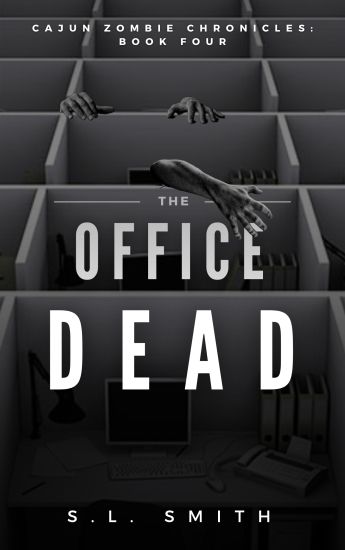
Chet awakes from the nightmare of cubicles and blinking fluorescent lights. He is surrounded by the Office Dead. The fourth installment of Cajun Zombie, which chronicles the events leading up to Book Three: The Kingdom Dead. Here lies the adventures of Miss Abbey's group, how they came together, and their fight to escape Baton Rouge in the days and weeks before they joined Isherwood and the rest in the island citadel of St. Maryville. The master of puppets is coming in black boots. The pieces are in motion, but what is this mysterious chess game unfolding in the land of the dead?