Kirjojen hintavertailu. Mukana 11 244 527 kirjaa ja 12 kauppaa.

Kirjahaku

Etsi kirjoja tekijän nimen, kirjan nimen tai ISBN:n perusteella.

1000 tulosta hakusanalla S. E. Thomas

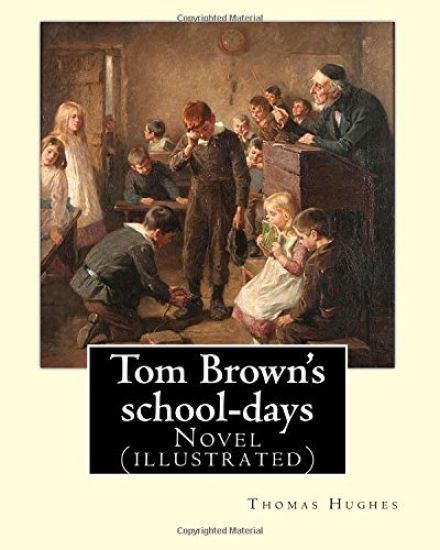
Tom Brown's school-days. By: Thomas Hughes, illustrated By: Louis (John) Rhead and By: E. J. Sullivan, introduction By: W. D. Howells (NOVEL): The
The story is set in the 1830s at Rugby School, a public school for boys. Hughes attended Rugby School from 1834 to 1842. The novel was originally published as being "by an Old Boy of Rugby", and much of it is based on the author's experiences. Tom Brown is largely based on the author's brother George Hughes. George Arthur, another of the book's main characters, is generally believed to be based on Arthur Penrhyn Stanley. The fictional Tom's life also resembles the author's, in that the culminating event of his school career was a cricket match. 3] The novel also features Dr Thomas Arnold (1795-1842), who was the actual headmaster of Rugby School from 1828 to 1841. Tom Brown's School Days has been the source for several film and television adaptations. It also influenced the genre of British school novels, which began in the nineteenth century, and led to fictional depictions of schools such as Billy Bunter's Greyfriars School, Mr Chips' Brookfield, St. Trinian's, and Harry Potter's Hogwarts. A sequel, Tom Brown at Oxford, was published in 1861.Tom Brown is energetic, stubborn, kind-hearted and athletic, rather than intellectual. He follows his feelings and the unwritten rules of the boys. The early chapters of the novel deal with his childhood at his home in the Vale of White Horse. Much of the scene setting in the first chapter is deeply revealing of Victorian England's attitudes towards society and class, and contains a comparison of so-called Saxon and Norman influences on England. This part of the book, when young Tom wanders the valleys freely on his pony, serves as a contrast with the hellish experiences in his first years at school. His first school year is at a local school. His second year starts at a private school, but due to an epidemic of fever in the area, all the school's boys are sent home, and Tom is transferred mid-term to Rugby School. On his arrival, the eleven-year-old Tom Brown is looked after by a more experienced classmate, Harry "Scud" East. Tom's nemesis at Rugby is the bully Flashman. The intensity of the bullying increases, and, after refusing to hand over a sweepstake ticket for the favourite in a horse race, Tom is deliberately burned in front of a fire. Tom and East defeat Flashman with the help of Diggs, a kind, comical, older boy. In their triumph they become unruly........ Edmund Joseph Sullivan (1869-1933), usually known as E. J. Sullivan, was a British book illustrator who worked in a style which merged the British tradition of illustration from the 1860s with aspects of Art Nouveau. Louis John Rhead (November 6, 1857 - July 29, 1926) was an English-born American artist, illustrator, author and angler who was born in Etruria, Staffordshire, England. He emigrated to the United States at the age of twenty-four. William Dean Howells ( March 1, 1837 - May 11, 1920) was an American realist novelist, literary critic, and playwright, nicknamed "The Dean of American Letters". He was particularly known for his tenure as editor of The Atlantic Monthly, as well as for his own prolific writings, including the Christmas story "Christmas Every Day" and the novels The Rise of Silas Lapham and A Traveler from Altruria.... Thomas Hughes QC (20 October 1822 - 22 March 1896) was an English lawyer, judge, politician and author. He is most famous for his novel Tom Brown's School Days (1857), a semi-autobiographical work set at Rugby School, which Hughes had attended. It had a lesser-known sequel, Tom Brown at Oxford (1861). Hughes had numerous other interests, in particular as a Member of Parliament, in the British co-operative movement, and in a settlement in Tennessee reflecting his values.....
HBR's 10 Must Reads on Strategy for Healthcare (featuring articles by Michael E. Porter and Thomas H. Lee, MD)

HBR's 10 Must Reads on Strategy for Healthcare (featuring articles by Michael E. Porter and Thomas H. Lee, MD)

Harvard Business Review; Michael E. Porter; James C. Collins; W. Chan Kim; Renee Mauborgne

Harvard Business Review Press
2018
pokkari
Prepare for an uncertain future with a solid vision and innovative practices.Is your healthcare organization spending too much time on strategy--with too little to show for it?If you read nothing else on strategy, read these 10 articles. We've combed through hundreds of Harvard Business Review articles and selected the most important ones for healthcare professionals to help you catalyze your organization’s strategy development and execution.Leading strategy experts, such as Michael E. Porter, Jim Collins, W. Chan Kim, and Renee Mauborgne, provide the insights and advice you need to:Understand how the rules of corporate competition translate to the healthcare sectorCraft a vision for an uncertain futureSegment your market to better serve diverse patient populationsAchieve the best health outcomes--at the lowest costLearn what disruptive innovation means for healthcareUse the Balanced Scorecard to measure your progressThis collection of articles includes "What Is Strategy?" by Michael E. Porter; "The Five Competitive Forces That Shape Strategy," by Michael E. Porter; "Health Care Needs Real Competition," by Leemore S. Dafny and Thomas H. Lee; "Building Your Company's Vision," by Jim Collins and Jerry I. Porras; "Reinventing Your Business Model," by Mark W. Johnson, Clayton M. Christensen, and Henning Kagermann; "Will Disruptive Innovations Cure Health Care?" by Clayton M. Christensen, Richard Bohmer, and John Kenagy; "Blue Ocean Strategy," by W. Chan Kim and Renee Mauborgne; "Rediscovering Market Segmentation," by Daniel Yankelovich and David Meer; "The Office of Strategy Management," by Robert S. Kaplan and David P. Norton; and "The Strategy That Will Fix Health Care," by Michael E. Porter and Thomas H. Lee.
S. 1074, the Thomasina E. Jordan Indian Tribes of Virginia Federal Recognition Act of 2013; S. 1132, the Lumbee Recognition Act; and S. 161, the Littl

S. 1074, the Thomasina E. Jordan Indian Tribes of Virginia Federal Recognition Act of 2013; S. 1132, the Lumbee Recognition Act; and S. 161, the Littl

United States Senate; Committee On Indian Affairs 1993; United States Congress

Createspace Independent Publishing Platform
2017
nidottu
S. 1074, the Thomasina E. Jordan Indian Tribes of Virginia Federal Recognition Act of 2013; S. 1132, the Lumbee Recognition Act; and S. 161, the Little Shell Tribe of Chippewa Indians Restoration Act of 2013: hearing before the Committee on Indian Affairs, United States Senate, One Hundred Thirteenth Congress, first session, October 30, 2013.
Tom Brown's School Days. by an Old Boy [I.E. Thomas Hughes]. Third Edition.

Tom Brown's School Days. by an Old Boy [I.E. Thomas Hughes]. Third Edition.

Tom Brown; Sydney Prior Hall

British Library, Historical Print Editions
2011
pokkari
Title: Tom Brown's School Days. By an Old Boy i.e. Thomas Hughes]. Third edition.Publisher: British Library, Historical Print EditionsThe British Library is the national library of the United Kingdom. It is one of the world's largest research libraries holding over 150 million items in all known languages and formats: books, journals, newspapers, sound recordings, patents, maps, stamps, prints and much more. Its collections include around 14 million books, along with substantial additional collections of manuscripts and historical items dating back as far as 300 BC.The FICTION & PROSE LITERATURE collection includes books from the British Library digitised by Microsoft. The collection provides readers with a perspective of the world from some of the 18th and 19th century's most talented writers. Written for a range of audiences, these works are a treasure for any curious reader looking to see the world through the eyes of ages past. Beyond the main body of works the collection also includes song-books, comedy, and works of satire. ++++The below data was compiled from various identification fields in the bibliographic record of this title. This data is provided as an additional tool in helping to insure edition identification: ++++ British Library Brown, Tom; Hall, Sydney Prior; 1869 1868]. xx. 374 p.; 8 . 12618.d.11.
E. Kidder's Receipts of Pastry and Cookery, for the use of his Scholars. Who Teaches at his School in Queen Street Near St. Thomas Apostles.
The 18th century was a wealth of knowledge, exploration and rapidly growing technology and expanding record-keeping made possible by advances in the printing press. In its determination to preserve the century of revolution, Gale initiated a revolution of its own: digitization of epic proportions to preserve these invaluable works in the largest archive of its kind. Now for the first time these high-quality digital copies of original 18th century manuscripts are available in print, making them highly accessible to libraries, undergraduate students, and independent scholars.Medical theory and practice of the 1700s developed rapidly, as is evidenced by the extensive collection, which includes descriptions of diseases, their conditions, and treatments. Books on science and technology, agriculture, military technology, natural philosophy, even cookbooks, are all contained here.++++The below data was compiled from various identification fields in the bibliographic record of this title. This data is provided as an additional tool in helping to insure edition identification: ++++British LibraryT092424Engraved throughout. The work has no register, but it has alphabetical numbering system. A reissue of the 1740 edition, in which Kidder's school address is given as "St. Martins le grand", with a different titlepage; additional text added to leaves F2 a London, 1740?]. 52]leaves: ill., port.; 8
The Top 5 Greatest Civil War Generals: Robert E. Lee, Stonewall Jackson, Ulysses S. Grant, William Tecumseh Sherman, and George H. Thomas
*Includes pictures and maps of battles. *Includes a bibliography of every general. With the exception of George Washington, perhaps the most famous general in American history is Robert E. Lee, despite the fact he led the Confederate Army of Northern Virginia against the Union in the Civil War. His most famous subordinate, Stonewall Jackson, is one of the most famous generals of the war, but it's still unclear whether that was a compliment for standing strong or an insult for not moving his brigade, but the nickname stuck for the brigade and the general itself. While all eyes were fixed on the Eastern theater at places like Manassas, Richmond, the Shenandoah Valley and Antietam, Ulysses S. Grant went about a steady rise up the ranks through a series of successes in the West. Grant eventually came east to face Lee in 1864. Synonymous with barbarity in the South, William Tecumseh Sherman is lauded as a war hero in the North, and modern historians consider him the harbinger of total war. Military historian B. H. Liddell Hart famously declared that Sherman was "the first modern general." While there is a never ending stream of acclaim going to generals like Grant, Lee, and Sherman, General George H. Thomas has managed to fly under the radar. Thomas scored almost inconceivable successes at Missionary Ridge, Franklin, and Nashville. Thomas also skillfully fought at Perryville, Stones River, and in Sherman's Atlanta Campaign, but he's best remembered as "The Rock of Chickamauga". Thomas' heroics prevented the destruction of the Union army at that battle and allowed it to successfully retreat to Chattanooga.
The Top 5 Greatest Civil War Generals: Robert E. Lee, Stonewall Jackson, Ulysses S. Grant, William Tecumseh Sherman, and George H. Thomas
*Includes pictures and maps of battles. *Includes a bibliography of every general. With the exception of George Washington, perhaps the most famous general in American history is Robert E. Lee, despite the fact he led the Confederate Army of Northern Virginia against the Union in the Civil War. His most famous subordinate, Stonewall Jackson, is one of the most famous generals of the war, but it's still unclear whether that was a compliment for standing strong or an insult for not moving his brigade, but the nickname stuck for the brigade and the general itself. While all eyes were fixed on the Eastern theater at places like Manassas, Richmond, the Shenandoah Valley and Antietam, Ulysses S. Grant went about a steady rise up the ranks through a series of successes in the West. Grant eventually came east to face Lee in 1864. Synonymous with barbarity in the South, William Tecumseh Sherman is lauded as a war hero in the North, and modern historians consider him the harbinger of total war. Military historian B. H. Liddell Hart famously declared that Sherman was "the first modern general." While there is a never ending stream of acclaim going to generals like Grant, Lee, and Sherman, General George H. Thomas has managed to fly under the radar. Thomas scored almost inconceivable successes at Missionary Ridge, Franklin, and Nashville. Thomas also skillfully fought at Perryville, Stones River, and in Sherman's Atlanta Campaign, but he's best remembered as "The Rock of Chickamauga". Thomas' heroics prevented the destruction of the Union army at that battle and allowed it to successfully retreat to Chattanooga.
Wedding's Basic Bessemer Process. Translated [From the Supplement to the Author's Darstellung Des Schmiedbaren Eisens" Entitled, "Basische Bessemer Oder Thomas Process"] ... by W. B. Phillips ... and E. Prochaska ... with a Supplementary Chapter on
Title: Wedding's Basic Bessemer Process. Translated from the supplement to the author's Darstellung des schmiedbaren Eisens" entitled, "Basische Bessemer oder Thomas Process"] ... by W. B. Phillips ... and E. Prochaska ... With a supplementary chapter on dephosphorization in the basic open-hearth furnace, by E. Prochaska.Publisher: British Library, Historical Print EditionsThe British Library is the national library of the United Kingdom. It is one of the world's largest research libraries holding over 150 million items in all known languages and formats: books, journals, newspapers, sound recordings, patents, maps, stamps, prints and much more. Its collections include around 14 million books, along with substantial additional collections of manuscripts and historical items dating back as far as 300 BC.The GENERAL HISTORICAL collection includes books from the British Library digitised by Microsoft. This varied collection includes material that gives readers a 19th century view of the world. Topics include health, education, economics, agriculture, environment, technology, culture, politics, labour and industry, mining, penal policy, and social order. ++++The below data was compiled from various identification fields in the bibliographic record of this title. This data is provided as an additional tool in helping to insure edition identification: ++++ British Library Wedding, Hermann; Phillips, William Battle; Prochaska, Ernst Otto; 1891. 224 p.; 8 . W71/7909