
Kirjahaku
Etsi kirjoja tekijän nimen, kirjan nimen tai ISBN:n perusteella.
1000 tulosta hakusanalla S. Irfan Habib
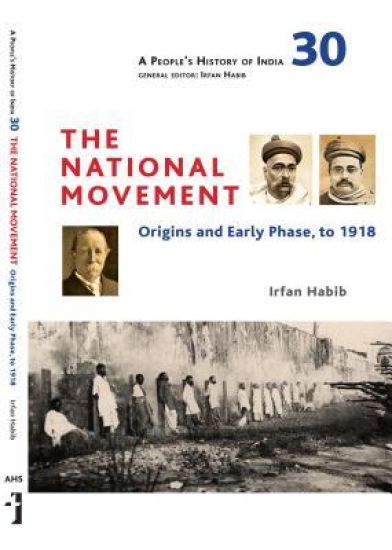
A People`s History of India 30 – The National Movement: Origins and Early Phase to 1918
Irfan Habib
Tulika Book
2018
sidottu
The National Movement: The First Phase, till 1918 deals with popular resistance to colonial rule, a special position being given to the Revolt of 1857–58, its nature and legacy; the rise of national consciousness, and the factors leading to it; the movement for social reform and political awakening among the middle classes. It examines the critique of British rule by early economic nationalists as well as the foundation (in 1885), and development as a political party, of the Indian National Congress. It considers the rise of the Extremists (as against Moderates), describes the rise of communalism and the Partition of Bengal (1905), the opposition to it and the rift within the Congress, the rise of violence and the Ghadar movement (1913–15). It also considers the effect of British measures of 1909 and 1911 on the National Movement, the Congress–Muslim League Pact of 1916, the Home Rule Movement, and, finally, Gandhiji’s arrival and the agitations of 1917–18.The volume is authored by Irfan Habib, the general editor of the A People's History of India series.

A People`s History of India 14 – – Economic History of India, AD 1206–1526, The Period of the Delhi
Irfan Habib
Tulika Book
2018
nidottu
This volume is devoted to the economic and social history of India from the thirteenth to the fifteenth century. The book consists of three long chapters, divided into numerous subchapters. The first chapter describes the agrarian order during the main period of the Delhi Sultanate (1206–1398), while the second chapter delves into the urban economy and trading world of the same period. The third chapter deals with the fifteenth century, 1398–1526, a period of political divisions. While describing the economy and social structure in north India during the century, the chapter pays special attention to conditions in the Vijayanagara empire, which flourished during this period in south India.A special feature of the volume, as with others in the series, is the inclusion of long extracts from sources and technical and bibliographical notes appended to each chapter.

A People's History of India 31 – The National Movement, Part 2 – The Struggle for Freedom, 1919–1947
Irfan Habib
Tulika
2020
sidottu
This volume takes up the story of the Indian National Movement from 1919 when the first nationalist struggle took place on an all-India scale. It brings the Satyagraha against the Rowlatt Act, engraved in national memory by the slaughter at Jallianwala Bagh. The work ends with August 1947 when India finally attained independence. The volume stresses the importance of the ideological factor, seen in the growth of communalism that ultimately led to the Partition of the country along with independence.
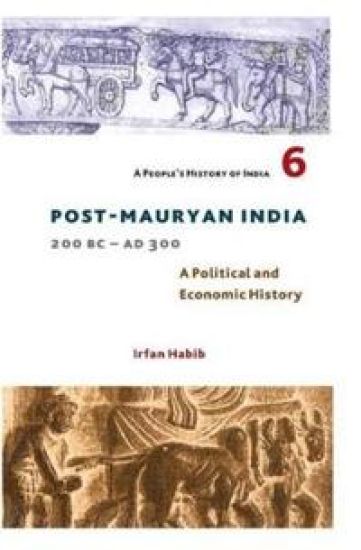
A People's History of India 6 – Post Mauryan India, 200 BC – AD 300
Irfan Habib
Tulika Book
2013
nidottu
Post-Mauryan India, 200 BC - AD 300: A Political and Economic History, as part of the People's History of India series, deals with the five hundred years that, in the political sphere, are associated with the dominance of Indo-Greeks, Sakas, Kushans, and Satavahanas. The volume also offers a detailed survey of the economy of the period, which saw important changes, in craft production as well as overseas trade. (The changes in the caste system and cultural life during this long period will be treated in a separate volume.) A special feature of the present volume is that the information contained is based on fully updated material. As with other volumes of the series, translations of select inscriptions and extracts from texts are appended to each chapter. There are special notes (by way of technical aids) on the Puranas, the Shangam texts, and Kushan chronology; and on numismatics and economics. In addition, there are seven maps and twenty-four illustrations, being mainly reproductions of coins and sculpture.

A People's History of India 25 – Indian Economy Under Early British Rule, 1757 –1857
Irfan Habib
Tulika Book
2014
nidottu
This volume in the People's History of India series gives a general account of Indian economy in the first century of British rule (1757-1857). It describes the changes in Indian economy brought about by the pressure for tribute, the British land settlements, and the triumph of free trade. In order to set these changes in a proper perspective, it begins by furnishing a survey of pre-colonial economic conditions. A notable feature of the book is its reference to how aspects of Indian economy were seen and interpreted by contemporary observers. This is accomplished partly by a rich collection of extracts from the sources. There are also special notes on current interpretations of eighteenth-century history, the nature of tribute or drain of wealth from India to England, and the scope and problems of historical demography.

Prehistory describes the earliest ages of human life in India, long before the existence of written records. It is part of a larger project, a People's History of India. In this monograph, the style is sought to be kept simple without making it 'popular', rhetorical or inexact. Chapter 1 treats in brief the geological formation of India, and changes in its climate and natural environment in so far as these relate to an understanding of our prehistory and history. Chapter 2 provides the story of man, first in the global context and then in India. Chapter 3 describes the coming of agriculture and the beginnings of exploitative relationships. Technical or controversial matters that need special attention are dealt with in notes appended to each chapter.
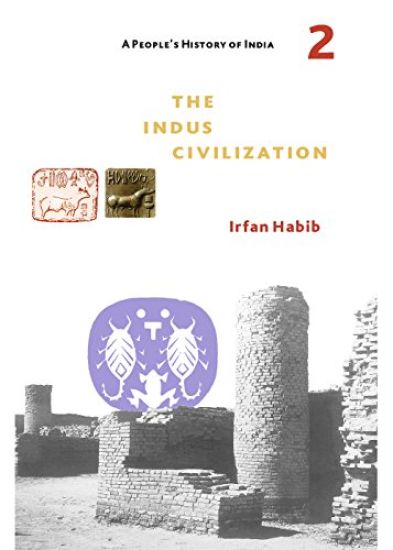
The Indus Civilization by Irfan Habib forms Volume 2 of the People's History of India series. It continues the story from the point reached in the preceding volume, Prehistory, and goes on to describe in depth the Indus Civilization. In addition, other contemporary and later cultures down to about 1500 BC are surveyed, and there is a discussion on how the major language families of India have emerged.

Mauryan India, as part of the People's History of India series, covers the period from about 350 bc to about 185 bc, thereby encompassing the invasion of Alexander (327-325 bc) and the history of the Mauryan Empire (c.324-185 bc). There is a detailed account of the inscriptions of Ashoka and their significance. A picture of the economy, society and culture of the time follows, constructed out of the varied sources available, epigraphic, textual and archaeological. An effort is made throughout to keep the reader abreast of recent discoveries, and to share with him the reasons for all conclusions and inferences. There are special notes on Mauryan chronology, the date of the Arthashastra, the science of epigraphy, and the dialects of Ashokan Prakrit. As many as fifteen excerpts from Indian and Greek sources, including ten full edicts of Ashoka, are provided. There are nine maps (five of them exceptionally detailed) and twenty illustrations (black-and-white). The volume is addressed to both the general reader and the student, and attempts to cover all topics that conventional textbooks include besides much other material that a 'people's history' needs to be concerned with, such as economic life, technology, social structure, gender relations, modes of exploitation, language, varied aspects of culture, etc. It is hoped that it will be considered a readable addition to what has so far been written on the Mauryan Empire.

Increasing interest has been shown in recent decades in matters relating to ecology, especially under the influence of the debate on climate change. The scope of ecology is, of course, much wider than that of climate alone, and involves in addition not only human relation with all species of animals and plants but also those conditions of human societies (material and intellectual) that influence our responses to the opportunities and challenges posed by nature. It is with this wider sense in mind that the history of ecology has been treated in this volume. Extensive extracts from sources have been provided; and there are special notes on ecology, climatology, zooarchaeology, natural history, and forestry.
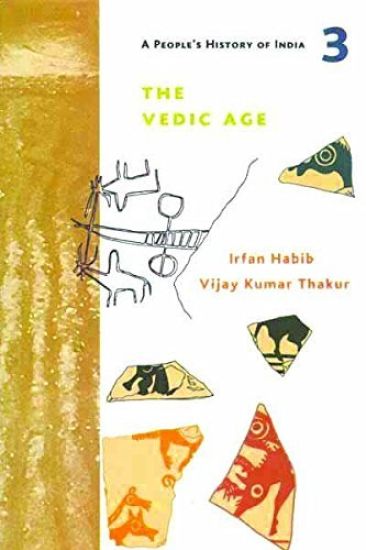
The Vedic Age completes the first set of three monographs in the People's History of India series. It deals with the period c. 1500 to c. 700 bc, during which it sets the Rigveda and the subsequent Vedic corpus. It explores aspects of geography, migrations, technology, economy, society, religion, and philosophy. It draws on these texts to reconstruct the life of the ordinary people, with special attention paid to class as well as gender. In a separate chapter, the major regional cultures as revealed by archaeological evidence are carefully described. Much space is devoted to the coming of iron, for the dawn of the Iron Age - though not the Iron Age itself - lay within the period this volume studies. There are special notes on historical geography, the caste system (whose beginnings lay in this period) and the question of epic archaeology. A special feature of this monograph is the inclusion of seven substantive extracts from different sources, which should give the reader a taste of what these texts are like.

The monograph surveys the developments within the Indian economy during the period of the high tide of colonial domination between the 1857 Rebellion and the First World War. Its various sub-chapters deal with population, gross product and prices; tribute, imperialism of Free Trade, and the construction of railways; peasant agriculture, plantations, commercialization of agriculture and its impact on rents, peasant incomes and agricultural wages; and rural de-industrialization, modern industries, tariff and exchange policies; banking and finance; and fiscal system, tax-burden and the rise of economic nationalism. There are extracts from contemporary comments and reports; technical notes on such matters as computing national income, counterfactual analysis, etc., and short bibliographies accompanying each of the five chapters.
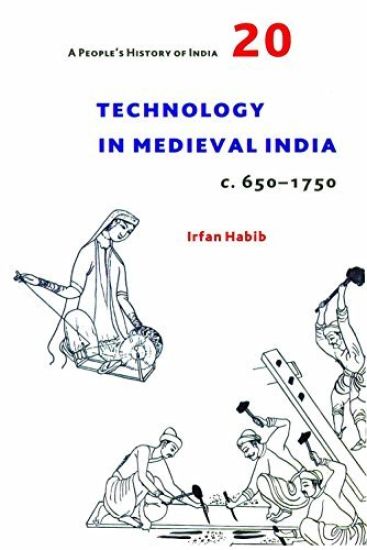
A People's History of India 20 – Technology in Medieval India, c. 650–1750
Irfan Habib
Tulika Book
2016
nidottu
This book covers the whole range of technology, from the tools and skills of ordinary men and women to the instruments of astronomers and the equipage and weaponry of war. Changes in technology are carefully traced and their consequences examined. Larger questions, such as those of constraints on technological development and the role of the social and economic environment, are also addressed. This volume, in line with the others of A People's History of India, gives several extracts from texts, containing significant information about specific aspects of pre-modern technology. There are special notes on technical terms, sources of the history of technology, the problem of invention versus diffusion, and the development of medieval technology outside India. It includes illustrations taken from medieval sculpture, painting and book-illustrations. The volume is addressed to the general reader as well as the student, who would like to read about something on which conventional textbooks have little to offer. A special effort is made to keep the style non-technical without loss of accuracy. It is hoped that the theme is sufficiently interesting not only for the historian but for any citizen wanting to know what common people, men and women, did with their hands and tools in earlier times.

A People's History of India 14 – Economy and Society of India during the Period of the Delhi Sultanate, c. 1200 to c. 1500
Irfan Habib
Tulika Book
2017
sidottu
Comprising No. 14 in the People's History of India series, published by Aligarh Historians Society in collaboration with Tulika Books, this volume is devoted to the economic and social history of India from the 13th to the 15th century. The book consists of three long chapters, divided into numerous sub-chapters. The first chapter describes the agrarian order during the main period of the Delhi Sultanate (1206-1398), and the second the urban economy and trading world of the same period. The third chapter deals with the fifteenth century, 1398-1526, a period of political divisions. While describing the economy and social structure in north India during the century, the chapter pays special attention to conditions in the Vijayanagara empire, which flourished during this period in south India. A special feature of the volume, as with others in the series, is the inclusion of long extracts from sources and technical and bibliographical notes appended to each chapter.
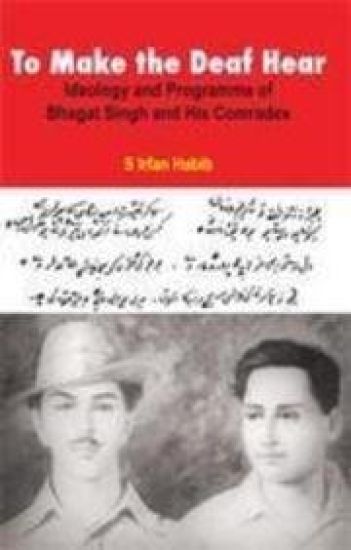
This is a path-breaking work on the political life and times of Bhagat Singh and his associates, and the organizations of which they were a part, the Hindustan Socialist Republican Association (HSRA) and the Naujawan Bharat Sabha. It highlights many hitherto neglected aspects of the evolution of Bhagat Singh as a national hero, including the definite shift towards socialism in his outlook. This is also among the best works on the revolutionary nationalists and their role in India's freedom movement. Documents and short writings crucial to understanding the essential core of their ideology and programme are included as appendices. This is that rare book of history that scholars and the general reader alike could enjoy and appreciate, and which no student of modern south Asian history can do without. Above all, it describes incredibly well those momentous decades of the 1920s and early 30s when the left-radical agenda came to occupy a huge space on the Subcontinent.


How do we define nationalism? Who is a good nationalist? Do you become anti-national if you criticize the government? These are questions that overwhelm most debates today, but these discussions are not new. And while the loudest voices would have us believe that Indian nationalism is (and has always been) a narrow, parochial, xenophobic one, our finest political leaders, thinkers, scientists and writers have been debating the concept since the early nineteenth century and come to a different conclusion. Nationalism as we understand it today first came into being more than a hundred years ago. Studied by historians, political scientists and sociologists for its role in world history, it remains one of the strongest driving forces in politics and also the most malleable one. A double-edged sword, it can be a binding force or a deeply divisive instrument used to cause strife around political, cultural, linguistic or, more importantly, religious identities. In this anthology, historian S. Irfan Habib traces the growth and development of nationalism in India from the late nineteenth century through its various stages: liberal, religion-centric, revolutionary, cosmopolitan, syncretic, eclectic, right liberal...The views of our most important thinkers and leaders-Mahatma Gandhi, Jawaharlal Nehru, C. Rajajgopalachari, Bhagat Singh, Bal Gangadhar Tilak, Sarojini Naidu, B. R. Ambedkar, Rabindranath Tagore, M. N. Roy, Maulana Azad, Jayaprakash Narayan and others-remind us what nationalism should mean and the kind of inclusive, free and humanistic nation that we should continue to build.
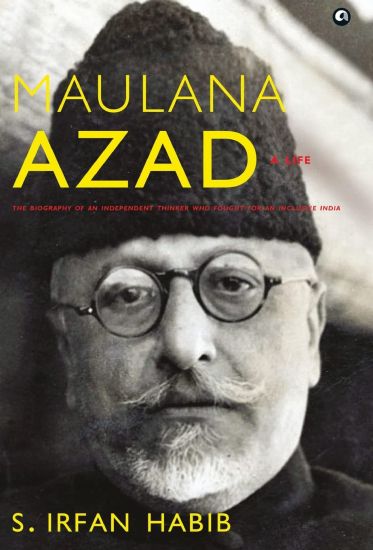
Maulana Abul Kalam Azad (1888-1958) was an Islamic scholar, freedom fighter, freethinker, journalist, and independent India's first education minister. Born into an orthodox family of famed Islamic scholars, Azad was deeply influenced by the pan-Islamic philosophies of Sir Syed Ahmad Khan and Jamaluddin Afghani. Azad had no formal education, but he was an autodidact who taught himself about culture, philosophy, languages, and literature. As a teenager, he successfully published several magazines and newspapers and went on to publish the immensely popular Urdu weekly Al-Hilal through which he tried to persuade Indian Muslims to shake off the shackles of British rule. He became inspired by Gandhi's non-violent civil disobedience movement and was extremely critical of the Muslim League's communal politics. He joined the Indian National Congress and was elected its youngest president. As president, Azad fought against the fissiparous politics of the Muslim League as well as the oppressive British regime. After Independence, he reinvigorated India's formal education system and laid the foundations for scientific and cultural learning in India. He pioneered free and compulsory elementary education and adult literacy programmes. In this in-depth biography of Azad, historian S. Irfan Habib takes the reader through some of the most decisive moments in Azad's life. In 'The Early Years', we learn of Azad's unusual upbringing, his illustrious family, upheavals in the Islamic world, and the initial inklings of Azad's freethinking outlook on life. 'Maulana Azad and Critical Thinking in Islam' examines the various schools of thought, ethical questions, and pan-Islamic debates that shaped Azad's religious attitudes and his approach to the idea of nationalism. 'Azad, Islam, and Nationalism' looks at Azad's political career and his unwavering belief in composite nationalism and staunch opposition to the Muslim League's sectarian politics. 'Ghubar-i-Khatir Beyond Faith and Politics' lays bare Azad's philosophical moorings and personal likes and dislikes through a collection of epistolary essays written during his imprisonment in the Ahmednagar Fort prison in the 1940s. And, finally, 'Building a New India' charts Azad's efforts to strengthen the country's weak education system through initiatives aimed at primary and adult education, his efforts towards the scientific and cultural advancement of the country, and his contribution to the arts and culture of a newly independent nation. Maulana Azad: A Life is the definitive biography of one of India's greatest thinkers and nation builders.
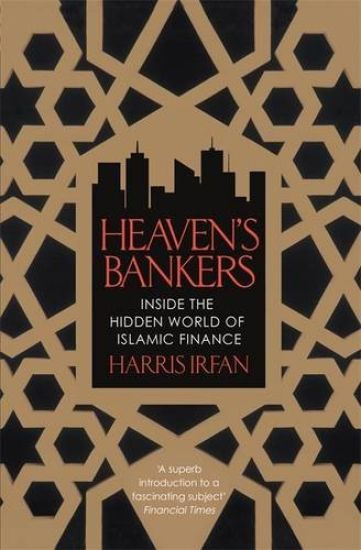
A journey inside the hidden world of Islamic finance, from one of the world's leading Islamic finance bankers.

Content Distribution Network's Technology (CDN)
Mustafa Khan; Muhammad Irfan Younas Mughal
LAP Lambert Academic Publishing
2010
pokkari