Kirjojen hintavertailu. Mukana 11 244 527 kirjaa ja 12 kauppaa.

Kirjahaku

Etsi kirjoja tekijän nimen, kirjan nimen tai ISBN:n perusteella.

1000 tulosta hakusanalla S. Tsai

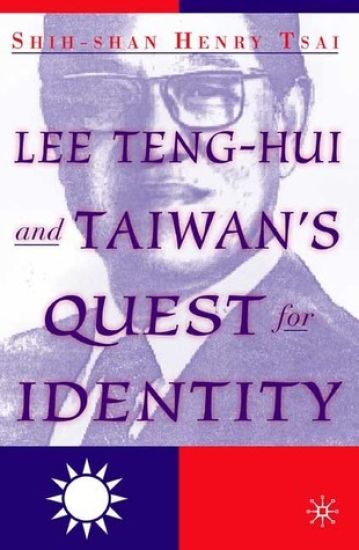
Lee Teng-hui and Taiwan's Quest for Identity
The book is an account of Taiwan's evolving national consciousness told through the biography of its former President Lee Teng-hui - the central figure in the island's political transformation over the past two decades. In describing the broader historical and social context of the various stages of Lee's life, the book also analyzes Taiwan's own evolution during the past century as a Japanese colony, a Leninist party-state dictatorship, and then an American-inspired fledgling democracy. The book explores such questions as: Is Lee Teng-hui an opportunistic recidivist who is interested only in his own self-preservation, or is he a hero who not only propelled Taiwan into a new era, but also constructed a new national identity for the islanders? Are the multi-ethnic islanders culturally 'Chinese' or are they 'Taiwanese'? Is Taiwan historically and politically part of 'China' or does it have its own history and identity, and deserves international recognition as an independent sovereign country?
America’s Forgotten Constitutions

America’s Forgotten Constitutions

Robert L. Tsai

Harvard University Press
2014
sidottu
The U.S. Constitution opens by proclaiming the sovereignty of all citizens: “We the People.” Robert Tsai’s gripping history of alternative constitutions invites readers into the circle of those who have rejected this ringing assertion—the defiant groups that refused to accept the Constitution’s definition of who “the people” are and how their authority should be exercised.America’s Forgotten Constitutions is the story of America as told by dissenters: squatters, Native Americans, abolitionists, socialists, internationalists, and racial nationalists. Beginning in the nineteenth century, Tsai chronicles eight episodes in which discontented citizens took the extraordinary step of drafting a new constitution. He examines the alternative Americas envisioned by John Brown (who dreamed of a republic purged of slavery), Robert Barnwell Rhett (the Confederate “father of secession”), and Etienne Cabet (a French socialist who founded a utopian society in Illinois). Other dreamers include the University of Chicago academics who created a world constitution for the nuclear age; the Republic of New Afrika, which demanded a separate country carved from the Deep South; and the contemporary Aryan movement, which plans to liberate America from multiculturalism and feminism.Countering those who treat constitutional law as a single tradition, Tsai argues that the ratification of the Constitution did not quell debate but kindled further conflicts over basic questions of power and community. He explains how the tradition mutated over time, inspiring generations and disrupting the best-laid plans for simplicity and order. Idealists on both the left and right will benefit from reading these cautionary tales.
The People's Race Inc.

The People's Race Inc.

Michael S.K.N. Tsai

University of Hawai'i Press
2016
nidottu
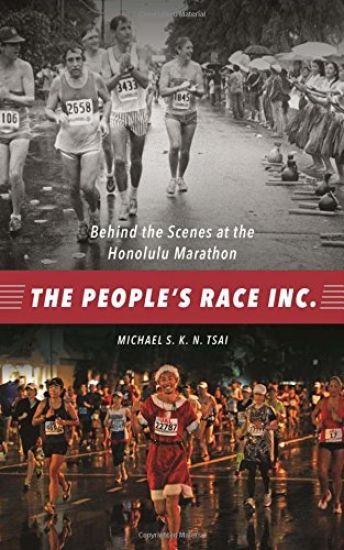
The Honolulu Marathon debuted in 1973 as the shared vision of a maverick cardiologist bent on proving the benefit of long-distance running for cardiac patients and an impetuous mayor eager to prove Honolulu the equal of the top cities in the county. Over a span of forty-plus years, the race has grown into one of the largest marathons in the world, a $100 million economic engine for its home state, and a launch pad for some of the most dominant long-distance runners in modern history. From its modest start as a community event for local amateurs, in 2012 the race boasted an estimated 31,000 participants—more than half from Japan—and the field was led by elite Kenyan, Ethiopian, and Russian professional runners; each hoping to earn a share of a $150,000 prize purse.The People’s Race Inc. captures the personalities, politics, and power plays behind the burgeoning growth of the Honolulu Marathon and provides a unique lens for understanding the complex history of the sport itself. Drawn from revealing interviews with those closest to the event, as well as exhaustive research, journalist Michael Tsai presents an insider’s account of how organizers forged lucrative partnerships with foreign investors, helped initiate the age of African dominance of themarathon, and weathered some of the most bizarre challenges imaginable. The book also exposes the ways in which the growth of the Honolulu Marathon mirrored the explosive, at times bewildering, development of post-statehood Hawai‘i.
Lee Teng-hui and Taiwan's Quest for Identity
Taiwan at the Birth of Lee Teng-hui The Japanese Education of a Taiwanese Economist Clenched in the Jaws of War and Massacre: Lee Teng-hui's Sorrowful Years, 1944-1947 The Making of a Scholar Lee Teng-hui's Conversion to Christianity and Kuomintang First Taste of Power Governor and Vice President, 1981-1987 The Presidency of Lee Teng-hui, 1988-1993 Leading Taiwan to Democratic Consolidation Epilogue
Demand the Impossible: One Lawyer's Pursuit of Equal Justice for All
Stephen Bright emerged on the scene as a cause lawyer in the early decades of mass incarceration, when inflammatory politics and harsh changes to criminal justice policy were crashing down on the most vulnerable members of society. He dedicated his career to unleashing social change by representing clients that society had long ago discarded, and advocated for all to receive a fair trial.In Demand the Impossible, Robert L. Tsai traces Bright's remarkable career to explore the legal ideas that were central to his relentless pursuit of equal justice. For nearly forty years, Bright led the Southern Center for Human Rights, a nonprofit that provided legal aid to incarcerated people and worked to improve conditions within the justice system. He argued four capital cases before the US Supreme Court--and won each one, despite facing an increasingly hostile bench. With each victory, he brought to light how the law itself had become corrupted by the country's thirst for severe punishment, exposing prosecutorial misconduct, continuing racial inequality, inadequate safeguards for people with intellectual disabilities, and the shameful quality of legal representation for the poor.Organized around these four major Supreme Court cases, each narrated in vivid and dramatic detail, Tsai's essential account explores the racism built into the criminal justice system and the incredible advancements one lawyer and his committed allies made for equal rights. An electrifying work of legal history, Demand the Impossible reveals how change can be won in even the most challenging times and how seemingly small victories can go on to have outsized effects.
It's Okay

It's Okay

Shiow-Miin Tsai

Reycraft Books
2020
sidottu
A little boy and his mother draw together, turning his mistakes into marvelous pictures. But what happens when his mother makes a mistake? What will that become?
Aila's Ingenious Idea

Aila's Ingenious Idea

Sydney Tsai

Hasmark Publishing
2023
pokkari
The school carnival is cancelled because there isn't enough money In Aila's Ingenious Idea, Aila and her friends learn about teamwork, money principles, and business skills in a resourceful plan to fundraise and save the carnival, despite a few roadblocks This inspirational story written by a high school student is about teamwork and perseverance that fosters a love of reading and financial literacy in young readers.
Taiwan in Japan's Empire-Building

Taiwan in Japan's Empire-Building

Hui-Yu Caroline Tsai

Routledge
2008
sidottu
This book explores the institutions through which Taiwan was governed under Japanese colonial rule, illuminating how the administration was engineered and how Taiwan was placed in Japan’s larger empire building. The author argues that rather than envisaging the ruling of the society and then going on to frame policies accordingly Japanese rule in Taiwan was more ad hoc: utilizing and integrating "native" social forces to ensure cooperation.Part I examines how the Japanese administration was shaped in the specific context of colonial Taiwan, focusing on the legal tradition, the civil service examination and the police system. Part II elaborates on the process of "colonial engineering," with special attention paid to "colonial governmentality", "social engineering" and colonial spatiality. In Part III Hui-yu Caroline Ts’ai provides a more in-depth analysis of wartime integration policies and the mobilization of labor before making an evaluation of Japan’s colonial legacy.Taiwan in Japan’s Empire-Building will appeal to researchers, scholars and students interested in Japanese Imperial History as well as those studying the history of Taiwan.
Taiwan in Japan's Empire-Building

Taiwan in Japan's Empire-Building

Hui-Yu Caroline Tsai

Routledge
2011
nidottu
This book explores the institutions through which Taiwan was governed under Japanese colonial rule, illuminating how the administration was engineered and how Taiwan was placed in Japan’s larger empire building. The author argues that rather than envisaging the ruling of the society and then going on to frame policies accordingly Japanese rule in Taiwan was more ad hoc: utilizing and integrating "native" social forces to ensure cooperation.Part I examines how the Japanese administration was shaped in the specific context of colonial Taiwan, focusing on the legal tradition, the civil service examination and the police system. Part II elaborates on the process of "colonial engineering," with special attention paid to "colonial governmentality", "social engineering" and colonial spatiality. In Part III Hui-yu Caroline Ts’ai provides a more in-depth analysis of wartime integration policies and the mobilization of labor before making an evaluation of Japan’s colonial legacy.Taiwan in Japan’s Empire-Building will appeal to researchers, scholars and students interested in Japanese Imperial History as well as those studying the history of Taiwan.
The Making of China’s Post Office

The Making of China’s Post Office

Weipin Tsai

HARVARD UNIVERSITY PRESS
2024
sidottu
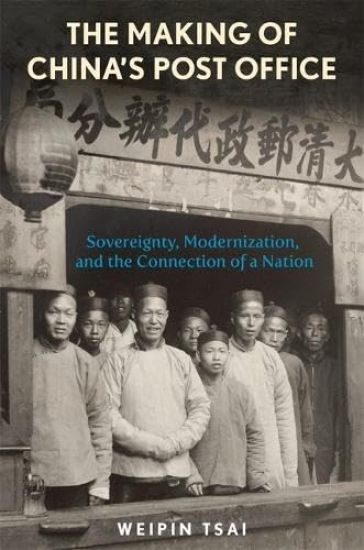
The Making of China’s Post Office traces the origins and early development of the country’s modern postal system. Sweeping in perspective, it goes beyond the bounds of institutional history to explore the political maneuverings, economic imperatives, and societal pressures both inhibiting and driving forward postal development. Although its prime mover was Robert Hart, Inspector General of the Chinese Maritime Customs Service, the wider cast of characters includes foreign and native staff, Qing officials, local administrations, commercial interests, and foreign governments.Drawing extensively on archival material from the Second Historical Archives of China in Nanjing, the Tianjin Municipal Archives, and the Archive of Queen’s University Belfast, Weipin Tsai contextualizes the making of the post office within the country’s long and contested path of modernization, bringing Chinese voices to the fore. Tsai illustrates the extent to which local agency shaped the design and development of the service as it expanded from experimental coastal operation into China’s interior and on to its border periphery, the first nationwide modernization project to directly impact people’s daily lives. Ultimately, the grand spatial reach of the Post Office carried significant symbolic meaning in relation to sovereignty for the Qing government and for later Republican administrations.
The New Real Estate Agent's Handbook

The New Real Estate Agent's Handbook

Nick Tsai

Success Publications Sar
2023
pokkari
Are you a new real estate agent looking to succeed in the industry? Look no further Our comprehensive guide covers everything you need to know to thrive in your first few years as a real estate agent. From mastering the mindsets of highly successful agents to creating a daily routine that sets you up for success, this book is packed with practical tips and strategies for building a successful career in real estate.In addition to covering the fundamentals of real estate, this book also includes expert advice on personal branding, business planning, marketing tools and apps, and much more. Plus, you'll find a range of tips and techniques for working with clients, including scripts for cold calling and handling objections, as well as strategies for winning listings, closing deals, and optimizing open houses.This book is your blueprint to success in real estate. In this book, you will discoverHow to Succeed as a New Real Estate Agent Within Your First Few YearsThe 6 Mindsets of Highly Successful Real Estate Agents8 Daily Routine and Schedule of a Successful Real Estate AgentPersonal Branding for Real Estate Agents - 5 Rules to Become the Top-Of-Mind of Your Ideal ClientsHow To Write a Real Estate Agent Business Plan In 10 Steps12 Best Real Estate Marketing Tools and Apps For RealtorsHow New Real Estate Agents Get Clients FastThe Best Real Estate Scripts that Get Appointments For Realtors6 Tips to WIN Every Real Estate Listing Presentation8 Most Effective Real Estate Farming Ideas and Strategies7 Tips on How to Optimize Your Next Open House to Maximize More Listings9 Real Estate Sales Techniques That Will Help You Close More Deals100+ Real Estate Social Media Post Ideas to Get More Leads8 Powerful Real Estate Lead Generation Ideas for New Agents and RealtorsThe Best Real Estate Closing Techniques for RealtorsBest Real Estate Negotiation Strategies for RealtorsHow to handle 12 typical seller & buyer objectionsReal Estate Cold Calling Techniques That Work (With Script)And much... moreDon't miss out on this essential resource for new real estate agents. Order your copy today and start building a successful career in real estate
Taking the Mystery Out of Medications in Autism/Asperger's Syndrome

Taking the Mystery Out of Medications in Autism/Asperger's Syndrome

Tsai Luke Y.; Mesibov Gary B.

Future Horizons Incorporated
2001
nidottu
Although medication should always be a last resort, many people on the autism spectrum claim that medication has improved their lives significantly. But how can a parent decide which meds to choose or which to stay away from? Written by a doctor and father to a child with autism, this book provides the answers that parents and non-medical professionals need. Dr. Luke Tsai explains what medication therapy is, and gives you the knowledge to make informed choices. Learn what different medications do in the body, their side effects, and how to properly assess the results. There is an extremely helpful appendix that provides sample medical forms, diagnostic tools, and a detailed glossary that you will refer to time and time again.
Women, Let's Rise

Women, Let's Rise

Lori Armitage; Annyse Balkwill; Steph Clark; Violette de Ayala; Pamela D'Ippolito; Jessica Khouri; Krysta Lee; Julia Lefaivre; Sally Lovelock; Elizabeth Meekes; Janet Miller; Annie Ngu; Lisa Pinnock; Michaella Putman (Petrik); Shell Richardson; Lola T. Small; Theresa Toscano; Lisa J.L. Tsai; Christina Whitley; Sarah Yeung; Natalie Zombeck

Golden Brick Road Publishing House
2021
pokkari
Women of all generations from all corners of the world have the power to affect positive change with those around us by sharing our best authentic selves. This moving collection of personal journeys, insights, and wisdom encourages women to use their natural talents of self-reflection, connection, and collaboration to influence and inspire. Working towards a world where women are fully valued for their energy and contribution, Women Let's Rise aims to ignite the fire within every woman to power up, step out, and empower the world with her presence.
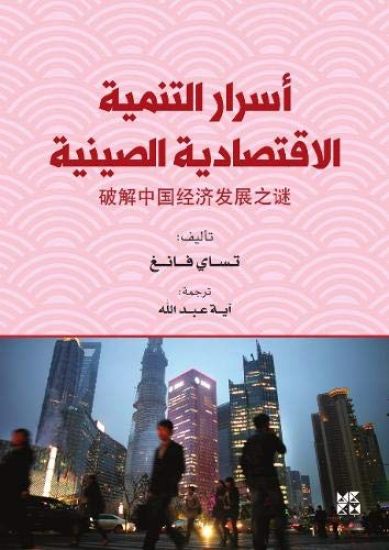
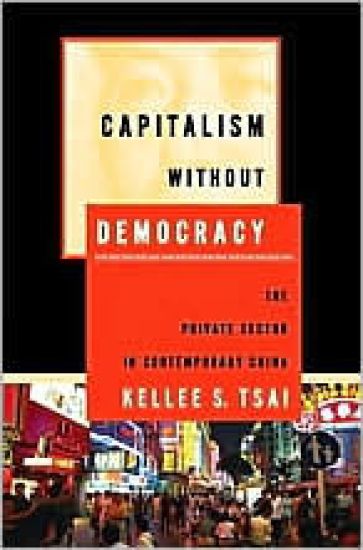
Capitalism Without Democracy

Capitalism Without Democracy

Kellee S. Tsai

Cornell University Press
2007
sidottu
Over the past three decades, China has undergone a historic transformation. Once illegal, its private business sector now comprises 30 million businesses employing more than 200 million people and accounting for half of China's Gross Domestic Product. Yet despite the optimistic predictions of political observers and global business leaders, the triumph of capitalism has not led to substantial democratic reforms. In Capitalism without Democracy, Kellee S. Tsai focuses on the activities and aspirations of the private entrepreneurs who are driving China's economic growth. The famous images from 1989 of China's new capitalists supporting the students in Tiananmen Square are, Tsai finds, outdated and misleading. Chinese entrepreneurs are not agitating for democracy. Most are working eighteen-hour days to stay in business, while others are saving for their one child's education or planning to leave the country. Many are Communist Party members. "Remarkably," Tsai writes, "most entrepreneurs feel that the system generally works for them." Tsai regards the quotidian activities of Chinese entrepreneurs as subtler and possibly more effective than voting, lobbying, and protesting in the streets. Indeed, major reforms in China's formal institutions have enhanced the private sector's legitimacy and security in the absence of mobilization by business owners. In discreet collaboration with local officials, entrepreneurs have created a range of adaptive informal institutions, which in turn, have fundamentally altered China's political and regulatory landscape. Based on years of research, hundreds of field interviews, and a sweeping nationwide survey of private entrepreneurs funded by the National Science Foundation, Capitalism without Democracy explodes the conventional wisdom about the relationship between economic liberalism and political freedom.
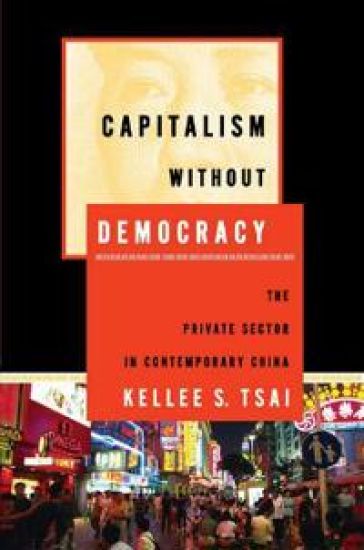
Capitalism Without Democracy

Capitalism Without Democracy

Kellee S. Tsai

Cornell University Press
2007
pokkari
Over the past three decades, China has undergone a historic transformation. Once illegal, its private business sector now comprises 30 million businesses employing more than 200 million people and accounting for half of China's Gross Domestic Product. Yet despite the optimistic predictions of political observers and global business leaders, the triumph of capitalism has not led to substantial democratic reforms. In Capitalism without Democracy, Kellee S. Tsai focuses on the activities and aspirations of the private entrepreneurs who are driving China's economic growth. The famous images from 1989 of China's new capitalists supporting the students in Tiananmen Square are, Tsai finds, outdated and misleading. Chinese entrepreneurs are not agitating for democracy. Most are working eighteen-hour days to stay in business, while others are saving for their one child's education or planning to leave the country. Many are Communist Party members. "Remarkably," Tsai writes, "most entrepreneurs feel that the system generally works for them." Tsai regards the quotidian activities of Chinese entrepreneurs as subtler and possibly more effective than voting, lobbying, and protesting in the streets. Indeed, major reforms in China's formal institutions have enhanced the private sector's legitimacy and security in the absence of mobilization by business owners. In discreet collaboration with local officials, entrepreneurs have created a range of adaptive informal institutions, which in turn, have fundamentally altered China's political and regulatory landscape. Based on years of research, hundreds of field interviews, and a sweeping nationwide survey of private entrepreneurs funded by the National Science Foundation, Capitalism without Democracy explodes the conventional wisdom about the relationship between economic liberalism and political freedom.
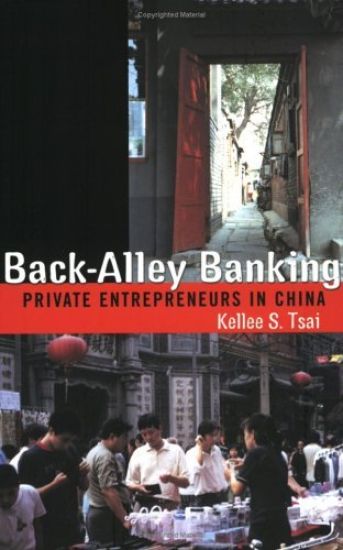
Back-Alley Banking

Back-Alley Banking

Kellee S. Tsai

Cornell University Press
2004
pokkari
Chinese entrepreneurs have founded more than thirty million private businesses since Beijing instituted economic reforms in the late 1970s. Most of these private ventures, however, have been denied access to official sources of credit. State banks continue to serve state-owned enterprises, yet most private financing remains illegal. How have Chinese entrepreneurs managed to fund their operations? In defiance of the national banking laws, small business owners have created a dizzying variety of informal financing mechanisms, including rotating credit associations and private banks disguised as other types of organizations. Back-Alley Banking includes lively biographical sketches of individual entrepreneurs; telling quotations from official documents, policy statements, and newspaper accounts; and interviews with a wide variety of women and men who give vivid narratives of their daily struggles, accomplishments, and hopes for future prosperity. Kellee S. Tsai's book draws upon her unparalleled fieldwork in China's world of shadow finance to challenge conventional ideas about the political economy of development. Business owners in China, she shows, have mobilized local social and political resources in innovative ways despite the absence of state-directed credit or a well-defined system of private property rights. Entrepreneurs and local officials have been able to draw on the uncertainty of formal political and economic institutions to enhance local prosperity.