Kirjojen hintavertailu. Mukana 11 342 296 kirjaa ja 12 kauppaa.

Kirjahaku

Etsi kirjoja tekijän nimen, kirjan nimen tai ISBN:n perusteella.

1000 tulosta hakusanalla Sabina Saturn

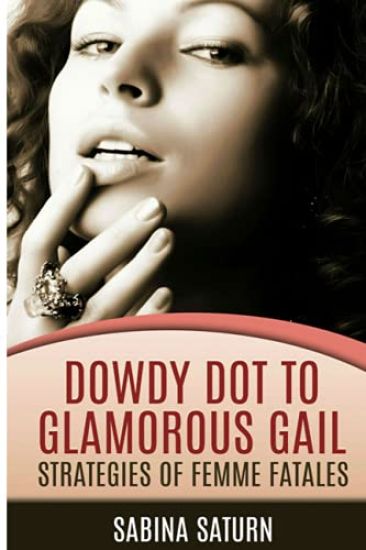
Dowdy Dot to Glamorous Gail

Dowdy Dot to Glamorous Gail

Sabina Saturn

Createspace Independent Publishing Platform
2015
pokkari
A book on how to acquire glamour, learn seduction. How did famous beautiful women, "divas" or femme fatales accomplish this? Includes quotes and thought of the famous and style and fashion. How fashion can express your beauty. Features Princess Diana, Princess Grace, Wallis Simpson how they evolved into stunning women. Anyone can look plain or glamorous. It's a choice. Many famous beauties have been "plain Janes". Even Princess Grace, Princess Diana could look frumpy. This book explores how they evolved into beauties with style and how you can too. What is Seduction? What is Style? Charisma? How do we lose weight and get fit? How to transform into your best you. A fun book. 60 pages.
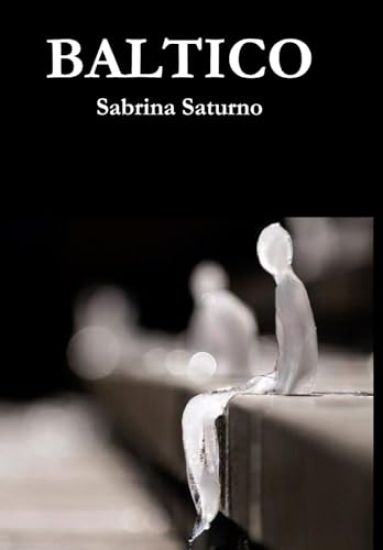
Baltico

Baltico

Sabrina Saturno

Lulu.com
2013
sidottu
"Baltico" raccolta di poesie di Sabrina Saturno. Il nome "Baltico" si riferisce al freddo Mar Baltico. Baltico deriva dalla radice di una lingua proto indo-europea balt-, che significa "bianco", per cui Mar Baltico significa "mare bianco". Il bianco il colore della purezza, della verit , indica la luce del giorno, la salvezza dell'eroe, il colore delle creature speciali che attraversano il confine tra il reale e l'immaginario, dei sentimenti nobili e del desiderio di cambiamento.
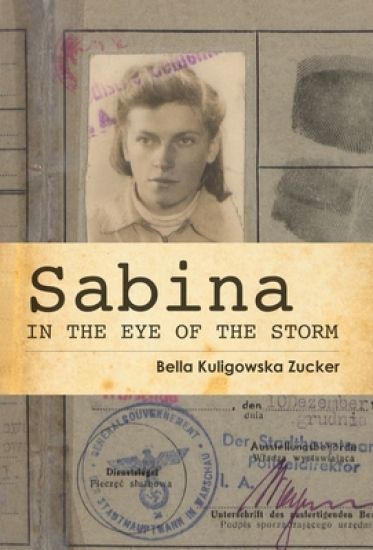
Sabina

Sabina

Bella Kuligowska Zucker

Grace Rapkin Associates LLC
2020
sidottu
This is the memoir written by Bella Kuligowska Zucker, the only person in her family to survive the Holocaust. In September 1939, Bella was a carefree teenager living in Poland when the German army struck. She was rounded up with her friends and family and sent to a series of grim Jewish ghettos. After loved ones were separated and lost through the war years, Bella survived by changing her identity. Narrowly escaping death each time, she moved from place to place, odd job to odd job, new name to new name. After finding the birth certificate of a Catholic girl five years her senior, she became Sabina Mazurek. Then she went into the eye of the storm, Germany, where she believed she might be safest. Sabina is her story. As in Diary of a Young Girl by Anne Frank and Night by Elie Wiesel, Bella Kuligowska marshaled unexpected resources to manage as a teen during the horrors of World War II. Sabina offers a different perspective on how many Jews survived outside of the concentration camps, in more familiar yet infinitely hostile settings, with the help of others along the way.
Sabina

Sabina

Vibeke Olsson

Albert Bonniers Förlag
2012
nidottu
Fastän slavbarn och född utan högerhand undgick Sabina att nyfödd kastas ut i kloaken. Istället köptes hon till Plinius förnäma hus, där hon nu lär de andra slavarnas barn att läsa. Men olyckan kommer till patricierhuset, och Sabina måste säljas till en officersfamilj i det fjärran, barbariska Germanien. Hennes liv förändras brutalt, och först nu drabbar henne kriget men också kärleken…SABINA (1985) är den tredje delen i en svit om fyra romaner: Hedningarnas förgård, Kvarnen och korset, Sabina och Sabina och Alexander.Det här är en print-on-demand-utgåva. Läs mer på www.albertbonniersforlag.se/pod
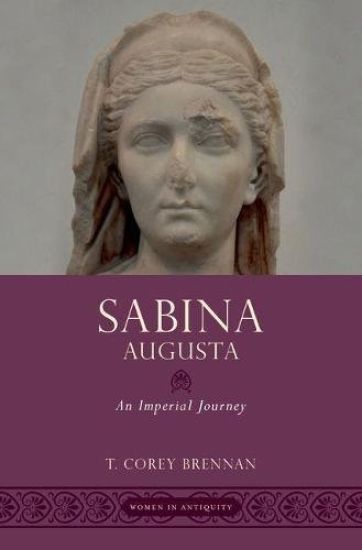
Sabina Augusta

Sabina Augusta

T. Corey Brennan

Oxford University Press Inc
2018
sidottu
Sabina Augusta (ca. 85-ca. 137), wife of the emperor Hadrian (reigned 117-38), accumulated more public honors in Rome and the provinces than any imperial woman had enjoyed since the first empress, Augustus' wife Livia. Indeed, Sabina is the first woman whose image features on a regular and continuous series of coins minted at Rome. She was the most travelled and visible empress to date. Hadrian also deified his wife upon her death. In synthesizing the textual and massive material evidence for the empress, T. Corey Brennan traces the development of Sabina's partnership with her husband and shows the vital importance of the empress for Hadrian's own aspirations. Furthermore, the book argues that Hadrian meant for Sabina to play a key role in promoting the public character of his rule, and details how the emperor's exaltation of his wife served to enhance his own claims to divinity. Yet the sparse literary sources on Sabina instead put the worst light on the dynamics of her marriage. Brennan fully explores the various, and overwhelmingly negative, notions this empress stirred up in historiography, from antiquity through the modern era; and against the material record proposes a new and nuanced understanding of her formal role. This biographical study sheds new light not just on its subject but also more widely on Hadrian-including the vexed question of that emperor's relationship with his apparent lover Antinoös-and indeed Rome's imperial women as a group.
Sabina Augusta

Sabina Augusta

T. Corey Brennan

Oxford University Press Inc
2020
nidottu
Sabina Augusta (ca. 85-ca. 137), wife of the emperor Hadrian (reigned 117-38), accumulated more public honors in Rome and the provinces than any imperial woman had enjoyed since the first empress, Augustus' wife Livia. Indeed, Sabina is the first woman whose image features on a regular and continuous series of coins minted at Rome. She was the most travelled and visible empress to date. Hadrian also deified his wife upon her death. In synthesizing the textual and massive material evidence for the empress, T. Corey Brennan traces the development of Sabina's partnership with her husband and shows the vital importance of the empress for Hadrian's own aspirations. Furthermore, the book argues that Hadrian meant for Sabina to play a key role in promoting the public character of his rule, and details how the emperor's exaltation of his wife served to enhance his own claims to divinity. Yet the sparse literary sources on Sabina instead put the worst light on the dynamics of her marriage. Brennan fully explores the various, and overwhelmingly negative, notions this empress stirred up in historiography, from antiquity through the modern era; and against the material record proposes a new and nuanced understanding of her formal role. This biographical study sheds new light not just on its subject but also more widely on Hadrian-including the vexed question of that emperor's relationship with his apparent lover Antinoös-and indeed Rome's imperial women as a group.
Sabina Spielrein and the Poetry of Psychoanalysis
Sabina Spielrein, who has been mostly known for her relation with her analyst Carl Jung, came to the attention of the wider public following the discovery and publication of some of her diaries and personal letters some 40 years ago. The focus on her relationship with Jung and her personal story have consequently led to a neglect of her writings, with many of her crucial texts even remaining untranslated into English. Sabina Spielrein and the Poetry of Psychoanalysis seeks to re-address this distortion of her legacy by examining her original contribution to the field, such as her early analytical work with children.Spielrein referred to moments of intimacy between herself and Jung as "poetry". Indeed, as a response to what can be considered the inevitable failure in her relationship to Jung, Spielrein wrote poetry and songs, notes, and theoretical papers. These writings are examined here as her means of finishing her own analysis. She was the first person to become an psychoanalyst through her own psychoanalysis, a path that would later be recognised as a necessary part of the training for any analyst.The book traces the poetry of Sabina Spielrein’s writing through both its content and style, examining the effect of these writings upon psychoanalysis and inserting them into a lineage of what Lacan would later call the passe: a device that is open for the analysand to finish his or her analysis and accede to the place of psychoanalyst. This book will be of interest to scholars and practitioners of psychoanalysis and other clinicians, including those who work with children, those interested in the early history of psychoanalysis, and those concerned with women’s writing more generally.
Sabina Spielrein and the Poetry of Psychoanalysis
Sabina Spielrein, who has been mostly known for her relation with her analyst Carl Jung, came to the attention of the wider public following the discovery and publication of some of her diaries and personal letters some 40 years ago. The focus on her relationship with Jung and her personal story have consequently led to a neglect of her writings, with many of her crucial texts even remaining untranslated into English. Sabina Spielrein and the Poetry of Psychoanalysis seeks to re-address this distortion of her legacy by examining her original contribution to the field, such as her early analytical work with children.Spielrein referred to moments of intimacy between herself and Jung as "poetry". Indeed, as a response to what can be considered the inevitable failure in her relationship to Jung, Spielrein wrote poetry and songs, notes, and theoretical papers. These writings are examined here as her means of finishing her own analysis. She was the first person to become an psychoanalyst through her own psychoanalysis, a path that would later be recognised as a necessary part of the training for any analyst.The book traces the poetry of Sabina Spielrein’s writing through both its content and style, examining the effect of these writings upon psychoanalysis and inserting them into a lineage of what Lacan would later call the passe: a device that is open for the analysand to finish his or her analysis and accede to the place of psychoanalyst. This book will be of interest to scholars and practitioners of psychoanalysis and other clinicians, including those who work with children, those interested in the early history of psychoanalysis, and those concerned with women’s writing more generally.
Sabina Spielrein:
Sabina Spielrein is perhaps best known for her love affair with her doctor, Carl Gustav Jung. Their intense therapeutic relationship led to a mutual fascination that lasted, for Spielrein, for the rest of her life. It is debatable whether Spielrein and Jung’s relationship was consummated, but it did give birth to some of the most important ideas within psychoanalysis and analytical psychology today, the most notable being that of the death instinct. But what happened to Spielrein and why have her story and work remained in the dark for so many years?This second edition of Sabina Spielrein: Forgotten Pioneer of Psychoanalysis complements the first edition by retaining many of the most important documents about her life and work. Included in this edition are Jung’s hospital records of his treatment of Spielrein, Jung’s letters to Spielrein following her discharge in 1905, extracts from her personal diary, and her ground breaking paper on the development of language, "The origin of the child’s words Papa and Mama." New material includes Spielrein’s famous paper, "Destruction as a cause of coming into being", in which she formulates her theory of the death drive, a paper describing her place and contribution within Freud’s Vienna Circle, commentaries on the mutual erotic transference between Spielrein and Jung, and a theoretical discussion of her seminal ideas on aggression. This new edition compiles the essential writings of Spielrein along with commentaries by prominent psychoanalytic and Jungian scholars. It is the definitive source book on Spielrein for clinicians, scholars and historians of psychoanalysis.Coline Covington, Ph.D. is a training analyst of the Society of Analytical Psychology and the British Psychotherapy Foundation. She is former editor of the Journal of Analytical Psychology and former chair of the British Psychoanalytic Council. She is in private practice in London.