

Kirjahaku
Etsi kirjoja tekijän nimen, kirjan nimen tai ISBN:n perusteella.
1000 tulosta hakusanalla Sabra Breann Davis
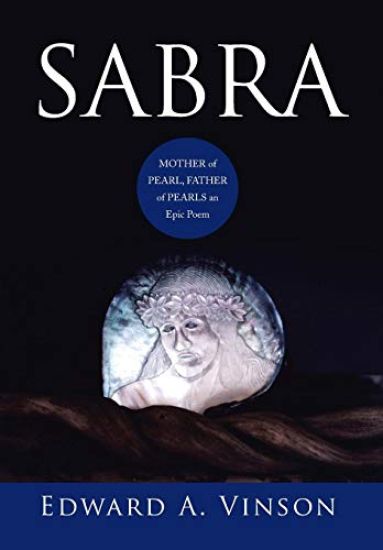

A poetry collection of love, loss and redemption.
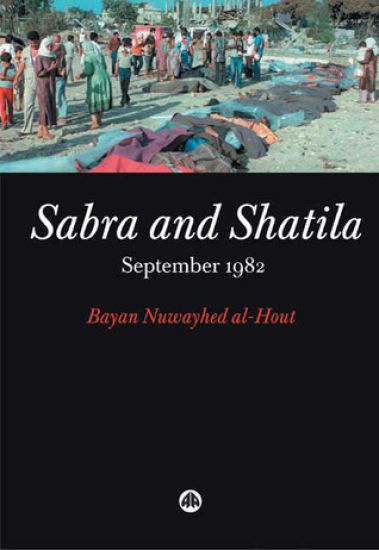
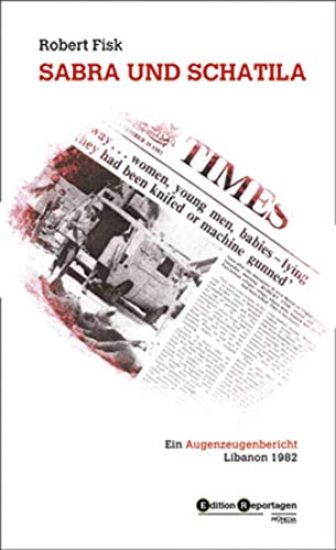
Now available for the first time in English, this classic book is the most comprehensive, authoritative account of the Sabra and Shatila massacre and what happened and who was responsible. Taking place over three bloody days in the Lebanese capital Beirut, the Sabra and Shatila massacre was committed against Palestinian refugees by Lebanese militias, aided and supervised by the Israeli Army, which had encircled the district. Driven by the horror of what occurred, author Bayan Nuwayhed al-Hout, interviewed survivors and set up an oral history project immediately after the massacre to preserve testimonies. Containing interviews with the victims families, in addition to statistical data and attempts to determine the number of victims, this book is a courageous attempt to make sense of what happened and an important political document in its own right.

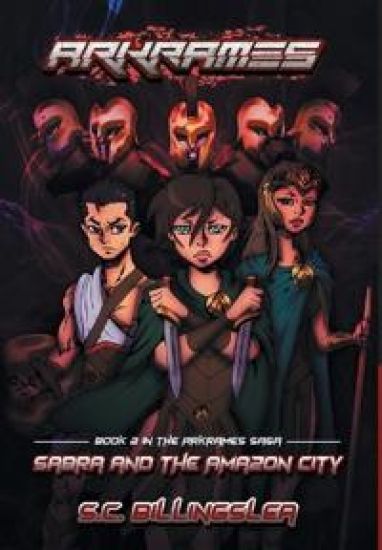
A Different Path...Having returned from her adventure with Arkrames, Sabra has chosen to accept the offer made to her by the Amazons. However, once she joins them, she learns that they are on the brink of war with their nemeses, the Gargareans - an all-male society with whom they share a tenuous peace. But Sabra soon discovers that her new life with the Amazons and the facts surrounding the hostility between them and the Gargareans are not quite what they had first appeared to be.When Arkrames arrives on the island in search of Sabra, he finds himself in the middle of the animosity between the two kingdoms and seeks refuge with the Gargareans.While Sabra is trying to find her place among the Amazons, she is forced to face some difficult decisions about her loyalties to Arkrames, the Amazons, and the relationships that have formed since she joined the sisterhood. Only she can decide what path the future will take her down....
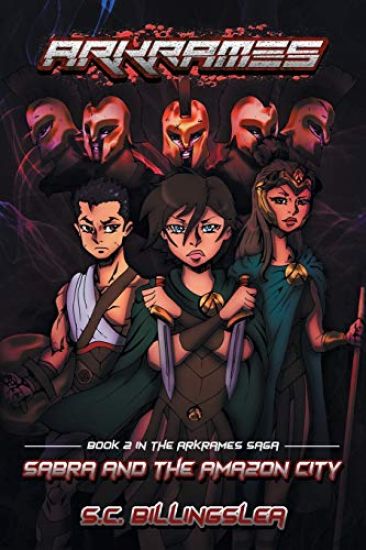
A Different Path...Having returned from her adventure with Arkrames, Sabra has chosen to accept the offer made to her by the Amazons. However, once she joins them, she learns that they are on the brink of war with their nemeses, the Gargareans - an all-male society with whom they share a tenuous peace. But Sabra soon discovers that her new life with the Amazons and the facts surrounding the hostility between them and the Gargareans are not quite what they had first appeared to be.When Arkrames arrives on the island in search of Sabra, he finds himself in the middle of the animosity between the two kingdoms and seeks refuge with the Gargareans.While Sabra is trying to find her place among the Amazons, she is forced to face some difficult decisions about her loyalties to Arkrames, the Amazons, and the relationships that have formed since she joined the sisterhood. Only she can decide what path the future will take her down....
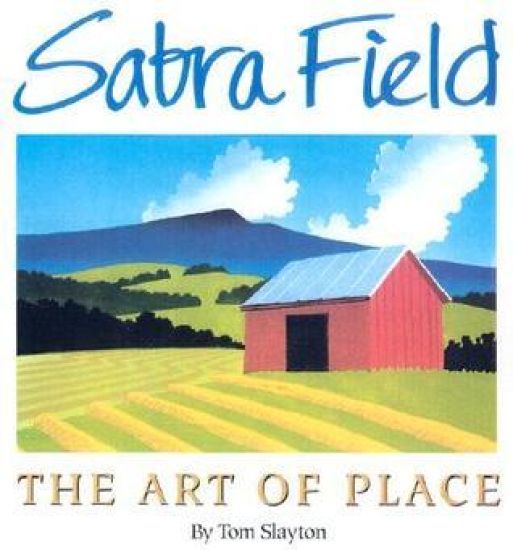
Her prints hang in the boardrooms of some of North America's biggest corporations-and in the cabins of some of New England's most rustic fishing camps. Among the few contemporary artists whose work has found an enthusiastic following well outside the traditional world of collectors and fine-art experts, Sabra Field has attracted a diverse and growing national audience. Her 1987 Vermont Bicentennial commemorative stamp, for example, depicting yellow farm fields, a red barn, and blue mountains, quickly became one of the U.S. Postal Service's best-selling issues, with more than 60 million copies purchased. Author Tom Slayton says that Field, who lives deep in the Vermont countryside, brilliantly expresses"a rural zeigeist in her wood-block prints that is in the age-old traditional of pastoralism . . . which belies the underlying complexity of her work." But while Field's work falls solidly within the pastoral tradition, it also significantly updates it, striking a chord with activist environmentalists and policymakers and inspiring action not normally associated with the traditions of pastoral art. One of North America's most accomplished contemporary printmakers, Sabra Field produces works of great beauty and boldness-with the power to command attention and appreciation at first glance and to endure the test of time in the eyes of their beholders. She is also coauthor of Before Life Hurries On.

It is the summer of 1982 and Beirut is under siege. Eighteen-year-old Ivan's parents have just been evacuated from the city with other members of the Palestine Liberation Organisation. Ivan stays on, interpreting for international medical volunteers in Sabra refugee camp by day, getting stoned with them by night, and working undercover for the PLO. Hoping to get closer to Eli, a Norwegian physiotherapist, he helps her treat Youssef, a camp orphan disabled by a cluster bomb. An unexpected friendship develops between the three and things begin to look up - But events take a nasty turn when the president-elect is assassinated. The Israeli army enters Beirut and surrounds the camp, with Eli and Youssef trapped inside. What happens next makes international headlines and leaves Ivan scrabbling to salvage something from the chaos.
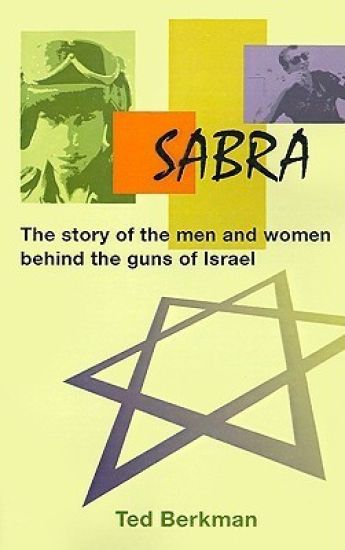
Sabra: The Story of the Men and Women Behind the Guns of Israel
Ted Berkman
Manifest Publications
1969
nidottu
They Fought For Their Lives - And For A New Jewish Future Critical comment: Explains the dream, the drive and the reality which brought a small nation through perilous times. A fine book and a delight to read. Cleveland Press Permits the reader the privilege, the sometimes painful privilege, of looking directly into the soul of the ordinary Israeli. With keen insight, restraint, power and passionate commitment, Ted Berkman has dug into the heart of Israel's Six Day War. As objectively written as it is possible to write, well worth reading and owning. Pittsburgh Jewish Chronicle Brings us not only personal witness (of the war) but an introduction to the men and women of this new country . . . a people who will not see the repetition of violence and persecution against itself. Los Angeles Times Fascinating; a marvelous book for young people, and refreshing for adults as well. (Norfolk) Virginian Pilot Grips the reader's attention like a first-rate suspense novel. Wichita Falls (Tex.) Times Vivid, graphic; swift magnetic style that is eminently readable. Rabbi Louis Newman Sabra is not only the most vivid book on the Six-Day War . . . but a most vivid portrait of all Israel. Ted Berkman makes understandable a complex society, ultra-orthodox to atheistic, communal to capitalist, primitive to sophisticated, fused into unity. Not of least importance is the sense of abhorrence of war that is purveyed in all these warriors. Meyer Levin A clear, complete and gripping account of a brief but complex war. The reader is sitting in an Israeli pilot seat as the Egyptian air force gets smashed on the ground; riding a spearhead tank through the smoking Mitla Pass; storming Jordanian trenches and breaching Jerusalem's walls. New York Times, Sunday Book Section Deeply moving, magnificent, Detroit Jewish News An affecting, sometimes too painful look at a people whom love of country has made larger than life. Berkman has a flair for the fast, vivid vignette. Publisher's Weekly Straightforward, clearly and pointedly written, the book is, like the native-born Israeli sabra, unsentimental. Providence (Rhode Island) Journal Easily the best story in a long time. Fast moving action, vivid word pictures, reading one cannot lay down till the end. A significant book, to be read twice and shared with others. New England Farmer

Sabra's Decision: The Sword And A Rose
Mary J. Greene
Createspace Independent Publishing Platform
2017
nidottu
The novel is set in the fictional region of Wessex in rural south west England. It deals in themes of love, honour and betrayal, against a backdrop of the seemingly idyllic, but often harsh, realities of a farming community in Victorian England. It describes the farmer Sabra Everdene, her life and relationships-especially with her lonely neighbour William Boldwood, the faithful shepherd Gabriel Oak, and the thriftless soldier Sergeant Troy.
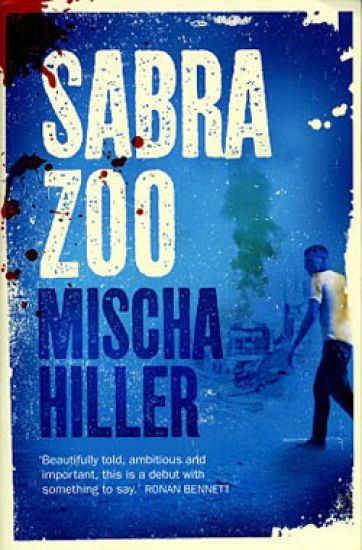
It is the summer of 1982 and Beirut is under siege. Eighteen-year-old Ivan's parents have just been evacuated from the city with other cadres of the Palestine Liberation Organisation. Ivan stays on, interpreting for international medical volunteers in Sabra refugee camp by day, getting stoned with them at night, and working undercover for the PLO. Hoping to get closer to Eli, a Norwegian physiotherapist, he helps her treat the belligerent Youssef, a camp orphan disabled by a cluster bomb. But events take a nasty turn when the president-elect is assassinated. The Israeli army enters Beirut and surrounds the camp, with Eli and Youssef trapped inside. Can Ivan, unable to enter the camp, salvage anything from the chaos?
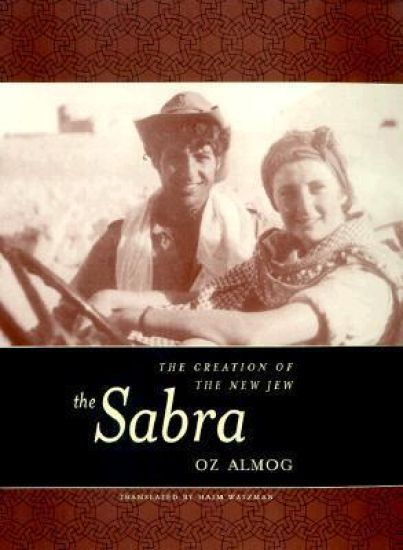
The Sabras were the first Israelis - the first generation, born in the 1930s and 1940s, to grow up in the Zionist settlement in Palestine. Socialized and educated in the ethos of the Zionist labor movement and the communal ideals of the kibbutz and moshav, they turned the dream of their pioneer forebears into the reality of the new State of Israel. While the Sabras made up a small minority of the new society's population, their cultural influence was enormous. Their ideals, their love of the land, their recreational culture of bonfires and singalongs, their adoption of Arab accessories, their slang and gruff, straightforward manner, together with a reserved, almost puritanical attitude toward individual relationships, came to signify the cultural fulfillment of the utopian ideal of a new Jew. Oz Almog's lively, methodical, and convincing portrayal of the Sabras addresses their lives, thought, and role in Jewish history. The most comprehensive study of this exceptional generation to date, "The Sabra" provides a complex and unflinching analysis of accepted norms and an impressive appraisal of the Sabra, one that any examination of new Israeli reality must take into consideration. The Sabras became Palmach commanders, soldiers in the British Brigade, and, later, officers in the Israel Defense Forces. They served as a source of inspiration and an object of emulation for an entire society. Almog's source material is rich and varied: he uses poems, letters, youth movement and army newsletters, and much more to portray the Sabras' attitudes toward the Arabs, war, nature, work, agriculture, cooperation, and education. In any event, the Sabra remained central to the founding myth of the nation, the real Israeli, against whom later generations will be judged. Almog's pioneering book juxtaposes the myths against the realities and, in the process, limns a collective profile that brilliantly encompasses the complex forces that shaped this remarkable generation.
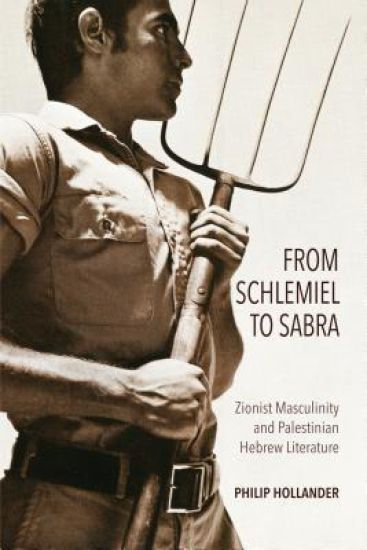
In From Schlemiel to Sabra Philip Hollander examines how masculine ideals and images of the New Hebrew man shaped the Israeli state. In this innovative book, Hollander uncovers the complex relationship that Jews had with masculinity, interrogating narratives depicting masculinity in the new state as a transition from weak, feminized schlemiels to robust, muscular, and rugged Israelis. Turning to key literary texts by S. Y. Agnon, Y. H. Brenner, L. A. Arieli, and Aharon Reuveni, Hollander reveals how gender and sexuality were intertwined to promote a specific Zionist political agenda. A Zionist masculinity grounded in military prowess could not only protect the new state but also ensure its procreative needs and future. Self-awareness, physical power, fierce loyalty to the state and devotion to the land, humility, and nurture of the young were essential qualities that needed to be cultivated in migrants to the state. By turning to the early literature of Zionist Palestine, Hollander shows how Jews strove to construct a better Jewish future.
In From Schlemiel to Sabra Philip Hollander examines how masculine ideals and images of the New Hebrew man shaped the Israeli state. In this innovative book, Hollander uncovers the complex relationship that Jews had with masculinity, interrogating narratives depicting masculinity in the new state as a transition from weak, feminized schlemiels to robust, muscular, and rugged Israelis. Turning to key literary texts by S. Y. Agnon, Y. H. Brenner, L. A. Arieli, and Aharon Reuveni, Hollander reveals how gender and sexuality were intertwined to promote a specific Zionist political agenda. A Zionist masculinity grounded in military prowess could not only protect the new state but also ensure its procreative needs and future. Self-awareness, physical power, fierce loyalty to the state and devotion to the land, humility, and nurture of the young were essential qualities that needed to be cultivated in migrants to the state. By turning to the early literature of Zionist Palestine, Hollander shows how Jews strove to construct a better Jewish future.