Kirjahaku
Etsi kirjoja tekijän nimen, kirjan nimen tai ISBN:n perusteella.
1000 tulosta hakusanalla Sabrina P Evans
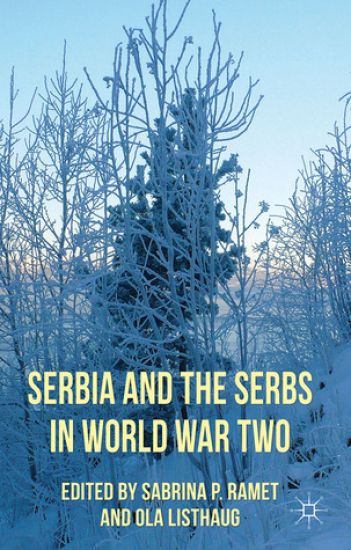
A valuable and objective reassessment of the role of Serbia and Serbs in WWII. Today, Serbian textbooks praise the Chetniks of Draža MIhailovi? and make excuses for the collaboration of Milan Nedi?'s regime with the Axis. However, this new evaluation shows the more complex and controversial nature of the political alliances during the period.
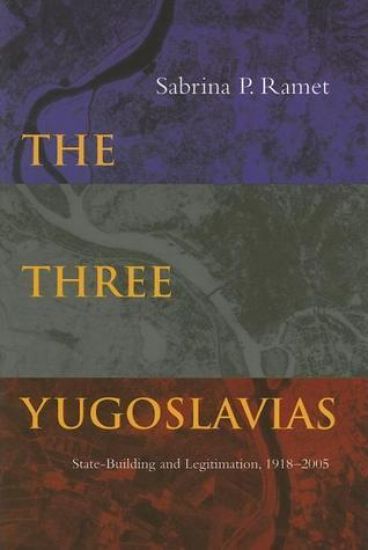
Yugoslavia exploded onto the front pages of world newspapers in the early 1990s. The War of Yugoslav Succession of 1991–1995 convinced many that interethnic violence was endemic to politics in Yugoslavia and that the Yugoslav meltdown had occurred because of ancient hatreds. In this thematic history of Yugoslavia in the 20th century, Sabrina P. Ramet demonstrates that, on the contrary, the instability of the three 20th-century Yugoslav states—the interwar kingdom (1918–41), socialist Yugoslavia (1945–91), and the rump Yugoslav state created in 1992, consisting of Serbia and Montenegro—can be attributed to the failure of succeeding governments to establish the rule of law and political legitimacy. Ramet places emphasis on the failure of the state-building project and the absence of political legitimation, rather than on ineluctable or abstract historical forces. Based on extensive archival research and fieldwork and the culmination of more than two decades of study, The Three Yugoslavias is a major contribution to an understanding of Yugoslavia and its successor states.
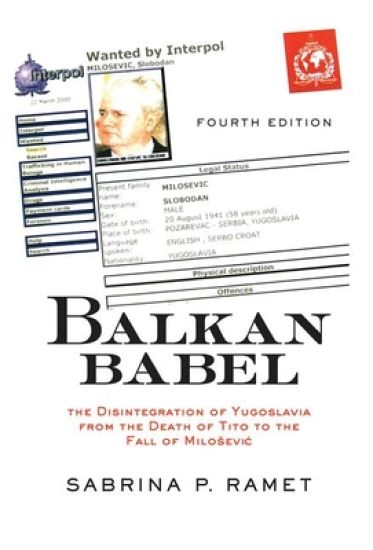
The fourth edition of this critically acclaimed work includes a new chapter, a new epilogue, and revisions throughout the book. Sabrina Ramet, a veteran observer of the Yugoslav scene, traces the steady deterioration of Yugoslavia's political and social fabric in the years since 1980, arguing that, while the federal system and multiethnic fabric la
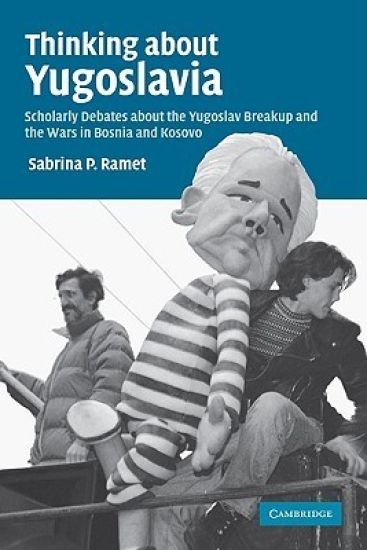
The Yugoslav break up and conflict have given rise to a considerable literature offering dramatically different interpretations of what happened. But just how do the various interpretations relate to each other? This ambitious new book by Sabrina Ramet, an eminent commentator on recent Balkan politics and history, reviews and analyses more than 130 books about the troubled region and compares their accounts, theories, and interpretations of events. Ramet surveys the major debates which divide the field, alternative accounts of the causes of Yugoslavia's violent collapse, and the scholarly debates concerning humanitarian intervention. Rival accounts are presented side by side for easy comparison. Thinking about Yugoslavia examines books on Slovenia, Croatia, Serbia, Bosnia-Herzegovina, Macedonia, Montenegro, and Kosovo which were published in English, German, Serbian/Croatian/Bosnian, and Italian, thus offering the English-speaking reader a unique insight into the controversies.
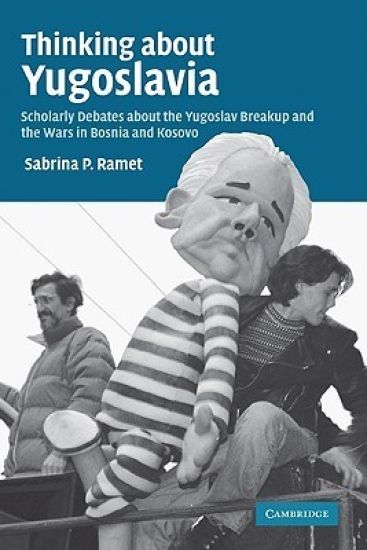
The Yugoslav break up and conflict have given rise to a considerable literature offering dramatically different interpretations of what happened. But just how do the various interpretations relate to each other? This ambitious new book by Sabrina Ramet, an eminent commentator on recent Balkan politics and history, reviews and analyses more than 130 books about the troubled region and compares their accounts, theories, and interpretations of events. Ramet surveys the major debates which divide the field, alternative accounts of the causes of Yugoslavia's violent collapse, and the scholarly debates concerning humanitarian intervention. Rival accounts are presented side by side for easy comparison. Thinking about Yugoslavia examines books on Slovenia, Croatia, Serbia, Bosnia-Herzegovina, Macedonia, Montenegro, and Kosovo which were published in English, German, Serbian/Croatian/Bosnian, and Italian, thus offering the English-speaking reader a unique insight into the controversies.
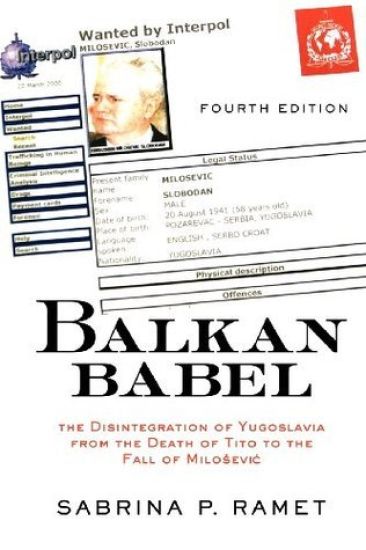
The fourth edition of this critically acclaimed work includes a new chapter, a new epilogue, and revisions throughout the book. Sabrina Ramet, a veteran observer of the Yugoslav scene, traces the steady deterioration of Yugoslavia's political and social fabric in the years since 1980, arguing that, while the federal system and multiethnic fabric laid down fault lines, the final crisis was sown in the failure to resolve the legitimacy question, triggered by economic deterioration, and pushed forward toward war by Serbian politicians bent on power - either within a centralized Yugoslavia or within an 'ethnically cleansed' Greater Serbia. With her detailed knowledge of the area and extensive fieldwork, Ramet paints a strikingly original picture of Yugoslavia's demise and the emergence of the Yugoslav successor states.
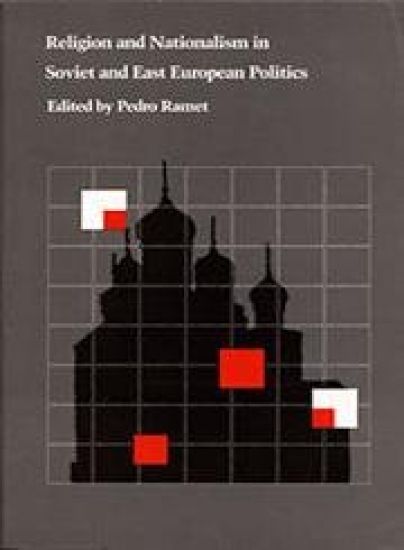
Religion and Nationalism in Soviet and East European Politics
Sabrina P. Ramet
Duke University Press
1988
sidottu
Religious organizations in many countries of the communist world have served as agents for the preservation, defense, and reinforcement of nationalist feelings, and in playing this role have frequently been a source of frustration to the Communist Party elites. Although the relationship between governments and religious groups varies according to the particular country and group in question, the mosaic of these relationships constitutes a revealing picture of the political reform shaping the lives of Soviet and East European citizens.
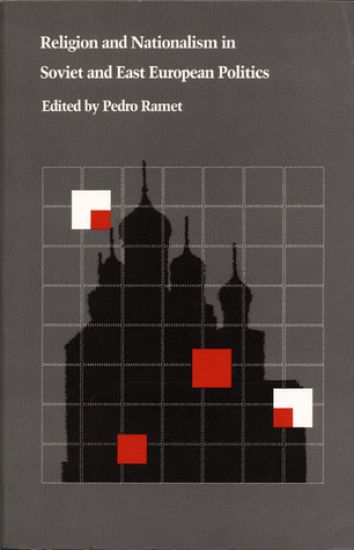
Religion and Nationalism in Soviet and East European Politics
Sabrina P. Ramet
Duke University Press
1988
pokkari
Religious organizations in many countries of the communist world have served as agents for the preservation, defense, and reinforcement of nationalist feelings, and in playing this role have frequently been a source of frustration to the Communist Party elites. Although the relationship between governments and religious groups varies according to the particular country and group in question, the mosaic of these relationships constitutes a revealing picture of the political reform shaping the lives of Soviet and East European citizens.
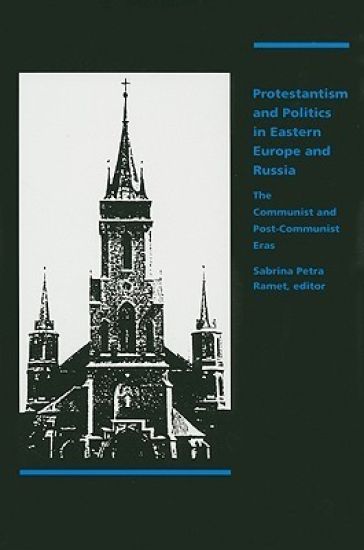
Protestantism and Politics in Eastern Europe and Russia
Sabrina P. Ramet
Duke University Press
1992
sidottu
Coming at a time of enormous transformations in the one-time Communist bloc, this volume provides a much-needed perspective on the significance of church-state relations in the renaissance of civil society in the region. The essays collected here accentuate the peculiarly political character of Protestantism within Communist systems. With few identifiable leaders, a multiplicity of denominations, and a tendency away from hierarchical structures, the Protestant churches presents a remarkably diverse pattern of church-state relations. Consequently, the longtime coexistence of Protestantism and Communism in Eastern Europe and the former Soviet Union affords numerous examples of political accommodation and theological adaption that both reflect and foreshadow the dramatic changes of the 1990s.Based on extensive field research, including interviews with notable figures in the Protestant churches in the region, the essays in this volume address broad topics such as the church's involvment in environmentalism, pacifism, and other dissident movements, as well as issues particular to Russia, Poland, Czechoslovakia, East Germany, (1949–1989), Hungary, Yugoslavia (1945-1991), Bulgaria, and Romania. The final volume in the three-volume work "Christianity Under Stress," Protestantism and Politics in Eastern Europe and Russia will prove invaluable to anyone hoping to understand not only the workings of religion under Communism, but the historical and contemporary interactions of church and state in general.Contributors. Paul Bock, Lawrence Klippenstein, Paul Mojzes, Earl A. Pope, Joseph Pungur, Sabrina Petra Ramet, Walter Sawatsky, N. Gerald Shenk, Gerd Stricker, Sape A. Zylstra
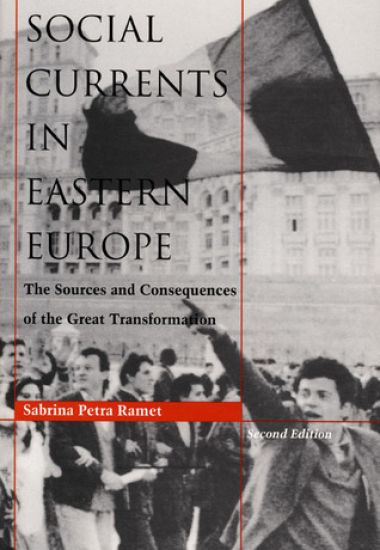
Social Currents in Eastern Europe traces the diverse social currents that have developed alongside and interacted with political and economic forces to bring about change in Eastern Europe. In this second edition-which significantly updates and expands the previous edition to include a new introduction, revisions throughout, as well as five new chapters, including timely material on ethnic war in the former Yugoslavia-Ramet extends and develops the theory of social change upon which the book is based.Ramet draws on interviews conducted over a ten-year period with individuals active in arenas for social change-intellectual dissent, feminism, religious activism, youth cultures and movements, and trade unionism-in eight East European countries: East Germany, Poland, Czechoslovakia, Hungary, Yugoslavia, Romania, Bulgaria, and Albania. She shows how the processes leading to the ultimate collapse of communism began more than a decade earlier and how they were necessarily manifested in spheres as diverse as religion and rock music.Ramet also examines the consequences of the "Great Transformation" and analyzes the numerous unresolved problems that these societies currently confront, whether it be in the arena of economics, political legitimation, or the challenges of establishing a civil society free of chauvinism.
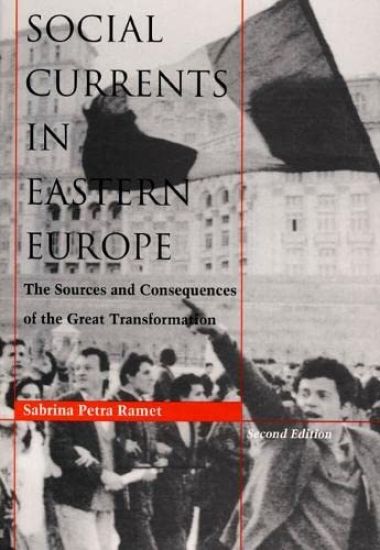
Social Currents in Eastern Europe traces the diverse social currents that have developed alongside and interacted with political and economic forces to bring about change in Eastern Europe. In this second edition-which significantly updates and expands the previous edition to include a new introduction, revisions throughout, as well as five new chapters, including timely material on ethnic war in the former Yugoslavia-Ramet extends and develops the theory of social change upon which the book is based.Ramet draws on interviews conducted over a ten-year period with individuals active in arenas for social change-intellectual dissent, feminism, religious activism, youth cultures and movements, and trade unionism-in eight East European countries: East Germany, Poland, Czechoslovakia, Hungary, Yugoslavia, Romania, Bulgaria, and Albania. She shows how the processes leading to the ultimate collapse of communism began more than a decade earlier and how they were necessarily manifested in spheres as diverse as religion and rock music.Ramet also examines the consequences of the "Great Transformation" and analyzes the numerous unresolved problems that these societies currently confront, whether it be in the arena of economics, political legitimation, or the challenges of establishing a civil society free of chauvinism.
Nihil Obstat-Latin for "nothing stands in the way"-examines the interplay between religion and politics in East-Central Europe and Russia. While focusing on the postcommunist, late twentieth century, Sabrina P. Ramet discusses developments as far back as the eleventh century to explain the patterns that have developed over time and to show how they still affect contemporary interecclesiastical relations as well as those among Church, state, and society.Based on interview research in Germany, Austria, Slovenia, Croatia, Bosnia, Serbia, and Macedonia, and on materials published in German, Italian, Serbo-Croatian, Polish, Czech, Slovak, Russian, and English, Ramet paints a clear picture of the political and religious fragility of former communist states, which are experiencing some aspects of freedom and choice for the first time. With its comprehensive discussion of the largest religious institutions in the area, especially the Catholic and Orthodox Churches, and its extensive survey of nontraditional religious associations that have become active in the region since 1989, this study makes a distinct contribution to growing discussions about the rise of fundamentalism and the inner dilemmas of modernity. With its depth of information and thoughtful exploration of cultural traditions, Nihil Obstat uniquely presents the ramifications and complexities of European religion in a postcommunist world.
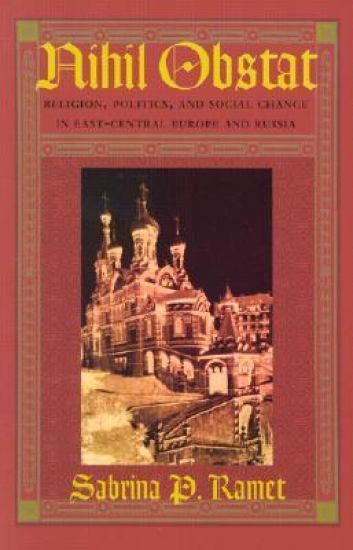
Nihil Obstat-Latin for "nothing stands in the way"-examines the interplay between religion and politics in East-Central Europe and Russia. While focusing on the postcommunist, late twentieth century, Sabrina P. Ramet discusses developments as far back as the eleventh century to explain the patterns that have developed over time and to show how they still affect contemporary interecclesiastical relations as well as those among Church, state, and society.Based on interview research in Germany, Austria, Slovenia, Croatia, Bosnia, Serbia, and Macedonia, and on materials published in German, Italian, Serbo-Croatian, Polish, Czech, Slovak, Russian, and English, Ramet paints a clear picture of the political and religious fragility of former communist states, which are experiencing some aspects of freedom and choice for the first time. With its comprehensive discussion of the largest religious institutions in the area, especially the Catholic and Orthodox Churches, and its extensive survey of nontraditional religious associations that have become active in the region since 1989, this study makes a distinct contribution to growing discussions about the rise of fundamentalism and the inner dilemmas of modernity. With its depth of information and thoughtful exploration of cultural traditions, Nihil Obstat uniquely presents the ramifications and complexities of European religion in a postcommunist world.