Kirjojen hintavertailu. Mukana 11 699 587 kirjaa ja 12 kauppaa.

Kirjahaku

Etsi kirjoja tekijän nimen, kirjan nimen tai ISBN:n perusteella.

174 tulosta hakusanalla Sadako Kurihara

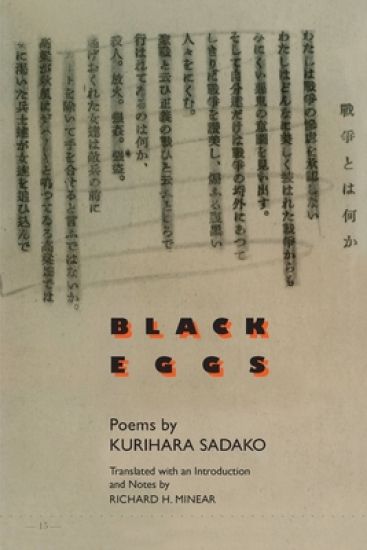
Black Eggs

Black Eggs

Sadako Kurihara

The University of Michigan Press
2021
nidottu
Kurihara Sadako was born in Hiroshima in 1913, and she was there on August 6, 1945. Already a poet before she experienced the atomic bombing of Hiroshima, she used her poetic talents to describe the blast and its aftermath. In 1946, despite the censorship of the American Occupation, she published Kuroi tamago (Black Eggs), poems from before, during, and immediately after the war. This volume includes a translation of Kuroi tamago from the complete edition of 1983. But August 6, 1945, was not the end point of Kurihara’s journey. In the years after Kuroi tamago she has broadened her focus—to Japan as a victimizer rather than victim, to the threat of nuclear war, to antiwar movements around the world, and to inhumanity in its many guises. She treats events in Japan such as politics in Hiroshima, Tokyo’s long-term complicity in American policies, and the decision in 1992 to send Japanese troops on U.N. peacekeeping operations. But she also deals with the Vietnam War, Three Mile Island, Kwangju, Greenham Common, and Tiananmen Square. This volume includes a large selection of these later poems. Kurihara sets us all at ground zero, strips us down to our basic humanity, and shows us the world both as it is and as it could be. Her poems are by turns sorrowful and sarcastic, tender and tough. Several of them are famous in Japan today, but even there, few people appreciate the full force and range of her poetry. And few poets in any country—indeed, few artists of any kind—have displayed comparable dedication, consistency, and insight.
When We Say “Hiroshima”

When We Say “Hiroshima”

Sadako Kurihara

The University of Michigan Press
1999
nidottu
Kurihara Sadako is one of the poetic giants of the nuclear age. Born in Hiroshima in 1913, she was in Hiroshima on August 6, 1945. From then till now she has addressed her poetry primarily to issues of nuclear destruction, nuclear weapons, and nuclear power. Herself a victim of the world’s first nuclear attack, she became the poetic conscience of the Hiroshima that was no more. But Kurihara turned her attention soon to more controversial issues, including Japan’s role as victimizer in World War II. Many of her poems attack the Japanese government and its policies then and now. When We Say “Hiroshima” contains a selection of the poems Kurihara wrote between 1942 and 1989. They include meditations on death, on survival, on nuclear radiation, on Japanese politics, on American foreign policy, and on women’s issues.
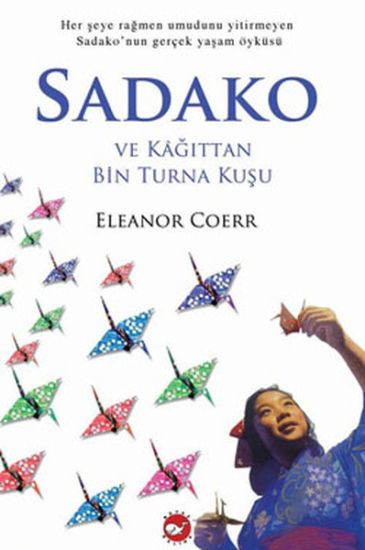
Sadako

Sadako

Eleanor Coerr

Puffin Books
1997
nidottu
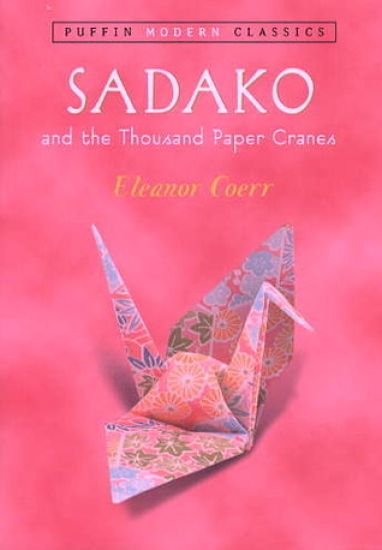
Hospitalized with the dreaded atom bomb disease, leukemia, a child in Hiroshima races against time to fold one thousand paper cranes to verify the legend that by doing so a sick person will become healthy.
Sadako

Sadako

VDM Publishing House
2010
nidottu
Observera att förlaget som ger ut denna produkt baserar innehållet i sina produkter på fria källor som Wikipedia. Boken är med stor sannolikhet endast ett utdrag ur dessa informationskällor, alltså inte en vanlig bok i den bemärkelsen.
Sadako and the Thousand Paper Cranes

Sadako and the Thousand Paper Cranes

Eleanor Coerr

Puffin Books
2004
nidottu
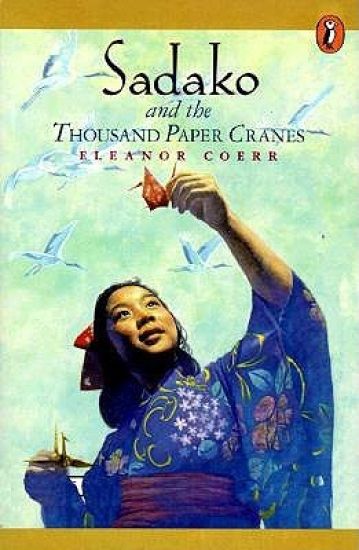
"An extraordinary book, one no reader will fail to find compelling and unforgettable." --Booklist, starred review The star of her school's running team, Sadako is lively and athletic...until the dizzy spells start. Then she must face the hardest race of her life--the race against time. Based on a true story, Sadako and the Thousand Paper Cranes celebrates the courage that makes one young woman a heroine in Japan. " The] story speaks directly to young readers of the tragedy of Sadako's death and, in its simplicity, makes a universal statement for 'peace in the world." --The Horn Book "The story is told tenderly but with neither a morbid nor a sentimental tone: it is direct and touching." --BCCB
Sadako and the Thousand Paper Cranes

Sadako and the Thousand Paper Cranes

Eleanor Coerr

Puffin Books
1987
nidottu
"An extraordinary book, one no reader will fail to find compelling and unforgettable." --Booklist, starred review Hiroshima-born Sadako is lively and athletic--the star of her school's running team . . . until the dizzy spells start. Soon gravely ill with leukemia, the "atom bomb disease," Sadako faces her future with spirit and bravery. Recalling a Japanese legend, Sadako sets to work folding paper cranes. For the legend holds that if a sick person folds one thousand cranes, the gods will grant her wish and make her healthy again. Based on a true story, Sadako and the Thousand Paper Cranes celebrates the extraordinary courage that made one young woman a heroine in Japan.
Sadako-san and Sadako-chan

Sadako-san and Sadako-chan

Noriaki Sugihara

SEVEN SEAS ENTERTAINMENT, LLC
2021
nidottu
This hilarious manga takes a look at the softer side of one of horror’s most iconic monsters: Sadako from The Ring! Sadako is destined to bring death and despair to anyone who’s fallen under her curse. One day, as Sadako goes to claim her next victim, she meets another girl named Sadako. Sadako-chan is a precocious young child who’s eager to help Sadako-san adjust to the modern era– no more climbing out of TVs, it’s all about Youtube now! With help from her new friend, can Sadako finally move on from her tragic past? A hilarious manga featuring one of horror’s most iconic monsters!
Sadako och de tusen papperstranorna

Sadako och de tusen papperstranorna

Eleanor Coerr

En bok för alla
2021
sidottu
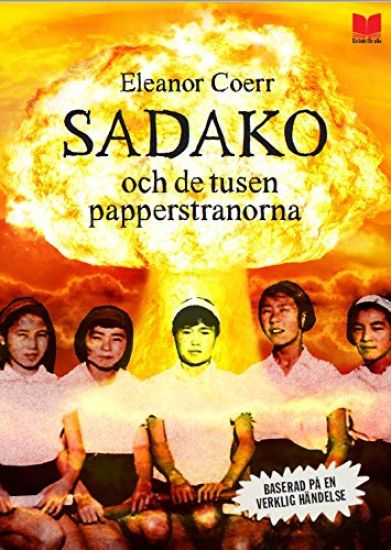
Sadako Sasaki växer upp i Hiroshima i Japan. När hon är två år släpps en atombomb över staden. De som inte dör på en gång utsätts under resten av sina liv för den osynliga men dödliga strålningen som bomben för med sig. Sadako blir så småningom en livlig, atletisk flicka och hon är den stora stjärnan i skolans löparteam. Tills yrselanfallen börjar. Sadako har drabbats av atombombssjukan - leukemi. Enligt en japansk legend kan den som viker tusen tranor av papper få en önskan uppfylld. Tillsammans med sina klasskamrater sätter Sadako igång att vika. Detta blir hennes livs viktigaste lopp ett lopp mot tiden. Berättelsen om Sadako är baserad på en verklig händelse. Du kan besöka Barnens Fredsmonument i Fredsparken i Hiroshima. Där, på toppen av ett paradisberg, står en staty av Sadako som med utsträckta händer lyfter en trana mot skyn. Nedanför monumentet kan man läsa: Detta är vårt rop, detta är vår bön; fred i världen.
Sadako's Cranes

Sadako's Cranes

J Loske

Michael Neugebauer (Publishing) Ltd
2021
sidottu
A timeless story, beautifully told and illustrated by Judith Loske Based on the true story of Sadako Sasaki, who lived in Hiroshima when the atomic bomb was dropped on August 6, 1945, Sadako's Cranes tells the story of her battle with leukemia. When Sadako hears of a Japanese legend which says that a person who folds 1,000 paper cranes is granted a wish, she begins folding cranes. Her wish was simply to live. Loske's beautiful illustrations are based on colored-pencil drawings that have been digitally processed.
Sadako Sasaki

Sadako Sasaki

VDM Publishing House
2010
nidottu
Observera att förlaget som ger ut denna produkt baserar innehållet i sina produkter på fria källor som Wikipedia. Boken är med stor sannolikhet endast ett utdrag ur dessa informationskällor, alltså inte en vanlig bok i den bemärkelsen.
Sadako Yamamura

Sadako Yamamura

VDM Publishing House
2010
nidottu
Observera att förlaget som ger ut denna produkt baserar innehållet i sina produkter på fria källor som Wikipedia. Boken är med stor sannolikhet endast ett utdrag ur dessa informationskällor, alltså inte en vanlig bok i den bemärkelsen.
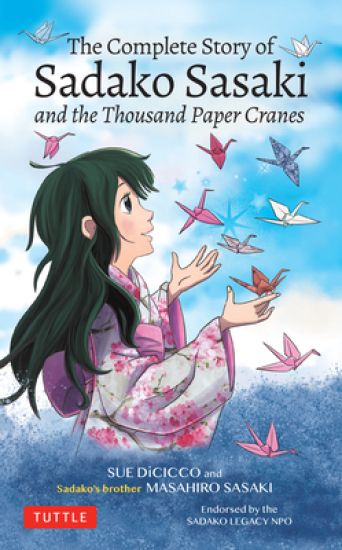
The Complete Story of Sadako Sasaki

The Complete Story of Sadako Sasaki

Masahiro Sasaki; Sue DiCicco

Tuttle Publishing
2020
nidottu
**Independent Publisher Book Award (IPPY) Winner****Middle School Book of the Year — Northern Lights Book Awards****Skipping Stones Honor Award Winner**For the first time, middle readers can learn the complete story of the courageous girl whose life, which ended through the effects of war, inspired a worldwide call for peace.In this book, author Sue DiCicco and Sadako's older brother Masahiro tell her complete story in English for the first time—how Sadako's courage throughout her illness inspired family and friends, and how she became a symbol of all people, especially children, who suffer from the impact of war. Her life and her death carry a message: we must have a wholehearted desire for peace and be willing to work together to achieve it. Sadako Sasaki was two years old when the atomic bomb was dropped on her city of Hiroshima at the end of World War II. Ten years later, just as life was starting to feel almost normal again, this athletic and enthusiastic girl was fighting a war of a different kind. One of many children affected by the bomb, she had contracted leukemia. Patient and determined, Sadako set herself the task of folding 1000 paper cranes in the hope that her wish to be made well again would be granted.Illustrations and personal family photos give a glimpse into Sadako's life and the horrors of war. Proceeds from this book are shared equally between The Sadako Legacy NPO and The Peace Crane Project.
Mil Pájaros de Papel. La Historia de Sadako Sasaki / One Thousand Paper Cranes: The Story of Sadako and the Children's Peace Statue
Esta es la historia real de Sadako Sasaki, la ni a que, por su gran tenecidad, se convirti en un s mbolo de las v ctimas de Hiroshima. Diez a os despu s de que la bomba at mica cayera en Hiroshima, la joven Sadako Sasaki muri de una leucemia provocada por este desastre humanitario. Sin perder la determinaci n que la caracteriz durante su vida, Sadako se propuso hacer mil p jaros de origami con la esperanza de que, como cuenta la leyenda, los dioses la sanasen. Sus familiares y amigos la acompa aron en una carrera contra el tiempo que los uni todav a m s. En este libro, Ishii Takayuki cuenta a los j venes (y a los no tan j venes) la historia real que hay detr s del Monumento a la Paz de los Ni os en Hiroshima. ENGLISH DESCRIPTION The inspirational story of the Japanese national campaign to build the Children's Peace Statue honoring Sadako and hundreds of other children who died as a result of the bombing of Hiroshima. Ten years after the atomic bomb was dropped on Hiroshima, Sadako Sasaki died as a result of atomic bomb disease. Sadako's determination to fold one thousand paper cranes and her courageous struggle with her illness inspired her classmates. After her death, they started a national campaign to build the Children's Peace Statue to remember Sadako and the many other children who were victims of the Hiroshima bombing. On top of the statue is a girl holding a large crane in her outstretched arms. Today in Hiroshima Peace Memorial Park, this statue of Sadako is beautifully decorated with thousands of paper cranes given by people throughout the world.
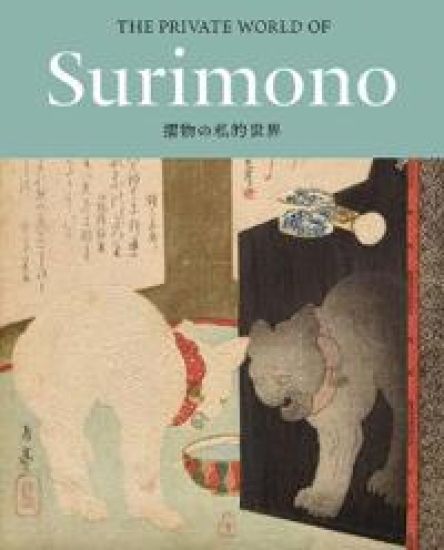
The Private World of Surimono

The Private World of Surimono

Sadako Ohki; Adam Haliburton

Yale University Press
2020
pokkari
A detailed look at a genre that combines virtuoso printmaking techniques, sophisticated imagery, and engaging, playful poetry This beautiful volume celebrates the tradition of the Japanese surimono print. Produced from around 1800 until 1840, during the Edo period, surimono (“printed things” in Japanese) combine intricate artwork and playful poetry, and their small print runs and exclusive audiences allowed for lavish yet subtle surface treatments, such as embossing and gilding. Enjoyed for their learned allusions to literature and contemporary culture, surimono continue to delight and perplex scholars with their visual puns and wordplay. Imagery ranges from delicate, domestic still lifes to spirited vignettes of the natural world, while the poems are often lighthearted takes on the classical Japanese waka form. With its rich text and scholarly apparatus—including names and titles in kanji characters as well as transliterations and translations of the poems on the catalogued prints—The Private World of Surimono serves as a critical resource for scholars of Japanese art and history and offers general readers insight into this rare and innovative print form.Distributed for the Yale University Art Gallery