
Kirjahaku
Etsi kirjoja tekijän nimen, kirjan nimen tai ISBN:n perusteella.
1000 tulosta hakusanalla Sally Robinson Yoast
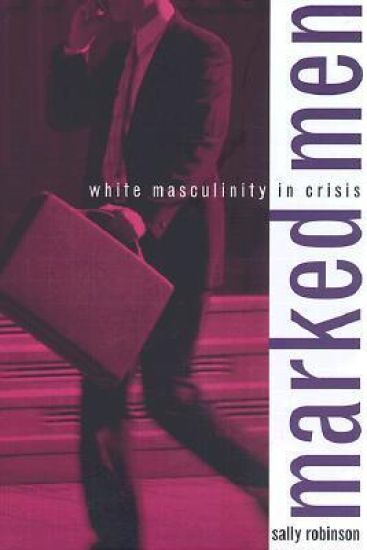
White men still hold most of the political and economic cards in the United States; yet stories about wounded and traumatized men dominate popular culture. Why are white men jumping on the victim bandwagon? Examining novels by Philip Roth, John Updike, James Dickey, John Irving, and Pat Conroy and such films as Deliverance, Misery, and Dead Poets Society-as well as other writings, including The Closing of the American Mind-Sally Robinson argues that white men are tempted by the possibilities of pain and the surprisingly pleasurable tensions that come from living in crisis.
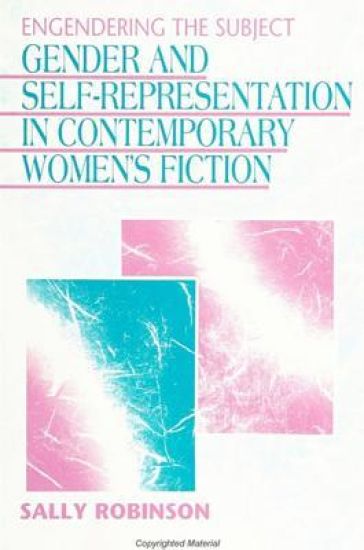
Robinson sets up a dialogue between feminist critical theory and contemporary women's fiction in order to argue for a new way of reading the specificity of women's writing. Through theoretically informed readings of novels by Doris Lessing, Angela Carter, and Gayl Jones, the author argues that female subjectivity is engendered in discourse through the woman writer's strategic engagement in representational systems that rely on a singular figure of Woman for coherence. Through this engagement, women's self-representation emerges as a process through which women take up multiple and contradictory positions in relation to different hegemonic discursive systems, and through which they engender themselves as subjects.Finally, Engendering the Subject suggests how women's fiction can provide a model for a feminist practice of reading that would simultaneously work against the historical containment of Woman, and for the empowerment of women as subjects of cultural practices.
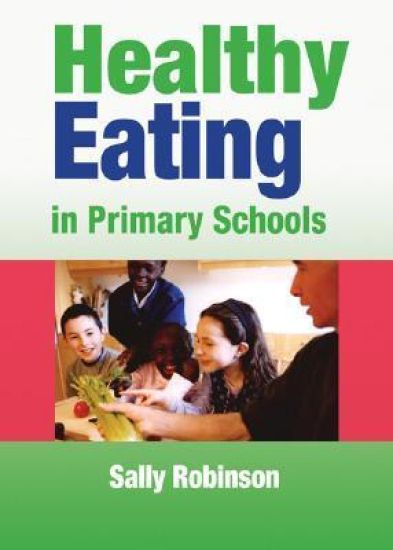
Developed with the support of the Kent Healthy Schools Programme to encourage primary schools to promote healthy eating, this resource takes a whole-school, holistic approach towards children's eating and relates to the PSHE Curriculum and the Healthy Schools Programme. There is a good blend of easily accessible information on healthy eating supported by individual case studies. The three sections cover: " a summary of the range of children's eating issues " strategies for promoting healthy eating and preventing, recognising and dealing with eating problems " examples of lesson plans related to the physical, emotional and social aspects of children's eating. Dr Sally Robinson is principal lecturer in the Department of Health and Social Welfare Studies at Canterbury Christ Church University.
Developed with the support of the Kent Healthy Schools Programme to encourage primary schools to promote healthy eating, this resource takes a whole-school, holistic approach towards children's eating and relates to the PSHE Curriculum and the Healthy Schools Programme. There is a good blend of easily accessible information on healthy eating supported by individual case studies. The three sections cover: " a summary of the range of children's eating issues " strategies for promoting healthy eating and preventing, recognising and dealing with eating problems " examples of lesson plans related to the physical, emotional and social aspects of children's eating. Dr Sally Robinson is principal lecturer in the Department of Health and Social Welfare Studies at Canterbury Christ Church University.
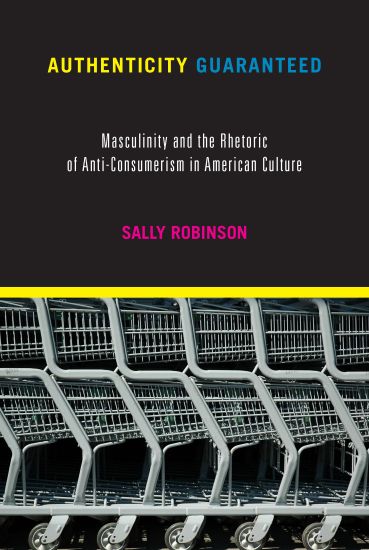
Americans love to hate consumerism. Scholars, intellectuals, musicians, and writers of all kinds take pleasure in complaining that consumer culture endangers the ""real"" things in life, including self-determination and individualism. In Authenticity Guaranteed, Sally Robinson brings to light the unacknowledged gender and class assumptions of anti-consumerist critique in the second half of the twentieth century. American anti-consumerism, despite its apparent complexity, takes a remarkably consistent and predictable narrative form. From the mid-century Organization Man to the millennial No Logo, anti-consumerist critique reinforces the gender order by insisting that authenticity is threatened, and masculine agency curtailed, by the feminizing forces of consumer culture.Robinson identifies a tradition of masculine protest and rebellion against feminization in iconic texts such as The Catcher in the Rye and Fight Club, as well as in critiques of postmodernism, academic denunciations of shopping, and a variety of other discourses that aim to diagnose what ails American consumer culture. This fresh and timely argument enters into conversation with a wide range of existing scholarship and opens up new questions for scholarly and political discussion.
Educating Children with Life-Limiting Conditions
Alison Ekins; Sally Robinson; Ian Durrant; Kathryn Summers
Routledge
2017
sidottu
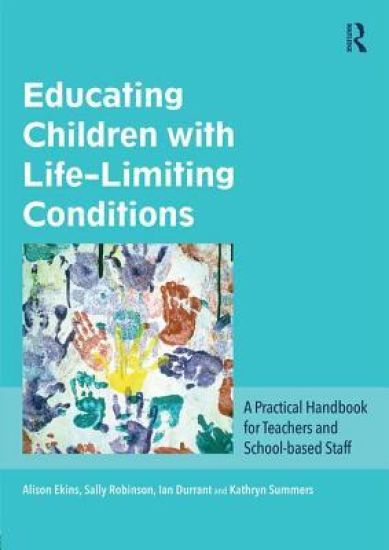
Educating Children with Life-Limiting Conditions supports teachers who are working with children with life-limiting or life-threatening conditions in mainstream schools by providing them with the core knowledge and skills that underpin effective practice within a whole-school and cross-agency approach. Mainstream schools now include increasing numbers of children with life-limiting or life-threatening conditions, and this accessible book is written by a team comprised of both education and health professionals, helping to bridge the gap between different services.Recognising the complexity of individual cases, the authors communicate key principles relating to the importance of communication, multi-professional understanding and working and proactive planning for meeting the needs of any child with a life-limiting or life-threatening condition that can be applied to a range of situations.Reflective activities and practical resources are provided and are also available to download. This book will be of interest to teachers in mainstream schools, as well as teachers, SENCOs and senior leaders in all school settings, school nurses, children’s nurses and allied health professionals.
Educating Children with Life-Limiting Conditions
Alison Ekins; Sally Robinson; Ian Durrant; Kathryn Summers
Routledge
2017
nidottu
Educating Children with Life-Limiting Conditions supports teachers who are working with children with life-limiting or life-threatening conditions in mainstream schools by providing them with the core knowledge and skills that underpin effective practice within a whole-school and cross-agency approach. Mainstream schools now include increasing numbers of children with life-limiting or life-threatening conditions, and this accessible book is written by a team comprised of both education and health professionals, helping to bridge the gap between different services.Recognising the complexity of individual cases, the authors communicate key principles relating to the importance of communication, multi-professional understanding and working and proactive planning for meeting the needs of any child with a life-limiting or life-threatening condition that can be applied to a range of situations.Reflective activities and practical resources are provided and are also available to download. This book will be of interest to teachers in mainstream schools, as well as teachers, SENCOs and senior leaders in all school settings, school nurses, children’s nurses and allied health professionals.
Preventing the Emotional Abuse and Neglect of People with Intellectual Disability
Hilary Brown; Sally Robinson
Jessica Kingsley Publishers
2013
pokkari
There's so many different types of abuse, and it all comes down to the same thing. It's making people nothing. And Fran was nothing. There was never anything nice said about her, everything was negative. And she had to put up with that, and we had to put up with that, until we all sort of believed it, almost.'Preventing the Emotional Abuse and Neglect of People with Intellectual Disability throws light onto the traumatic experiences faced by people with intellectual disability living in disability accommodation services. Through the narratives of nine people with intellectual disability and their family members, it reveals: the problem of systematic abuse; the cumulative impact of emotional and psychological abuse and neglect over time; recognition of the abuse by people with intellectual disability; and the lack of moral authority afforded to them in abuse acknowledgement and reporting. The author suggests a number of positive approaches and methods to help all those working with people with intellectual disability to prevent emotional abuse, respond appropriately and effectively support the recovery of victims. This book will prove to be indispensable for social care workers, care home managers, social workers, researchers and academics in the disability field, social sciences students, human rights workers and abuse practitioners.
Emerging Safety Science
Robert Giffin; Robert Pool; Sally Robinson
National Academies Press
2008
nidottu
In recent years, the costs of new drug development have skyrocketed. The average cost of developing a new approved drug is now estimated to be $1.3 billion (DiMasi and Grabowski, 2007). At the same time, each year fewer new molecular entities (NMEs) are approved. DiMasi and Grabowski report that only 21.5 percent of the candidate drugs that enter phase I clinical testing actually make it to market. In 2007, just 17 novel drugs and 2 novel biologics were approved. In addition to the slowing rate of drug development and approval, recent years have seen a number of drugs withdrawn from the market for safety reasons. According to the Government Accountability Office (GAO), 10 drugs were withdrawn because of safety concerns between 2000 and March 2006 (GAO, 2006). Finding ways to select successful drug candidates earlier in development could save millions or even billions of dollars, reduce the costs of drugs on the market, and increase the number of new drugs with improved safety profiles that are available to patients. Emerging scientific knowledge and technologies hold the potential to enhance correct decision making for the advancement of candidate drugs. Identification of safety problems is a key reason that new drug development is stalled. Traditional methods for assessing a drug's safety prior to approval are limited in their ability to detect rare safety problems. Prior to receiving U.S. Food and Drug Administration (FDA) approval, a drug will have been tested in hundreds to thousands of patients. Generally, drugs cannot confidently be linked to safety problems until they have been tested in tens of thousands to hundreds of thousands of people. With current methods, it is unlikely that rare safety problems will be identified prior to approval. Emerging Safety Science: Workshop Summary summarizes the events and presentations of the workshop.Table of Contents Front Matter 1 Introduction 2 Investigative Toxicology: The State of the Art 3 Screening Technologies I: Human Cell–Based Approaches 4 Screening Technologies II: Toxicogenomics 5 Screening Technologies III: Metabolomics 6 Screening Technologies IV: Pharmacogenetics 7 Qualifying Biomarkers 8 Pharmacovigilance 9 Integration 10 The Future of Safety Science References Appendix A: Workshop Agenda Appendix B: Speaker Biographies
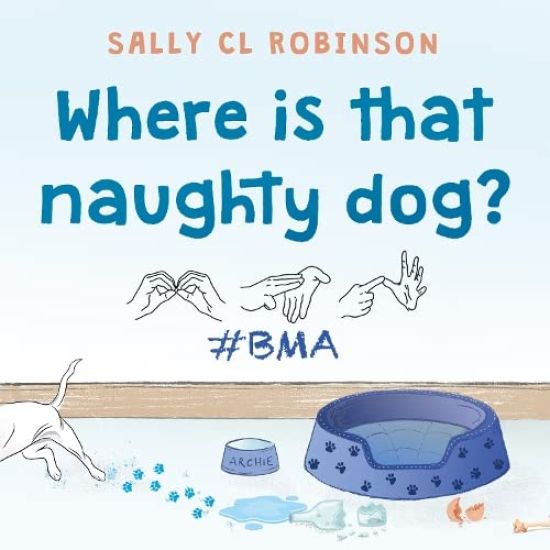
We need your help! Archie has escaped, and is nowhere to be found... Can you have a look around with us, to help us seek and find? Born without the ability to hear anything, Archie was left sad and alone in a rescue centre, waiting for his forever home. But as long as he has a full tummy and is warm, he won't let anything phase him! This book follows the 'almost' true stories of Archie the rescued Staffie dog. His silly antics and adventures will have you laughing and sometimes surprised: do you think he really is naughty, or just misunderstood? One thing is for certain, though: we all need to BE MORE ARCHIE!

This innovative tarot features artwork from dozens of different artists, creating a vibrant deck that is built up from 82 unique contributions. Like a choir singing in harmony, this deck proves that the whole is much greater than the sum of its parts. With 80 cards (a standard 78-card deck plus additional cards for the four elements), Vox Arcana Tarot blends together the energy of the contributing artists to create a tarot that speaks to the full range of the human experience. Boxed deck (31/4 x 5) includes an 80-card deck and instructional booklet

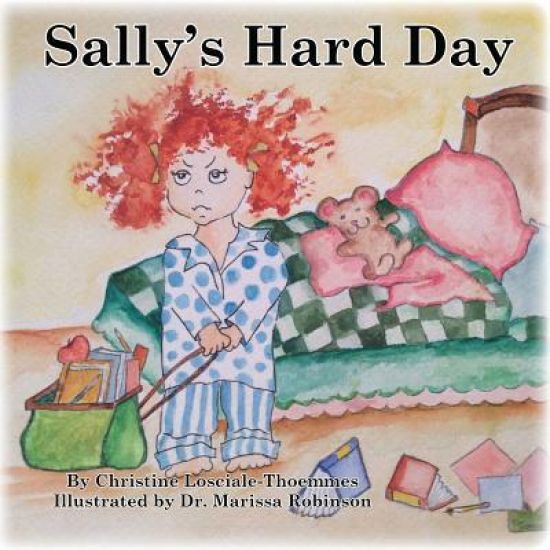
Sally's Hard Day
Christine Losciale-Thoemmes; Marissa Robinson
Christine Losciale-Thoemmes
2017
pokkari

C.R.A.F.T. Conversations for Teacher Growth
Sally J. Zepeda; Lakesha Robinson Goff; Stefanie W. Steele
Association for Supervision Curriculum Development
2019
nidottu
Conversations between administrators and teachers take place every day, for many reasons, but what can we do to elevate them so that they lead to better professional relationships, more effective school leaders and teachers, and improved learning for students? C.R.A.F.T. Conversations for Teacher Growth offers the answer, demonstrating how exchanges that are clear, realistic, appropriate, flexible, and timely can be transformational. The authors explain how C.R.A.F.T. conversations support leaders' efforts in four ""cornerstone"" areas: Building Capacity, Invoking Change, Promoting Collaboration, and Prioritizing Celebration. With this foundation in place, they offer explicit guidance for developing the skills necessary to move through all components of a C.R.A.F.T. conversation: planning, opening, engaging, closing, reflecting, and following up. Extended vignettes featuring administrators and teachers bring each component to life, illustrating how focused efforts on improving how we communicate and build relationships can help schools achieve their goals and become places where adults—and students—thrive.
Honoring the Circle: Ongoing Learning from American Indians on Politics and Society, Volume II: The Continuing Impact of American Indian Wa
Sally Roesch Wagner Ain Haas; Walter S. Robinson; Stephen M. Sachs
Waterside Productions
2020
nidottu
Honoring the Circle: Ongoing Learning from American Indians on Politics and Society, Volume II: The Continuing Impact of American Indian Ways in North America and the World in the Nineteenth Century and Beyond shows the continuing dynamics of the strands of American Indian influenced thought, begun among colonists and founding Americans, shaping the U.S. with new Native influences. This was well recognized among Americans in 1800, who considered themselves a fusion of the European and the Indian. Andrew Jackson's forced removal of Indians to the west began to hide that reality. This can be seen with European image of the Indian Goddess, first envisioned as dressed in buckskins and feathers; by the time her statue was placed atop the U.S. capitol in 1863 as the Goddess of Liberty, the outer clothing had become that of a Roman Goddess, but the Indian Woman remained beneath.Early in the nineteenth century Indian influences were plainly visible in the writings of John C. Calhoun and in the many Tammany Societies, including New York's Tammany Hall, founded to promote discussion of issues of the day and named in honor of a Delaware chief. Building on the influence of Franklin, Jefferson and others, an American Philosophy of Pragmatism developed, with strong Native roots among its interacting strands. Important contributors were Emerson and Thoreau, who had considerable contact with Indians, and later Jane Addams, James, Peirce and Dewey. Indian voices that shaped U.S. affairs included those of William Apess, Black Hawk, Elias Boudinot and George Copway. Indian influences have continued in Pragmatism's off-shoots and interactions, blossoming in the twenty-first century with President Obama and the current progressive movement.The Women's liberation movement began at contact, as Europeans saw the balanced reciprocity of women and men in Native communities. Among its early advocates who had close relations with Indians were Lydia Maria Child and Catharine Maria Sedgwick. Later, Matilda Joslyn Gage and others were inspired by Haudenosaunee women, as the women's movement became a major force. From the start, the women's movement was involved with civil rights broadly, including Indian rights, with women forming much of the core of anti-slavery movement. The movement for African-American rights has long had Native and Pragmatic roots in the valuing of diversity, as seen in the work of W. E. B. Du Bois, Martin Luther King Jr., Richard Wright and Cornell West. The more recent gay, lesbian, and transgender movement also has inspiration from Native practice.Over time, a growing number of Indigenous Americans have become active in the U.S. mainstream. Charles Eastman, Ella Deloria and Nick Black Elk were early contributors to mainstream understanding of Indians, while Vine Deloria Jr. was one of those contributing directly to the Pragmatic tradition. A major stimulus for American and world appreciation of Indigenous American ways was the counterculture movement of the 1960s. Many young people sought out Indians, and took interest in Indian ways as a positive alternative to mainstream western culture. This, along with the civil rights movement. contributed greatly to a larger public interest in Native ways and assisted Indian renewal and the shift in U.S. Indian policy to self-determination.The environmental movement has been influenced since contact by Indigenous concerns for maintaining balance with nature. But it began with Indian-influenced Thoreau and Emerson. A significant number of environmentalists and activists, such as Baird Callicott and Gary Snyder, have stirred interest in Native relations with nature. There have been an increasing number of Native environmental professionals and activists. Indians have become leaders in the movement, as seen the recent oil pipeline protests at Standing Rock, while Native voices have been more prevalent in public life.

ESSENTIAL TIPS FOR CONFERENCE ORGANISERS
Sally Brown; Fiona Campbell; Phil Race; Alison Robinson
Kogan Page Ltd
2003
nidottu
Many conferences and training events are organised by individuals who have little experience of doing so. Some have had the task thrust upon them without being offered adequate training, and have little idea of the time, experience and care needed to plan and manage events effectively. Each conference is different, and each can present a new problem to the unprepared, even to the most experienced conference organiser.This book provides immediate, accessible advice on how to run an effective event, featuring a wealth of practical tips, guidelines, case studies, action checklists, and useful sample material and templates. All areas of organisation are covered, including: managing, planning, contingency planning, targeting, costing and budgeting, housekeeping, administering, assuring the quality of content, evaluating, disseminating and ensuring continuity.
Essential Tips for Organizing Conferences & Events
Sally Brown; Fiona Campbell; Phil Race; Alison Robinson
Routledge
2016
sidottu
Many conferences and training events are organised by individuals who have little experience of doing so. Some have had the task thrust upon them without being offered adequate training, and have little idea of the time, experience and care needed to plan and manage events effectively. Each conference is different, and each can present a new problem to the unprepared, even to the most experienced conference organiser. This book provides immediate, accessible advice on how to run an effective event, featuring a wealth of practical tips, guidelines, case studies, action checklists, and useful sample material and templates. All areas of organisation are covered, including: managing, planning, contingency planning, targeting, costing and budgeting, housekeeping, administering, assuring the quality of content, evaluating, disseminating and ensuring continuity.