Kirjojen hintavertailu. Mukana 11 244 527 kirjaa ja 12 kauppaa.

Kirjahaku

Etsi kirjoja tekijän nimen, kirjan nimen tai ISBN:n perusteella.

1000 tulosta hakusanalla Samuel E Trosow

The Political Economy of Legal Information

The Political Economy of Legal Information

Samuel E Trosow

Routledge Member of the Taylor and Francis Group
1999
sidottu
From the informative information contained in The Political Economy of Legal Information: The New Landscape, you will discover how you, as a librarian or other information professional, can comprehend, cope with, and even try to influence the factors which comprise the new legal information landscape. You will discover the great changes in the legal publishing industry that have occurred within the last few years and the new ways in which legal information is produced, stored, disseminated, and used. The Political Economy of Legal Information will provide you with valuable tips to help you make sense of this new landscape so your library can reap the benefits of this new age. This informative book provides you with a collection of essays that describe, asses, and evaluate the political economy of information in the changing realm of legal publishing to keep you and your library on top of this dynamic situation. Through The Political Economy of Legal Information, you will find valuable insight into how you can make adjustments to constant technological changes by:confronting the cost efficiency model which promises both lower prices and greater effectiveness to help you make informed decisions about your library's technology learning about the economic logic of copyright laws to safeguard your library's reliance on big-name databases exploring the new Legal Publishers’List that provides a roadmap to the mergers and acquisitions that have characterized the publishing industry in recent years in order to choose the best manufacturer of the legal products in your library exploring case studies to help you understand how educational institutions, governmental entities, and small publishers can successfully cope with the new information landscape and to keep you informed of all the options available to your libraryWritten by a wide cross section of people who are working with legal information,The Political Economy of Legal Information provides essential information to assist you and your library in staying informed regarding the fast-paced world of legal publishing.
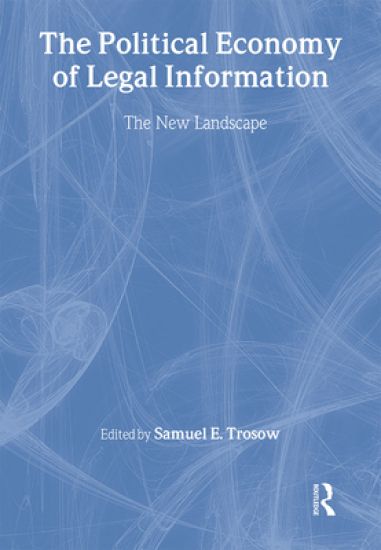
The Political Economy of Legal Information
From the informative information contained in The Political Economy of Legal Information: The New Landscape, you will discover how you, as a librarian or other information professional, can comprehend, cope with, and even try to influence the factors which comprise the new legal information landscape. You will discover the great changes in the legal publishing industry that have occurred within the last few years and the new ways in which legal information is produced, stored, disseminated, and used. The Political Economy of Legal Information will provide you with valuable tips to help you make sense of this new landscape so your library can reap the benefits of this new age. This informative book provides you with a collection of essays that describe, asses, and evaluate the political economy of information in the changing realm of legal publishing to keep you and your library on top of this dynamic situation. Through The Political Economy of Legal Information, you will find valuable insight into how you can make adjustments to constant technological changes by:confronting the cost efficiency model which promises both lower prices and greater effectiveness to help you make informed decisions about your library's technology learning about the economic logic of copyright laws to safeguard your library's reliance on big-name databases exploring the new Legal Publishers’List that provides a roadmap to the mergers and acquisitions that have characterized the publishing industry in recent years in order to choose the best manufacturer of the legal products in your library exploring case studies to help you understand how educational institutions, governmental entities, and small publishers can successfully cope with the new information landscape and to keep you informed of all the options available to your libraryWritten by a wide cross section of people who are working with legal information,The Political Economy of Legal Information provides essential information to assist you and your library in staying informed regarding the fast-paced world of legal publishing.
Constraining Public Libraries

Constraining Public Libraries

Samuel E. Trosow; Kirsti E. Nilsen

Scarecrow Press
2006
nidottu
In Constraining Public Libraries: The World Trade Organization's General Agreement on Trade in Services, the authors present a compelling argument for why the library community should be concerned about the effect of international trade agreements on the ability to deliver library and information services to the public. The book begins with a rigorous yet succinct description of the relevant provisions of the General Agreement on Trade in Services (GATS), proceeds to discuss how it is likely to impact particular public library services, and then discusses how the library community could best respond to these challenges. While there cannot be certainty when considering how GATS will ultimately impinge upon public libraries, this book pinpoints potential problem areas. It is a valuable tool in informing the dialogue within public libraries on the World Trade Organization, and providing the foundation for effective advocacy at the domestic and international levels to ensure that public libraries continue to play a central role in their communities for generations to come. Those in library and information science, as well as public administrators, educators, students, political and policy science professionals, government officials, and trade negotiators, will find this book to be an informative resource.
The 1864 Diary of Union Civil War Soldier Sergeant Samuel E. Grosvenor: A first-hand account of the horrors at Andersonville Prison
This is the transcription of Samuel E. Grosvenor's diary from his time with the 16th Regiment, Company B, as they were encamped at Plymouth, North Carolina, and then taken by the Confederate Army and imprisoned at Andersonville. Throughout1864 and his time as a POW, Grosvenor shares his thoughts on the war, his faith in God, the inhuman environment of the prison, the weather, the food (or lack of), to his expressions of joy of being released in December and being reunited with family and friends. Throughout the diary is anarrative compiled from other sources shedding more light on the events that he makes note of along with many pictures including some rare photos taken during the war and of Grosvenor's homestead in Guilford, Connecticut.
The Reminiscences of Dr. Samuel E. Barnes, Member of the Golden Thirteen
After a boyhood in Oberlin, Ohio, Barnes attended Oberlin College in the same town, graduating in 1936. He excelled in sports, particularly football and track, in both high school and college. He worked for five years as an athletic coach at Livingstone College in North Carolina, later enlisted in the Navy in September 1942. He served as an athletic specialist until tapped to enter an officer training program. He was commissioned an ensign in March 1944, one of the Navy’s first 13 black officers. After initial duty running athletic programs at Great Lakes, Illinois, he was sent to Williamsburg, Virginia, for training and later commanded a black stevedore battalion on Okinawa. After World War II he returned to civilian life and earned both his master’s degree and doctorate. In 1947 Barnes joined the faculty of Howard University in Washington, D.C. He coached a number of sports and later was athletic director from 1956 to 1970. Subsequently he was with Federal City College and the University of the District of Columbia. From 1970 to 1972 Dr. Barnes was on the executive committee of the National Collegiate Athletic Association, the first black person to achieve that honor.
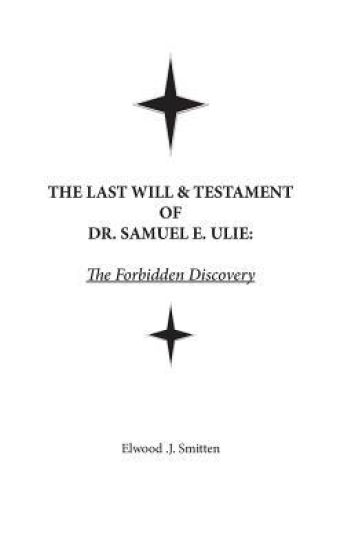
The Last Will & Testament of Dr. Samuel E. Ulie: The Forbidden Discovery

The Last Will & Testament of Dr. Samuel E. Ulie: The Forbidden Discovery

Jonathon Elwood Smith

Createspace Independent Publishing Platform
2018
nidottu
This book entails the journey of one man that embarks on a strange scientific investigation to prove the existence of another form of life. During his journey he encounters a race of creatures & it is soon discovered that nothing is what it seems to be. Unknown is that his discovery has a plan of its own for him that will shake the very fathoms of his sanity. Will it indeed be his last testament unto his death? Or can he stop these creatures from beyond before it is too late.
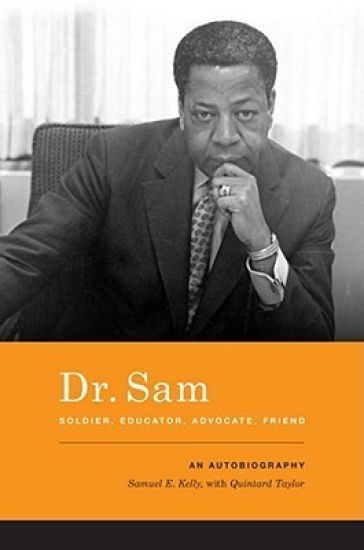
Dr. Sam, Soldier, Educator, Advocate, Friend

Dr. Sam, Soldier, Educator, Advocate, Friend

Samuel E. Kelly

University of Washington Press
2011
sidottu
When he was seventeen, Sam Kelly met Paul Robeson, who asked him, "What are you doing for the race?" That question became a challenge to the young Kelly and inspired him to devote his life to helping others. Sam Kelly's story intersects with major developments in twentieth-century African American history, from the rich culture of the Harlem Renaissance and the integration of the U.S. Army to the civil rights movement and the political turmoil of the 1960s.Kelly recounts his childhood in Greenwich, Connecticut, and his visits to Harlem. He describes his rise from army private to second lieutenant between 1944 and 1945, his bitter encounters with racism while wearing his army uniform in the South, his participation in the U.S. occupation of Japan, and his role in the desegregation of the army in 1948. In his rise to colonel, Kelly was a training and operations officer who helped create the post–Korean War rapid-response deployment army that would later fight in Vietnam and Iraq.As an educator, Dr. Sam earned the respect of the Black Panthers who took his African American history courses. In 1970, he became the first vice president for the Office of Minority Affairs and the first major African American administrator at the University of Washington. For six years, he led one of the strongest programs in the nation dedicated to integrating students of color at a major university. After retiring from the University of Washington at the age of sixty-five, Dr. Sam continued his work for black Americans by beginning a new career as a teacher and administrator at an alternative high school in Portland, Oregon.This remarkable book shares the difficulties in his personal life, including the birth of his special needs son, Billy; the unsuccessful struggle of his wife, Joyce, against breast cancer; and the challenges facing an interracial family. Before he died in 2009, he was proud to witness the election of Barack Obama as the first African American president, a fulfillment of his lifelong dream that the nation would recognize the rights and dignity of all citizens.Watch the book trailer: http://www.youtube.com/user/UWashingtonPress#p/u/4/udknuKbOmnE
Dr. Sam, Soldier, Educator, Advocate, Friend

Dr. Sam, Soldier, Educator, Advocate, Friend

Samuel E. Kelly

University of Washington Press
2013
pokkari
When he was seventeen, Sam Kelly met Paul Robeson, who asked him, "What are you doing for the race?" That question became a challenge to the young Kelly and inspired him to devote his life to helping others. Sam Kelly's story intersects with major developments in twentieth-century African American history, from the rich culture of the Harlem Renaissance and the integration of the U.S. Army to the civil rights movement and the political turmoil of the 1960s.Kelly recounts his childhood in Greenwich, Connecticut, and his visits to Harlem. He describes his rise from army private to second lieutenant between 1944 and 1945, his bitter encounters with racism while wearing his army uniform in the South, his participation in the U.S. occupation of Japan, and his role in the desegregation of the army in 1948. In his rise to colonel, Kelly was a training and operations officer who helped create the post–Korean War rapid-response deployment army that would later fight in Vietnam and Iraq.As an educator, Dr. Sam earned the respect of the Black Panthers who took his African American history courses. In 1970, he became the first vice president for the Office of Minority Affairs and the first major African American administrator at the University of Washington. For six years, he led one of the strongest programs in the nation dedicated to integrating students of color at a major university. After retiring from the University of Washington at the age of sixty-five, Dr. Sam continued his work for black Americans by beginning a new career as a teacher and administrator at an alternative high school in Portland, Oregon.This remarkable book shares the difficulties in his personal life, including the birth of his special needs son, Billy; the unsuccessful struggle of his wife, Joyce, against breast cancer; and the challenges facing an interracial family. Before he died in 2009, he was proud to witness the election of Barack Obama as the first African American president, a fulfillment of his lifelong dream that the nation would recognize the rights and dignity of all citizens.Watch the book trailer: http://www.youtube.com/user/UWashingtonPress#p/u/4/udknuKbOmnE