Kirjojen hintavertailu. Mukana 11 244 527 kirjaa ja 12 kauppaa.

Kirjahaku

Etsi kirjoja tekijän nimen, kirjan nimen tai ISBN:n perusteella.

1000 tulosta hakusanalla Samuel Ford Whittingham

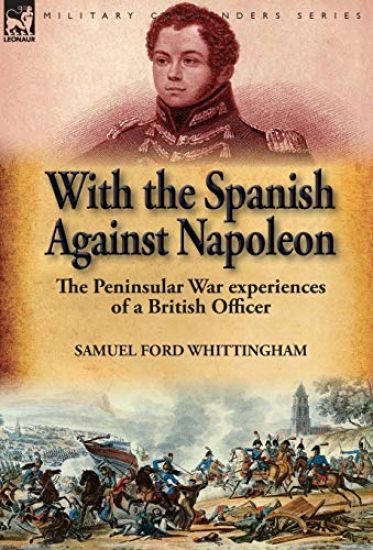
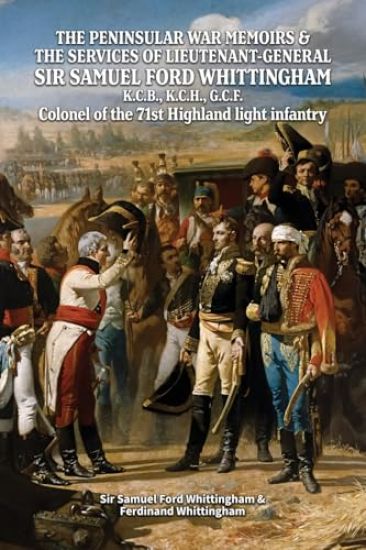
THE PENINSULAR WAR MEMOIRS & THE SERVICES OF LIEUTENANT-GENERAL SIR SAMUEL FORD WHITTINGHAM K.C.B., K.C.H., G.C.F. Colonel of the 71st Highland light infantry
Whittingham took part under La Pe a on 18 July 1808 in the victorious battle of Baylen, and for his services was made a colonel of cavalry in the Spanish army on 20 July. In February 1809 he joined the army corps of the Duke of Alburquerque in La Mancha, where he took part in several cavalry affairs with such distinction that he was promoted to be brigadier-general in the Spanish army. He was present at the battle of Medellin on 28 March, when the Spanish general Cuesta was defeated by the French general Victor-Perrin. On this occasion Whittingham re-formed the routed cavalry and led them against the enemy. A short time previous to Wellesley's advance into Spain Whittingham joined the British headquarters on the frontier of Portugal. On 28 July at the battle of Talavera he was severely wounded when gallantly bringing up two Spanish battalions to the attack and was mentioned in Sir Arthur Wellesley's despatch of 29 July 1809. He was given the command of the Spanish cavalry, which he remodelled upon British lines.Whittingham served in command of a force of Spanish cavalry and infantry under La Pe a at the battle of Barrosa, on 5 March 1811, and kept in check a French corps of cavalry and infantry which attempted to turn the Barossa heights by the seaward side. He was engaged on the 7th of the month in the affair of Xegona, and on the 15th in the affair of Concentay a was wounded by a musket-ball in the right cheek, and was on both occasions most favourably mentioned by Sir John Murray in despatches. On 13 April he took part in the victorious battle of Castalla and was again mentioned in despatches. When Murray invested Tarragona on 3 June Whittingham's division occupied the left. On Suchet's advance to relieve the place Whittingham vainly suggested to Murray that a corps of observation should be left before Tarragona, and that Murray should move to meet Suchet with all his force. The siege was raised. Murray was relieved in command of the army by Lord William Bentinck, and Whittingham covered the retreat, checking and repulsing the French column in pursuit, and joining the main army again at Cambrils.In March 1814 Whittingham escorted King Ferdinand VII in his progress to Madrid, who on 16 June 1814 promoted him to be lieutenant-general in the Spanish army. On 4 June Wellington wrote from Madrid to the Duke of York, in anticipation of Whittingham's return home: "He has served most zealously and gallantly from the commencement of the war in the peninsula, and I have had every reason to be satisfied with his conduct in every situation in which he has been placed."Whittingham reached Calcutta on 2 November 1822. He was busy in 1824 with the preparations for the expedition to Ava, and in November of that year with the Barrackpur Mutiny. He took part in the siege of Bhartpur, was slightly wounded on 13 January 1826, but was present at the capture on the 18th
THE PENINSULAR WAR MEMOIRS & THE SERVICES OF LIEUTENANT-GENERAL SIR SAMUEL FORD WHITTINGHAM K.C.B., K.C.H., G.C.F. Colonel of the 71st Highland light infantry
Whittingham took part under La Pe a on 18 July 1808 in the victorious battle of Baylen, and for his services was made a colonel of cavalry in the Spanish army on 20 July. In February 1809 he joined the army corps of the Duke of Alburquerque in La Mancha, where he took part in several cavalry affairs with such distinction that he was promoted to be brigadier-general in the Spanish army. He was present at the battle of Medellin on 28 March, when the Spanish general Cuesta was defeated by the French general Victor-Perrin. On this occasion Whittingham re-formed the routed cavalry and led them against the enemy. A short time previous to Wellesley's advance into Spain Whittingham joined the British headquarters on the frontier of Portugal. On 28 July at the battle of Talavera he was severely wounded when gallantly bringing up two Spanish battalions to the attack and was mentioned in Sir Arthur Wellesley's despatch of 29 July 1809. He was given the command of the Spanish cavalry, which he remodelled upon British lines.Whittingham served in command of a force of Spanish cavalry and infantry under La Pe a at the battle of Barrosa, on 5 March 1811, and kept in check a French corps of cavalry and infantry which attempted to turn the Barossa heights by the seaward side. He was engaged on the 7th of the month in the affair of Xegona, and on the 15th in the affair of Concentay a was wounded by a musket-ball in the right cheek, and was on both occasions most favourably mentioned by Sir John Murray in despatches. On 13 April he took part in the victorious battle of Castalla and was again mentioned in despatches. When Murray invested Tarragona on 3 June Whittingham's division occupied the left. On Suchet's advance to relieve the place Whittingham vainly suggested to Murray that a corps of observation should be left before Tarragona, and that Murray should move to meet Suchet with all his force. The siege was raised. Murray was relieved in command of the army by Lord William Bentinck, and Whittingham covered the retreat, checking and repulsing the French column in pursuit, and joining the main army again at Cambrils.In March 1814 Whittingham escorted King Ferdinand VII in his progress to Madrid, who on 16 June 1814 promoted him to be lieutenant-general in the Spanish army. On 4 June Wellington wrote from Madrid to the Duke of York, in anticipation of Whittingham's return home: "He has served most zealously and gallantly from the commencement of the war in the peninsula, and I have had every reason to be satisfied with his conduct in every situation in which he has been placed."Whittingham reached Calcutta on 2 November 1822. He was busy in 1824 with the preparations for the expedition to Ava, and in November of that year with the Barrackpur Mutiny. He took part in the siege of Bhartpur, was slightly wounded on 13 January 1826, but was present at the capture on the 18th

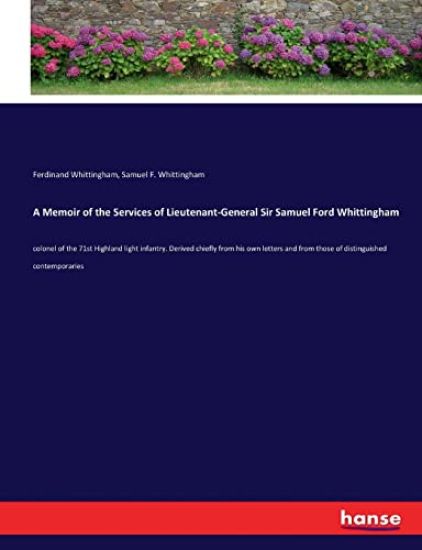
A Memoir of the Services of Lieutenant-General Sir Samuel Ford Whittingham

A Memoir of the Services of Lieutenant-General Sir Samuel Ford Whittingham

Ferdinand Whittingham; Samuel F Whittingham

Hansebooks
2020
pokkari
A Memoir of the Services of Lieutenant-General Sir Samuel Ford Whittingham - colonel of the 71st Highland light infantry. Derived chiefly from his own letters and from those of distinguished contemporaries is an unchanged, high-quality reprint of the original edition of 1868. Hansebooks is editor of the literature on different topic areas such as research and science, travel and expeditions, cooking and nutrition, medicine, and other genres. As a publisher we focus on the preservation of historical literature. Many works of historical writers and scientists are available today as antiques only. Hansebooks newly publishes these books and contributes to the preservation of literature which has become rare and historical knowledge for the future.
The Christian Repository, Issue 67

The Christian Repository, Issue 67

Samuel Howard Ford

Sagwan Press
2018
pokkari
This work has been selected by scholars as being culturally important, and is part of the knowledge base of civilization as we know it. This work was reproduced from the original artifact, and remains as true to the original work as possible. Therefore, you will see the original copyright references, library stamps (as most of these works have been housed in our most important libraries around the world), and other notations in the work.This work is in the public domain in the United States of America, and possibly other nations. Within the United States, you may freely copy and distribute this work, as no entity (individual or corporate) has a copyright on the body of the work.As a reproduction of a historical artifact, this work may contain missing or blurred pages, poor pictures, errant marks, etc. Scholars believe, and we concur, that this work is important enough to be preserved, reproduced, and made generally available to the public. We appreciate your support of the preservation process, and thank you for being an important part of keeping this knowledge alive and relevant.
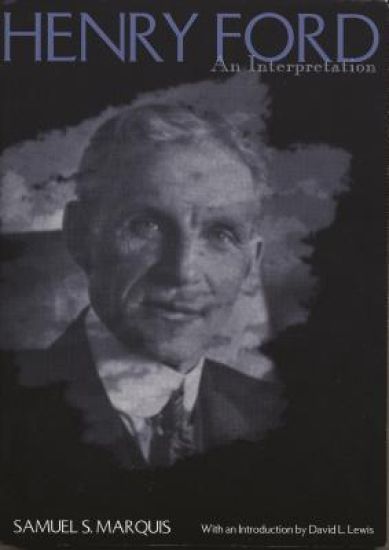
Henry Ford

Henry Ford

Samuel S. Marquis

Wayne State University Press
2007
nidottu
Regarded by many automotive historians as the finest and most dispassionate character study of Henry Ford ever written, Henry Ford: An Interpretation has long been out of print and priced out of the reach of many collectors. Published at the height of Ford's success in 1923, the volume was written by the Reverend Samuel S. Marquis, an Episcopalian minister who was also the head of the sociology department at Ford Motor Company. Instead of a history of Ford Motor Company or a simple retelling of Ford's life story, Marquis claims that his collection of essays is intended to analyze the "psychological puzzle such as the unusual mind and personality of Henry Ford presents." In insightful chapters that can be read in any order, Marquis examines Ford's mastery of self-promotion, his invincible reputation, his religious views, and his "elusive" personality. He also considers Ford through the lens of his corporation by commenting on its industrial operations, its charitable causes, and its "executive scrap heap." According to many accounts, Henry Ford was greatly pained by the criticism in some of Marquis's essays, which led him to suppress the wide distribution of the volume. Indeed, so many copies of Henry Ford: An Interpretation were borrowed from the Detroit Public Library and never returned that the library was forced to remove the volume from its shelves. Not surprisingly, the original edition of this book is very expensive and hard to find as a result of these sorts of actions. Ford history enthusiasts as well as readers who are interested in historical biography will be grateful for the reprint of this significant volume.
Henry Ford: An Interpretation

Henry Ford: An Interpretation

Samuel S. Marquis

Literary Licensing, LLC
2011
sidottu
""Henry Ford: An Interpretation"" is a biography written by Samuel S. Marquis that explores the life and legacy of Henry Ford, the founder of the Ford Motor Company and a pioneer in the automobile industry. The book delves into Ford's upbringing, his early career, and his revolutionary ideas that transformed the manufacturing process and made cars more affordable for the average American. Marquis also examines Ford's controversial views on social and political issues, including his anti-Semitic beliefs and his support for the Nazi regime in Germany during World War II. Through extensive research and analysis, Marquis provides a comprehensive portrait of a complex and influential figure in American history.This scarce antiquarian book is a facsimile reprint of the old original and may contain some imperfections such as library marks and notations. Because we believe this work is culturally important, we have made it available as part of our commitment for protecting, preserving, and promoting the world's literature in affordable, high quality, modern editions, that are true to their original work.