
Kirjahaku
Etsi kirjoja tekijän nimen, kirjan nimen tai ISBN:n perusteella.
1000 tulosta hakusanalla Samuel K. Anderson

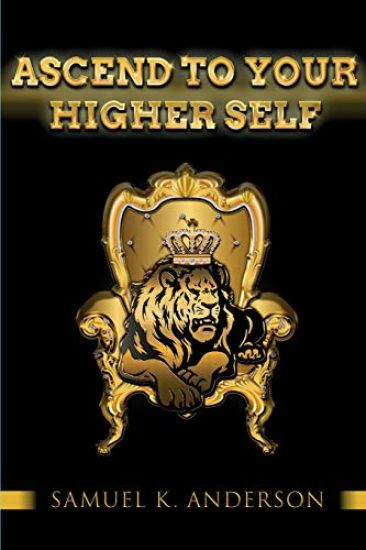
The FINEST THICKEST P**** is about: Power of the P**** Relaxation of your P**** You need to learn how to use your P**** to grant you good energetic vibrations. Failing to have control over your P**** may put you disproportionately out of your frequency. Be mindful of your P**** in order to be properly impregnated at the right time with the right energetic vibrating frequency. Your P**** is your power. Hence use your P**** wisely to attract the right energy. May your P**** get much needed rest to grow big in the realms of higher energetic vibrating frequencies. Feel your P****Adore your P****Embrace your P****Love your P****Use your P**** for your redemption. Enjoy this book, let's get started.
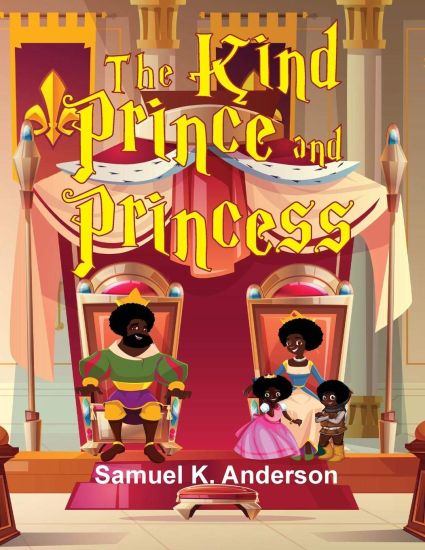
Get into the Kingdom of Be-Kind. Meet the prince and princess who decided to share their celebrations with the kids and parents of the Kingdom of Be-Kind. This book teaches us how to be kind, loving and sharing what we have with our community. Let's find out how the prince and princess were able to convince their parents to use their personal celebrations to honor all the children in the kingdom.
This book is about thoughts, inspirations, moments, meditations, motivations, wisdom, guidance, liberations, celebrations, struggles, success, life, appreciations, purpose, love, energy, freedom, lessons, laughter, tears, come-backs, determination, knowledge, joy, poems, reflections, happiness and forgiveness.

The most powerful weapon effective to destabilizing the strength, power, intellectual agility, and the union of any friendship, relationship, family, community, institutions, municipality, a state/region or a nation is the seed of discord. Once effectively sowed, you can easily control, manipulate and destroy such people's identity, confidence, knowledge and their very worth. Such distorted people will believe anything outside of themselves. This book uses an Epistemological, Mathematical, Biblical, Geographical, Archaeological, Scientific, Common Sense and Cultural Approach to Searching and Embracing through comprehension, the Audacity of The Most High God in relation to the universe and everything in it. This is not a religious book, rather spiritual. Its pedagogy challenges you to question everything, research and holistically decipher some of the complex topics in your personal spiritual awakening.


111 LAWS and PROVERBS I WISH I KNEW EARLIER IN LIFE
Samuel K Anderson
Royal Publication
2020
pokkari
111 Laws and Proverbs I Wish I Knew Earlier in Life is about the psychological and philosophical proverbs, self helps and attraction laws that position you to be your best self in every endeavor. The thoughts that roam through your mind have the power to become real life manifestations. These laws and proverbs are facts of every day life and science. Everything under the sun results from the acceptance and manifestation of good or evil, positive or negative energies or forces that gravitate manifestations. Practice these Laws of positive attraction, proverbs and wise inspirations that bring growth and success.
![Sung by Six. [Poems By] S. K. Cowan, J. H. Cousins, W. M. Knox, L. J. McQuilland, W. T. Anderson, J. J. Pender.](/covers/9781241066444.jpg)
Sung by Six. [Poems By] S. K. Cowan, J. H. Cousins, W. M. Knox, L. J. McQuilland, W. T. Anderson, J. J. Pender.
Samuel Kennedy Cowan; W T Anderson; James Henry
British Library, Historical Print Editions
2011
pokkari

The American Southeast at the End of the Ice Age
David G. Anderson; Derek T. Anderson; Katherine McMillan Barry; Kara Bridgman Sweeney; Samuel O. Brookes; Adam M. Burke; Stephen B. Carmody; Philip J. Carr; William A. Childress; I. Randolph Daniel; Ryan Duggins; Grayal E. Farr; Michael K. Faught; Brendan Fenerty; Jay D. Franklin; Lauren M. Franklin; J. Christopher Gillam; Joseph A. M. Gingerich; Jessi J. Halligan; Kandace D. Hollenbach; Vance T. Holliday; Thomas A. Jennings; K. C. Jones; Shawn A. Joy; Jerald Ledbetter; Greg J. Maggard; Steven M. Meredith; D. Shane Miller
THE UNIVERSITY OF ALABAMA PRESS
2022
sidottu
The definitive book on what is known about the Late Pleistocene and Early Holocene archaeological record in the Southeast The 1996 benchmark volume The Paleoindian and Early Archaic Southeast, edited by David G. Anderson and Kenneth E. Sassaman, was the first study to summarize what was known of the peoples who lived in the Southeast when ice sheets covered the northern part of the continent and mammals such as mammoths, saber-toothed cats, and ground sloths roamed the landscape.The American Southeast at the End of the Ice Age provides an updated, definitive synthesis of current archaeological research gleaned from an array of experts in the region. It is organized in three parts: state records, the regional perspective, and reflections and future directions. Chapters survey a diversity of topics including the distribution of the earliest archaeological sites in the region, chipped-stone tool technology, the expanding role of submerged archaeology, hunter-gatherer lifeways, past climate changes and the extinction of megafauna on the transitional landscape, and evidence of demographic changes at the end of the Ice Age. Discussion of the ethical responsibilities regarding the use of private collections and the relationship of archaeologists and the avocational community, insight from outside the Southeast, and considerations for future research round out the volume.
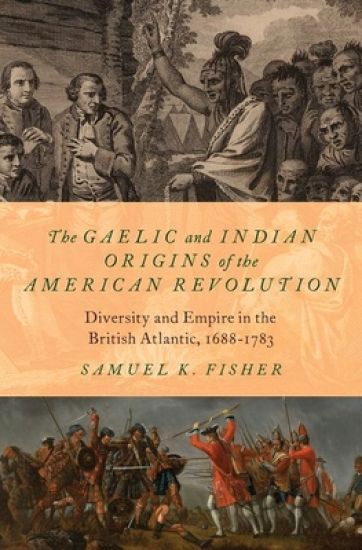
The Gaelic and Indian Origins of the American Revolution
Samuel K. Fisher
OXFORD UNIVERSITY PRESS INC
2022
sidottu
How did an unlikely group of peoples--Irish-speaking Catholics, Scottish Highlanders, and American Indians--play an even unlikelier role in the origins of the American Revolution? Drawing on little-used sources in Irish and Scottish Gaelic, The Gaelic and Indian Origins of the American Revolution places these typically marginalized peoples in Ireland, Scotland, and North America at the center of a larger drama of imperial reform and revolution. Gaelic and Indian peoples experiencing colonization in the eighteenth-century British empire fought back by building relationships with the king and imperial officials. In doing so, they created a more inclusive empire and triggered conflict between the imperial state and formerly privileged provincial Britons: Irish Protestants, Scottish whigs, and American colonists. The American Revolution was only one aspect of this larger conflict between inclusive empire and the exclusionary patriots within the British empire. In fact, Britons had argued about these questions since the Glorious Revolution of 1688, when revolutionaries had dethroned James II as they accused him of plotting to employ savage Gaelic and Indian enemies in a tyrranical plot against liberty. This was the same argument the American revolutionaries--and their sympathizers in England, Scotland, and Ireland--used against George III. Ironically, however, it was Gaelic and Indian peoples, not kings, who had pushed the empire in inclusive directions. In doing so they pushed the American patriots towards revolution. This novel account argues that Americans' racial dilemmas were not new nor distinctively American but instead the awkward legacies of a more complex imperial history. By showcasing how Gaelic and Indian peoples challenged the British empire--and in the process convinced American colonists to leave it--Samuel K. Fisher offers a new way of understanding the American Revolution and its relevance for our own times.
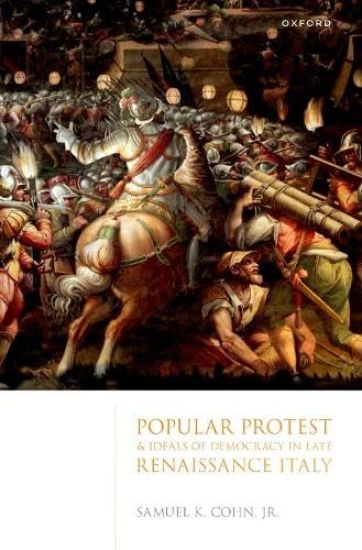
Popular Protest and Ideals of Democracy in Late Renaissance Italy
Samuel K. Cohn
Oxford University Press
2025
nidottu
Popular Protest and Ideals of Democracy in Late Renaissance Italy is the first study to analyse popular protest across the Italian peninsula and the Venetian colonies during the early modern period, 1494 to 1559. Drawing on over 100 contemporary chronicles and diaries, the fifty-eight volumes of Marin Sanudo's diplomatic dispatches, mercantile letters, and commentary, and 586 collective supplications scattered through archival sources from towns and villages in the Grand duchy of Milan, Samuel K. Cohn, Jr. places these incidents and their patterns in comparative perspectives, first with the late medieval heyday of popular revolt and then with regions north of the Alps. Cohn finds new developments during the early modern period such as an increase in women rebels, mutinies of soldiers, and new tactics of revolts such as shop closures, peaceful demonstrations of strength, and use of religious processions for discussions of tactics and strategies for obtaining logistic advantage. At the same time, these protests show convergences with the medieval Italian past, with leaders coming almost exclusively from the ranks of nonelites, religious ideology playing a surprisingly minor role, and the majority of revolts centring overwhelming in towns and cities. Finally, this study demonstrates that democracies do not just die under the duress of military occupation and growing powers of autocratic regimes. Ideals of representation and equality not only persisted; they could emerge in new forms and with greater sophistication.
Sommaroy sees no sunset for approximately 69 days of each year, during which the residents of this small Norwegian village enjoy perpetual daylight. This has inspired the Ghanaian philosopher, Samuel K. K. Blankson, to develop the philosophy of secular time based on daylight in astronomy.

Portraits of Medieval and Renaissance Living
Samuel K. Cohn; Steven A. Epstein; David Herlihy
The University of Michigan Press
1996
sidottu
This volume--a collection of essays dedicated to one of this century's most distinguished medieval historians, David Herlihy--introduces the general reader to the new social history of the Middle Ages and the Renaissance. The essays address three themes: sex and the family, power and patronage in local history, and society in town and countryside. The authors use current research to illustrate how Herlihy's ideas continue to shape work about the lives of powerful and ordinary people in this long and important period of Western history.Portraits of Medieval and Renaissance Living opens with Herlihy's final summary of his views on family history, followed by a reminiscence by his most important collaborator, Christiane Klapisch-Zuber. The first group of essays takes us inside specific familial settings, using recent methods in anthropological, legal, and women's studies to uncover new dimensions of medieval and Renaissance family life. A second group of studies focuses on the question of authority in medieval society and advances new theses about politics and society in Florence and other local settings. The final group of authors considers the special circumstances of town and countryside in Italy, England, and Spain and draws insightful generalizations across territorial and national boundaries. Like Herlihy's own work, these essays present innovative and challenging hypotheses about significant problems in the history of medieval and Renaissance Europe. Important new material on Florence, family history, religion, the Inquisition, and taxation is presented for the first time, but the essays are not simply technical exercises focused on small or isolated pieces of research. Thus the volume will go beyond the interest of specialists in medieval and Renaissance social history and will attract a wide audience of students and scholars.Samuel K. Cohn, Jr., is Professor of History, Brandeis University. Steven Epstein is Professor of History, University of Colorado.
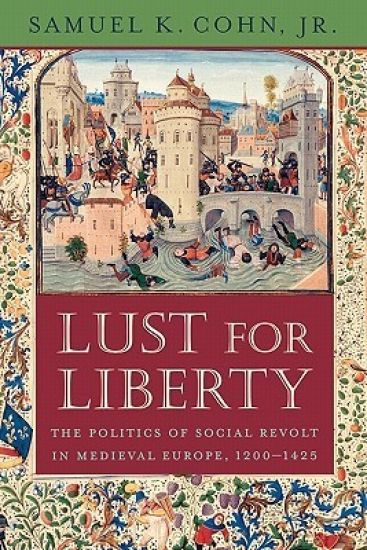
Lust for Liberty challenges long-standing views of popular medieval revolts. Comparing rebellions in northern and southern Europe over two centuries, Samuel Cohn analyzes their causes and forms, their leadership, the role of women, and the suppression or success of these revolts. Popular revolts were remarkably common--not the last resort of desperate people. Leaders were largely workers, artisans, and peasants. Over 90 percent of the uprisings pitted ordinary people against the state and were fought over political rights--regarding citizenship, governmental offices, the barriers of ancient hierarchies--rather than rents, food prices, or working conditions. After the Black Death, the connection of the word "liberty" with revolts increased fivefold, and its meaning became more closely tied with notions of equality instead of privilege.The book offers a new interpretation of the Black Death and the increase of and change in popular revolt from the mid-1350s to the early fifteenth century. Instead of structural explanations based on economic, demographic, and political models, this book turns to the actors themselves--peasants, artisans, and bourgeois--finding that the plagues wrought a new urgency for social and political change and a new self- and class-confidence in the efficacy of collective action.
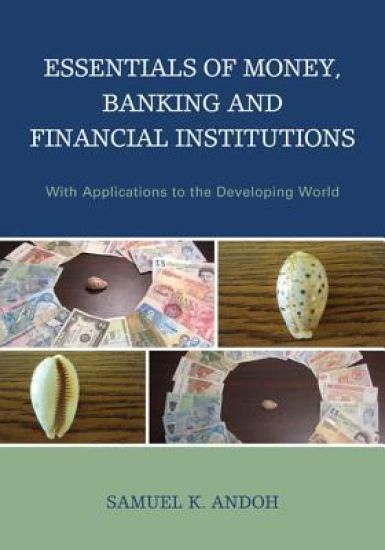
Essentials of Money, Banking and Financial Institutions
Samuel K. Andoh
Lexington Books
2014
sidottu
The study of money, banking and financial markets is a required or very popular elective in most undergraduate and graduate programs in economics and finance in Africa. However, the textbooks used are those written primarily for the developed world such as the United States or the U.K. The result is that students graduate with excellent theoretical knowledge about the subject matter as it pertains to the developed economies, but lack the ability to apply the same knowledge to less developed economies. Although the subject matter of money and banking can be treated at a theoretical level, it is best done with institutions in mind. As an application oriented course, references and applications should, as much as possible, be to the conditions and institutions present in the environment where the subject is being studied and where the knowledge will be used, rather than to institutions that exist elsewhere in developed economies. The primary purpose of Essentials of Money, Banking and Financial Institutions is to provide a text in money, banking, and financial institutions in the context of the developing economies, especially Africa. Throughout the book, a deliberate effort will be made to focus the students’ attention on the need to develop the existing institutions so they can help to accelerate economic development.

In 1962, Samuel K. Rubin founded 8mm Collector, the predecessor to Classic Images, a widely respected publication in the vintage film hobby that celebrates the golden age of Hollywood. He was instrumental in beginning the "vintage film fan movement," founding The Society for Cinephiles, as well as organizing the Cinecon vintage film conventions. This is simultaneously a history of the vintage film hobby, a history of Classic Images, and a memoir of Rubin's forty years in the center of the hobby's world. Rubin has drawn from his personal experiences with industry professionals from the silent and early sound era, and from his service during the more than 320 issues of Classic Images published since that magazine's inception. The book covers the birth of 8mm Collector and includes reviews of the classic films, reviews of books and videos of the early screen and profiles of classic film industry personalities. Classic Images still provides a medium for film enthusiasts to share their experiences with different vendors, buy and sell movie memorabilia, and generally covers the entire movie industry from the viewpoint of the collector.

"These seven essays on women, sex, violence, and piety in Renaissance Italy," writes historian Samuel Cohn Jr., "bespeak the darker side of the Renaissance and, in particular, the decline in Italian women's status from the late fourteenth century until the Counter Reformation visitations of the 1570s. In this sense, these essays run directly counter to Jacob Burckhardt's claim for Renaissance Italy, 'that women stood on a footing of perfect equality with men." Challenging conventional views of the history of women in the Italian Renaissance, Cohn examines the lives primarily of non-elite women and looks at their experiences in various city-states and regions, thus offering a different perspective from the history of aristocratic and well-to-do women in the large city-states. Drawing on a wide range of archival documentation, Cohn also relies on large sets of quantitative material to reveal a multifaceted view of women's social worlds not seen from the letters of patrician ladies or the prescriptive judgments of Renaissance moralists. Within the larger historical contexts of the Black Death, the growth of territorial states, and the Counter Reformation, Women in the Streets charts changes in law, the structure and accessibility of the criminal courts, and the customs and mentalities that shaped women's lot, from infanticide to the control of sexual mores. Ultimately, Cohn argues, women are the protagonists of this book, whether the issue is their support of other women or the resolution of conflict in the streets of Florence, the control of their own dowries or the salvation of their own souls.