Kirjojen hintavertailu. Mukana 11 244 527 kirjaa ja 12 kauppaa.

Kirjahaku

Etsi kirjoja tekijän nimen, kirjan nimen tai ISBN:n perusteella.

1000 tulosta hakusanalla Sandine Tomas

The Music of Love

The Music of Love

Sandine Tomas

Dreamspinner Press
2018
nidottu
Sometimes the music of love skips a beat…. Paralegal by day, musician by night, Julian has an expiration date stamped on his forehead when it comes to love. No relationship has made it past a year, so Julian avoids romance like the plague and concentrates on his music instead. Which works fine until gorgeous, smart, and funny Zachary joins Julian's firm. One look at the man and Julian knows he's dangerous. No matter what, he can't fall for Zachary. He has to spare Zachary the pain of dumping Julian at the one-year mark. His brilliant plan? Ask a straight friend to pose as his significant other to keep Zachary away. Not surprisingly, his scheme does little to dampen the attraction—on either side. When Zachary gives Julian a second chance despite his deception, Julian thinks his curse might be broken. But then he's faced with the impossible choice between a life with Zachary and living his dream of touring with the band….
Santa's Last Gift

Santa's Last Gift

Sandine Tomas

Dreamspinner Press
2019
pokkari
The greatest gift might be what they already have.After years away building his career, event planner Sebastian Chesnut returns to his small hometown of Fir Falls to reconnect with his mother, sister, and young nieces before his job takes him to London.He doesn't expect to find his high school boyfriend, Matty, has become a virtual member of Seb's family. Back then, Matty only offered a casual relationship, but Seb fell hard, and history is soon repeating itself. Seb's afraid to hope for a second chance, no matter how much they've grown and despite the family they share. Instead, he focuses on creating a last perfect holiday, which won't be easy with his sister's ex planning to take the girls over Christmas.Seb and Matty might not know what to do about their feelings for each other, but one thing's for sure—it won't be Christmas without the kids. Can these star-crossed lovers pull off a holiday miracle?
Sandrine's Case

Sandrine's Case

Thomas H Cook

Grove Press / Atlantic Monthly Press
2014
nidottu
Shortlisted for the 2014 Edgar Award and Barry Award for Best NovelThomas H. Cook is peerless in finding the humanity behind crime. In one of his greatest novels yet, a man explores unspools the history of his fractured relationship with his wife, as he stands trial for her murder. Samuel Madison always wondered why Sandrine chose him. He was a meek, stuffy doctorate student; she a brilliant bohemian with limitless imagination. On the surface, their relationship seemed tranquil: jobs at the same liberal arts college, a precocious young daughter, and a home filled with art and literature. And then one night Sandrine is found dead in their bedroom from an overdose of pain medication and alcohol, and Samuel is accused of poisoning her. As secrets about their often tumultuous marriage come to light in the courtroom, Samuel must face a town convinced of his guilt, a daughter whose faith in her father has been shaken to its core, and the truth about his wife, who never ceased being a mystery to him. Sandrine's Case is a powerful novel about the evil that can lurk within the heart of a seemingly ordinary man, and whether love can be reawakened even after death.
Sandrine

Sandrine

Thomas H. Cook

Head of Zeus
2013
nidottu
How did Sandrine die? There was no forced entry. She had been gradually stockpiling prescription drugs. A lethal quantity of Demerol was found in her blood. But did the beautiful, luminous Sandrine Madison really take her own life? The District Attorny doesn't think so. Neither does the local newspaper. And so Sandrine's husband must now face a town convinced of his guilt and a daughter whose faith in her father has been shaken to its core. But, as he stands in the dock, Samuel Madison must confront yet more searing questions: Who was Sandrine? Why did she die? And why - how? - is she making him fall in love with her all over again? A psychological thriller from a true master, SANDRINE will hold you in its spell until its unexpected end.
Under omprövning : en antologi om konst, kanon och kvalitet

Under omprövning : en antologi om konst, kanon och kvalitet

Thomas Steinfeld; Peter Luthersson; Theodore Dalrymple; Axel Odelberg; Karin Stensdotter; Roger Kimball; Johan Lundberg; Roger Scruton; James Macmillan; Camilla Lundberg; Pär Sandin; Gunnar Larsson; Hans Henrik Brummer; Therese Bohman; Henry Larsson; Ann-Sofi Ljung-Svensson; Martin Lagerholm; David Andersson; Einar Askestad; Rob Riemen; John Armstrong; Per Bauhn; Torbjörn Elensky; Alain de Botton; Peter Elmlund; Lars Anders Johansson; David Mason; Anna Brodow Inzaina; Christopher Rådlund; Denis Dutton; Brian Boyd; Marcus Nordlund

Bokförlaget Atlantis
2011
sidottu
Under omprövning rymmer ett stort antal bidrag som förenas av att de utifrån ett kritiskt perspektiv diskuterar vår tids mest karakteristiska estetiska hållningar och konstnärliga tendenser. Antologin försöker se framåt, förbi de modernistiska och postmodernistiska strategier som kännetecknat 1900-talets utveckling inom konstarter som litteratur, musik, bildkonst och arkitektur. Detta innebär också en omvärdering av kulturhistorien, där en rad förbisedda författarskap och konstnärskap lyfts fram. Och där kulturhistorien utvärderas med avseende på vad som kan te sig fruktbart och ofruktbart för framtiden.
Structural Transformation and Rural Change Revisited

Structural Transformation and Rural Change Revisited

Bruno Losch; Sandrine Freguin-Gresh; Eric Thomas White

World Bank Publications
2012
nidottu
This book makes a compelling case for reintegrating structural issues into agricultural and rural development policies, which have for the last 30 years over-focused on short-term issues. It shows how the liberalization of agriculture in many late developing countries has not in fact led to the development of the vibrant rural non-farm economy so often discussed in the literature. Neither has it led to a large-scale integration of agricultural producers into the global economy. Most producers remain engaged in traditional crops—mainly staples—and in traditional marketing systems characterized by limited contractualization. Yet in spite of these observations the book draws optimistic conclusions: there are a clear set of policy priorities that, if adapted to individual country contexts, can facilitate an enduring and productive rural transformation. The book is based on an in-depth seven-country study that surveyed 8,000 rural households. It specifically focuses on these households’ activity and income structures in an evolving agricultural context marked by liberalization and trends of increasing economic integration. In doing so it reviews the very different levels (and trajectories) of rural diversification among countries at various stages in the structural transformation process. Among late developers, such as the countries of sub-Saharan Africa, a common observation is an incipient economic transition that is accompanied by a strong process of demographic transition. Consequently, growing cohorts of new labor market entrants pose a dramatic challenge. This new demographic structure offers a huge opportunity for growth if it can be accommodated, and if not it represents a serious political and economic liability. If overall economic diversification is the major avenue for change, sustainable growth, and job creation, then it is clear that agriculture and the rural economy will have a critical role to play in the coming two decades. Based on its investigation of existing rural realities, the book suggests several policy orientations. These include a clear need to focus on staples and family agriculture, to engage in targeted development strategies at the regional level, and to pursue a policy of “territorial development” that promotes strong rural-urban linkages at the level of rural localities, towns and districts.
French as a Foreign Language for Cambridge IGCSE™ Digital Teacher's Resource Access Card

French as a Foreign Language for Cambridge IGCSE™ Digital Teacher's Resource Access Card

Esther Gagneux; Lauren Savage; Iestyn Thomas Hockaday; Sandrine Chein Chow Chine

Cambridge University Press
2026
lisenssiavain
The updated teacher's resource provides you with a wealth of guidance, ideas and inspiration to help deliver the syllabus and develop your students' learning. Support includes lesson ideas, differentiated classroom activities, worksheets, and the answers to the coursebook and workbook questions. The resource supports the Cambridge IGCSE™ and IGCSE (9-1) French syllabuses (0520/7156) for examination from 2028. Access your digital resource via Cambridge GO.
Långvarig smärta ur ett vårdande perspektiv

Långvarig smärta ur ett vårdande perspektiv

Helena Lööf; Sara Cederbom; Anna Danarp; Birgitta Kerstis; Sandra Medina; Thomas Overmeer; Sara Riggare; Maria Sandborgh; Lena Sandin Wranker; Mirkka Söderman; Karin Wideslätt

Studentlitteratur AB
2022
nidottu
Långvarig smärta leder ofta till minskat välbefinnande och till minskad generell upplevd hälsa. Inom primärvården är smärta den vanligaste orsaken till att personer söker vård. Därför måste alla som arbetar inom vården ha en bred kunskap om vad smärta är för att på bästa sätt bemöta personer med långvarig smärta.Smärta är ett mänskligt fenomen och förekommer i alla åldrar. Boken tar därför upp alltifrån smärta hos små barn till smärta hos de allra äldsta personerna. Betydelsen av att uppmärksamma och ta till vara patienters inneboende kunskap och kompetens i vårdmötet beskrivs också. Samtliga kapitel illustreras av fallbeskrivningar där utgångspunkten är olika situationer och vårdkontexter med förslag på adekvata omvårdnads- och stödåtgärder. Sjuksköterskans kärnkompetenser förankrar boken i det vårdande perspektivet.Boken riktar sig i första hand till studenter på grundutbildningar, främst till de som studerar till sjuksköterska, men även studenter inom fysioterapi och arbetsterapi kan ha stor nytta av bokens innehåll. Boken kan användas av andra professioner, liksom av studerande på olika vidareutbildningar som berör ämnet långvarig smärta.
Deadly Baggage

Deadly Baggage

Al Sandine

McFarland Co Inc
2015
pokkari
In 1519, a few hundred Europeans led by Hernan Cortes sailed from Cuba to the Mexican mainland, where they encountered representatives of the Aztec Empire. Their Iberian history, culture and religion, and their experience in the Greater Antilles made conquest and riches the aim of these adventurers. They regarded themselves as heroes in a romantic crusade of good against evil. Each member of the expedition sought to acquire precious metals and to become a lord of enslaved native labor. Their horses and steel swords, aided by native disunity and susceptibility to Old World diseases, ensured their success. This analysis of the conquest of Mexico stands in contrast to previous narratives that either reduce the conquest to a contest between Cortes and Montezuma, or describe a near miraculous victory of European ingenuity and Western values over Indian superstition and savagery. The author re-frames the clash of civilizations in New World prehistory that left inhabitants at a disadvantage.
Plundertown USA

Plundertown USA

Al Sandine

HANCOCK HOUSE PUBLISHERS LTD ,CANADA
2003
pokkari
Sandine recounts the story of Coos Bay's economic decline, illustrating the impact of economic globalization on a small Oregon community. He fills in background on the town's history, which he intertwines with his own autobiography and family history and supports with dozens of photographs. Annotati
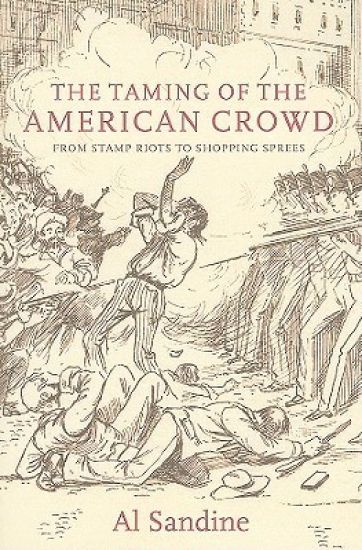
The Taming of the American Crowd

The Taming of the American Crowd

Al Sandine

Monthly Review Press,U.S.
2009
nidottu
The history of the United States has been largely shaped, forbetter or for worse, by the actions of large groups of people. Rioters on a village green, shoppers lurching about a labyrinthine mall, slaves packed into the dark hold of a ship, strikers assemblingoutside the factory gates, all have their place in the rich and sometimes tragic history of the American crowd. This unique study traces that history from the days of anti-colonial revolt to today's passive, "colonized crowds" that fill our sports arenas, commercial centers, and workplaces. In clear and lively prose, Al Sandine argues for the progressive role crowds have played in securing greater democracy, civil rights, and free speech. But he also investigates crowds in their more dangerous forms, such as lynch mobs and anti-immigrant riots.The Taming of the American Crowd explains how the crowd as an active subject of change--often positive, sometimes not--has been replaced by the passive crowd as object of control and regulation.Today, the imperatives of mass society organize people in large numbers to consume goods and conform to permissiblebehavioral patterns; not to openly contest power. But, with the world entering a new period of economic uncertainty and mass protests erupting across the globe, it is time to reversethat trend. This book shows us the history of the untamed crowd and urges us to reclaim its legacy.
The Taming of the American Crowd

The Taming of the American Crowd

Al Sandine

MONTHLY REVIEW PRESS,U.S.
2009
sidottu
The history of the United States has been largely shaped, forbetter or for worse, by the actions of large groups of people. Rioters on a village green, shoppers lurching about a labyrinthine mall, slaves packed into the dark hold of a ship, strikers assemblingoutside the factory gates, all have their place in the rich and sometimes tragic history of the American crowd. This unique study traces that history from the days of anti-colonial revolt to today's passive, colonized crowds that fill our sports arenas, commercial centers, and workplaces. In clear and lively prose, Al Sandine argues for the progressive role crowds have played in securing greater democracy, civil rights, and free speech. But he also investigates crowds in their more dangerous forms, such as lynch mobs and anti-immigrant riots.The Taming of the American Crowd explains how the crowd as an active subject of change--often positive, sometimes not--has been replaced by the passive crowd as object of control and regulation.Today, the imperatives of mass society organize people in large numbers to consume goods and conform to permissiblebehavioral patterns; not to openly contest power. But, with the world entering a new period of economic uncertainty and mass protests erupting across the globe, it is time to reversethat trend. This book shows us the history of the untamed crowd and urges us to reclaim its legacy.
Sandino's Communism

Sandino's Communism

Donald C. Hodges

University of Texas Press
2014
nidottu
Drawing on previously unknown or unassimilated sources, Donald C. Hodges here presents an entirely new interpretation of the politics and philosophy of Augusto C. Sandino, the intellectual progenitor of Nicaragua's Sandinista revolution.The first part of the book investigates the political sources of Sandino's thought in the works of Babeuf, Buonarroti, Blanqui, Proudhon, Bakunin, Most, Malatesta, Kropotkin, Ricardo Flores MagÓn, and Lenin-a mixed legacy of pre-Marxist and non-Marxist authoritarian and libertarian communists.The second half of the study scrutinizes the philosophy of nature and history that Sandino made his own. Hodges delves deeply into this philosophy as the supreme and final expression of Sandino's communism and traces its sources in the Gnostic and millenarian occult undergrounds. This results in a rich study of the ways in which Sandino's revolutionary communism and communist spirituality intersect-a spiritual politics that Hodges presents as more realistic than the communism of Karl Marx.While accepting the current wisdom that Sandino was a Nicaraguan liberal and social reformer, Hodges also makes a persuasive case that Sandino was first and foremost a communist, although neither of the Marxist nor anarchist variety. He argues that Sandino's eclectic communist spirituality was more of an asset than a liability for understanding the human condition, and that his spiritual politics promises to be more relevant than Marxism-Leninism for the twenty-first century. Indeed, Hodges believes that Sandino's holistic communism embraces both deep ecology and feminist spirituality-a finding that is sure to generate lively and productive debate.
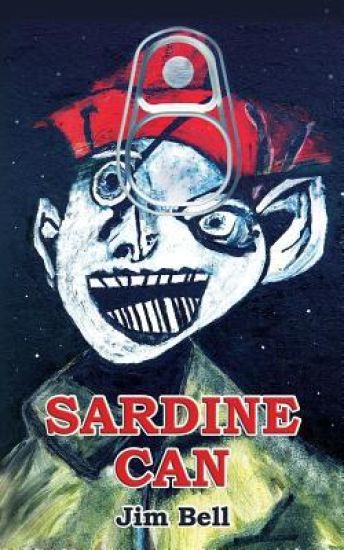
Sardine Can

Sardine Can

Jim Bell

Black Ops Texts
2018
nidottu
"What lies curl dry off a wishing well's wall? Is the world an eye and an eye a world?" Sardine Can is packed with 60 oblique tales and poems of assorted bit players at large; chiefly the mad, the bad, and the brokenhearted. Some traverse seas, wars, the twilight years, and squalor; others, the forlorn ruins of their consciences. There are weddings, funerals, road trips, and obsessions; loners, musos, insomniacs, and lovers. With ennui the haunting starts out early as just as sting. It first creeps within the marrow, then trawls across the apron of the heart like a salted Ouija glass; their tongues just strings in their throats . . .
Sandino

Sandino

Augusto C. Sandino

Princeton University Press
2014
pokkari
"Washington is called the father of his country; the same may be said of Bol!var and Hidalgo; but I am only a bandit, according to the yardstick by which the strong and the weak are measured."--Augusto C. Sandino. For the first time in English, here are the impassioned words of the remarkable Nicaraguan hero and martyr Augusto C. Sandino, for whom the recent revolutionary regime was named. From 1927 until 1933 American Marines fought a bitter jungle war in Nicaragua, with Sandino as their guerrilla foe. This artisan and farmer turned soldier was an unexpectedly formidable military threat to one of the succession of regimes that the United States had imposed on that country beginning in 1909. He was also the creator of a deeply patriotic language of protest--eloquent, often naive, sometimes cruel, and always defiant. The documents in this volume, presented chronologically, constitute a spontaneous autobiography, a record not only of Sandino's adventurous life but also of a crucial and often overlooked aspect of the relationship between Nicaragua and the United States. Emblematic of the deep-rooted U.S. entanglement in Nicaraguan affairs is the fact that Anastasio Somoza, who assassinated Sandino in 1934, was the father of the Somoza overthrown by the Sandinistas in 1979. By 1933 Sandino's guerrilla army had at last forced the departure of the American Marines from Nicaragua, and in that same year he had negotiated a peace agreement with the new president, Juan Bautista Sacasa. Sacasa granted Sandino and a hundred followers a large tract of government land to establish an agricultural cooperative, and Sandino agreed to partial disarmament of of his men. But a year later he was seized near the presidential mansion by solders of Somoza's National Guard and assassinated with two of his generals. The National Guard then attacked and destroyed his cooperative. Both before and after Sandino's brutal assassination, Somoza tried to discredit the idiosyncratic blend of political, religious, and theosophical ideas through which Sandino inspired his soldiers. Included among the documents here are expressions not only of Sandino's military preoccupations and of his philosophy but also of his practical concerns about worker organization and legislation, the rights of women and children, the protection and development of Nicaragua's Indians, Central American unification, construction of a Nicaraguan canal for the benefit of Nicaraguans and the world in general, Indo-Hispanic cooperation, and land reform. This work, which is based on the two-volume Spanish edition compiled by Sergio Ramirez, includes an introduction by Robert Conrad setting Sandino's life in historical context. Originally published in 1990. The Princeton Legacy Library uses the latest print-on-demand technology to again make available previously out-of-print books from the distinguished backlist of Princeton University Press. These editions preserve the original texts of these important books while presenting them in durable paperback and hardcover editions. The goal of the Princeton Legacy Library is to vastly increase access to the rich scholarly heritage found in the thousands of books published by Princeton University Press since its founding in 1905.
Sandino

Sandino

Augusto C. Sandino

Princeton University Press
2016
sidottu
"Washington is called the father of his country; the same may be said of Bol!var and Hidalgo; but I am only a bandit, according to the yardstick by which the strong and the weak are measured."--Augusto C. Sandino. For the first time in English, here are the impassioned words of the remarkable Nicaraguan hero and martyr Augusto C. Sandino, for whom the recent revolutionary regime was named. From 1927 until 1933 American Marines fought a bitter jungle war in Nicaragua, with Sandino as their guerrilla foe. This artisan and farmer turned soldier was an unexpectedly formidable military threat to one of the succession of regimes that the United States had imposed on that country beginning in 1909. He was also the creator of a deeply patriotic language of protest--eloquent, often naive, sometimes cruel, and always defiant. The documents in this volume, presented chronologically, constitute a spontaneous autobiography, a record not only of Sandino's adventurous life but also of a crucial and often overlooked aspect of the relationship between Nicaragua and the United States. Emblematic of the deep-rooted U.S. entanglement in Nicaraguan affairs is the fact that Anastasio Somoza, who assassinated Sandino in 1934, was the father of the Somoza overthrown by the Sandinistas in 1979. By 1933 Sandino's guerrilla army had at last forced the departure of the American Marines from Nicaragua, and in that same year he had negotiated a peace agreement with the new president, Juan Bautista Sacasa. Sacasa granted Sandino and a hundred followers a large tract of government land to establish an agricultural cooperative, and Sandino agreed to partial disarmament of of his men. But a year later he was seized near the presidential mansion by solders of Somoza's National Guard and assassinated with two of his generals. The National Guard then attacked and destroyed his cooperative. Both before and after Sandino's brutal assassination, Somoza tried to discredit the idiosyncratic blend of political, religious, and theosophical ideas through which Sandino inspired his soldiers. Included among the documents here are expressions not only of Sandino's military preoccupations and of his philosophy but also of his practical concerns about worker organization and legislation, the rights of women and children, the protection and development of Nicaragua's Indians, Central American unification, construction of a Nicaraguan canal for the benefit of Nicaraguans and the world in general, Indo-Hispanic cooperation, and land reform. This work, which is based on the two-volume Spanish edition compiled by Sergio Ramirez, includes an introduction by Robert Conrad setting Sandino's life in historical context. Originally published in 1990. The Princeton Legacy Library uses the latest print-on-demand technology to again make available previously out-of-print books from the distinguished backlist of Princeton University Press. These editions preserve the original texts of these important books while presenting them in durable paperback and hardcover editions. The goal of the Princeton Legacy Library is to vastly increase access to the rich scholarly heritage found in the thousands of books published by Princeton University Press since its founding in 1905.

Sandino's Nation

Sandino's Nation

Stephen Henighan

McGill-Queen's University Press
2014
sidottu
Ernesto Cardenal and Sergio Ramirez are two of the most influential Latin American intellectuals of the late twentieth and early twenty-first centuries. Addressing Nicaragua's struggle for self-definition from divergent ethnic, religious, generational, political, and class backgrounds, they constructed distinct yet compatible visions of national history, anchored in a reappraisal of the early twentieth-century insurgent leader Augusto Cesar Sandino. During the Sandinista Revolution of 1979-90, Cardenal, appointed Nicaragua's minister of culture, became one of the most provocative and internationally recognized figures of liberation theology, while Ramirez, a member of the revolutionary junta, and later elected vice-president of Nicaragua, emerged as an authoritative figure for third world nationalism. But before all else, the two were groundbreaking creative writers. Through a close reading of the works by Nicaragua's best-known and most prolific modern authors, Sandino's Nation studies the construction of Nicaraguan national identity during three distinct periods of the country's recent history - before, during, and after the 1979-90 revolution. Stephen Henighan offers rigorous textual analyses of poems, memoirs, essays, and novels, interwoven with a sharply narrated history of Nicaragua. The only comprehensive study of the careers of Cardenal and Ramirez, Sandino's Nation is essential to understanding transformations to both Nicaragua and the role of the writer in Latin America.
Sandino's Nation

Sandino's Nation

Stephen Henighan

McGill-Queen's University Press
2014
nidottu
Ernesto Cardenal and Sergio Ramirez are two of the most influential Latin American intellectuals of the late twentieth and early twenty-first centuries. Addressing Nicaragua's struggle for self-definition from divergent ethnic, religious, generational, political, and class backgrounds, they constructed distinct yet compatible visions of national history, anchored in a reappraisal of the early twentieth-century insurgent leader Augusto Cesar Sandino. During the Sandinista Revolution of 1979-90, Cardenal, appointed Nicaragua's minister of culture, became one of the most provocative and internationally recognized figures of liberation theology, while Ramirez, a member of the revolutionary junta, and later elected vice-president of Nicaragua, emerged as an authoritative figure for third world nationalism. But before all else, the two were groundbreaking creative writers. Through a close reading of the works by Nicaragua's best-known and most prolific modern authors, Sandino's Nation studies the construction of Nicaraguan national identity during three distinct periods of the country's recent history - before, during, and after the 1979-90 revolution. Stephen Henighan offers rigorous textual analyses of poems, memoirs, essays, and novels, interwoven with a sharply narrated history of Nicaragua. The only comprehensive study of the careers of Cardenal and Ramirez, Sandino's Nation is essential to understanding transformations to both Nicaragua and the role of the writer in Latin America.
Sandino's Daughters Revisited

Sandino's Daughters Revisited

Margaret Randall

Rutgers University Press
1994
nidottu
"A completely new and different book from her earlier Sandino's Daughters. The core is a dozen lengthy interviews with feminist women (all but one), hence not randomly drawn from Nicaraguan society. Randall opens the volume with a useful, wide-ranging interpretative survey of history, politics, and the social situation of women. One observation that sticks: women who most resembled men in their conduct rose highest under Sandinista rule"--Handbook of Latin American Studies, v. 57.http://www.loc.gov/hlas/