Qualitative Methods in Media and Communication offers a learning-centered guide to designing, conducting, and evaluating qualitative communication and media research methods. Drawing upon years of teaching qualitative research methods, Sandra L. Faulkner and Joshua D. Atkinson introduce and unpack qualitative communication research method design, analysis, representation, writing, and evaluation using extended examples and clear discussion. The authors use key terms, extended examples, discussion questions, student-tested writing and research activities, examples of student work and questions, and suggested resources to help readers design, do, and analyze qualitative research. As a textbook, its pedagogical goals for the student include: (1) becoming a critical reader of research studies by understanding the epistemologies and methodological assumptions used by researchers, (2) learning the various methods, strategies, and approaches for doing qualitative research, (3) developing a strong basic vocabulary and understanding of concepts relating to qualitative and humanistic research methods, (4) understanding special concerns related to particular research methods, and (5) designing, executing, and representing original qualitative research projects. With numerous elements intended to engage students and enrich the learning process, the book provides examples of how to do qualitative and critical analyses, including arts-based and media and textual analyses to understand, describe, and query communication and media research in a variety of communication areas. There is also an extensive discussion of ethics in qualitative research and spotlights with renowned researchers on hot topics in qualitative research.
For the last thirty years, the nation's mental health and social service systems have been under relentless assault, with dramatically rising costs and the fragmentation of service delivery rendering them incapable of ensuring the safety, security, and recovery of their clients. The resulting organizational trauma both mirrors and magnifies the trauma-related problems their clients seek relief from. Just as the lives of people exposed to chronic trauma and abuse become organized around the traumatic experience, so too have our social service systems become organized around the recurrent stress of trying to do more under greater pressure: they become crisis-oriented, authoritarian, disempowered, and demoralized, often living in the present moment, haunted by the past, and unable to plan for the future. Complex interactions among traumatized clients, stressed staff, pressured organizations, and a social and economic climate that is often hostile to recovery efforts recreate the very experiences that have proven so toxic to clients in the first place. Healing is possible for these clients if they enter helping, protective environments, yet toxic stress has destroyed the sanctuary that our systems are designed to provide. This thoughtful, impassioned critique of business as usual begins to outline a vision for transforming our mental health and social service systems. Linking trauma theory to organizational function, Destroying Sanctuary provides a framework for creating truly trauma-informed services. The organizational change method that has become known as the Sanctuary Model lays the groundwork for establishing safe havens for individual and organizational recovery. The goals are practical: improve clinical outcomes, increase staff satisfaction and health, increase leadership competence, and develop a technology for creating and sustaining healthier systems. Only in this way can our mental health and social service systems become empowered to make a more effective contribution to the overall health of the nation. Destroying Sanctuary is a stirring call for reform and recovery, required reading for anyone concerned with removing the formidable barriers to mental health and social services, from clinicians and administrators to consumer advocates.
Qualitative Methods in Media and Communication offers a learning-centered guide to designing, conducting, and evaluating qualitative communication and media research methods. Drawing upon years of teaching qualitative research methods, Sandra L. Faulkner and Joshua D. Atkinson introduce and unpack qualitative communication research method design, analysis, representation, writing, and evaluation using extended examples and clear discussion. The authors use key terms, extended examples, discussion questions, student-tested writing and research activities, examples of student work and questions, and suggested resources to help readers design, do, and analyze qualitative research. As a textbook, its pedagogical goals for the student include: (1) becoming a critical reader of research studies by understanding the epistemologies and methodological assumptions used by researchers, (2) learning the various methods, strategies, and approaches for doing qualitative research, (3) developing a strong basic vocabulary and understanding of concepts relating to qualitative and humanistic research methods, (4) understanding special concerns related to particular research methods, and (5) designing, executing, and representing original qualitative research projects. With numerous elements intended to engage students and enrich the learning process, the book provides examples of how to do qualitative and critical analyses, including arts-based and media and textual analyses to understand, describe, and query communication and media research in a variety of communication areas. There is also an extensive discussion of ethics in qualitative research and spotlights with renowned researchers on hot topics in qualitative research.
This is the third in a trilogy of books that chronicle the revolutionary changes in our mental health and human service delivery systems that have conspired to disempower staff and hinder client recovery. Creating Sanctuary documented the evolution of The Sanctuary Model therapeutic approach as an antidote to the personal and social trauma that clients bring to child welfare agencies, psychiatric hospitals, and residential facilities. Destroying Sanctuary details the destructive role of organizational trauma in the nation's systems of care. Restoring Sanctuary is a user-friendly manual for organizational change that addresses the deep roots of toxic stress and illustrates how to transform a dysfunctional human service system into a safe, secure, trauma-informed environment. At its heart, The Sanctuary Model represents an organizational value system that is committed to seven principles, which serve as anchors for decision making at all levels: non-violence, emotional intelligence, social learning, democracy, open communication, social responsibility, and growth and change. The Sanctuary Model is not a clinical intervention; rather, it is a method for creating an organizational culture that can more effectively provide a cohesive context within which healing from psychological and socially derived forms of traumatic experience can be addressed. Chapters are organized around the seven Sanctuary commitments, providing step-by-step, realistic guidance on creating and sustaining fundamental change. "Restoring Sanctuary" is a roadmap to recovery for our nation's systems of care. It explores the notion that organizations are living systems themselves and as such they manifest various degrees of health and dysfunction, analogous to those of individuals. Becoming a truly trauma-informed system therefore requires a process of reconstitution within helping organizations, top to bottom. A system cannot be truly trauma-informed unless the system can create and sustain a process of understanding itself.
For the last thirty years, the nation's mental health and social service systems have been under relentless assault, with dramatically rising costs and the fragmentation of service delivery rendering them incapable of ensuring the safety, security, and recovery of their clients. The resulting organizational trauma both mirrors and magnifies the trauma-related problems their clients seek relief from. Just as the lives of people exposed to chronic trauma and abuse become organized around the traumatic experience, so too have our social service systems become organized around the recurrent stress of trying to do more under greater pressure: they become crisis-oriented, authoritarian, disempowered, and demoralized, often living in the present moment, haunted by the past, and unable to plan for the future. Complex interactions among traumatized clients, stressed staff, pressured organizations, and a social and economic climate that is often hostile to recovery efforts recreate the very experiences that have proven so toxic to clients in the first place. Healing is possible for these clients if they enter helping, protective environments, yet toxic stress has destroyed the sanctuary that our systems are designed to provide. This thoughtful, impassioned critique of business as usual begins to outline a vision for transforming our mental health and social service systems. Linking trauma theory to organizational function, Destroying Sanctuary provides a framework for creating truly trauma-informed services. The organizational change method that has become known as the Sanctuary Model lays the groundwork for establishing safe havens for individual and organizational recovery. The goals are practical: improve clinical outcomes, increase staff satisfaction and health, increase leadership competence, and develop a technology for creating and sustaining healthier systems. Only in this way can our mental health and social service systems become empowered to make a more effective contribution to the overall health of the nation. Destroying Sanctuary is a stirring call for reform and recovery, required reading for anyone concerned with removing the formidable barriers to mental health and social services, from clinicians and administrators to consumer advocates.
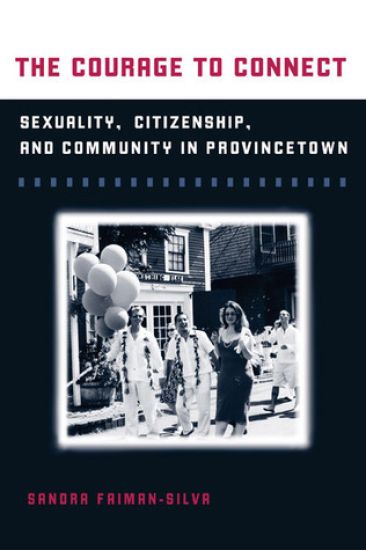
Based on over six years of fieldwork, Sandra L. Faiman-Silva's The Courage to Connect traces the transformation of the Cape Cod community of Provincetown from its nineteenth-century origins as a fishing town where Portuguese immigrants settled to its present status as a welcoming, sexually diverse tourist enclave. Faiman-Silva examines the community’s history and economy as well as how gay and straight cultures intersect in areas such as public education, local government, and law enforcement. Using queer and critical culture theory to deconstruct day-to-day local encounters, Faiman-Silva describes the causes of social conflicts and how these conflicts can be resolved. Capturing the pathos and joy of a community that has struggled to accommodate radical social changes, The Courage to Connect yields understanding of the ways in which communities can construct themselves to overcome differences.
Endorsed by the Christian Medical Association.A Comprehensive Christian Guide to the Challenges of Infertility• Medical • Ethical • Emotional • Marital • Spiritual • BiblicalInfertility changes everything, shattering dreams and breaking hearts. But hope is available—today more than ever. The Infertility Companion draws on the Bible and on current medical knowledge, including the latest research, to shed light on such questions as:•Can people of faith ethically use high-tech infertility treatments?•How do we make moral, biblical decisions about medical treatment, third-party reproduction, stem cell research, and embryo adoption? •Is God punishing me? •Does God even care?•Will adoption increase our chances of getting pregnant?•How can we reduce the stress of infertility on our marriage relationship?•How can we keep sex from becoming a chore?These theologically trained authors have taught at a variety of conferences on infertility, pregnancy loss, and adoption, and they have helped thousands of couples to face the future through their message of encouragement. The Infertility Companion includes discussion questions and a workbook suitable for individuals, couples, or small groups. Full of practical tips and true stories, this book will guide couples past the ethical pitfalls of assisted reproductive technologies as they travel the difficult road ahead.An all-encompassing guide for the Christian infertility patient. Where other books fall short, this “companion” aids the patient not only with the physical and emotional aspects of this journey, but also helps answer the tough spiritual and ethical questions that arise in a couple’s desire to conceive.—Julie Watson, Conceiving Concepts
Ethnic Periodicals in Contemporary America provides easy and accessible information on 290 ethnic-interest periodicals, 32 of which have multiple ethnic-group listings, published in the United States. The basic information about the structure of the publication is presented in an easy-to-read data base format followed by a narrative about the editorial content/focus of the publication. In addition to this information, a list of the non-responding periodicals, complete with known addresses, is provided, and when appropriate, non-deliverable questionnaire responses are also included in this text.This guide is structured to provide basic information about the framework of the publication in a database format. This includes information of some 30 areas of the periodicals' publication structure and policies. Further information about the editorial content and focus of the periodicals is provided in the description of the publication. The description is based on information provided by editors and/or publishers who responded to a comprehensive questionnaire designed to find out about each publication. The questionnaire is also included in this book. In many of the publications, editors and/or publishers have provided valuable information to help contributors with writing skills and submission of manuscripts. Beyond providing information about targeting ethnic-interest periodicals and groups, this book contains the most comprehensive listing of ethnic periodicals in the United States, thus making it easier for other researchers to focus in on such areas as linguistics, immigration and assimilation into existing cultures through the periodicals, anthropology, geography, genealogy, social and political history through the popular medium of the periodicals, and many other areas of interest.
Over the past fifty years, children's literature has freed itself of many traditional restrictions and become a field of exciting innovations in both form and content. The new status of children's literature has been accompanied by an unprecedented growth in research on children's literature internationally. This volume explores the many changes that have taken place in the past half-century in children's literature, showing how those changes reflect our rapidly-changing world and attempt to prepare children for the new millennium. Among the issues discussed are the shifting boundaries between children's literature and adult literature, postmodern trends, paradigm shifts, national literatures, and the reconceptualization of the past.
In the period between the Civil War and World War I, German universities provided North American women with opportunities in graduate and professional training that were not readily available to them at home. This training allowed women to compete to a greater degree with men in increasingly professionalized fields. In return for such opportunities, these women played a key role in opening up German universities to all women. Many devoted the rest of their lives to creating better research and graduate opportunities for other women, forever changing the course of higher education in North America. This study provides accounts of the incredible barriers encountered by these first women students in Europe. It documents their perseverance and hard-won triumphs and includes as well the stories of the progressive men who mentored them and fought for their rights to higher education. Never before has documentation of so many North American students at German-speaking universities been included in one volume. This collection of stories from women across disciplines makes it possible to assess the truly remarkable nature of their combined contributions to higher education and research in North America and Europe.
**Selected for Doody’s Core Titles® 2024 in Radiologic Technology** Master sonographic examination protocols and techniques! The market-leading ultrasound text and reference, Textbook of Diagnostic Sonography, 9th Edition provides an in-depth understanding of general/abdominal and obstetric/gynecologic sonography. More than 3,100 ultrasound images and full-color anatomy illustrations help you recognize normal anatomy and abnormal pathology. Organized primarily by body system, coverage includes vascular sonography and echocardiography, and in the obstetrics section features a chronologic, trimester approach to ultrasound during pregnancy. Written by expert medical sonography educator and clinician Sandra L. Hagen-Ansert, this resource serves as ideal preparation for board exams and as a reference for practitioners in many different clinical settings. Comprehensive coverage includes sections on the foundations of ultrasound imaging and patient care, the abdomen, superficial structures of the body, pediatrics, the thoracic cavity and echocardiography, cerebrovascular evaluation, gynecology, and obstetrics. More than 3,100 images and full-color illustrations include high-resolution ultrasound pictures, detailed line drawings with need-to-know anatomic information, color photographs of gross pathology, and color Doppler illustrations. Key Terms open each chapter, focusing your attention on the vocabulary that you are required to know and understand. Key Pearls highlight the important concepts in each chapter. Pathology tables summarize clinical findings, laboratory findings, sonographic findings, and differential considerations. Sonographic Findings icon makes it easy to locate clinical information on particular pathologic conditions. Imaging information in each chapter includes normal anatomy, normal physiology, laboratory data and values, pathology, sonographic evaluation of an organ, pitfalls in sonography, clinical findings, and differential considerations. Condensed bibliography at the end of each chapter lists essential references for further research and study. Resources on the Evolve website include review questions for students and PowerPoint® slides, an image collection, and a test bank with 1,625 questions for instructors. NEW! Updated images depict the latest advances in the field of sonography and help you prepare for ARDMS boards and for clinicals. NEW! Updated content reflects the newest curriculum standards so you gain the knowledge and expertise required to pass the boards.
**2025 Textbook and Academic Authors Association (TAA) McGuffey Longevity Award Winner** Reinforce your understanding of Hagen-Ansert’s Textbook of Diagnostic Sonography, 9th Edition with this practical workbook! With chapters corresponding to the textbook, this study guide provides exercises allowing you to review, practice, and apply sonography concepts. Case studies offer opportunities to apply your knowledge to the clinical setting. Like the text, this edition of the workbook includes updated images and scans, in addition to content that reflects the newest curriculum standards. It’s a useful review and an excellent preparation tool for national board examinations in diagnostic sonography! Review questions?are presented in a variety of formats, including multiple-choice, matching, short answer, fill-in-the-blank, and labeling, with answers at the back of the book. Exercises in each chapter provide review and practice with terminology, anatomy, physiology, laboratory values, sonographic anatomy and technique, and pathology. Anatomy labeling activities test your ability to recognize anatomic structures in sonographic images. Review of key terms in each chapter allows you to test your knowledge of the terminology used in the textbook. Case studies include images from the textbook, testing your skills at identifying key anatomy and pathology and in interpreting sonographic findings. Content reviews include multiple-choice questions to test your knowledge of the four main content areas covered on ARDMS board exams: general sonography, pediatric, cardiovascular anatomy, and obstetrics and gynecology. NEW! Updated content keeps pace with the 9th edition of Textbook of Diagnostic Sonography, reflecting the newest curriculum standards and preparing you for the national board examinations. NEW! Updated images and scans reflect the latest advances in the field and help you prepare for boards and for clinicals.
This book provides practical information to design specific intervention strategies aimed at preventing the escalation of violence in any community. It provides both practical advice and theoretical stimulation for introductory students and for senior practitioners of forensic psychotherapy.
This is a study of the Royal Bank of Canada’s Monthly Letter, which was initially created in 1920 as a traditional economic newsletter and later evolved quite serendipitously into a publication marvel when, in 1943, it came under the influence of John Heron, journalist and publicist, gaining mass appeal both domestically and abroad.This concise history documents the inception, development and rise to popularity of the Monthly Letter, telling the untold story of how a corporate newsletter became a tool of international public diplomacy. The purpose of this writing is to demonstrate the entanglement of the fields of public diplomacy and public relations and to offer a more palatable conceptualization of them as two discrete, but necessary, parts of a whole. It acknowledges the varied soup of contested terminology which surrounds the field of public diplomacy (e.g. corporate diplomacy, cultural diplomacy and economic diplomacy). This work conceptualizes public diplomacy and public relations as two parts of a whole in which the sum is greater than its individual parts, juxtaposing the two fields in relation to one another, diminishing neither.The contents of this work provide a broad overview of the fields of public diplomacy and public relations that could serve as an introduction and discussion point for students and scholars in both fields and offers a specific case study around which lively discussion and additional study can ensue.
What happens when incidents result in a policy sector losing its legitimacy? When a malfunctioning policy sector receives so much negative public attention that it has to fight for its survival? This study describes three such cases in detail within the British and Dutch Prison Services, examining the incidents, the negative response of the media and Members of Parliament to these incidents, and the way in which policy-makers tried to deal with the crises. This book establishes under which conditions such crises led to reform.
What meanings do your students have for key mathematics concepts? What meanings do you wish them to have? Creating a Language-Rich Math Class offers practical approaches for developing conceptual understandings by connecting concrete, pictorial, verbal, and symbolic representations. The focus is on making mathematics memorable instead of on memorizing.You’ll learn strategies for introducing students to math language that gives meaning to the terms and symbols they use every day; for building flexibility and precision in students’ use of math language; and for structuring activities to make them more language-rich. This second edition also provides strategies for helping students to at times be quiet and listen to their peers; for purposefully using language to introduce students to more complex mathematical symbolism and algebraic properties; and for using writing prompts to zoom in on the meanings that individual students have given to the language-rich experiences.Appropriate for elementary teachers and instructional coaches, the book also includes features such as Investigations to Try and Questions for Reflection to help you incorporate these ideas into your practice. In addition, there are Blackline masters of game cards and puzzles, which can also be found on our website for free download at http://www.routledge.com/9780367759957.
Creating Sanctuary is a description of a hospital-based program to treat adults who had been abused as children and the revolutionary knowledge about trauma and adversity that the program was based upon. This book focuses on the biological, psychological, and social aspects of trauma. Fifteen years later, Dr. Sandra Bloom has updated this classic work to include the groundbreaking Adverse Childhood Experiences Study that came out in 1998, information about Epigenetics, and new material about what we know about the brain and violence.This book is for courses in counseling, social work, and clinical psychology on mental health, trauma, and trauma theory.