सञ्जीव पोखरेल समसामयिक, राजनीतिक तथा सामाजिक विषयमा सरोकार राख्ने लेखक हुन् । त्रिभुवन विश्वविद्यालयको मानवशास्त्र केन्द्रीय विभागअन्तर्गत एमए र एमफिल तहमा लामो समय अध्यापन गरेका पोखरेल, अन्तर्राष्ट्रिय विकास साझेदारीका क्षेत्रमा पनि संलग्न छन् । 'एक अनि शून्य' पोखरेलको पहिलो प्रकाशित पुस्तक हो ।
Sanjeev Bhaskar, the comedian and writer behind The Kumars at No. 42 embarks on an epic and highly personal journey through modern India. Sanjeev's characteristic humour and unique take on the country form the heart of this beautifully written travel book that became a Sunday Times bestseller in hardback when it accompanied his BBC series. Exotic and diverse, richly colourful and endlessly complex – India is one of the most exciting countries to visit in the world today. Sanjeev Bhaskar of Goodness Gracious Me has visited his Indian relations there over many years, but this is his chance to delve deeper into what makes this country so fascinating, perplexing and often challenging to visit. As Sanjeev travels from Delhi to Bombay, Jaipur to Calcutta, he meets ordinary and extraordinary Indian people from every background, and brings his natural warmth and sense of humour to these encounters. Although often baffled by the eccentricities of India, our endearingly good-natured guide never fails to find humour in these situations. Sanjeev's India is also a personal journey as Sanjeev meets old relatives who reveal their moving and often traumatic stories of Indian's turbulent and bloody past, and comes to understand a little more about his own roots. During his trip Sanjeev is invited to a middle-class wedding in Delhi as well as witnessing the poverty of the slums in the Calcutta backstreets. He wryly observes the polo-playing Maharajah jet-set in Jaipur as well as the kitsch of Bombay Bollywood, and experiences the Ganges lit up by a million floating candles for the ancient ritual of Diwali as well as the majestic colonial architecture of the British Raj. With such an engaging and thoughtful travelling companion, we find ourselves going beyond the clichés to reveal a country steeped in history yet at the forefront of new technology, at once confusing, astonishing and jaw-droppingly beautiful.
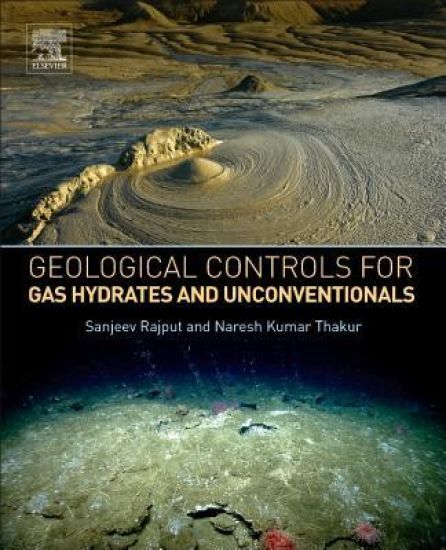
Geological Controls for Gas Hydrate Formations and Unconventionals tells the story of unconventional hydrocarbon resources, especially gas hydrates, tight gas, shale gas, liquid- rich shale, and shale oil, to future generations. It presents the most current research in unconventionals, covering structural constituents of continental margins and their role in generating hydrocarbons. Additionally, this book answers basic questions regarding quantifications and characterizations, distributions, modes of occurrence, physical and chemical properties, and more — in essence, all the information that is necessary to improve the models for precision prediction of the enigma of gas hydrates and other unconventionals. Blending geology, geophysics, geomechanics, petrophysics, and reservoir engineering, it explains in simple language the scientific concepts that are necessary to develop geological and reservoir models for unconventionals.Serving as a focal point for geoscientists and engineers conducting research that focuses on reservoir characteristics of unconventionals, Geological Controls for Gas Hydrate Formations and Unconventionals is a useful resource for a variety of other specialiststies including physicists, geochemists, exploration geologists, and petroleum and reservoir engineers. It details the key factors for successful exploration and development of unconventional reservoirs including discovery, data evaluation, full-field development, production, and abandonment, along with a vivid description ofn the worldwide occurrence of unconventional hydrocarbons.
Chest Imaging Cases thoroughly encompasses the field of thoracic radiology through 137 cases covering common and challenging radiologic and clinical issues. The cases are divided into categories important for board examinations and clinical practice: diagnoses that should be made on radiography, trachea, esophagus, chest wall, thoracic outlet, congenital lesions, mediastinal lesions, pleura, diaphragm, pulmonary masses, diffuse lung disease, pulmonary vascular disease, thoracic trauma, and post-surgical complications. Using a problem and solution format, each case features high-quality images, practical differential diagnoses, approaches to daily practice, management pearls and suggested readings. Concise discussions keep cases brief and informative, allowing for efficient learning and interpretation. Chest Imaging Cases is the essential resource for honing diagnostic skills in thoracic radiology for students, physicians-in-training and practitioners.
This book presents an overview of the democracy movement and the history of education in Nepal. It shows how schools became the battleground for the state and the Maoists as well as captures emerging trends in the field, challenges for the state and negotiations with political commitments. It looks at the factors that contributed to the conflict, and studies the politics of the region alongside gender and identity dynamics. One of the first studies on the subject, the book highlights how conflict and education are intrinsically linked in Nepal. It illustrates how schools became the centre of attention between warring groups and how they were used for political meetings and recruitment of fighters during the political transitions in a contested terrain in South Asia. It brings to the fore incidents of abduction and killing of teachers and students, and the use of children as porters for arms and ammunitions. Drawing extensively on both primary and secondary sources and qualitative analyses, the book provides the key to a complex web of relationships among the stakeholders during conflict and also models of education in post-conflict situations. This book will interest scholars and researchers in education, politics, peace and conflict studies, sociology, development studies, social work, strategic and security studies, contemporary history, international relations, and Nepal and South Asian studies.
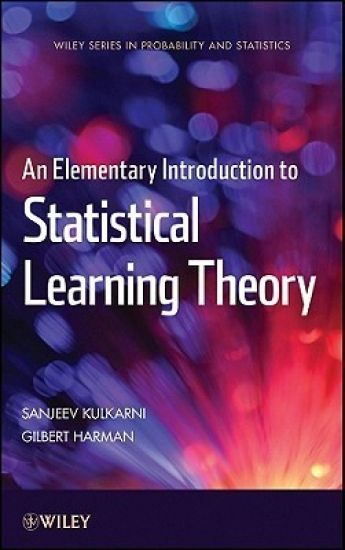
A thought-provoking look at statistical learning theory and its role in understanding human learning and inductive reasoning A joint endeavor from leading researchers in the fields of philosophy and electrical engineering, An Elementary Introduction to Statistical Learning Theory is a comprehensive and accessible primer on the rapidly evolving fields of statistical pattern recognition and statistical learning theory. Explaining these areas at a level and in a way that is not often found in other books on the topic, the authors present the basic theory behind contemporary machine learning and uniquely utilize its foundations as a framework for philosophical thinking about inductive inference. Promoting the fundamental goal of statistical learning, knowing what is achievable and what is not, this book demonstrates the value of a systematic methodology when used along with the needed techniques for evaluating the performance of a learning system. First, an introduction to machine learning is presented that includes brief discussions of applications such as image recognition, speech recognition, medical diagnostics, and statistical arbitrage. To enhance accessibility, two chapters on relevant aspects of probability theory are provided. Subsequent chapters feature coverage of topics such as the pattern recognition problem, optimal Bayes decision rule, the nearest neighbor rule, kernel rules, neural networks, support vector machines, and boosting. Appendices throughout the book explore the relationship between the discussed material and related topics from mathematics, philosophy, psychology, and statistics, drawing insightful connections between problems in these areas and statistical learning theory. All chapters conclude with a summary section, a set of practice questions, and a reference sections that supplies historical notes and additional resources for further study. An Elementary Introduction to Statistical Learning Theory is an excellent book for courses on statistical learning theory, pattern recognition, and machine learning at the upper-undergraduate and graduate levels. It also serves as an introductory reference for researchers and practitioners in the fields of engineering, computer science, philosophy, and cognitive science that would like to further their knowledge of the topic.
This beginning graduate textbook describes both recent achievements and classical results of computational complexity theory. Requiring essentially no background apart from mathematical maturity, the book can be used as a reference for self-study for anyone interested in complexity, including physicists, mathematicians, and other scientists, as well as a textbook for a variety of courses and seminars. More than 300 exercises are included with a selected hint set. The book starts with a broad introduction to the field and progresses to advanced results. Contents include: definition of Turing machines and basic time and space complexity classes, probabilistic algorithms, interactive proofs, cryptography, quantum computation, lower bounds for concrete computational models (decision trees, communication complexity, constant depth, algebraic and monotone circuits, proof complexity), average-case complexity and hardness amplification, derandomization and pseudorandom constructions, and the PCP theorem.
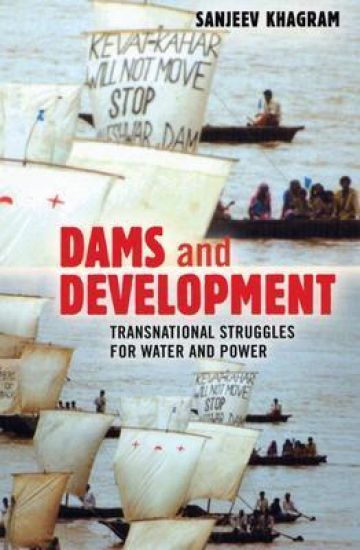
Big dams built for irrigation, power, water supply, and other purposes were among the most potent symbols of economic development for much of the twentieth century. Of late they have become a lightning rod for challenges to this vision of development as something planned by elites with scant regard for environmental and social consequences—especially for the populations that are displaced as their homelands are flooded. In this book, Sanjeev Khagram traces changes in our ideas of what constitutes appropriate development through the shifting transnational dynamics of big dam construction. Khagram tells the story of a growing, but contentious, world society that features novel and increasingly efficacious norms of appropriate behavior in such areas as human rights and environmental protection. The transnational coalitions and networks led by nongovernmental groups that espouse such norms may seem weak in comparison with states, corporations, and such international agencies as the World Bank. Yet they became progressively more effective at altering the policies and practices of these historically more powerful actors and organizations from the 1970s on. Khagram develops these claims in a detailed ethnographic account of the transnational struggles around the Narmada River Valley Dam Projects in central India, a huge complex of thirty large and more than three thousand small dams. He offers further substantiation through a comparative historical analysis of the political economy of big dam projects in India, Brazil, South Africa, and China as well as by examining the changing behavior of international agencies and global companies. The author concludes with a discussion of the World Commission on Dams, an innovative attempt in the late 1990s to generate new norms among conflicting stakeholders.
From the earliest campaign against Augusto Pinochet’s repressive practices to the recent massive demonstrations against the World Trade Organization, transnational collective action involving nongovernmental organizations has been restructuring politics and changing the world. Ranging from Santiago to Seattle and covering more than twenty-five years of transnational advocacy, the essays in Restructuring World Politics offer a clear, richly nuanced picture of this process and its far-reaching implications in an increasingly globalized political economy. The book brings together scholars, activists, and policy makers to show how such advocacy addresses-and reshapes-key issues in the areas of labor, human rights, gender justice, democratization, and sustainable development throughout the world.A primary goal of transnational advocacy is to create, strengthen, implement, and monitor international norms. How transnational networks go about doing this, why and when they succeed, and what problems and complications they face are the main themes of this book. Looking at a wide range of cases where nongovernmental actors attempt to change norms and the practices of states, international organizations, and firms in the private sector-from debt restructuring to protecting human rights, from anti-dam projects in India to the prodemocracy movement in Indonesia-the authors compellingly depict international nongovernmental organizations and transnational social movements as considerable, emerging powers in international politics, initiating, facilitating, and directing the transformation of global norms and practices.Contributors: Karen Brown Thompson, U of Minnesota; Charles T. Call, Brown U; Elizabeth A. Donnelly, Harvard U; Darren Hawkins, Brigham Young U; Thalia G. Kidder; Smitu Kothari; Paul J. Nelson, U of Pittsburgh; August Nimtz, U of Minnesota; Mark Ritchie, Institute for Agriculture and Trade Policy; Jackie Smith, SUNY Stony Brook; Daniel C. Thomas, U of Illinois, Chicago.
2D Materials for Surface Plasmon Resonance-based Sensors offers comprehensive coverage of recent design and development (including processing and fabrication) of 2D materials in the context of plasmonic-based devices. It provides a thorough overview of the basic principles and techniques used in the analysis and design of 2D material-based optical sensor systems. Beginning with the basic concepts of plasmon/plasmonic sensors and mathematical modelling, the authors explain the fundamental properties of 2D materials, including Black Phosphorus (BP), Phosphorene, Graphene, Transition metal dichalcogenides (TMDCs), MXene's and SW-CNT. It also details the applications of these emerging materials in clinical diagnosis and their future trends. This text will be useful for practising engineers, undergraduate and postgraduate students. Key Features Presents the fundamental concepts of 2D material assisted fibre optic and prism based SPR sensor in a student-friendly manner. Includes the recent synthesis and characterization techniques of 2D materials. Provides computational results of recently discovered electronic and optical properties of the 2D materials along with their effectiveness in the field of plasmonic sensors. Presents emerging applications of novel 2D material-based plasmonic sensors in the field of chemical, bio-chemical and biosensing.
2D Materials for Surface Plasmon Resonance-based Sensors offers comprehensive coverage of recent design and development (including processing and fabrication) of 2D materials in the context of plasmonic-based devices. It provides a thorough overview of the basic principles and techniques used in the analysis and design of 2D material-based optical sensor systems. Beginning with the basic concepts of plasmon/plasmonic sensors and mathematical modelling, the authors explain the fundamental properties of 2D materials, including Black Phosphorus (BP), Phosphorene, Graphene, Transition metal dichalcogenides (TMDCs), MXene's and SW-CNT. It also details the applications of these emerging materials in clinical diagnosis and their future trends. This text will be useful for practising engineers, undergraduate and postgraduate students. Key Features Presents the fundamental concepts of 2D material assisted fibre optic and prism based SPR sensor in a student-friendly manner. Includes the recent synthesis and characterization techniques of 2D materials. Provides computational results of recently discovered electronic and optical properties of the 2D materials along with their effectiveness in the field of plasmonic sensors. Presents emerging applications of novel 2D material-based plasmonic sensors in the field of chemical, bio-chemical and biosensing.
The book consists of 32 chapters featuring the concepts and applications of precision farming and protected cultivation broadly covered with theoretical and practical approach. The first 8 chapters are exclusively designed to provide detailed information on concept, need, objectives, benefits, components, applications and limitations of precision farming; laser leveler and its working mechanism, components and functioning; mechanized sowing and types of mechanical seeders and their use; approaches for mapping of soils and plant attributes; site-specific weed and nutrient management; precision management of insect-pests and diseases; yield mapping in horticultural crops. An attempt has been made to cover the concept and application of protected cultivation in chapters from 9 to 30 characteristically highlighting the concept of greenhouse technology, its principles as well as historical and technological developments, agrivoltaic system, its concept and features, response of plant species under greenhouse conditions, criteria for the selection of crops and varieties for protected cultivation, basic considerations for site selection, orientation and designing of greenhouse structures, climate control mechanisms for cooling and heating in greenhouses, components, accessories and BIS codes for protected cultivation, types of Irrigation system for greenhouse production system, growing media for greenhouse cultivation, soil pasteurization namely solarization, steam sterilization, chemical sterilization and augmentation with biological agents, checking the suitability of soil and water for greenhouse crops, plug tray nursery raising, basics of fertigation in greenhouse production system, packages of practice for greenhouse cucumber, bell pepper, tomato and melons, potential of pruning as unconventional alternative for mass multiplication of greenhouse cucumber and tomato, types of soil-less cultures, GAP for protected cultivation and economic analysis of protected cultivation. Note: T&F does not sell or distribute the Hardback in India, Pakistan, Nepal, Bhutan, Bangladesh and Sri Lanka.
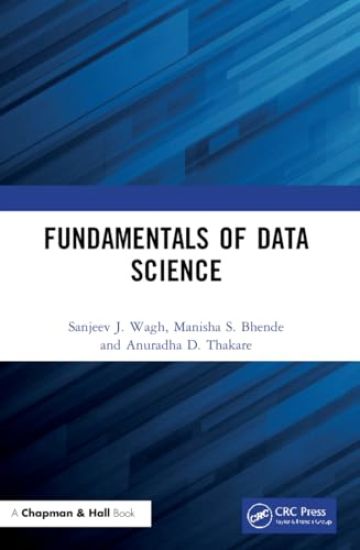
Fundamentals of Data Science is designed for students, academicians and practitioners with a complete walkthrough right from the foundational groundwork required to outlining all the concepts, techniques and tools required to understand Data Science.Data Science is an umbrella term for the non-traditional techniques and technologies that are required to collect, aggregate, process, and gain insights from massive datasets. This book offers all the processes, methodologies, various steps like data acquisition, pre-process, mining, prediction, and visualization tools for extracting insights from vast amounts of data by the use of various scientific methods, algorithms, and processesReaders will learn the steps necessary to create the application with SQl, NoSQL, Python, R, Matlab, Octave and Tablue.This book provides a stepwise approach to building solutions to data science applications right from understanding the fundamentals, performing data analytics to writing source code. All the concepts are discussed in simple English to help the community to become Data Scientist without much pre-requisite knowledge.Features : Simple strategies for developing statistical models that analyze data and detect patterns, trends, and relationships in data sets. Complete roadmap to Data Science approach with dedicatedsections which includes Fundamentals, Methodology and Tools. Focussed approach for learning and practice various Data Science Toolswith Sample code and examples for practice. Information is presented in an accessible way for students, researchers and academicians and professionals.
This book provides an essential overview of IoT, energy-efficient topology control protocols, motivation, and challenges for topology control for Wireless Sensor Networks, and the scope of the research in the domain of IoT. Further, it discusses the different design issues of topology control and energy models for IoT applications, different types of simulators with their advantages and disadvantages. It also discusses extensive simulation results and comparative analysis for various algorithms. The key point of this book is to present a solution to minimize energy and extend the lifetime of IoT networks using optimization methods to improve the performance.Features: Describes various facets necessary for energy optimization in IoT domain. Covers all aspects to achieve energy optimization using latest technologies and algorithms, in wireless sensor networks. Presents various IoT and Topology Control Methods and protocols, various network models, and model simulation using MATLAB®. Reviews methods and results of optimization with Simulation Hardware architecture leading to prolonged life of IoT networks. First time introduces bio-inspired algorithms in the IoT domain for performance optimizationThis book aims at Graduate Students, Researchers in Information Technology, Computer Science and Engineering, Electronics and Communication Engineering.
This book provides an essential overview of IoT, energy-efficient topology control protocols, motivation, and challenges for topology control for Wireless Sensor Networks, and the scope of the research in the domain of IoT. Further, it discusses the different design issues of topology control and energy models for IoT applications, different types of simulators with their advantages and disadvantages. It also discusses extensive simulation results and comparative analysis for various algorithms. The key point of this book is to present a solution to minimize energy and extend the lifetime of IoT networks using optimization methods to improve the performance.Features: Describes various facets necessary for energy optimization in IoT domain. Covers all aspects to achieve energy optimization using latest technologies and algorithms, in wireless sensor networks. Presents various IoT and Topology Control Methods and protocols, various network models, and model simulation using MATLAB®. Reviews methods and results of optimization with Simulation Hardware architecture leading to prolonged life of IoT networks. First time introduces bio-inspired algorithms in the IoT domain for performance optimizationThis book aims at Graduate Students, Researchers in Information Technology, Computer Science and Engineering, Electronics and Communication Engineering.