

Kirjahaku
Etsi kirjoja tekijän nimen, kirjan nimen tai ISBN:n perusteella.
1000 tulosta hakusanalla Sara E Wiltse



Kindergarten Stories and Morning Talks with Over 125 Illustrations
Sara E. Wiltse
Cardamom Publishers
2010
nidottu
Kindergarten Stories and Morning Talks, with over 125 Illustrations is an updated edition of the 1894 kindergarten story curriculum. Enlarged original text with greater line spacing makes this 2010 edition easier to read aloud to children. Cardamom Publishers has also added over 125 vintage illustrations related to the stories, creating a more vivid learning experience for today's visually oriented children. Animal and nature stories, fairy tales, fables, and simple object lessons (explaining how items in daily use at that time were manufactured) are included in this collection. Virtues such as truth and gratitude are emphasized. Elements of history and science can be found in some of the stories. Suggestions for related activities are included. This book is organized into one school year of weekly lessons (September-June) for ease of use by home educators as well as classroom teachers. An ideal first curriculum for homeschooling parents and teachers of young children who enjoy and appreciate vintage texts.

Sara e il tesoro dei due regni
Rosolino Di Salvo; Rosolino Ron Sisifo Di Salvo
Independently Published
2018
nidottu
Sara una Neolaureata in archeologia che viene invitata da un ente internazionale a svolgere importanti ricerche nei pressi di un villaggio dell'Algeria, ma durante gli scavi accadono degli strani incidenti... coinvolta in una emozionante avventura tra due terre di fuoco cos lontane ma allo stesso tempo cos tanto vicine tra loro come L'Africa e la Sicilia, teatro di un losco traffico di opere d'arte antiche oltre che dell'ormai noto giro di vite umane; la donna sar alle prese con le realt delle mafie Siculo-Africane e diverr testimone di quella continua tragedia che tutt'oggi si consuma nella nostra spietata indifferenza. L'uomo delle terre bruciate, l''arte e la storia sono i veri protagonisti di questo racconto che nell'intento di sensibilizzare i lettori stato scritto con umili intenzioni e grandi speranze. Grazie. Rosolino Di Salvo * Puoi visitare le pagine sul sito dell'autore: HTTP: //ROSOLINO.CLOUD o leggere gratuitamente gli estratti e acquistare i libri sul sito: HTTP: //AMAZON.IT cercando: ROSOLINO DI SALVO

Sexual and gender-based violence (SGBV) has always been a part of warfare. In Asia, testimonies of egregious rape and sexual violence extend back to the Rape of Nanjing, to the experience of the Korean comfort women in World War II, and to forced marriages and sexual slavery during the Cambodian genocide. The past two decades have yielded crucial new insights about SGBV, but scholars and researchers still struggle to explain why and when this violence occurs. A major problem is that incidences of SGBV are vastly underreported; reliable data is especially scarce in Asia, where demographic and health surveys are infrequent and national reporting systems are underdeveloped relative to other parts of the globe. Asia also has some of the most protracted conflicts in the world but the complexity of subnational conflicts in Asia often masks the gendered dimensions of violence. In Hidden Wars, Sara E. Davies and Jacqui True examine the relationship between reports of SGBV and structural gender inequality in three conflict-affected societies in Asia--Burma, the Philippines, and Sri Lanka. Based on extensive field research and an original dataset on conflict-related SGBV, Davies and True show how reporting is significantly constrained by a variety of factors, including normalized gendered violence as well as political dynamics affecting local civil society, humanitarian, and international organizations. They address the real-world limitations of data collection and argue that these constraints reinforce a culture of silence and impunity that perpetuates SGBV and permits governments to abrogate their responsibility for this violence. Hidden Wars breaks new methodological ground in showing that what we know about SGBV can be understood fully only if the politicized context of reporting SGBV and data collection is taken into consideration.

Sexual and gender-based violence (SGBV) has always been a part of warfare. In Asia, testimonies of egregious rape and sexual violence extend back to the Rape of Nanjing, to the experience of the Korean comfort women in World War II, and to forced marriages and sexual slavery during the Cambodian genocide. The past two decades have yielded crucial new insights about SGBV, but scholars and researchers still struggle to explain why and when this violence occurs. A major problem is that incidences of SGBV are vastly underreported; reliable data is especially scarce in Asia, where demographic and health surveys are infrequent and national reporting systems are underdeveloped relative to other parts of the globe. Asia also has some of the most protracted conflicts in the world but the complexity of subnational conflicts in Asia often masks the gendered dimensions of violence. In Hidden Wars, Sara E. Davies and Jacqui True examine the relationship between reports of SGBV and structural gender inequality in three conflict-affected societies in Asia--Burma, the Philippines, and Sri Lanka. Based on extensive field research and an original dataset on conflict-related SGBV, Davies and True show how reporting is significantly constrained by a variety of factors, including normalized gendered violence as well as political dynamics affecting local civil society, humanitarian, and international organizations. They address the real-world limitations of data collection and argue that these constraints reinforce a culture of silence and impunity that perpetuates SGBV and permits governments to abrogate their responsibility for this violence. Hidden Wars breaks new methodological ground in showing that what we know about SGBV can be understood fully only if the politicized context of reporting SGBV and data collection is taken into consideration.
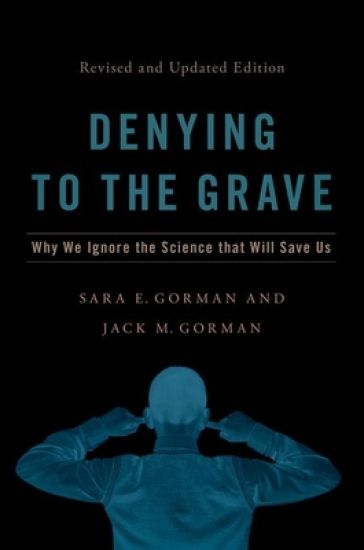
With science denial as a rising danger to public health, Sara E. Gorman and Jack M. Gorman analyze society's resistance to scientific evidence relating to health and safety, and the tools to combat these tendencies. Why do some parents decide not to vaccinate their children? Why do some people keep guns at home, despite ample evidence that doing so increases the risk of a gun-related injury? And why do people use antibiotics for illnesses that antibiotics cannot possibly alleviate? When it comes to health, many people believe that science is wrong, that the evidence is incomplete, and that unidentified hazards lurk everywhere. In Denying to the Grave, Sara Gorman and Jack Gorman explore the psychology of health science denial. Using several examples as case studies, they propose six key principles that may lead people to reject "accepted" health-related wisdom: the charismatic leader; fear of complexity; confirmation bias; fear of corporate and government conspiracies; causality and filling the ignorance gap; and the nature of risk prediction. This fully updated and expanded new edition of Denying to the Grave reviews the most recent research on health science denial, offering a brand new chapter on how the contemporary "assault on science" waged by certain political administrations has eroded public trust in national health and science agencies, such as CDC, FDA, and EPA. Also new to this edition is a chapter investigating the relationship between health crises and misinformation, and what happens to science denial amidst a global public health crisis. Finally, the book proposes a novel approach to counteracting misinformation and improving our ability to understand and accept scientific consensus. In an era in which trust in science has become more important, and yet more elusive, than ever before, Denying to the Grave sheds light on why we often choose to ignore scientific evidence, pointing the way toward a new understanding of how science should be conveyed to the public in order to save lives with existing knowledge and technology.

Veteran health writer Sara Gorman compellingly argues that the backbone of medical conspiracy theories is not misinformation but lack of trust--in our hospitals and in our democracy writ large. In the aftermath of the COVID-19 pandemic, trust in the healthcare system seems to be at an all-time low. Conspiracy theories are now mainstream, and distrust of government health agencies is common among private citizens. Yet many of those same individuals still profess trust in their doctors. What, then, is driving the general mistrust in medicine, and how can the public's faith be restored? The Anatomy of Deception investigates the cause behind this seeming uptick in distrust by tracing the unexpected connection between medical mistrust and the move toward far right ideology in the United States. Drawing on personal qualitative research and interviews, health writer and expert Sara Gorman challenges traditional concepts of medical mistrust and argues that the loss of institutional trust in American health care signals a larger breakdown in democracy as a whole. In six short chapters, Gorman advances the idea of medical mistrust not as a byproduct of personal or historical abuses but as a direct result of bias, miscommunication, and lack of access that has slowly eroded trust in the public health system over time. She argues that we can build back trust in medicine through investments in health equity as a first step towards healing the schisms present in modern American society. Wide-ranging yet incisive, The Anatomy of Deception uncovers the root of medical mistrust in America and how we can regain trust in the systems and values central to our democracy.
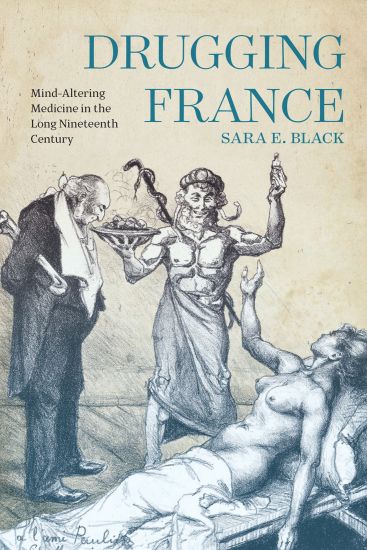
In the nineteenth century, drug consumption permeated French society to produce a new norm: the chemical enhancement of modern life. French citizens empowered themselves by seeking pharmaceutical relief for their suffering and engaging in self-medication. Doctors and pharmacists, meanwhile, fashioned themselves as gatekeepers to these potent drugs, claiming that their expertise could shield the public from accidental harm. Despite these efforts, the unanticipated phenomenon of addiction laid bare both the embodied nature of the modern self and the inherent instability of the notions of individual free will and responsibility.Drugging France explores the history of mind-altering drugs in medical practice between 1840 and 1920, highlighting the intricate medical histories of opium, morphine, ether, chloroform, cocaine, and hashish. While most drug histories focus on how drugs became regulated and criminalized as dangerous addictive substances, Sara Black instead traces the spread of these drugs through French society, demonstrating how new therapeutic norms and practices of drug consumption transformed the lives of French citizens as they came to expect and even demand pharmaceutical solutions to their pain. Through self-experimentation, doctors developed new knowledge about these drugs, transforming exotic botanical substances and unpredictable chemicals into reliable pharmaceutical commodities that would act on the mind and body to modify pain, sensation, and consciousness.From the pharmacy counter to the boudoir, from the courtroom to the operating theatre, from the battlefield to the birthing chamber, Drugging France explores how everyday encounters with drugs reconfigured how people experienced their own minds and bodies.
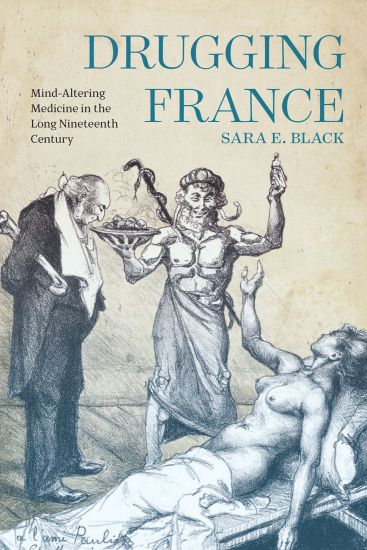
In the nineteenth century, drug consumption permeated French society to produce a new norm: the chemical enhancement of modern life. French citizens empowered themselves by seeking pharmaceutical relief for their suffering and engaging in self-medication. Doctors and pharmacists, meanwhile, fashioned themselves as gatekeepers to these potent drugs, claiming that their expertise could shield the public from accidental harm. Despite these efforts, the unanticipated phenomenon of addiction laid bare both the embodied nature of the modern self and the inherent instability of the notions of individual free will and responsibility.Drugging France explores the history of mind-altering drugs in medical practice between 1840 and 1920, highlighting the intricate medical histories of opium, morphine, ether, chloroform, cocaine, and hashish. While most drug histories focus on how drugs became regulated and criminalized as dangerous addictive substances, Sara Black instead traces the spread of these drugs through French society, demonstrating how new therapeutic norms and practices of drug consumption transformed the lives of French citizens as they came to expect and even demand pharmaceutical solutions to their pain. Through self-experimentation, doctors developed new knowledge about these drugs, transforming exotic botanical substances and unpredictable chemicals into reliable pharmaceutical commodities that would act on the mind and body to modify pain, sensation, and consciousness.From the pharmacy counter to the boudoir, from the courtroom to the operating theatre, from the battlefield to the birthing chamber, Drugging France explores how everyday encounters with drugs reconfigured how people experienced their own minds and bodies.
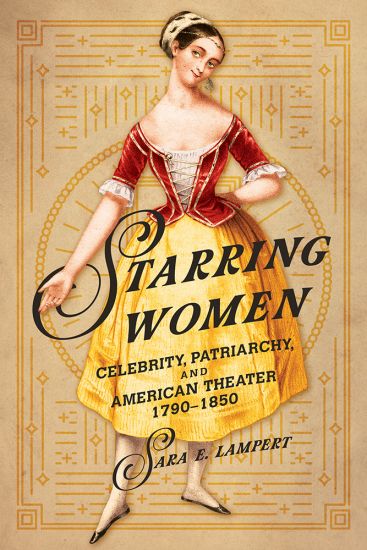
Women performers played a vital role in the development of American and transatlantic entertainment, celebrity culture, and gender ideology. Sara E. Lampert examines the lives, careers, and fame of overlooked figures from Europe and the United States whose work in melodrama, ballet, and other stage shows shocked and excited early U.S. audiences. These women lived and performed the tensions and contradictions of nineteenth-century gender roles, sparking debates about women's place in public life. Yet even their unprecedented wealth and prominence failed to break the patriarchal family structures that governed their lives and conditioned their careers. Inevitable contradictions arose. The burgeoning celebrity culture of the time forced women stage stars to don the costumes of domestic femininity even as the unsettled nature of life in the theater defied these ideals. A revealing foray into a lost time, Starring Women returns a generation of performers to their central place in the early history of American theater.
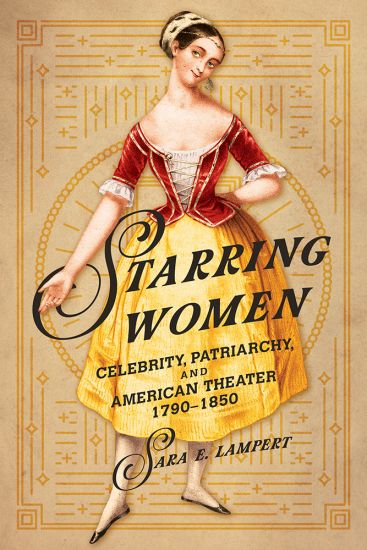
Women performers played a vital role in the development of American and transatlantic entertainment, celebrity culture, and gender ideology. Sara E. Lampert examines the lives, careers, and fame of overlooked figures from Europe and the United States whose work in melodrama, ballet, and other stage shows shocked and excited early U.S. audiences. These women lived and performed the tensions and contradictions of nineteenth-century gender roles, sparking debates about women's place in public life. Yet even their unprecedented wealth and prominence failed to break the patriarchal family structures that governed their lives and conditioned their careers. Inevitable contradictions arose. The burgeoning celebrity culture of the time forced women stage stars to don the costumes of domestic femininity even as the unsettled nature of life in the theater defied these ideals.A revealing foray into a lost time, Starring Women returns a generation of performers to their central place in the early history of American theater.

As men and women traveled west to settle America's untamed lands, and tried to strike it rich in gold, they led a simple existence, often carrying the barest necessities from one location to another. Yet they also carried with them their own popular culture, through folk songs, legends, and literature, that has often been mythologized into our present American popular culture. Through primary sources such as letters, diaries, and photographs, the author draws parallels and makes distinctions between the pioneers and cowboys of the past and those of today. Students and fans of the Old West will find this volume a rich source of history for this time period.Many images and items in today's popular culture were born in the time of westward expansion. Log cabins, cowboys such as the Marlboro Man and Woody of ^I Toy Story^R fame, and Levi's jeans, all have their roots in the Old West. Outlaws such as Wild Bill Hikock, Billy the Kid, and Jesse James, and good guys such as Davy Crockett, continue to fascinate students and western enthusiasts. Traveling entertainments, mail-order houses, and patent medicines, although no longer popular in today's society, tell us much about the nomadic existence of families during this time. With a timeline and a list of everyday products and their prices during the time period, this volume will be an invaluable resource to students and historians tracing the roots of American popular culture.

Simulation in Acute Neurology
Sara E. Hocker; Eelco F. M. Wijdicks
Elsevier - Health Sciences Division
2018
sidottu
Simulation in Acute Neurology is a textbook on the execution of a simulation-based educational program in the management of acute neurologic emergencies. Simulation in Acute Neurology has practical value because it contains detailed descriptions of our simulation scenarios. The foundation of this book is our experience with neurosimulation?and it has been a very good one. Part I provides an overview of the principles of simulation in medicine and examines the many unique opportunities simulation provides as an educational tool. Barriers to simulating neurologic emergencies are also discussed. Simulation allows a physician-in-training to be observed directly as he or she evaluates and manages acute neurologic disease. Part II is the core of the book. Fifteen acute neurologic emergencies, including complex neuroethical quandaries, are presented in detail, step by step, decision by decision, error after error. Each chapter in this section starts with an explanation of the essence of the discussed neuroemergency (THE PROBLEM BEFORE US), followed by a description of the scenario itself (THE PRESENTING CLINICAL PROBLEM), how scenarios can be adjusted to different types of learners (ADAPTING THE SCENARIO), and ends with a discussion of topics for feedback, which are generally focused around errors and pitfalls (DEBRIEFING). To show the flow of scenarios, we created two additional main headings: (THE IDEAL LEARNER) and (THE NOT-SO IDEAL LEARNER). Part I provides an overview of the principles of simulation in medicine and examines the many unique opportunities simulation provides as an educational tool. Barriers to simulating neurologic emergencies are also discussed. Simulation allows a physician-in-training to be observed directly as he or she evaluates and manages acute neurologic disease. Part II is the core of the book. Fifteen acute neurologic emergencies, including complex neuroethical quandaries, are presented in detail, step by step, decision by decision, error after error. Each chapter in this section starts with an explanation of the essence of the discussed neuroemergency (THE PROBLEM BEFORE US), followed by a description of the scenario itself (THE PRESENTING CLINICAL PROBLEM), how scenarios can be adjusted to different types of learners (ADAPTING THE SCENARIO), and ends with a discussion of topics for feedback, which are generally focused around errors and pitfalls (DEBRIEFING). To show the flow of scenarios, we created two additional main headings: (THE IDEAL LEARNER) and (THE NOT-SO IDEAL LEARNER).
This book examines the mobilization, role, and trajectory of women rescuers and perpetrators during the 1994 genocide in Rwanda. While much has been written about the victimization of women during the 1994 genocide in Rwanda, very little has been said about women who rescued targeted victims or perpetrated crimes against humanity. This book explores and analyzes the role played by women who exercised agency as rescuers and as perpetrators during the genocide in Rwanda. As women, they took actions and decisions within the context of a deeply entrenched patriarchal system that limited their choices. This work examines two diverging paths of women’s agency during this period: to rescue from genocide or to perpetrate genocide. It seeks to answer three questions: First, how were certain Rwandan women mobilized to participate in genocide, and by whom? Second, what were the specific actions of women during this period of violence and upheaval? Finally, what were the trajectories of women rescuers and perpetrators after the genocide? Comparing and contrasting how women rescuers and perpetrators were mobilized, the actions they undertook, and their post-genocide trajectories, and concluding with a broader discussion of the long-term impact of ignoring these women, this book develops a more nuanced and holistic view of women’s agency and the genocide in Rwanda.This book will be of much interest to students of gender studies, genocide studies, African politics and critical security studies.
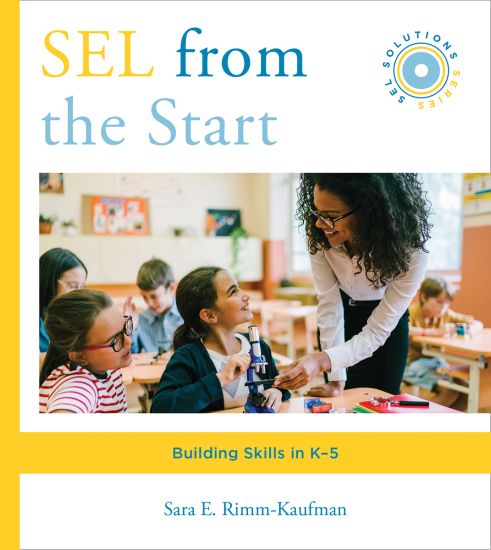
Teachers are trained to manage misbehaviour in the classroom, but receive little guidance about how to cultivate positive, prosocial behaviour. With this book in hand, elementary teachers will be ready to launch the school year with confidence, using the concrete strategies in each chapter for improving students’ SEL skills in the five categories defined by CASEL (the Collaborative for Academic, Social and Emotional Learning): communication skills, emotion management, emotional awareness, social awareness and decision-making skills. This handy guide breaks down instruction of these skills into small, sequenced steps, making it easy to foster students’ skills from the start of school and build on them as the year progresses.

A pictorial survey of United States lighthouses discusses their architectural styles and construction materials while profiling structures built between the late eighteenth century and the 1940s, in a volume that explores the engineering and technological achievements of lighthouses prior to their control by the U.S. Coast Guard.

"Here is a unique and penetrating postmodernist invitation to reread Pascal's Pensees. With a full control on two centuries of Pascalian hermeneutics, Sara Melzer leads her readers into a passionate quest far beyond the worn-out search for a paleontological reconstruction of the Pensees's hypothetical final form. She rightly and deeply understands Pascal's writing--ecriture--as the complex story of the "Fall of Truth into language." Such a perspective gives to Pascal's fragments a rejuvenated life, a newness, a dramatic and powerful voice for our own culture. In brief, a welcome breeze of fresh air in the Pascalian world!"--Edouard Morot-Sir, The University of North Carolina at Chapel Hill "By approaching Pascal's Pensees from the point of view of contemporary critical theory, Melzer sheds new light on this well-known work. Her argument is clear, lucid, and cogent. She has a firm grasp of the major issues at stake in debates among literary critics. I think this is an important work that will be of interest not only to Pascal specialists but also to people who work in the general area of literary theory...One of the genuine strengths of the book is the author's ability to discern the theological implications of issues that preoccupy literary theorists. This is particularly important at a time when students of theology and religion are becoming more and more interested in literary theory. They will find this analysis of Pascal very suggestive."--Mark Taylor, Williams College

Fire, both inevitable and ubiquitous, plays a crucial role in North American ecosystems. But, as necessary as fire is to maintaining healthy ecosystems, it threatens human lives and livelihoods in unacceptable ways. This volume explores the rich yet largely uncharted terrain at the intersection of fire policy, fire science, and fire management in order to find better ways of addressing this pressing dilemma. Written in clear language, it will help scientists, policy makers, and the general public, especially residents of fire-prone areas, better understand where we are today in regard to coping with wildfires, how we got here, and where we need to go. Drawing on abundant historical and analytic information to shed new light on current controversies, "Living with Fire" offers a dynamic new paradigm for coping with fire that recognizes its critical environmental role. The book also tells how we can rebuild the important ecological and political processes that are necessary for finding better ways to cope with fire and with other complex policy dilemmas.