Kirjojen hintavertailu. Mukana 11 244 527 kirjaa ja 12 kauppaa.

Kirjahaku

Etsi kirjoja tekijän nimen, kirjan nimen tai ISBN:n perusteella.

1000 tulosta hakusanalla Sarah C. Williams

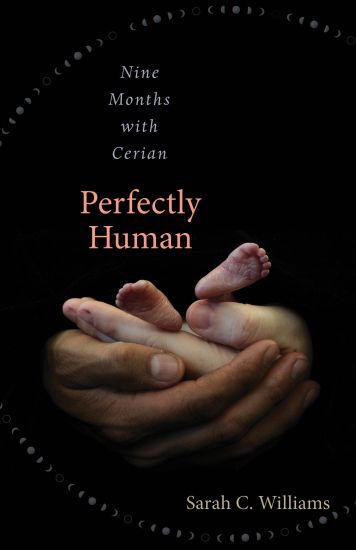
Perfectly Human

Perfectly Human

Sarah C. Williams

Plough Publishing House
2018
pokkari
She knew they would only have a few fleeting months together, but in that time Sarah's unborn daughter would transform her understanding of beauty, worth, and the gift of life. Happily married and teaching history at the University of Oxford, Sarah Williams had credentials, success, and knowledge. It took someone who would never have any of these things to teach her what it means to be human. This extraordinary true story begins with the welcome news of a new member of the Williams family. Sarah's husband, Paul, and their two young daughters share her excitement. But the happiness is short-lived, as a hospital scan reveals a lethal skeletal dysplasia. Birth will be fatal. Sarah and Paul decide to carry the baby to term, a decision that shocks medical staff and Sarah's professional colleagues. Sarah and Paul find themselves having to defend their child's dignity and worth against incomprehension and at times open hostility. They name their daughter, Cerian, Welsh for "loved one." Sarah writes, "Cerian is not a strong religious principle or a rule that compels me to make hard and fast ethical decisions. She is a beautiful person who is teaching me to love the vulnerable, treasure the unlovely, and face fear with dignity and hope." In this candid and vulnerable account, Sarah brings the reader along with her on the journey towards Cerian's birthday and her deathday. It's rare enough to find a writer who can share such a heart-stretching personal experience without sounding sappy, but here is one who at the same time has the ability to articulate the broader cultural issues raised by Cerian's story. In a society striving for perfection, where worth is earned, identity is constructed, children are a choice, normal is beautiful, and deformity is repulsive, Cerian's short life raises vital questions about what we value and where we are headed as a culture. Perfectly Human was first published in the United Kingdom as The Shaming of the Strong. This edition includes a new afterword by the author.
When Courage Calls: Josephine Butler and the Radical Pursuit of Justice for Women
'Offers a new way of writing about religion and should serve as a model for future studies in modern British history. ' Literary Review'A crucial and compelling read' NATALIE COLLINS @GodLovesWomen 'The story of Josephine Butler is astonishing, shocking, inspiring, recounted here by a narrator who understands the very core of her subject. A powerful read.' CLAIRE GILBERT, author of I, Julian 'When Courage Calls allows us to hear Butler's message afresh at a time when women's value and safety is again at risk.' ALISON MILBANK, Professor of Literature and Theology, University of Nottingham'Remarkable' KRISH KANDIAH'This is an inspiring book written by an inspiring writer' RACHAEL TREWEEK, Bishop of Gloucester Millicent Fawcett, the leader of the British suffragist movement, described Josephine Butler as 'the most distinguished English woman of the nineteenth century'. Among the first feminist activists, Butler raised public awareness of the plight of destitute women, worked to address human trafficking and led a vigorous campaign to secure equal rights for women before the law. In her pursuit of justice, Butler did as much for women as William Wilberforce did for African slaves within the British Empire, and yet, while Wilberforce remains a household name, Butler is forgotten.Social historian Sarah C. Williams presents a re-examined biography of the radical political activist Josephine Butler. From the beauty of her childhood in Northumbria, to the stifling intellectual environment of mid-Victorian Oxford; from the impoverished streets of Liverpool and the brothels of London, Brussels and Paris, to the offices of Westminster and the Houses of Parliament. Butler's relentless drive to secure rights for women against the sexual double standard of her day captures a remarkable woman with deeply held values for equality.Underpinning Butler's public life of political activism lies the full corpus of her writing and the spirituality that grounded her activism. When Courage Calls offers a profound examination of Butler's inner life of prayer, defined by her radical sense of justice that was able to transform Victorian society. Such conviction offers us a taste of the possibility for our time and culture.This biography presents a fresh interpretation of the relationship between Josephine Butler's public leadership, her political activism and her spirituality.
When Courage Calls: Josephine Butler and the Radical Pursuit of Justice for Women
Millicent Fawcett once described Josephine Butler as 'the most distinguished English woman of the nineteenth century'. Among the first feminist activists, Butler raised public awareness of the plight of destitute women, worked to address human trafficking and led a vigorous campaign to secure equal rights for women before the law. In her pursuit of justice, Butler did as much for women as William Wilberforce did for African slaves within the British Empire, and yet, while Wilberforce remains a household name, Butler is forgotten. Underpinning Butler's public life of political activism lies the full corpus of her writing and the spirituality that grounded her activism. When Courage Calls offers a profound examination of Butler's inner life of prayer, defined by her radical sense of justice that was able to transform Victorian society. Such conviction offers us a taste of what might be possible for our own time and culture.
Plough Quarterly No. 26 – What Are Families For?

Plough Quarterly No. 26 – What Are Families For?

Ross Douthat; Edwidge Danticat; Sarah C. Williams; Rabbi Jonathan Sacks; Cardinal Christoph Schönborn; Leah Libresco Sargeant; Gina Dalfonzo; Zito Madu; Norann Voll; Noah Van Niel

Plough Publishing House
2020
pokkari
What is a family and what is it good for? Story 1: Families are in crisis, and the cause is moral breakdown. We urgently need a deep renewal of our family culture, supported by public policies that strengthen traditional marriage and encourage childbearing. Story 2: Families are in crisis, and the cause is capitalism. We need structural changes in society so that all families can flourish: parental leave, guaranteed healthcare, flexible work hours for parents, restorative justice. What if both these stories are true? This issue of Plough reflects on what a family is and what it is for, so that the transformations needed to solve the crisis of the family start from a firm basis, not a nostalgic ideal or progressive theorizing. As always, we take as a starting point the teachings of Jesus. It turns out his idea of family values might not be what people think. He calls us to extend our natural love for our biological family to a vast new throng of siblings – a family of many ethnicities and cultures that includes the widowed, the unmarried, the outsider, and the stranger. In this issue: - Ross Douthat asks what is stopping people from having the one more child they desire. - Edwidge Danticat says families are not nuclear. - Gina Dalfonzo reveals what singles know best about the church as family. - Norann Voll remembers a Jewish woman who escaped the Holocaust and married a German. - W. Bradford Wilcox and Alysse ElHage report on how the Covid pandemic has impacted the family. - Noah Van Niel asks whether masculinity is OK anymore. - Cardinal Christoph Schönborn reflects the burden of family history, celibacy, and monument toppling. - Sarah C. Williams pinpoints the source of feminist pioneer Josephine Butler’s daring. - Rabbi Jonathan Sacks begins the story of marriage 385 million years ago in a lake in Scotland. - Zito Madu recalls how his father’s amazing storytelling saved the past from oblivion. You’ll also find: - M. M. Townsend on what Louisa May Alcott and Simone de Beauvoir had in common - A special announcement about Plough’s new poetry contest: the Rhina Espaillat Poetry Award - A reading from G. K. Chesterton - Two new poems by Rachel Hadas - Reviews of Eric Edstrom’s Un-American, Maya Schenwar and Victoria Law’s Prison by Any Other Name, Brian Doyle’s One Long River of Song, and Martín Caparrós’s Hunger Plough Quarterly features stories, ideas, and culture for people eager to put their faith into action. Each issue brings you in-depth articles, interviews, poetry, book reviews, and art to help you put Jesus’ message into practice and find common cause with others.
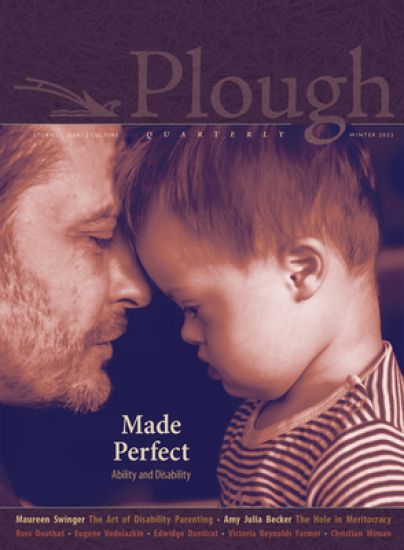
Plough Quarterly No. 30 – Made Perfect

Plough Quarterly No. 30 – Made Perfect

Molly McCully Brown; Victoria Reynolds Farmer; Edwidge Danticat; Stephanie Saldaña; Kelsey Osgood; Christian Wiman; Amy Julia Becker; Ross Douthat; Eugene Vodolazkin; Sarah C. Williams; Isaac T. Soon; Leah Libresco Sargeant

PLOUGH PUBLISHING HOUSE
2021
pokkari
Whose lives count as fully human? The answer matters for everyone, disabled or not.The ancient Greek ideal linked physical wholeness to moral wholeness – the virtuous citizen was “beautiful and good.” It’s an ideal that has all too often turned deadly, casting those who do not measure up as less than human. In the pre-Christian era, infants with disabilities were left on the rocks; in modern times, they have been targeted by eugenics.Much has changed, thanks to the tenacious advocacy of the disability rights movement. Yesteryear’s hellish institutions have given way to customized educational programs and assisted living centers. Public spaces have been reconfigured to improve access. Therapies and medical technology have advanced rapidly in sophistication and effectiveness. Protections for people with disabilities have been enshrined in many countries’ antidiscrimination laws.But these victories, impressive as they are, mask other realities that collide awkwardly with society’s avowals of equality. Why are parents choosing to abort a baby likely to have a disability? Why does Belgian law allow for euthanasia in cases of disability, even absent a terminal diagnosis or physical pain? Why, when ventilators were in short supply during the first Covid wave, did some states list disability as a reason to deny care?On this theme: - Heonju Lee tells how his son with Down syndrome saved another child’s life.- Molly McCully Brown and Victoria Reynolds Farmer recount their personal experiences with disability.- Amy Julia Becker says meritocracies fail because they value the wrong things.- Maureen Swinger asks six mothers around the world about raising a child with disabilities.- Joe Keiderling documents the unfinished struggle for disability rights.- Isaac T. Soon wonders if Saint Paul’s “thorn in the flesh” was a disability.- Leah Libresco Sargeant reviews What Can a Body Do? and Making Disability Modern.- Sarah C. Williams says testing for fetal abnormalities is not a neutral practice.Also in the issue: - Ross Douthat is brought low by intractable Lyme disease.- Edwidge Danticat flees an active shooter in a packed mall.- Eugene Vodolazkin finds comic relief at funerals, including his own father’s.- Kelsey Osgood discovers that being an Orthodox Jew is strange, even in Brooklyn.- Christian Wiman pens three new poems.- Susannah Black profiles Flannery O’Conner.- Our writers review Eyal Press’s Dirty Work, Steve Coll’s Directorate S, and Millennial Nuns by the Daughters of Saint Paul.Plough Quarterly features stories, ideas, and culture for people eager to apply their faith to the challenges we face. Each issue includes in-depth articles, interviews, poetry, book reviews, and art.
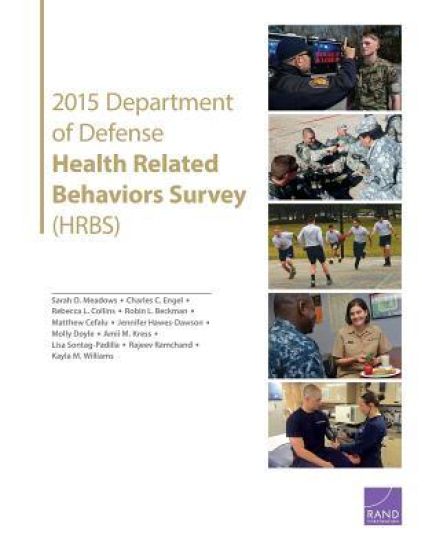
2015 Department of Defense Health Related Behaviors Survey (Hrbs)

2015 Department of Defense Health Related Behaviors Survey (Hrbs)

Sarah O Meadows; Charles C Engel; Rebecca L Collins; Robin L Beckman; Matthew Cefalu; Jennifer Hawes-Dawson; Molly Doyle; Amii M Kress; Lisa Sontag-Padilla; Rajeev Ramchand; Kayla M Williams

RAND
2018
nidottu
RAND researchers report key findings from the 2015 Health Related Behaviors Survey of active-duty service members. The report details the survey's methodology and sample demographics, as well as policy implications. The results are intended to supplement data already collected by the Department of Defense and to inform policy initiatives to help improve the readiness, health, and well-being of the force.
The Risk-Mitigation Value of the Transportation Worker Identification Credential

The Risk-Mitigation Value of the Transportation Worker Identification Credential

Heather J Williams; Kristin Van Abel; David Metz; James V Marrone; Edward W Chan; Katherine Costello; Ryan Michael Bauer; Devon Hill; Simon Véronneau; Joseph C Chang; Ian Mitch; Joshua Lawrence Traub; Sarah Soliman; Zachary Haldeman; Kelly Klima; Douglas C Ligor

RAND
2021
nidottu
The Transportation Worker Identification Credential (TWIC) is designed to enhance security at U.S. ports. It demonstrates that the holder has passed a Transportation Security Administration security threat assessment and is required of anyone with unescorted access to a secure area at a regulated facility. This report provides the findings from an assessment of the TWIC program, along with the assessors' recommendations.
The Descendants of William and Sarah (Poe) Herndon, of Caroline County, Va., and Chatham County, N.C
This work has been selected by scholars as being culturally important and is part of the knowledge base of civilization as we know it.This work is in the public domain in the United States of America, and possibly other nations. Within the United States, you may freely copy and distribute this work, as no entity (individual or corporate) has a copyright on the body of the work.Scholars believe, and we concur, that this work is important enough to be preserved, reproduced, and made generally available to the public. To ensure a quality reading experience, this work has been proofread and republished using a format that seamlessly blends the original graphical elements with text in an easy-to-read typeface.We appreciate your support of the preservation process, and thank you for being an important part of keeping this knowledge alive and relevant.
The Descendants of William and Sarah (Poe) Herndon, of Caroline County, Va., and Chatham County, N.C
This work has been selected by scholars as being culturally important and is part of the knowledge base of civilization as we know it.This work is in the public domain in the United States of America, and possibly other nations. Within the United States, you may freely copy and distribute this work, as no entity (individual or corporate) has a copyright on the body of the work.Scholars believe, and we concur, that this work is important enough to be preserved, reproduced, and made generally available to the public. To ensure a quality reading experience, this work has been proofread and republished using a format that seamlessly blends the original graphical elements with text in an easy-to-read typeface.We appreciate your support of the preservation process, and thank you for being an important part of keeping this knowledge alive and relevant.
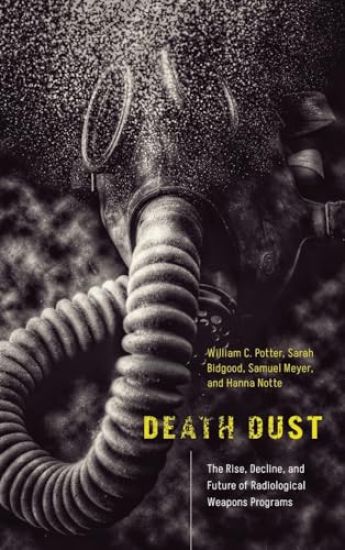
Death Dust

Death Dust

William C. Potter; Sarah Bidgood; Samuel Meyer; Hanna Notte

STANFORD UNIVERSITY PRESS
2023
sidottu
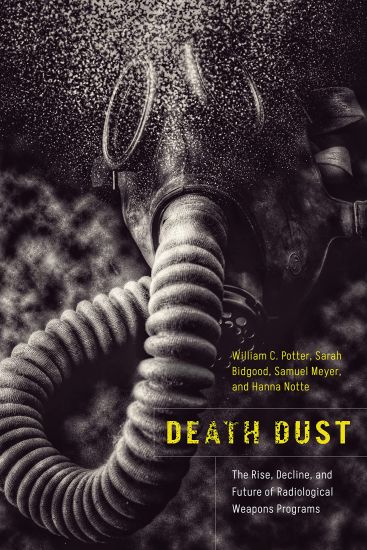
The postwar period saw increased interest in the idea of relatively easy-to-manufacture but devastatingly lethal radiological munitions whose use would not discriminate between civilian and military targets. Death Dust explores the largely unknown history of the development of radiological weapons (RW)—weapons designed to disperse radioactive material without a nuclear detonation—through a series of comparative case studies across the United States, the Soviet Union, the United Kingdom, Iraq, and Egypt. The authors illuminate the historical drivers of and impediments to radiological weapons innovation. They also examine how new, dire geopolitical events—such as the war in Ukraine—could encourage other states to pursue RW and analyze the impact of the spread of such weapons on nuclear deterrence and the nonproliferation regime. Death Dust presents practical, necessary steps to reduce the likelihood of a resurgence of interest in and pursuit of radiological weapons by state actors.
Death Dust

Death Dust

William C. Potter; Sarah Bidgood; Samuel Meyer; Hanna Notte

STANFORD UNIVERSITY PRESS
2023
pokkari
The postwar period saw increased interest in the idea of relatively easy-to-manufacture but devastatingly lethal radiological munitions whose use would not discriminate between civilian and military targets. Death Dust explores the largely unknown history of the development of radiological weapons (RW)—weapons designed to disperse radioactive material without a nuclear detonation—through a series of comparative case studies across the United States, the Soviet Union, the United Kingdom, Iraq, and Egypt. The authors illuminate the historical drivers of and impediments to radiological weapons innovation. They also examine how new, dire geopolitical events—such as the war in Ukraine—could encourage other states to pursue RW and analyze the impact of the spread of such weapons on nuclear deterrence and the nonproliferation regime. Death Dust presents practical, necessary steps to reduce the likelihood of a resurgence of interest in and pursuit of radiological weapons by state actors.
The Campaigns of Sargon II, King of Assyria, 721-705 B.C.

The Campaigns of Sargon II, King of Assyria, 721-705 B.C.

Sarah C. Melville

University of Oklahoma Press
2016
sidottu
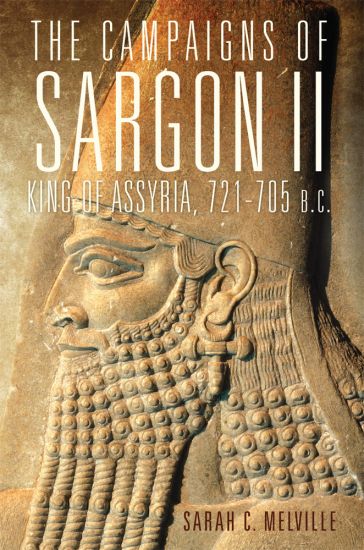
Backed by an unparalleled military force, Sargon II outwitted and outfought powerful competitors to extend Assyrian territory and secure his throne. As Sarah C. Melville shows through a detailed analysis of each of his campaigns, the king used his army not just to conquer but also to ensure regional security, manage his empire's resources, and support his political agenda. Under his leadership, skilled chariotry, cavalry, and infantry excelled in all types of terrain against an array of culturally diverse enemies. This book represents the first in-depth military study of the great Assyrian king. Drawing extensively from original sources, including cuneiform inscriptions, the letters of Sargon and his officials, archival documents, and monumental art, Melville presents Sargon's achievements as king, diplomat, and conqueror. Contrary to the stereotype of the brutal Assyrian despot, Sargon applied force selectively, with deliberate economy, and as only one of several possible ways to deal with external threat or to exploit opportunity.The Campaigns of Sargon II demonstrates how Sargon changed the geopolitical dynamics in the Near East, inspired a period of cultural florescence, established long-lasting Assyrian supremacy, and became one of the most influential kings of the ancient world.
The Campaigns of Sargon II, King of Assyria, 721-705 B.C.

The Campaigns of Sargon II, King of Assyria, 721-705 B.C.

Sarah C. Melville

University of Oklahoma Press
2021
nidottu
Backed by an unparalleled military force, Sargon II outwitted and outfought powerful competitors to extend Assyrian territory and secure his throne. As Sarah C. Melville shows through a detailed analysis of each of his campaigns, the king used his army not just to conquer but also to ensure regional security, manage his empire’s resources, and support his political agenda. Under his leadership, skilled chariotry, cavalry, and infantry excelled in all types of terrain against an array of culturally diverse enemies. This book represents the first in-depth military study of the great Assyrian king. Drawing extensively from original sources, including cuneiform inscriptions, the letters of Sargon and his officials, archival documents, and monumental art, Melville presents Sargon’s achievements as king, diplomat, and conqueror. Contrary to the stereotype of the brutal Assyrian despot, Sargon applied force selectively, with deliberate economy, and as only one of several possible ways to deal with external threat or to exploit opportunity.The Campaigns of Sargon II demonstrates how Sargon changed the geopolitical dynamics in the Near East, inspired a period of cultural florescence, established long-lasting Assyrian supremacy, and became one of the most influential kings of the ancient world.
The Fungi

The Fungi

Sarah C. Watkinson; Lynne Boddy; Nicholas Money

Academic Press Inc
2015
nidottu
The Fungi, Third Edition, offers a comprehensive and thoroughly integrated treatment of the biology of the fungi. This modern synthesis highlights the scientific foundations that continue to inform mycologists today, as well as recent breakthroughs and the formidable challenges in current research. The Fungi combines a wide scope with the depth of inquiry and clarity offered by three leading fungal biologists. The book describes the astonishing diversity of the fungi, their complex life cycles, and intriguing mechanisms of spore release. The distinctive cell biology of the fungi is linked to their development as well as their metabolism and physiology. One of the great advances in mycology in recent decades is the recognition of the vital importance of fungi in the natural environment. Plants are supported by mycorrhizal symbioses with fungi, are attacked by other fungi that cause plant diseases, and are the major decomposers of their dead tissues. Fungi also engage in supportive and harmful interactions with animals, including humans. They are major players in global nutrient cycles. This book is written for undergraduates and graduate students, and will also be useful for professional biologists interested in familiarizing themselves with specific topics in fungal biology.
Gustave Doré and the Modern Biblical Imagination

Gustave Doré and the Modern Biblical Imagination

Sarah C. Schaefer

Oxford University Press Inc
2021
sidottu
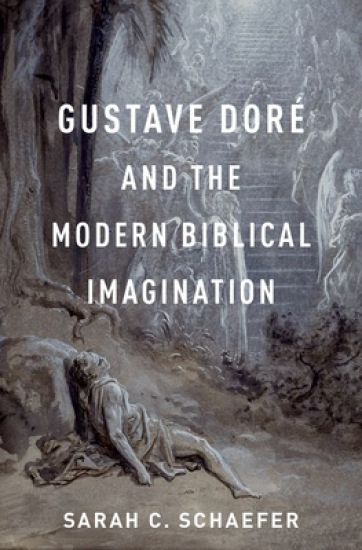
Gustave Doré and the Modern Biblical Imagination explores the role of biblical imagery in modernity through the lens of Gustave Doré (1832-83), whose work is among the most reproduced and adapted scriptural imagery in the history of Judeo-Christianity. First published in France in late 1865, Doré's Bible illustrations received widespread critical acclaim among both religious and lay audiences, and the next several decades saw unprecedented dissemination of the images on an international scale. In 1868, the Doré Gallery opened in London, featuring monumental religious paintings that drew 2.5 million visitors over the course of a quarter-century; when the gallery's holdings travelled to the United States in 1892, exhibitions at venues like the Art Institute of Chicago drew record crowds. The United States saw the most creative appropriations of Doré's images among a plethora of media, from prayer cards and magic lantern slides to massive stained-glass windows and the spectacular epic films of Cecile B. DeMille. This book repositions biblical imagery at the center of modernity, an era that has often been defined through a process of secularization, and argues that Doré's biblical imagery negotiated the challenges of visualizing the Bible for modern audiences in both sacred and secular contexts. A set of texts whose veracity and authority were under unprecedented scrutiny in this period, the Bible was at the center of a range of historical, theological, and cultural debates. Gustave Doré is at the nexus of these narratives, as his work established the most pervasive visual language for biblical imagery in the past two and a half centuries, and constitutes the means by which the Bible has persistently been translated visually.
Undocumented Storytellers

Undocumented Storytellers

Sarah C. Bishop

Oxford University Press Inc
2019
sidottu
Undocumented Storytellers offers a critical exploration of the ways undocumented immigrant activists harness the power of storytelling to mitigate the fear and uncertainty of life without legal status and to advocate for immigration reform. Sarah C. Bishop chronicles the ways young people uncover their lack of legal status experientially -- through interactions with parents, in attempts to pursue rites of passage reserved for citizens, and as audiences of political and popular media. She provides both theoretical and pragmatic contextualization as activist narrators recount the experiences that influenced their decisions to cultivate public voices. Bishop draws from a mixed methodology of in-depth interviews with undocumented immigrants from eighteen unique nations of origin, critical-rhetorical ethnographies of immigrant rights events and protests, and narrative analysis of immigrant-produced digital media to interrogate the power and limitations of narrative activism. Autobiographical immigrant storytelling refutes mainstream discourse on immigration and reveals the determination of individuals who elsewhere have been vilified by stereotype and presupposition. Offering an unparalleled view into the ways immigrants' stories appear online, Bishop illuminates digital narrative strategies by detailing how undocumented storytellers reframe their messages when stories have unintended consequences. The resulting work provides broad insights into the role of strategic framing and autobiographical story-sharing in advocacy and social movements.