Born of the union between African maroons and the Island Carib on colonial St. Vincent, and later exiled to Honduras, the Garifuna way of life combines elements of African, Island Carib, and colonial European culture. Beginning in the 1940s, this cultural matrix became even more complex as Garifuna began migrating to the United States, forming communities in the cities of New York, New Orleans, and Los Angeles. Moving between a village on the Caribbean coast of Honduras and the New York City neighborhoods of the South Bronx and Harlem, England traces the daily lives, experiences, and grassroots organizing of the Garifuna. Concentrating on how family life, community life, and grassroots activism are carried out in two countries simultaneously as Garifuna move back and forth, England also examines the relationship between the Garifuna and Honduran national society and discusses much of the recent social activism organized to protect Garifuna coastal villages from being expropriated by the tourism and agro-export industries. Based on two years of fieldwork in Honduras and New York, her study examines not only how this transnational system works but also the impact that the complex racial and ethnic identity of the Garifuna have on the surrounding societies. As a people who can claim to be black, indigenous, and Latino, the Garifuna have a complex relationship not only with U.S. and Honduran societies but also with the international community of nongovernmental organizations that advocate for the rights of indigenous peoples and blacks.
Descended from African maroons and the Island Carib on colonial St. Vincent, and later exiled to Honduras, the Garifuna way of life combines elements of African, Island Carib, and colonial European culture. Beginning in the 1940s, this cultural matrix became even more complex as Garifuna began migrating to the United States, forming communities in the cities of New York, New Orleans, and Los Angeles. Moving between a village on the Caribbean coast of Honduras and the New York City neighborhoods of the South Bronx and Harlem, England traces the daily lives, experiences, and grassroots organizing of the Garifuna.Concentrating on how family life, community life, and grassroots activism are carried out in two countries simultaneously as Garifuna move back and forth, England also examines the relationship between the Garifuna and Honduran national society and discusses much of the recent social activism organized to protect Garifuna coastal villages from being expropriated by the tourism and agro-export industries.Based on two years of fieldwork in Honduras and New York, her study examines not only how this transnational system works but also the impact that the complex racial and ethnic identity of the Garifuna have on the surrounding societies. As a people who can claim to be Black, Indigenous, and Latino, the Garifuna have a complex relationship not only with U.S. and Honduran societies but also with the international community of nongovernmental organizations that advocate for the rights of Indigenous peoples and blacks.Publication of the paperback edition made possible by a Sustaining the Humanities through the American Rescue Plan grant from the National Endowment for the Humanities.
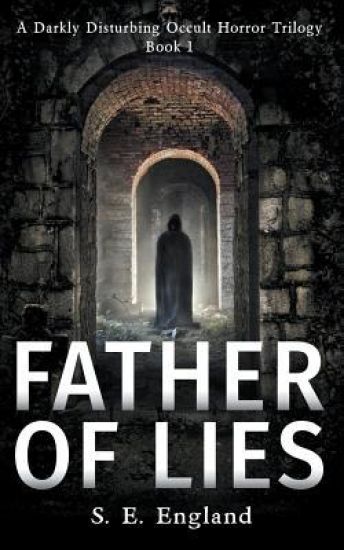
With no known identity or family, Ruby is the most violently disturbed patient ever admitted to Drummersgate Asylum, high on the bleak moors of northern England. After two years with no improvement, Dr Jack McGowan eventually decides to hypnotise her. With terrifying consequences. A horrific dark force is now unleashed on the entire medical team, as each in turn attempts to unlock Ruby's shocking and sinister past. Who is this girl? And how did she manage to survive such unimaginable evil? Set in a desolate mining village, where secrets are tightly kept and intruders hounded out, their questions soon lead to a haunted mill, the heart of darkness...and the Father of Lies. Sleep tight.
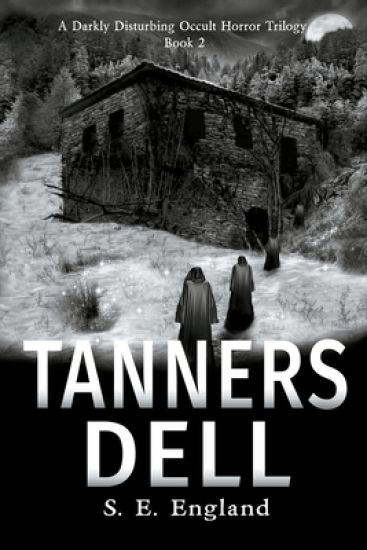
'Powerful and Disturbing' Occult Horror: Book 2 in the Father of Lies Trilogy. "Following the hypnosis of violently disturbed psychiatric patient, Ruby Dean, an unholy dark force was unleashed on the medical staff who tried to help her. Now only one of the original team remains - Ward Sister, Becky.Despite her fiance, D.I. Ross, being unconscious and many of her colleagues either dead or critically ill, Becky is determined to rescue Ruby's twelve year old daughter from a similar fate to her mother. But no one asking questions in the desolate mining village Ruby descends from ever comes to a good end. And as the diabolical history of the area is gradually revealed, it seems the evil invoked is now both real and contagious.'
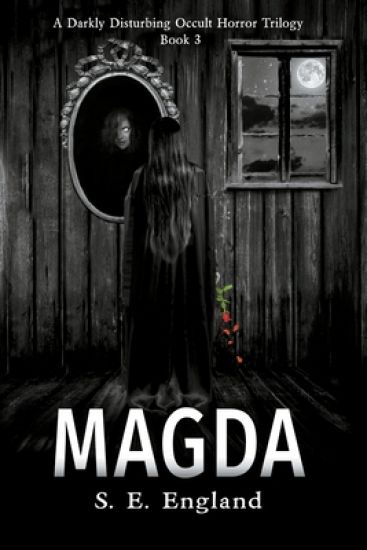
The dark and twisted community of Woodsend harbours a terrible secret - one tracing back to the age of the Elizabethan witch hunts, when many innocent women were persecuted and hanged. But there is a far deeper vein of horror running through this village; an evil that once invoked has no intention of relinquishing its grip on the modern world. Rather it watches and waits with a focused intelligence, leaving Ward Sister, Becky, and Police Officer, Toby, constantly checking over their shoulders and jumping at shadows. Just who invited in this malevolent presence? And is the demonic woman who possessed Magda back in the sixteenth century, the same one now gazing at Becky whenever she looks in the mirror? You may need to sleep with the lights on after reading this...Are you ready to meet Magda in this final instalment of the trilogy? Are you sure?
A haunting supernatural thriller. 'It is 1951 and a remote mining village on the North Staffordshire Moors is hit by one of the worst snowstorms in living memory. Cut off for over three weeks, the old and the sick will die; the strongest bunker down; and those with evil intent will bring to its conclusion a family vendetta spanning three generations. Inspired by a true event, 'The Soprano' tells the story of Grace Holland - a strikingly beautiful, much admired local celebrity who brings glamour and inspiration to the grimy moorland community. But why is Grace still here? Why doesn't she leave this staunchly Methodist, rain-sodden place and the isolated farmhouse she shares with her mother? Riddled with witchcraft and tales of superstition, the story is mostly narrated by the Whistler family who own the local funeral parlour, in particular six year old Louise - now an elderly lady - who recalls one of the most shocking crimes imaginable.'
Writing Terror on the Bodies of Women: Media Coverage of Violence against Women in Guatemala analyzes the scope and dynamics of violence against women in Guatemala and how it is represented in the print media. Using nearly two thousand Guatemalan newspaper reports covering murders and assaults on women, this book contextualizes violence against women within the history of violence in Guatemala; gender ideologies and patriarchal social structures; and the contemporary demands of the women’s movement for social and legislative change. It shows that while some newspapers cover violence against women with investigative reports and editorials that use feminist analysis and language, these are overshadowed by the large number of individual reports that reproduce narratives of terror and conceal the gendered nature of violence against women by suggesting that “delinquents,” “gangs,” “unknown men,” and inexplicably violent husbands are the main culprits, while simultaneously upholding dichotomous gendered narratives of “good” and “bad” wives and daughters.
TANNERS DELL, BOOK 2 OF THE FATHER OF LIES TRILOGY: Following the hypnosis of violently disturbed psychiatric patient, Ruby Dean, an unholy dark force was unleashed on the medical staff who tried to help her. Now only one of the original team remains - Ward Sister, Becky.Despite her fianc , D.I. Ross, being unconscious and many of her colleagues either dead or critically ill, Becky is determined to rescue Ruby's twelve year old daughter from a similar fate to her mother. But no one asking questions in the desolate mining village Ruby descends from ever comes to a good end. And as the diabolical history of the area is gradually revealed, it seems the evil invoked is now both real and contagious.Don't turn out the lights MORE BOOKS BY SARAH ENGLANDBOOK 1: FATHER OF LIESBOOK 3: MAGDAOCCULT HORROR: THE OWLMENSUPERNATURAL THRILLER: THE SOPRANOGOTHIC HOROR: HIDDEN COMPANY NEW: MONKSPIKE - A MEDIEVAL HORROR SET IN THE FOREST OF DEAN. NOW OUT HALLOWEEN 2019More information and newsletter sign-up: http: //www.sarahenglandauthor.co.uk
BOOK 3, MAGDA: The community of Woodsend harbours a terrible secret - one tracing back to the age of the Elizabethan witch hunts, when many innocent women were persecuted and hanged. But there is a far deeper vein of horror running through this village; an evil that once invoked has no intention of relinquishing its grip on the modern world. Rather it watches and waits with a focused intelligence, leaving Ward Sister, Becky, and Police Officer, Toby, constantly checking over their shoulders and jumping at shadows.Just who invited in this malevolent presence? And is the demonic woman who possessed Magda back in the sixteenth century, the same one now gazing at Becky whenever she looks in the mirror?You may need to sleep with the lights on after reading this...Are you ready to meet Magda in this final instalment to the trilogy? Are you sure?MORE BOOKS FROM SARAH ENGLANDBOOK 1: FATHER OF LIESBOOK 2: TANNERS DELLOCCULT HORROR: THE OWLMENSUPERNATURAL THRILLER: THE SOPRANOGOTHIC HOROR: HIDDEN COMPANY NEW: MONKSPIKE - A MEDIEVAL HORROR SET IN THE FOREST OF DEAN. NOW OUT - HALLOWEEN 2019More information and newsletter sign-up: http: //www.sarahenglandauthor.co.u
Jewett comments on Tales of New England From a March 1890 letter to Horace Scudder at The Atlantic (Cary, Letters), 63. "I wished to ask you at once if it would not be better to push this book through and let it come out before summer, since it simply makes one of a series, and if I should make up another volume of short stories in the autumn they might get into each other's way and 'trip up ' You see, I betray a sad lack of confidence in my children You do not express disapproval of the title which I put on the cover: Tales of New England. It says itself well and easily and perhaps will do as well as another, though I was not sure of that at first. You do not think it too ambitious? But what are they Tales of, if not -----? ----- " Sarah Orne Jewett (September 3, 1849 - June 24, 1909) was an American novelist, short story writer and poet, best known for her local color works set along or near the southern seacoast of Maine. Jewett is recognized as an important practitioner of American literary regionalism. Jewett's family had been residents of New England for many generations, and Sarah Orne Jewett was born in South Berwick, Maine.Her father was a doctor specializing in "obstetrics and diseases of women and children." and Jewett often accompanied him on his rounds, becoming acquainted with the sights and sounds of her native land and its people.As treatment for rheumatoid arthritis, a condition that developed in early childhood, Jewett was sent on frequent walks and through them also developed a love of nature. In later life, Jewett often visited Boston, where she was acquainted with many of the most influential literary figures of her day; but she always returned to South Berwick, small seaports near which were the inspiration for the towns of "Deephaven" and "Dunnet Landing" in her stories. Jewett was educated at Miss Olive Rayne's school and then at Berwick Academy, graduating in 1866. She supplemented her education through an extensive family library. Jewett was "never overtly religious," but after she joined the Episcopal church in 1871, she explored less conventional religious ideas. For example, her friendship with Harvard law professor Theophilus Parsons stimulated an interest in the teachings of Emanuel Swedenborg, an eighteenth-century Swedish scientist and theologian, who believed that the Divine "was present in innumerable, joined forms - a concept underlying Jewett's belief in individual responsibility." She published her first important story in the Atlantic Monthly at age 19, and her reputation grew throughout the 1870s and 1880s. Her literary importance arises from her careful, if subdued, vignettes of country life that reflect a contemporary interest in local color rather than plot. Jewett possessed a keen descriptive gift that William Dean Howells called "an uncommon feeling for talk - I hear your people." Jewett made her reputation with the novella The Country of the Pointed Firs (1896).A Country Doctor (1884), a novel reflecting her father and her early ambitions for a medical career, and A White Heron (1886), a collection of short stories are among her finest work. Some of Jewett's poetry was collected in Verses (1916), and she also wrote three children's books. Willa Cather described Jewett as a significant influence on her development as a writer, and "feminist critics have since championed her writing for its rich account of women's lives and voices."................
Sarah Stickney Ellis (1799-16 June 1872) was a Quaker turned Congregationalist who was the author of numerous books, mostly written about women's role(s) in society. She argued that it was the religious duty of women, as daughters, wives, and mothers, to provide the influence for good that would improve society. Particularly well-known are The Wives of England, The Women of England, The Mothers of England, and The Daughters of England, also her more directly educational works such as Rawdon House and Education of the Heart: Women's Best Work. Related to her principal literary theme of moral education for women, she established Rawdon House in Hertfordshire; a school for young ladies intended to apply the principles illustrated in her books to the "moral training, the formation of character, and in some degree the domestic duties of young ladies.",
Sarah Stickney Ellis, born Sarah Stickney (1799 - 16 June 1872), also known as Sarah Ellis, was a Quaker turned Congregationalist who was the author of numerous books, mostly written about women's roles in society. She argued that it was the religious duty of women, as daughters, wives, and mothers, to provide the influence for good that would improve society. Conduct novels: Particularly well-known are The Wives of England (1843), The Women of England, The Mothers of England, and The Daughters of England, also her more directly educational works such as Rawdon House and Education of the Heart: Women's Best Work. Related to her principal literary theme of moral education for women, she established Rawdon House in Hertfordshire; a school for young ladies intended to apply the principles illustrated in her books to the "moral training, the formation of character, and in some degree the domestic duties of young ladies." Unusually for the time, the school was non-denominational and included cookery and house management in the curriculum. With few exceptions, boys and girls were educated separately in 19th-century England, and the question of how to educate women was a subject of debate. It was common for women, as well as men, to believe that the former should not be educated in the full range of subjects, but should focus on domestic skills. Elizabeth Sandford wrote for women in support of this view, whilst others such as Susanna Corder ran a novel Quaker girls' school at Abney Park instituted by the philanthropist William Allen, which dissented from convention by teaching all the latest sciences as early as the 1820s. In Education of the Heart: Women's Best Work (1869) Sarah Ellis accepted the importance of intellectual education for women as well as training in domestic duties, but stressed that because women were the earliest educators of the men who predominantly ran and decided upon education in Victorian society, women primarily needed a system of education that developed sound moral character in their offspring. Ellis aimed much of her prescriptive writing in the 1840s and 1850s at the expanding lower middle-class in the suburbs. Her readers were women who might be the first in their family to employ a domestic servant, striving to adapt to an exclusively domestic role. Understandably, historians have focused on Ellis's education of these women in domestic duties, together with appropriate submission to their husbands, in the famous phrase, to 'suffer and be still'. But there was another side to her writing. She insisted that women should remain single if they could not find a 'reasonable' husband; she was conscious of the widespread incidence of marital disharmony in middle-class marriages as women struggled to submit to husbands whom Ellis calls, ambiguously, 'the lords of creation'; and she wrote of the need for wives to 'humour', or manipulate, their husbands in their own interests and in the interests of marital harmony. In private correspondence she spoke of tensions in her own marriage with Wiliam Ellis and of friends who had left their husbands. In 1837, Sarah married the Rev. William Ellis, who held a prominent position in the London Missionary Society, and with whom she worked for the missionary cause and to promote their common interest in temperance. After thirty-five years of marriage they died within a week of each other. Of independent mind, she was buried in the countryside near their home, whilst her husband was laid to rest in the Congregationalists' non-denominational Abney Park Cemetery in the outskirts of Victorian London.
Sarah Stickney Ellis (1799-16 June 1872) was a Quaker turned Congregationalist who was the author of numerous books, mostly written about women's role(s) in society. She argued that it was the religious duty of women, as daughters, wives, and mothers, to provide the influence for good that would improve society. Particularly well-known are The Wives of England, The Women of England, The Mothers of England, and The Daughters of England, also her more directly educational works such as Rawdon House and Education of the Heart: Women's Best Work. Related to her principal literary theme of moral education for women, she established Rawdon House in Hertfordshire; a school for young ladies intended to apply the principles illustrated in her books to the "moral training, the formation of character, and in some degree the domestic duties of young ladies.", With few exceptions, boys and girls were educated separately in nineteenth century England, and the question of how to educate women was a subject of great debate. It was quite common for women, as well as men, to believe that they should not be educated in the full range of subjects, but should focus on domestic skills. Elizabeth Sandford wrote for women in support of this view, whilst others such as Susanna Corder ran a novel Quaker girls' school at Abney Park instituted by the philanthropist William Allen that dissented from convention by teaching all the latest sciences as early as the 1820s. In Education of the Heart: Women's Best Work (1869) Sarah Ellis accepted the importance of intellectual education for women as well as training in domestic duties, but stressed that because women were the earliest educators of the men who predominantly ran and decided upon education in Victorian society, women primarily needed a system of education that developed sound moral character in their offspring.
Sarah Orne Jewett (September 3, 1849 - June 24, 1909) was an American novelist, short story writer and poet, best known for her local color works set along or near the southern seacoast of Maine. Jewett is recognized as an important practitioner of American literary regionalism. Jewett's family had been residents of New England for many generations, and Sarah Orne Jewett was born in South Berwick, Maine.Her father was a doctor specializing in "obstetrics and diseases of women and children." and Jewett often accompanied him on his rounds, becoming acquainted with the sights and sounds of her native land and its people.As treatment for rheumatoid arthritis, a condition that developed in early childhood, Jewett was sent on frequent walks and through them also developed a love of nature. In later life, Jewett often visited Boston, where she was acquainted with many of the most influential literary figures of her day; but she always returned to South Berwick, small seaports near which were the inspiration for the towns of "Deephaven" and "Dunnet Landing" in her stories. Jewett was educated at Miss Olive Rayne's school and then at Berwick Academy, graduating in 1866. She supplemented her education through an extensive family library. Jewett was "never overtly religious," but after she joined the Episcopal church in 1871, she explored less conventional religious ideas. For example, her friendship with Harvard law professor Theophilus Parsons stimulated an interest in the teachings of Emanuel Swedenborg, an eighteenth-century Swedish scientist and theologian, who believed that the Divine "was present in innumerable, joined forms - a concept underlying Jewett's belief in individual responsibility." She published her first important story in the Atlantic Monthly at age 19, and her reputation grew throughout the 1870s and 1880s. Her literary importance arises from her careful, if subdued, vignettes of country life that reflect a contemporary interest in local color rather than plot. Jewett possessed a keen descriptive gift that William Dean Howells called "an uncommon feeling for talk - I hear your people." Jewett made her reputation with the novella The Country of the Pointed Firs (1896).A Country Doctor (1884), a novel reflecting her father and her early ambitions for a medical career, and A White Heron (1886), a collection of short stories are among her finest work. Some of Jewett's poetry was collected in Verses (1916), and she also wrote three children's books. Willa Cather described Jewett as a significant influence on her development as a writer, and "feminist critics have since championed her writing for its rich account of women's lives and voices."..................
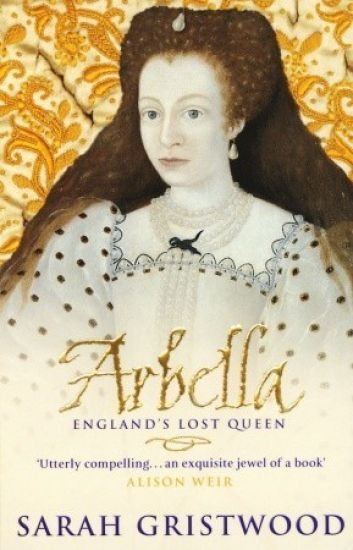
'It is Arbella they would proclaim Queen if her mistress should happen to die' Sir William Stanley, 1592Niece to Mary, Queen of Scots, granddaughter to the great Tudor dynast Bess of Hardwick, Lady Arbella Stuart was brought up in the belief that she would inherit Elizabeth I's throne.







![Summer and Winter in the Pyrenees. by the Author of "Women of England," Etc. [Mrs. Sarah Ellis.]](/covers/9781241200459.jpg)