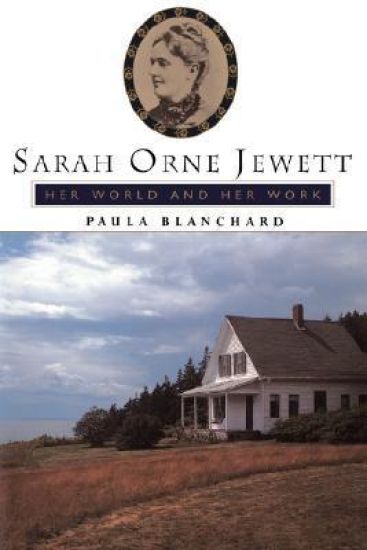
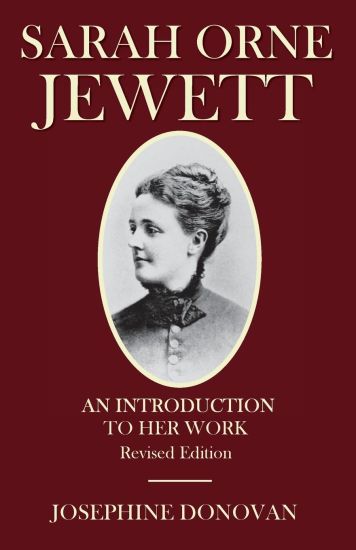
Best known for her masterpiece, The Country of the Pointed Firs , Sarah Orne Jewett (1849-1909) is a writer with enormous resonance for our time. Our fascination with place, with traditional values, and our yearning for a rural utopia all find fulfillment in Jewett's portrayal of the "grand and simple lives" of coastal Maine. In this delicious portrait, Paula Blanchard (biographer of Margaret Fuller and Emily Carr) plunges us into New England literary life in turn-of-the-century Boston, into the circles of Henry James, Lowell, Howell, Whittier, and Oliver Wendell Holmes. She delves into Jewett's close friendships with women, from the young Willa Cather and the flamboyant "Mrs. Jack" Gardner, and especially to Annie Fields, her partner in a sustaining "Boston marriage." Her enthralling and insightful glimpses into Jewett's fiction will send readers racing back to a writer of whose work Kipling said "it is the very life."
In her book Sarah Orne Jewett: Reconstructing Gender, Margaret Roman argues that one theme colors almost every short story and novel by the turn-of-the-century American author: each person, regardless of sex, must break free of the restrictive, polar-opposite norms of behavior traditionally assigned to men and women by a patriarchal society. That society, as seen from Jewett’s perspective during the late Victorian era, was one in which a competitive, active man dominates a passive, emotional woman. Frequently referring to Jewett’s own New England upbringing at the hands of an unusually progressive father, Roman demonstrates how the writer, through her personal quest for freedom and through the various characters she created, strove to eliminate the necessity for rigid and narrowly defined male-female roles and relationships.With the details of Jewett’s free-spirited life, Roman’s book represents a solid work of literary scholarship, which traces a gender-dissolving theme throughout Jewett’s writing. Whereas previous critics have focused primarily on her best-known works, including “A White Heron,” Deephaven, A Country Doctor, and The Country of the Pointed Firs, Roman encompasses within her own discussion virtually all of the stories found in the nineteen volumes Jewett published during her lifetime. And although much recent criticism has centered around Jewett’s strong female characters, Roman is the first to explore in depth Jewett’s male characters and married couples.The book progresses through distinct phases that roughly correspond to Jewett’s psychological development as a writer. In general, the characters in her early works exhibit one of two modes of behavior. Youngsters, free as Jewett was to explore the natural world of woods and field, glimpse the possibility of escape from the confining standards that society has set, though some experience turbulent and confusing adolescences where those norms have become more pressing, more demanding. At the opposite extreme are those who have mindlessly accepted the roles in which they have been trapped since youth—greedy, selfish men, dutiful women who tend emotionally empty houses, young couples unable to communicate either between themselves or with others—in short, characters who are too alienated within their roles to function as whole human beings.On the other hand, Jewett approaches the men and women of her later works with a higher degree of optimism, in that each person is free to live according to the dictates of his or her inherent personality—each character is able to measure life from within rather than from without. This group includes the self-confident men who are not reluctant to present a nurturing side, and the warm, giving women who are unafraid of displaying a decided inner strength. As Roman summarizes, “In her writings, Jewett attempts to shift society’s focus from a grasping power over people to the personal development of each member of society.”Ahead of her time in many ways, Sarah Orne Jewett confronted the Victorian polarized gender system, presaging the modern view that men and women should be encouraged to develop along whatever paths are most comfortable and most natural for them.
A highly regarded study of Uncle Tom's Cabin, Harriet Beecher Stowe's epic nineteenth-century novel which helped educate the American public about the evils of slavery. Written by a leading scholar, this introduction links Stowe's ideas with modern philosophical and political resistance movements, including Marxism, liberation theology, existentialism, and cultural feminism. The author finds Stowe's treatment of the problem of evil still timely in the twenty-first century.
Sarah Orne Jewett. The book, which was first published in 1884, was based on the relationship between Jewett and her physician father. The main character of A Country Doctor, Nan, is a young woman that encounters much strife when she decides to go against the traditional values of the day and become a doctor. Analysis The work has been compared to Elizabeth Stuart Phelps Ward's Doctor Zay, which also depicted a woman seeking a medical career in the late 1800s. 3] The book has been listed as an example of the shift in the perception of the role of women in society, with the main character of Nan choosing to pursue her career in medicine rather than a marriage and family.Themes addressed in A Country Doctor include the difficulty of meshing together the past and the future.The role of women in society, the eschewing of traditional roles and gender conventions, and whether or not it is possible for a woman to choose both a family and a career is also brought up as a theme in the novel.There is also reference within the book to the idea that "all people, regardless of sex, receive individual vocational calls"....... Sarah Orne Jewett (September 3, 1849 - June 24, 1909) was an American novelist, short story writer and poet, best known for her local color works set along or near the southern seacoast of Maine. Jewett is recognized as an important practitioner of American literary regionalism. Jewett's family had been residents of New England for many generations, and Sarah Orne Jewett was born in South Berwick, Maine.Her father was a doctor specializing in "obstetrics and diseases of women and children." and Jewett often accompanied him on his rounds, becoming acquainted with the sights and sounds of her native land and its people.As treatment for rheumatoid arthritis, a condition that developed in early childhood, Jewett was sent on frequent walks and through them also developed a love of nature. In later life, Jewett often visited Boston, where she was acquainted with many of the most influential literary figures of her day; but she always returned to South Berwick, small seaports near which were the inspiration for the towns of "Deephaven" and "Dunnet Landing" in her stories. Jewett was educated at Miss Olive Rayne's school and then at Berwick Academy, graduating in 1866. She supplemented her education through an extensive family library. Jewett was "never overtly religious," but after she joined the Episcopal church in 1871, she explored less conventional religious ideas. For example, her friendship with Harvard law professor Theophilus Parsons stimulated an interest in the teachings of Emanuel Swedenborg, an eighteenth-century Swedish scientist and theologian, who believed that the Divine "was present in innumerable, joined forms - a concept underlying Jewett's belief in individual responsibility." She published her first important story in the Atlantic Monthly at age 19, and her reputation grew throughout the 1870s and 1880s. Her literary importance arises from her careful, if subdued, vignettes of country life that reflect a contemporary interest in local color rather than plot. Jewett possessed a keen descriptive gift that William Dean Howells called "an uncommon feeling for talk - I hear your people." Jewett made her reputation with the novella The Country of the Pointed Firs (1896).A Country Doctor (1884), a novel reflecting her father and her early ambitions for a medical career, and A White Heron (1886), a collection of short stories are among her finest work. Some of Jewett's poetry was collected in Verses (1916), and she also wrote three children's books. Willa Cather described Jewett as a significant influence on her development as a writer, and "feminist critics have since championed her writing for its rich account of women's lives and voices."............
Sarah Orne Jewett (September 3, 1849 - June 24, 1909) was an American novelist, short story writer and poet, best known for her local color works set along or near the southern seacoast of Maine. Jewett is recognized as an important practitioner of American literary regionalism. Jewett's family had been residents of New England for many generations, and Sarah Orne Jewett was born in South Berwick, Maine.Her father was a doctor specializing in "obstetrics and diseases of women and children." and Jewett often accompanied him on his rounds, becoming acquainted with the sights and sounds of her native land and its people.As treatment for rheumatoid arthritis, a condition that developed in early childhood, Jewett was sent on frequent walks and through them also developed a love of nature. In later life, Jewett often visited Boston, where she was acquainted with many of the most influential literary figures of her day; but she always returned to South Berwick, small seaports near which were the inspiration for the towns of "Deephaven" and "Dunnet Landing" in her stories. Jewett was educated at Miss Olive Rayne's school and then at Berwick Academy, graduating in 1866. She supplemented her education through an extensive family library. Jewett was "never overtly religious," but after she joined the Episcopal church in 1871, she explored less conventional religious ideas. For example, her friendship with Harvard law professor Theophilus Parsons stimulated an interest in the teachings of Emanuel Swedenborg, an eighteenth-century Swedish scientist and theologian, who believed that the Divine "was present in innumerable, joined forms - a concept underlying Jewett's belief in individual responsibility." She published her first important story in the Atlantic Monthly at age 19, and her reputation grew throughout the 1870s and 1880s. Her literary importance arises from her careful, if subdued, vignettes of country life that reflect a contemporary interest in local color rather than plot. Jewett possessed a keen descriptive gift that William Dean Howells called "an uncommon feeling for talk - I hear your people." Jewett made her reputation with the novella The Country of the Pointed Firs (1896).A Country Doctor (1884), a novel reflecting her father and her early ambitions for a medical career, and A White Heron (1886), a collection of short stories are among her finest work. Some of Jewett's poetry was collected in Verses (1916), and she also wrote three children's books. Willa Cather described Jewett as a significant influence on her development as a writer, and "feminist critics have since championed her writing for its rich account of women's lives and voices."...............
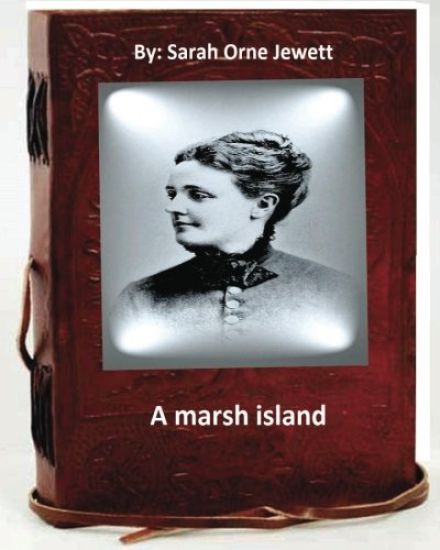
A Marsh Island has not fared well among Jewett's works. Critics have given it almost no attention at all. Except for Margaret Roman in Sarah Orne Jewett: Reconstructing Gender, most of the few people who have reported reading it have seen it as one of Jewett's lesser works. Below are two typical evaluations of the novel. As I have prepared this work for the Sarah Orne Jewett Text Project, I have found much to like about it. I have wondered whether previous readers have made too much of the love story and too little of the story of the artist finding himself, which seems obviously to be a version of Jewett's own entering into her vocation from a privileged social position.Below are two well-expressed and typical evaluations, presented in order to help point the question posed by the reception of this novel so far. Has it deserved its obscurity? . The last chapters of"A Marsh Island" are printed in the June Atlantic. It has been a pleasant and readable story, but I fancy that critics will be disappointed in it, after the expectations raised by "A Country Doctor." That book showed so marked a superiority over " Deephaven", and Miss Jewett's short stories, that we surely had a right to look for something unusually good in " A Marsh Island." In style, the new book shows some gain -- an added ease in description, a more skilful treatment of dialect, and an independence in the choice of details which brings out more clearly than ever Miss Jewell's strong individuality. But this gain is growth rather than artistic development, and it is not accompanied by any improvement in the matter of the story. Miss Jewett always writes with a purpose. In "A Country Doctor", she set herself the task of answering Miss Phelps and Mr. Howells, the authors of "Dr. Zay " and "Dr. Breen's Practice", by showing another and, as she believed, a fairer view of the question at issue, -- whether or not women could make successful doctors. Mr Howells, who always chooses to picture weakness rather than strength, and who has never yet given an encouraging answer to any social problem, selected for his typical female physician" (no wonder that they do not succeed while we call them that) a dependent, irresolute woman, who began the practice of her profession with no appreciation of the difficulties before her, and yielded to the very first obstacle in her path...... Sarah Orne Jewett (September 3, 1849 - June 24, 1909) was an American novelist, short story writer and poet, best known for her local color works set along or near the southern seacoast of Maine. Jewett is recognized as an important practitioner of American literary regionalism. Jewett's family had been residents of New England for many generations, and Sarah Orne Jewett was born in South Berwick, Maine.Her father was a doctor specializing in "obstetrics and diseases of women and children." and Jewett often accompanied him on his rounds, becoming acquainted with the sights and sounds of her native land and its people.As treatment for rheumatoid arthritis, a condition that developed in early childhood, Jewett was sent on frequent walks and through them also developed a love of nature. In later life, Jewett often visited Boston, where she was acquainted with many of the most influential literary figures of her day; but she always returned to South Berwick, small seaports near which were the inspiration for the towns of "Deephaven" and "Dunnet Landing" in her stories. Jewett was educated at Miss Olive Rayne's school and then at Berwick Academy, graduating in 1866. She supplemented her education through an extensive family library. Jewett was "never overtly religious," but after she joined the Episcopal church in 1871, she explored less conventional religious ideas. ...
Sarah Orne Jewett (September 3, 1849 - June 24, 1909) was an American novelist, short story writer and poet, best known for her local color works set along or near the southern seacoast of Maine. Jewett is recognized as an important practitioner of American literary regionalism. Jewett's family had been residents of New England for many generations, and Sarah Orne Jewett was born in South Berwick, Maine.Her father was a doctor specializing in "obstetrics and diseases of women and children." and Jewett often accompanied him on his rounds, becoming acquainted with the sights and sounds of her native land and its people.As treatment for rheumatoid arthritis, a condition that developed in early childhood, Jewett was sent on frequent walks and through them also developed a love of nature. In later life, Jewett often visited Boston, where she was acquainted with many of the most influential literary figures of her day; but she always returned to South Berwick, small seaports near which were the inspiration for the towns of "Deephaven" and "Dunnet Landing" in her stories. Jewett was educated at Miss Olive Rayne's school and then at Berwick Academy, graduating in 1866. She supplemented her education through an extensive family library. Jewett was "never overtly religious," but after she joined the Episcopal church in 1871, she explored less conventional religious ideas. For example, her friendship with Harvard law professor Theophilus Parsons stimulated an interest in the teachings of Emanuel Swedenborg, an eighteenth-century Swedish scientist and theologian, who believed that the Divine "was present in innumerable, joined forms - a concept underlying Jewett's belief in individual responsibility." She published her first important story in the Atlantic Monthly at age 19, and her reputation grew throughout the 1870s and 1880s. Her literary importance arises from her careful, if subdued, vignettes of country life that reflect a contemporary interest in local color rather than plot. Jewett possessed a keen descriptive gift that William Dean Howells called "an uncommon feeling for talk - I hear your people." Jewett made her reputation with the novella The Country of the Pointed Firs (1896).A Country Doctor (1884), a novel reflecting her father and her early ambitions for a medical career, and A White Heron (1886), a collection of short stories are among her finest work. Some of Jewett's poetry was collected in Verses (1916), and she also wrote three children's books. Willa Cather described Jewett as a significant influence on her development as a writer, and "feminist critics have since championed her writing for its rich account of women's lives and voices."...............
Sarah Orne Jewett (September 3, 1849 - June 24, 1909) was an American novelist, short story writer and poet, best known for her local color works set along or near the southern seacoast of Maine. Jewett is recognized as an important practitioner of American literary regionalism. Jewett's family had been residents of New England for many generations, and Sarah Orne Jewett was born in South Berwick, Maine.Her father was a doctor specializing in "obstetrics and diseases of women and children." and Jewett often accompanied him on his rounds, becoming acquainted with the sights and sounds of her native land and its people.As treatment for rheumatoid arthritis, a condition that developed in early childhood, Jewett was sent on frequent walks and through them also developed a love of nature. In later life, Jewett often visited Boston, where she was acquainted with many of the most influential literary figures of her day; but she always returned to South Berwick, small seaports near which were the inspiration for the towns of "Deephaven" and "Dunnet Landing" in her stories. Jewett was educated at Miss Olive Rayne's school and then at Berwick Academy, graduating in 1866. She supplemented her education through an extensive family library. Jewett was "never overtly religious," but after she joined the Episcopal church in 1871, she explored less conventional religious ideas. For example, her friendship with Harvard law professor Theophilus Parsons stimulated an interest in the teachings of Emanuel Swedenborg, an eighteenth-century Swedish scientist and theologian, who believed that the Divine "was present in innumerable, joined forms - a concept underlying Jewett's belief in individual responsibility." She published her first important story in the Atlantic Monthly at age 19, and her reputation grew throughout the 1870s and 1880s. Her literary importance arises from her careful, if subdued, vignettes of country life that reflect a contemporary interest in local color rather than plot. Jewett possessed a keen descriptive gift that William Dean Howells called "an uncommon feeling for talk - I hear your people." Jewett made her reputation with the novella The Country of the Pointed Firs (1896).A Country Doctor (1884), a novel reflecting her father and her early ambitions for a medical career, and A White Heron (1886), a collection of short stories are among her finest work. Some of Jewett's poetry was collected in Verses (1916), and she also wrote three children's books. Willa Cather described Jewett as a significant influence on her development as a writer, and "feminist critics have since championed her writing for its rich account of women's lives and voices."..................
Jewett comments on Tales of New England From a March 1890 letter to Horace Scudder at The Atlantic (Cary, Letters), 63. "I wished to ask you at once if it would not be better to push this book through and let it come out before summer, since it simply makes one of a series, and if I should make up another volume of short stories in the autumn they might get into each other's way and 'trip up ' You see, I betray a sad lack of confidence in my children You do not express disapproval of the title which I put on the cover: Tales of New England. It says itself well and easily and perhaps will do as well as another, though I was not sure of that at first. You do not think it too ambitious? But what are they Tales of, if not -----? ----- " Sarah Orne Jewett (September 3, 1849 - June 24, 1909) was an American novelist, short story writer and poet, best known for her local color works set along or near the southern seacoast of Maine. Jewett is recognized as an important practitioner of American literary regionalism. Jewett's family had been residents of New England for many generations, and Sarah Orne Jewett was born in South Berwick, Maine.Her father was a doctor specializing in "obstetrics and diseases of women and children." and Jewett often accompanied him on his rounds, becoming acquainted with the sights and sounds of her native land and its people.As treatment for rheumatoid arthritis, a condition that developed in early childhood, Jewett was sent on frequent walks and through them also developed a love of nature. In later life, Jewett often visited Boston, where she was acquainted with many of the most influential literary figures of her day; but she always returned to South Berwick, small seaports near which were the inspiration for the towns of "Deephaven" and "Dunnet Landing" in her stories. Jewett was educated at Miss Olive Rayne's school and then at Berwick Academy, graduating in 1866. She supplemented her education through an extensive family library. Jewett was "never overtly religious," but after she joined the Episcopal church in 1871, she explored less conventional religious ideas. For example, her friendship with Harvard law professor Theophilus Parsons stimulated an interest in the teachings of Emanuel Swedenborg, an eighteenth-century Swedish scientist and theologian, who believed that the Divine "was present in innumerable, joined forms - a concept underlying Jewett's belief in individual responsibility." She published her first important story in the Atlantic Monthly at age 19, and her reputation grew throughout the 1870s and 1880s. Her literary importance arises from her careful, if subdued, vignettes of country life that reflect a contemporary interest in local color rather than plot. Jewett possessed a keen descriptive gift that William Dean Howells called "an uncommon feeling for talk - I hear your people." Jewett made her reputation with the novella The Country of the Pointed Firs (1896).A Country Doctor (1884), a novel reflecting her father and her early ambitions for a medical career, and A White Heron (1886), a collection of short stories are among her finest work. Some of Jewett's poetry was collected in Verses (1916), and she also wrote three children's books. Willa Cather described Jewett as a significant influence on her development as a writer, and "feminist critics have since championed her writing for its rich account of women's lives and voices."................
Sarah Orne Jewett (September 3, 1849 - June 24, 1909) was an American novelist, short story writer and poet, best known for her local color works set along or near the southern seacoast of Maine. Jewett is recognized as an important practitioner of American literary regionalism. Jewett's family had been residents of New England for many generations, and Sarah Orne Jewett was born in South Berwick, Maine.Her father was a doctor specializing in "obstetrics and diseases of women and children." and Jewett often accompanied him on his rounds, becoming acquainted with the sights and sounds of her native land and its people.As treatment for rheumatoid arthritis, a condition that developed in early childhood, Jewett was sent on frequent walks and through them also developed a love of nature. In later life, Jewett often visited Boston, where she was acquainted with many of the most influential literary figures of her day; but she always returned to South Berwick, small seaports near which were the inspiration for the towns of "Deephaven" and "Dunnet Landing" in her stories. Jewett was educated at Miss Olive Rayne's school and then at Berwick Academy, graduating in 1866. She supplemented her education through an extensive family library. Jewett was "never overtly religious," but after she joined the Episcopal church in 1871, she explored less conventional religious ideas. For example, her friendship with Harvard law professor Theophilus Parsons stimulated an interest in the teachings of Emanuel Swedenborg, an eighteenth-century Swedish scientist and theologian, who believed that the Divine "was present in innumerable, joined forms - a concept underlying Jewett's belief in individual responsibility." She published her first important story in the Atlantic Monthly at age 19, and her reputation grew throughout the 1870s and 1880s. Her literary importance arises from her careful, if subdued, vignettes of country life that reflect a contemporary interest in local color rather than plot. Jewett possessed a keen descriptive gift that William Dean Howells called "an uncommon feeling for talk - I hear your people." Jewett made her reputation with the novella The Country of the Pointed Firs (1896).A Country Doctor (1884), a novel reflecting her father and her early ambitions for a medical career, and A White Heron (1886), a collection of short stories are among her finest work. Some of Jewett's poetry was collected in Verses (1916), and she also wrote three children's books. Willa Cather described Jewett as a significant influence on her development as a writer, and "feminist critics have since championed her writing for its rich account of women's lives and voices."...... I wish to tell you how much pleasure it gives me to know that you like my stories, and especially that you are such a friend of Miss Betty Leicester I must own that I took a great liking to her myself when I was writing her, and that she has always seemed to me to be a real person.