Kirjojen hintavertailu. Mukana 11 627 463 kirjaa ja 12 kauppaa.

Kirjahaku

Etsi kirjoja tekijän nimen, kirjan nimen tai ISBN:n perusteella.

1000 tulosta hakusanalla Sarah Orne Orne Jewett

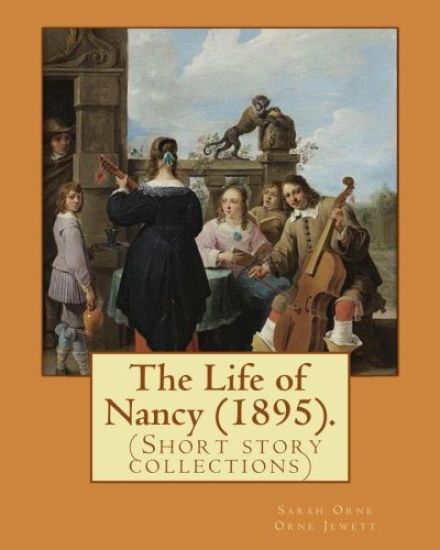
The Life of Nancy (1895). By: Sarah Orne Jewett: The Life of Nancy (1895) is a collection of eleven short stories by Sarah Orne Jewett.
The Life of Nancy (1895) is a collection of eleven short stories by Sarah Orne Jewett. Following in the tradition of "local color" fiction, Jewett's stories are defined by their detailed descriptions of all aspects of everyday life in the country locales and fishing-towns in which the stories are set. Plot Summary: The first section of the story is centered on the relationship between Nancy Gale and Tom Aldus throughout their lives. It begins in Boston several months after Tom spent time with Nancy's family in East Rodney, Maine. Tom was forced to spend time on the island as his friend sprained his ankle and could no longer travel. Tom and Nancy share a deep connection, which hints at romance but is never explicitly stated (Tom spends much time emphasizing Nancy's great beauty). This is Nancy's first visit to Boston (she is staying with her Aunt and Uncle Ezra four miles outside of the city). Tom gets permission from Ezra to spend the day with Nancy in the city. He is beguiled by her excitement at the city and helps her purchase gifts for several of her family members back home. She then attends a dance class with Tom's aunt, a woman she finds extremely elegant and poised. Nancy informs Tom that a young woman whom he was involved with in East Rodney the previous summer is now seeing another suitor. As the two say good-bye, Tom hopes they will see each other soon. The second section of the story begins 15 years after their day together in Boston. The two have not spoken this entire time. Tom is now married with children. Tom laments his desire to have written to Nancy many times, once during his engagement and another when he left the US for Europe for an extended period of time. He did, however, send her many books. Tom is traveling to East Rodney to survey land purchased by his father. When he arrives he is excited to see Nancy. He attends a ball and is greeted by Nancy's father who informs him that she has been ill with a serious form of rheumatoid arthritis for quite sometime. She is no longer capable of leaver one room in her house. She spends her days giving dance lessons and giving extra help to students from the local school who are having learning troubles. She remains the life of the town. Tom is deeply saddened by this information and travels the next day to visit her. Upon seeing her, he is immediately happy and remembers their lifelong friendship (which he thinks has not changed at all). She expresses how happy she is to see him, but does not spend a lot of time complaining of her situation. The next section of the story begins several months later. Tom has now built a new house on his fathers land (which he was originally going to sell). There is no longer any mention of his wife or children. He has also purchased Nancy a form of wheel chair, which she uses to leave her house and visit Tom outside in the beautiful weather. Everyone in the town is happy that she is able to move about - even if she can no longer walk. The story ends with Tom and Nancy sharing an emotional moment in which she says "there never has been a day when I haven't thought of you". Her last line emphasizes the emotional and possibly romantic bond that the two share, even after so much time has passed.... Sarah Orne Jewett (September 3, 1849 - June 24, 1909) was an American novelist, short story writer and poet, best known for her local color works set along or near the southern seacoast of Maine. Jewett is recognized as an important practitioner of American literary regionalism....

The country of the pointed firs. By: Sarah Orne Jewett: Sarah Orne Jewett (September 3, 1849 - June 24, 1909) was an American novelist, short story wr
Sarah Orne Jewett (September 3, 1849 - June 24, 1909) was an American novelist, short story writer and poet, best known for her local color works set along or near the southern seacoast of Maine. Jewett is recognized as an important practitioner of American literary regionalism. Jewett's family had been residents of New England for many generations, and Sarah Orne Jewett was born in South Berwick, Maine.Her father was a doctor specializing in "obstetrics and diseases of women and children." and Jewett often accompanied him on his rounds, becoming acquainted with the sights and sounds of her native land and its people.As treatment for rheumatoid arthritis, a condition that developed in early childhood, Jewett was sent on frequent walks and through them also developed a love of nature. In later life, Jewett often visited Boston, where she was acquainted with many of the most influential literary figures of her day; but she always returned to South Berwick, small seaports near which were the inspiration for the towns of "Deephaven" and "Dunnet Landing" in her stories. Jewett was educated at Miss Olive Rayne's school and then at Berwick Academy, graduating in 1866. She supplemented her education through an extensive family library. Jewett was "never overtly religious," but after she joined the Episcopal church in 1871, she explored less conventional religious ideas. For example, her friendship with Harvard law professor Theophilus Parsons stimulated an interest in the teachings of Emanuel Swedenborg, an eighteenth-century Swedish scientist and theologian, who believed that the Divine "was present in innumerable, joined forms - a concept underlying Jewett's belief in individual responsibility." She published her first important story in the Atlantic Monthly at age 19, and her reputation grew throughout the 1870s and 1880s. Her literary importance arises from her careful, if subdued, vignettes of country life that reflect a contemporary interest in local color rather than plot. Jewett possessed a keen descriptive gift that William Dean Howells called "an uncommon feeling for talk - I hear your people." Jewett made her reputation with the novella The Country of the Pointed Firs (1896).A Country Doctor (1884), a novel reflecting her father and her early ambitions for a medical career, and A White Heron (1886), a collection of short stories are among her finest work. Some of Jewett's poetry was collected in Verses (1916), and she also wrote three children's books. Willa Cather described Jewett as a significant influence on her development as a writer, and "feminist critics have since championed her writing for its rich account of women's lives and voices." On September 3, 1902, Jewett was injured in a carriage accident that all but ended her writing career. She was paralyzed by a stroke in March 1909, and she died on June 24 after suffering another. The Georgian home of the Jewett family, built in 1774 overlooking Central Square at South Berwick, is now a National Historic Landmark and Historic New England museum called the Sarah Orne Jewett House. Jewett never married, but she established a close friendship with writer Annie Adams Fields (1834-1915) and her husband, publisher James Thomas Fields, editor of the Atlantic Monthly. After the sudden death of James Fields in 1881, Jewett and Annie Fields lived together for the rest of Jewett's life in what was then termed a "Boston marriage". Some modern scholars have speculated that the two were lovers. Both women "found friendship, humor, and literary encouragement" in one another's company, traveling to Europe together and hosting "American and European literati." In France Jewett met Th r se Blanc-Bentzon with whom she had long corresponded and who translated some of her stories for publication in France.
A Sarah Orne Jewett Companion

A Sarah Orne Jewett Companion

Robert L. Gale

Greenwood Press
1999
sidottu
For too long Sarah Orne Jewett (1849-1909) was dismissed as a timid New England local colorist, known principally for her novels and short stories based in her native state of Maine. But in addition to her fiction, she also wrote poetry, plays, and essays. She enjoyed an extensive acquaintance with most of the established writers of her time and was on friendly terms with many lesser-known women of her era. With the publication of a selection of her letters in 1956, scholarly books and articles soon followed. And with the advent of the women's movement came a renewal of interest in Jewett's life and writings. She is now recognized as a uniquely sharp, compassionate observer of women and their lives in 19th-century New England.Included in this reference book are alphabetically arranged entries for Jewett's writings, characters, family members, friends, acquaintances, and professional associates and admirers. Entries on the most important works and persons include brief bibliographies. The volume begins with a concise introductory essay, and a chronology highlights the chief events in Jewett's life and career. The book closes with a general bibliography of works about Jewett. Given Jewett's complex characterizations and her subtle crafting of plots and settings, this book will be a valuable guide both for those approaching Jewett's works for the first time and for more advanced readers.
Sarah Orne Jewett

Sarah Orne Jewett

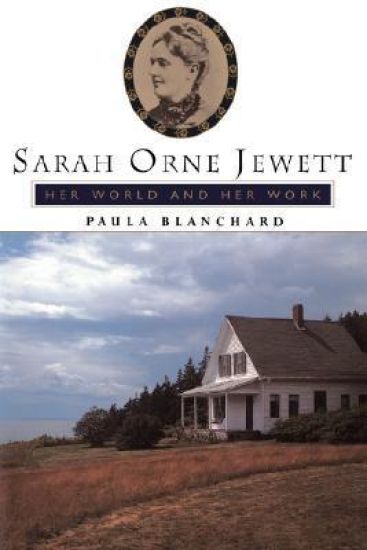
Paula Blanchard

Da Capo Press Inc
2002
pokkari
Best known for her masterpiece, The Country of the Pointed Firs , Sarah Orne Jewett (1849-1909) is a writer with enormous resonance for our time. Our fascination with place, with traditional values, and our yearning for a rural utopia all find fulfillment in Jewett's portrayal of the "grand and simple lives" of coastal Maine. In this delicious portrait, Paula Blanchard (biographer of Margaret Fuller and Emily Carr) plunges us into New England literary life in turn-of-the-century Boston, into the circles of Henry James, Lowell, Howell, Whittier, and Oliver Wendell Holmes. She delves into Jewett's close friendships with women, from the young Willa Cather and the flamboyant "Mrs. Jack" Gardner, and especially to Annie Fields, her partner in a sustaining "Boston marriage." Her enthralling and insightful glimpses into Jewett's fiction will send readers racing back to a writer of whose work Kipling said "it is the very life."
Sarah Orne Jewett - American Writers 61

Sarah Orne Jewett - American Writers 61

Thorp Margaret Farrand

UNIVERSITY OF MINNESOTA PRESS
1966
nidottu
Sarah Orne Jewett - American Writers 61 was first published in 1966. Minnesota Archive Editions uses digital technology to make long-unavailable books once again accessible, and are published unaltered from the original University of Minnesota Press editions.
Sarah Orne Jewett

Sarah Orne Jewett

Margaret Roman

The University of Alabama Press
2017
nidottu
In her book Sarah Orne Jewett: Reconstructing Gender, Margaret Roman argues that one theme colors almost every short story and novel by the turn-of-the-century American author: each person, regardless of sex, must break free of the restrictive, polar-opposite norms of behavior traditionally assigned to men and women by a patriarchal society. That society, as seen from Jewett’s perspective during the late Victorian era, was one in which a competitive, active man dominates a passive, emotional woman. Frequently referring to Jewett’s own New England upbringing at the hands of an unusually progressive father, Roman demonstrates how the writer, through her personal quest for freedom and through the various characters she created, strove to eliminate the necessity for rigid and narrowly defined male-female roles and relationships.With the details of Jewett’s free-spirited life, Roman’s book represents a solid work of literary scholarship, which traces a gender-dissolving theme throughout Jewett’s writing. Whereas previous critics have focused primarily on her best-known works, including “A White Heron,” Deephaven, A Country Doctor, and The Country of the Pointed Firs, Roman encompasses within her own discussion virtually all of the stories found in the nineteen volumes Jewett published during her lifetime. And although much recent criticism has centered around Jewett’s strong female characters, Roman is the first to explore in depth Jewett’s male characters and married couples.The book progresses through distinct phases that roughly correspond to Jewett’s psychological development as a writer. In general, the characters in her early works exhibit one of two modes of behavior. Youngsters, free as Jewett was to explore the natural world of woods and field, glimpse the possibility of escape from the confining standards that society has set, though some experience turbulent and confusing adolescences where those norms have become more pressing, more demanding. At the opposite extreme are those who have mindlessly accepted the roles in which they have been trapped since youth—greedy, selfish men, dutiful women who tend emotionally empty houses, young couples unable to communicate either between themselves or with others—in short, characters who are too alienated within their roles to function as whole human beings.On the other hand, Jewett approaches the men and women of her later works with a higher degree of optimism, in that each person is free to live according to the dictates of his or her inherent personality—each character is able to measure life from within rather than from without. This group includes the self-confident men who are not reluctant to present a nurturing side, and the warm, giving women who are unafraid of displaying a decided inner strength. As Roman summarizes, “In her writings, Jewett attempts to shift society’s focus from a grasping power over people to the personal development of each member of society.”Ahead of her time in many ways, Sarah Orne Jewett confronted the Victorian polarized gender system, presaging the modern view that men and women should be encouraged to develop along whatever paths are most comfortable and most natural for them.