Das Gemeindewaldprogramm ist eines der erfolgreichsten Programme in Nepal. Dieses Programm tr gt sowohl zur Erhaltung des Waldes als auch zur lokalen Entwicklung bei. Dieses Buch zeigt die aktuelle Situation der kommunalen Forstwirtschaft in Nepal und ihre Auswirkungen auf die lokale Entwicklung. (Individuell ist es eine Fallstudie des BHIMBALI Community Forest) Buffer Zone Area Padampur Village Development Committee Chitwan Nepal (Chitwan National Park Nepal Home Place of Rhinoceros).
Le programme de for ts communautaires est l'un des programmes les plus r ussis au N pal. Ce programme contribue la conservation des for ts ainsi qu'au d veloppement local. Ce livre montre la situation actuelle de la foresterie communautaire au N pal et ses effets sur le d veloppement local. (Individuellement, il s'agit d'une tude de cas de la for t communautaire de BHIMBALI) Zone tampon Comit de d veloppement du village de Padampur Chitwan, N pal (Parc national de Chitwan, N pal, lieu d'origine des rhinoc ros).
O Programa de Floresta Comunit ria um dos programas de maior sucesso no Nepal. Este programa contribui para a conserva o das florestas e para o desenvolvimento local. Este livro mostra a situa o atual da silvicultura comunit ria no Nepal e o seu efeito no desenvolvimento a n vel local. (Individualmente, um estudo de caso da floresta comunit ria de BHIMBALI) rea da zona tamp o Padampur Village Development Committee Chitwan Nepal (Parque Nacional de Chitwan Nepal, local de origem do rinoceronte).
Il Programma Forestale Comunitario uno dei programmi di maggior successo in Nepal. Questo programma aiuta la conservazione delle foreste e lo sviluppo locale. Questo libro illustra la situazione attuale della silvicoltura comunitaria in Nepal e il suo effetto sullo sviluppo locale. (Singolarmente un caso di studio della foresta comunitaria di BHIMBALI) Area buffer Zone Padampur Village Development Committee Chitwan Nepal (Parco nazionale di Chitwan Nepal, luogo di origine del rinoceronte).
Critical questions remain unanswered on the events of the cold-blooded and devastating terror attacks in Mumbai on 26 November 2008. Investigative and introspective, this book offers a lucid and graphic account of the ill-fated day and traces the changing dynamics of terror in South Asia.Using new insights, it explores South Asia‘s regional dynamic
Critical questions remain unanswered on the events of the cold-blooded and devastating terror attacks in Mumbai on 26 November 2008. Investigative and introspective, this book offers a lucid and graphic account of the ill-fated day and traces the changing dynamics of terror in South Asia. Using new insights, it explores South Asia’s regional dynamics of antagonism, the ever-present challenge to the frontiers of India, Pakistan and the terrorism question, the strife in Afghanistan and the self-serving selective US ‘war on terror’. Including a new Afterword, this second edition will greatly interest those in defence, security and strategic studies, politics and international relations, peace and conflict studies, media and journalism, and South Asian studies as well as the general reader.
This volume contains a copy of the original text of the Cheitharon Kumpapa, the Court Chronicle of the Kings of Manipur which is authorised by the Palace, and the English translation from the original composed in archaic Manipuri script (Meetei Mayek). Explanatory notes and a glossary complement this interesting source of information. Scholars working on East and South Asia will find this volume enlightening and the text will be useful for those readers engaged in social anthropology, religious history, archaeology, human geography and linguistics.
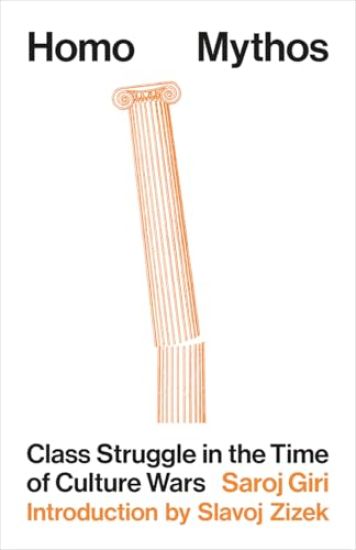
A mythic consciousness is on the rise. The figure of Homo Mythos can be deciphered today as surplus populations emerge as powerful agents, acting in open territory, free from the determinations of capitalism, liberalism, democracy and right-wing populisms. They spawn a notion of the mythic which foregrounds social contradictions and engenders visions of a communist future. Saroj Giri traces the contours of such a paradoxical figure in Bhima Koregaon in India, the celebration of the mythical powers of an army of Untouchables fighting Brahmin rulers in the Battle of Koregaon in 1818. This commemoration led to the widespread arrest and detention of activists by the Modi regime in 2018. Mytho-poetic tales and memories of a brave and independent pre-Buddhist totemic People-of-the-Snake, called Nagvanshis, intertwine with communistic battles of indigenous adivasis against big capital and the modern state. Here is a class struggle which, as Walter Benjamin once imagined, is nourished by the image of enslaved ancestors rather than that of liberated grandchildren. Homo Mythos anticipates and animates class struggle in the Information Age.
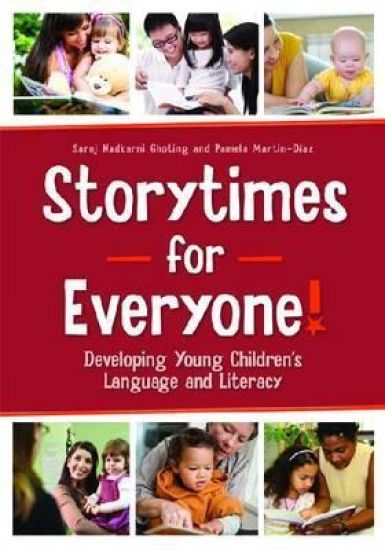
Recognising that informed, caring adults are critical to supporting early literacy development, this important resource builds on the concepts introduced in the second edition of the ALSC/PLA Every Child Ready to Read® initiative. Offering practical suggestions for incorporating early literacy information and strategies into the storytime setting, early literacy authorities Ghoting and Martin-Díaz Explain how young children develop knowledge critical for reading comprehension Discuss five vital storytime practices (singing, talking, reading, writing, and playing), which adults can be taught to use at homePresent dozens of storytimes for babies/toddlers, twos, and preschoolers, that engage adults while keeping their children in focusAddress how young bilingual children acquire language, and other current research Featuring a variety of songs, projects, and activities, this book can be used at the library, at home, or anywhere else storytimes take place.
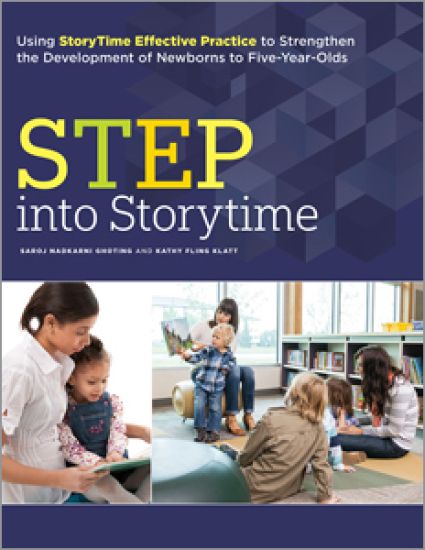
Story Time Effective Practice (STEP), developed by the authors, is an approach that articulates the link between child development theory and story times. This important resource shows how presenters can use STEP to craft a story time that is effective for mixed-age groups and adheres to best practices for emotional, social, physical, and cognitive support. In this book, Ghoting and Klatt, both early literacy experts, Offer more than 30 complete ready-to-use story times appropriate for new-borns to children age 5, along with extension activitiesShow how STEP relates to emotional, social, cognitive, and physical developmentExplain how story time materials and activities directly connect to language and literacy developmentInclude preparation, planning, and performance tips, plus guidance for interacting with parents and caregiversProvide lists of recommended additional resources, including organizations, websites, and sources for story time time activity ideasThis book is a must-have guide for story time presenters, preschool teachers, child care providers, and parents of young children.
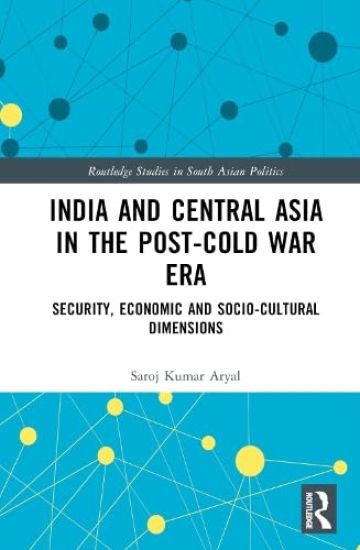
This book analyses the evolution of India’s foreign policy towards Central Asia after the end of the Cold War.Focusing on the development of India’s foreign policy towards Central Asia between 1991 and 2020, this book investigates the explanatory and intervening variables of the policy towards the region to identify its goals, assumptions, motivations and instruments. The preliminary assumption is that India’s foreign policy towards Central Asia has evolved after the Cold War from a passive approach to an active participant in Central Asian security, economic and socio-cultural spheres. This is also seen due to the emergence of the five Central Asian countries as independent states, which have a tremendous strategic significance due to their geographical location, huge hydrocarbon reserve and potential economic opportunities. India expanded its policy to the ‘Extended Neighbourhood,’ adding East, Central and West Asia to the existing South Asian neighbourhood. Since then, India has been engaging with the region considering the growing geostrategic and geo-economic significance of the region and using the available foreign policy instruments. This book presents a comprehensive assessment of India’s foreign policy behaviour evolution with proper analysis of the explanatory (external) and intervening (internal) variables that influence India’s behaviours towards the region. It shows that India also aims to be a very influential power in Central Asia. This book will be an excellent resource for students and researchers of area and global studies, international relations, Asian Politics and South and Central Asia.The Open Access version of this book, available at http://www.taylorfrancis.com, has been made available under a Creative Commons [Attribution-Non Commercial-No Derivatives (CC-BY-NC-ND)] 4.0 license.
This book is a searing history of Indo-Afghan relations. It looks at how Afghanistan was once the heartland of India but is reduced now to a troubled cousin in the contemporary era. Drawing on archival records, as well as ancient Greek, Sanskrit, Chinese, and Persian literature, the book traces the history of Afghanistan from ancient times up to the recent Taliban takeover of the country in 2020. It presents an analytical history of race, culture, and belonging in a world shaken and transformed by colonisation. The author provides a new interpretation of the region and discusses South Asia’s courteous racial etiquette.An indispensable read, the book will be useful for students and researchers of history, Middle East and Central Asian studies, international relations, politics, development studies, and Asian studies.
This book is a searing history of Indo-Afghan relations. It looks at how Afghanistan was once the heartland of India but is reduced now to a troubled cousin in the contemporary era. Drawing on archival records, as well as ancient Greek, Sanskrit, Chinese, and Persian literature, the book traces the history of Afghanistan from ancient times up to the recent Taliban takeover of the country in 2020. It presents an analytical history of race, culture, and belonging in a world shaken and transformed by colonisation. The author provides a new interpretation of the region and discusses South Asia’s courteous racial etiquette.An indispensable read, the book will be useful for students and researchers of history, Middle East and Central Asian studies, international relations, politics, development studies, and Asian studies.
This book offers a new analysis of small states in international relations from the perspective of Nepal, which lies at a strategic geopolitical position between China and India.The book argues that Nepal has been in a strategic position between the great powers for many centuries. The departure point of the study has three broader premises. The first is the increasing uncertainty of polarity and power distribution in world politics. This second point is the understudied aspect of the role that small states play in international relations. The final point emphasizes the empirical offering that Nepal can provide to the understanding of the role of small states in great power politics. Exploring the Nepalese way of great power management, the authors provide a wider explanation of the position of small states as geopolitical actors in international relations.An important perspective on the dynamics of China-India in the changing world order, this study will be of interest to researchers studying geopolitics, international relations, Asian studies and Global Affairs
A quick, concise reference to pathogenic microorganisms and the diseases they cause, this book is divided into specific groups of pathogenic microorganisms including bacteria, protozoa, fungi, viruses, and prions. It lists important pathogenic taxa in each group, covering their natural habitats, the diseases they cause, microbiological highlights, laboratory diagnosis, and measures of prevention and control, including availability of vaccines and effective therapeutic agents. All healthcare professionals and public health workers will benefit from having this reliable source of information at their fingertips.
Critical questions remain unanswered on the events of the cold-blooded and devastating terror attacks in Mumbai on 26 November 2008. Investigative and introspective, this book offers a lucid and graphic account of the ill-fated day and traces the changing dynamics of terror in South Asia. Using new insights, it explores South Asia’s regional dynamics of antagonism, the ever-present challenge to the frontiers of India, Pakistan and the terrorism question, the strife in Afghanistan and the self-serving selective US ‘war on terror’. Including a new Afterword, this second edition will greatly interest those in defence, security and strategic studies, politics and international relations, peace and conflict studies, media and journalism, and South Asian studies as well as the general reader.