
Kirjahaku
Etsi kirjoja tekijän nimen, kirjan nimen tai ISBN:n perusteella.
121 tulosta hakusanalla Satyajit Chakraborty

Lucknow is a city with magnificent history, architecture, culture and literature where once great musicians, poets and artists were patronized by the rich city elites and Nawabs, who made it the mecca of Hindustani art and culture. This book speaks of the rich tradition, history and culture during the final days of Lucknow's last Nawab, Wajid Ali Shah, through Satyajit Ray's major motion picture Shatranj Ke Khiladi or The Chess Players. In this book, Ray's narrative and socio-cultural representation of Lucknow are pitched against the original work of Munshi Premchand's short story by the same name, from which it was inspired. This work attempts to study Satyajit Ray's Shatranj Ke Khiladi in light of the actual historical events of nineteenth-century Lucknow, just before its annexation by the Raj. This work will analyze that period as depicted by Ray on celluloid, and the theme broadly highlights or rather studies the 'Imperial Manliness and Colonial Effeminacy', 'Politics of Annexation', 'Decadent Royalty' and 'Evolution of Performing Arts' during the reign of Wajid Ali Shah.
Surface Engineering of Graphene for Electrocatalysis
Aneeya Kumar Samantara; Satyajit Ratha; Brahmananda Chakraborty
Elsevier - Health Sciences Division
2025
nidottu
Surface Engineering of Graphene for Electrocatalysis: A Unique Process of Graphene Surface Functionalization for Sustainability provides a detailed knowledge-base on the historical evolution of graphene, its inherent physicochemical properties, various state-of-the-art synthetic protocols and subsequent surface engineering (functionalization and composite formation with different nanostructured materials) through feasible physico-chemical processes. Keeping in mind the urgency of electrocatalysis for sustainable energy, the book fundamentally discusses electrocatalysis, including electrochemical measurement techniques, reaction mechanisms, technical parameters for catalyst performance evaluation and the reported electrocatalysts.In addition, the book presents the impact of surface engineering of graphene on electrocatalytic systems and includes theoretical calculations/discussions in support of experimental findings that will improve understanding.

Biomarkers for Brain Injury-"Schizophrenia";the Need & Market
Chakraborty Satrajit
LAP Lambert Academic Publishing
2013
pokkari

Includes more than seventy rare essays on filmmaking, screenplay writing, autobiographical pieces and rare photographs and manuscripts of Satyajit Ray. Satyajit Ray Miscellany, the second book in The Penguin Ray Library series, brings to light some of the rarest essays and illustrations of Ray that opens a window to the myriad thought-process of this creative genius. With more than seventy gripping write-ups and rare photographs and manuscripts, this book is a collector's item.
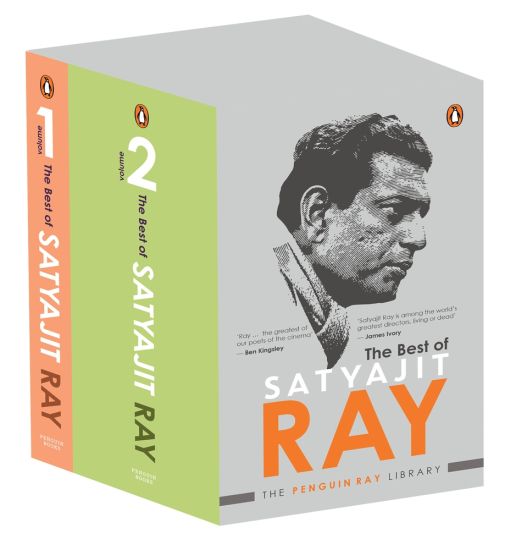

Satyajit Ray, one of the greatest auteurs of twentieth century cinema, was a Bengali motion-picture director, writer, and illustrator who set a new standard for Indian cinema with his Apu Trilogy: Pather Panchali (Song of the Little Road) (1955), Aparajito (The Unvanquished) (1956), and Apur Sansar (The World of Apu) (1959). His work was admired for its humanism, versatility, attention to detail, and skilled use of music. He was also widely praised for his critical and intellectual writings, which mirror his filmmaking in their precision and wide-ranging grasp of history, culture, and aesthetics. Spanning forty years of Ray's career, these essays, for the first time collected in one volume, present the filmmaker's reflections on the art and craft of the cinematic medium and include his thoughts on sentimentalism, mass culture, silent films, the influence of the French New Wave, and the experience of being a successful director. Ray speaks on the difficulty of adapting literary works to screen, the nature of the modern film festival, and the phenomenal contributions of Jean-Luc Godard and the Indian actor, director, producer, and singer Uttam Kumar. The collection also features an excerpt from Ray's diaries and reproduces his sketches of famous film personalities, such as Sergei Eisenstein, Charlie Chaplin, and Akira Kurosawa, in addition to film posters, photographs by and of the artist, film stills, and a filmography. Altogether, the volume relays the full extent of Ray's engagement with film and offers extensive access to the thought of one of the twentieth-century's leading Indian intellectuals.
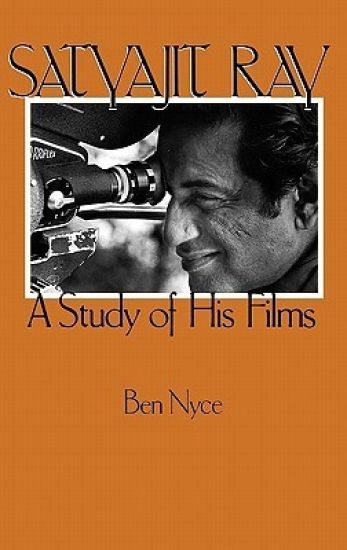
With 26 films to his credit and numerous international prizes, Satyajit Ray is India's most recognized filmmaker--yet, no extended study of his films has previouly been published in English in the West. Ben Nyce examines each of Ray's films in close detail and provides a cinematic examination of his unique style. Nyce explores Ray's career chronologically to best chart his stylistic development as a filmaker. Each chapter considers one film and how it expressed the particular quality of rhythm and mood which characterizes his work. Narrative synopses are first presented, and the opinions of his critics are continually noted and discussed. Included are studies of the following well known films: Pather Panchali, Aparajito, Apur Sanar (The Apu Trilogy), Jalsaghar (The Music Room), Ashani Sanket (Distant Thunder), and Ghare-Baire (The Home and the World).
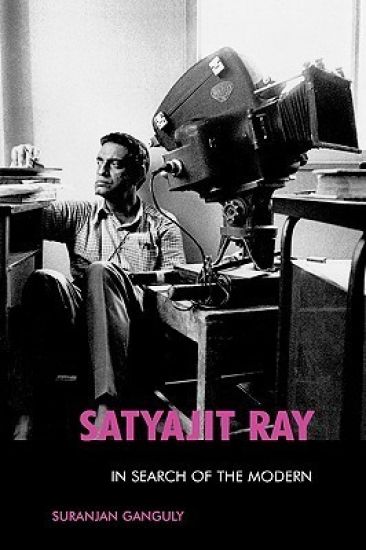
Satyajit Ray is usually credited with ushering modernity into the tradition-bound Indian Cinema. Suranjan Ganguly's book examines six of Ray's major films focusing on issues such as human subjectivity, the importance of education, the emancipation of women, the rise of the new middle class, and the crisis of identity in post-Independence India. He provides close readings of the following films: Pather Panchali (1955), Aparajito (1956), Apur Sansar (1959), Charulata (1964), Aranyer Din Ratri (1970), and Pratidwandi (1970). All six films relate to Ray's interest in how a culture acquires a composite, hybrid shape through the fusion of history and modernity. By placing Ray's films within the socio-historical and cultural contexts of Indian modernity, Ganguly offers a radically different approach, which will enable Western readers to engage more fully with the filmmaker's work.
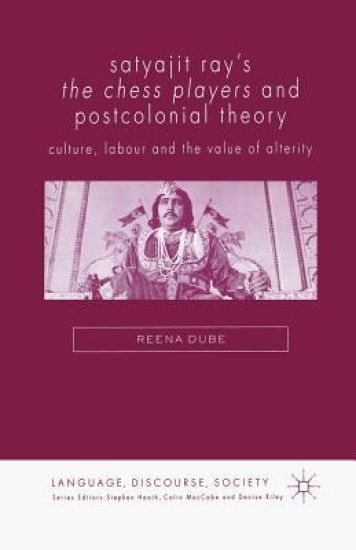
Satyajit Ray's The Chess Players and Postcolonial Film Theory
Reena Dube
Palgrave Macmillan
2005
nidottu
Indispensable for students of film studies, in this book Reena Dube explores Satyajit Ray's films, and The Chess Players in particular, in the context of discourses of labour in colonial and postcolonial conditions. Starting from Daniel Defoe and moving through history, short story and film to the present, Dube widens her analysis with comparisons in which Indian films are situated alongside Hollywood and other films, and interweaves historical and cultural debates within film theory. Her book treats film as part of the larger cultural production of India and provides a historical sense of the cross genre borrowings, traditions and debates that have deeply influenced Indian cinema and its viewers.
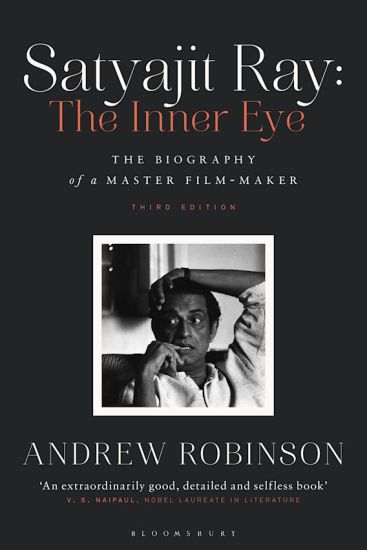
Akira Kurosawa said of the great director: ‘Not to have seen the cinema of Ray means existing in the world without seeing the sun or the moon.’ Martin Scorsese remarked on Ray’s birth centenary in 2021: ‘The films of Satyajit Ray are truly treasures of cinema, and everyone with an interest in film needs to see them.’Satyajit Ray: The Inner Eye is the definitive biography, based on extensive interviews with Ray himself, his actors and collaborators, and a deep knowledge of Bengali culture. Andrew Robinson provides an in-depth critical account of each film in an astonishingly versatile career, from Ray’s directorial debut Pather Panchali (1955) to his final feature Agantuk (1991). The third (centenary) edition includes new material: an epilogue, ‘A century of Ray’, about the nature of his genius; a wide-ranging conversation with Ray drawn from the author’s interviews; and an updated comprehensive bibliography of Ray’s writings.

Akira Kurosawa said of the great director: ‘Not to have seen the cinema of Ray means existing in the world without seeing the sun or the moon.’ Martin Scorsese remarked on Ray’s birth centenary in 2021: ‘The films of Satyajit Ray are truly treasures of cinema, and everyone with an interest in film needs to see them.’Satyajit Ray: The Inner Eye is the definitive biography, based on extensive interviews with Ray himself, his actors and collaborators, and a deep knowledge of Bengali culture. Andrew Robinson provides an in-depth critical account of each film in an astonishingly versatile career, from Ray’s directorial debut Pather Panchali (1955) to his final feature Agantuk (1991). The third (centenary) edition includes new material: an epilogue, ‘A century of Ray’, about the nature of his genius; a wide-ranging conversation with Ray drawn from the author’s interviews; and an updated comprehensive bibliography of Ray’s writings.

Satyajit Ray's The Chess Players and Postcolonial Film Theory
Reena Dube
Palgrave Macmillan
2005
sidottu
Indispensable for students of film studies, in this book Reena Dube explores Satyajit Ray's films, and The Chess Players in particular, in the context of discourses of labour in colonial and postcolonial conditions. Starting from Daniel Defoe and moving through history, short story and film to the present, Dube widens her analysis with comparisons in which Indian films are situated alongside Hollywood and other films, and interweaves historical and cultural debates within film theory. Her book treats film as part of the larger cultural production of India and provides a historical sense of the cross genre borrowings, traditions and debates that have deeply influenced Indian cinema and its viewers.

A fascinating exchange between two giants of Indian cinema, revealing the inner workings of Satyajit Ray’s creative process and the vision that shaped world cinema. Two of Indian cinema’s most acclaimed auteurs, Satyajit Ray and Shyam Benegal, come together in this intimate dialogue, offering a fascinating glimpse into the mind of a cinematic genius. Based on Benegal’s 1985 documentary on Ray, this volume brings together the film’s script, excerpts from extended interviews, and a remarkable collection of visual material showcasing Ray’s work as a filmmaker, illustrator, designer, and writer. Through candid conversations, Ray reflects on his childhood and the philosophy behind his storytelling, providing an unparalleled look at his creative process. With one master filmmaker capturing another, the result is a deeply personal and layered portrait that moves beyond Ray’s films to reveal the man behind the camera. Satyajit Ray: A Film is both a historical document and a celebration of artistic legacy; a rare opportunity to witness a dialogue between two legends shaping the course of Indian and global cinema.


The essays offered here were written between 1970 and 2005. They were not written with the view to form a book. They are now published together in the conviction that, both singly and as a whole, they can contribute to a better appreciation of Satyajit Ray’s legacy. The essays deal with Ray as a filmmaker. The date on which each essay was written is indicated as it situates each in the cultural context in which it was conceived. Out of the twenty-nine feature films of Ray, only eight, plus the Apu Trilogy as a whole, are discussed. Moreover, this small collection is not a selection, indicating preferences; nor is it a classification, rating the films. The discussion of Jana Aranya is the only essay that was written for this book to illuminate the evolution that took place from the first to the last film of Satyajit Ray. In order to preserve their historical historical, generally, the essays have not been updated. Given Ray’s deep involvement in film education, especially in the film societies movement in India,

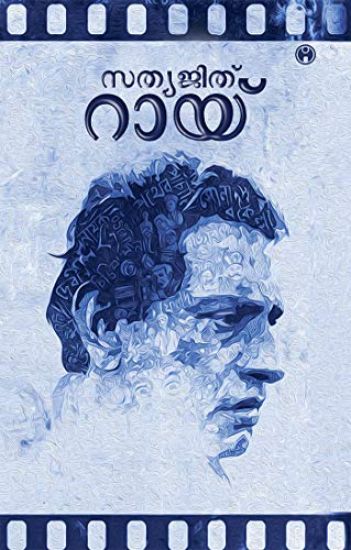
Satyajit Ray
Insight Publica
2020
pokkari
അമര്]ത്യാസെന്]/അടൂര്] ഗോപാലകൃഷ്ണന്] സന്ദീപ് റായ്/സി.വി. ബാലകൃഷ്ണൻ മാങ്ങാട് രത്നാകരൻ/നിമായ് ഘോഷ് വി. രാജകൃഷ്ണന്]/വിജയകൃഷ്ണന്]/ഐ. ഷണ്]മുഖദാസ് ജാനകി/ജി.പി. രാമചന്ദ്രന്]/ബ്ലയിസ് ജോണി സി.എസ്. വെങ്കിടേശ്വരന്]/വി. വിജയകുമാര്] ഒ.കെ. ജോണി/എസ്. ഗോപാലകൃഷ്ണന്]/വിപിന്] വിജയ് വി.കെ. ചെറിയാന്]/രാഹുല്] രാധാകൃഷ്ണന്]
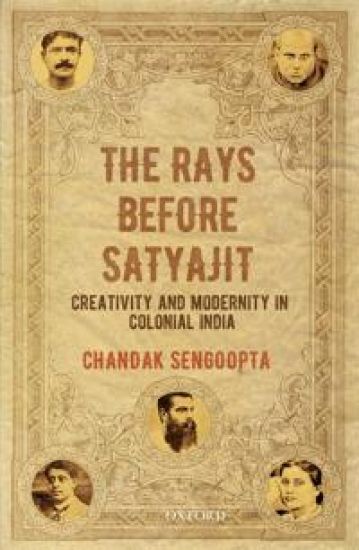
Although the filmmaker Satyajit Ray is well-known across the world, few outside Bengal know much about the diverse contributions of his forebears to printing technology, nationalism, childrens literature, feminism, advertising, entreprenurial culture and religious reform. Even within Bengal, the earlier Rays are often regarded exclusively as childrens writers. The first study in English of the multifarious interests and accomplishments of the Ray family and its collateral branches, The Rays Before Satyajit interweaves the Ray saga with the larger history of Indian modernity and its contradictions. Whilst eager to learn from the West and rarely drawn to simple-minded nationalism, the Rays, at their best, shunned mere imitation and sought to create forms of the modern that were thoroughly Indian and enthusiastically cosmopolitan. Some of the outcomes of this quest such as Upendrakishore Rays innovations in half-tone photography were even appreciated in the West, though the metropolitan careers of colonial innovators, as the book shows, were inevitably constrained by forces beyond their control. Ranging confidently across the history of religion, literature, science, technology and entrepreneurial culture, The Rays before Satyajit is not only a collective biography of an extraordinary family but illuminates the history of Indian modernity from a bracingly original perspective.