Max Stirner was one of the most important and seminal thinkers of the mid-nineteenth century. He exposed the religiosity behind secular humanism and rationalism, and the domination of the individual behind liberal modes of politics. This edited collection explores Stirner's radical and contemporary importance as a political theorist.
Most advanced industrial democracies have been successful in controlling ethnic political conflicts peacefully. This book examines ethnoregional conflicts in seven ethnoregions—in Scotland, Flanders, Wallonia, Brussels, Quebec, Northern Ireland, and the Basque region of Spain—to explain what mactors determine electoral support for ethnoregional parties, why in some cases electoral conflict has co-existed with ethnic violence, and why there appears to be an inverse relationship between electoral success and policy success among many ethnoregional parties. As ethnic conflicts—peaceful and violent—continue to rage around the world, this important new study merits the attention of scholars and students in comparative politics and ethnic studies.
This book explores the impact of poststructuralism on contemporary political theory by focussing on problems and issues central to politics today. Drawing on the theoretical concerns brought to light by the ‘poststructuralist’ thinkers Foucault, Derrida, Lacan, Deleuze and Max Stirner, Newman provides a critical examination of new developments in contemporary political theory: post-Marxism, discourse analysis, new theories of ideology and power, hegemony, radical democracy and psychoanalytic theory. He re-examines the political in light of these developments in theory to suggest new ways of thinking about politics through a reflection on the challenges that confront it.This volume will be of great interest to students of postmodernism and poststructuralist theory in political science, philosophy, sociology, philosophy and cultural studies.
This book explores the impact of poststructuralism on contemporary political theory by focussing on problems and issues central to politics today. Drawing on the theoretical concerns brought to light by the ‘poststructuralist’ thinkers Foucault, Derrida, Lacan, Deleuze and Max Stirner, Newman provides a critical examination of new developments in contemporary political theory: post-Marxism, discourse analysis, new theories of ideology and power, hegemony, radical democracy and psychoanalytic theory. He re-examines the political in light of these developments in theory to suggest new ways of thinking about politics through a reflection on the challenges that confront it.This volume will be of great interest to students of postmodernism and poststructuralist theory in political science, philosophy, sociology, philosophy and cultural studies.
Unstable universalities, available for the first time in paperback, examines the theme of universality and its place in radical political theory. Saul Newman argues that both Marxist politics of class struggle and the postmodern politics of difference have reached their historical and political limits, and that what is needed is a new approach to universality, a new way of thinking about collective politics. By exploring various themes and ideas within poststructuralist and post-Marxist theory, the book develops a new and original approach to universality – one that has important implications for politics today, particularly on questions of power, subjectivity, ethics and democracy. In so doing, it engages in debates with thinkers such as Laclau, Žižek, Badiou and Rancière over the future of radical politics. It also applies important theoretical insights to contemporary events such as the emergence of the anti-globalisation movement, the ‘war on terrorism’, the rise of anti-immigrant racism, and the nihilistic violence which lurks at the margins of the political.
In its comparison of anarchist and poststructuralist thought, From Bakunin to Lacan contends that the most pressing political problem we face today is the proliferation and intensification of power. Saul Newman targets the tendency of radical political theories and movements to reaffirm power and authority, in different guises, in their very attempt to overcome it. In his examination of thinkers such as Bakunin, Lacan, Stirner, and Foucault Newman explores important epistemological, ontological, and political questions: Is the essential human subject the point of departure from which power and authority can be opposed? Or, is the humanist subject itself a site of domination that must be unmasked? As it deftly charts this debate's paths of emergence in political thought, the book illustrates how the question of essential identities defines and re-defines the limits and possibilities of radical politics today.
In its comparison of anarchist and poststructuralist thought, From Bakunin to Lacan contends that the most pressing political problem we face today is the proliferation and intensification of power. Saul Newman targets the tendency of radical political theories and movements to reaffirm power and authority, in different guises, in their very attempt to overcome it. In his examination of thinkers such as Bakunin, Lacan, Stirner, and Foucault Newman explores important epistemological, ontological, and political questions: Is the essential human subject the point of departure from which power and authority can be opposed? Or, is the humanist subject itself a site of domination that must be unmasked? As it deftly charts this debate's paths of emergence in political thought, the book illustrates how the question of essential identities defines and re-defines the limits and possibilities of radical politics today.
What shape can radical politics take today in a time abandoned by the great revolutionary projects of the past? In light of recent uprisings around the world against the neoliberal capitalist order, Saul Newman argues that anarchism - or as he calls it postanarchism - forms our contemporary political horizon. In this book, Newman develops an original political theory of postanarchism; a form of anti-authoritarian politics which starts, rather than finishes, with anarchy. He does this by asking four central questions: who are we as subjects; how do we resist; what is our relationship to violence; and, why do we obey? By drawing on a range of heterodox thinkers including La Boétie, Sorel, Benjamin, Stirner and Foucault, the author not only investigates the current conditions for radical political thought and action, but proposes a new form of politics based on what he calls ontological anarchy and the desire for autonomous life. Rather than seeking revolutionary emancipation or political hegemony, we should affirm instead the non-existence of power and the ever-present possibilities of freedom. As the tectonic plates of our time are shifting, revealing the nihilism and emptiness of our political and economic order, postanarchism?s disdain for power in all its forms offers us genuine emancipatory potential.
What shape can radical politics take today in a time abandoned by the great revolutionary projects of the past? In light of recent uprisings around the world against the neoliberal capitalist order, Saul Newman argues that anarchism - or as he calls it postanarchism - forms our contemporary political horizon. In this book, Newman develops an original political theory of postanarchism; a form of anti-authoritarian politics which starts, rather than finishes, with anarchy. He does this by asking four central questions: who are we as subjects; how do we resist; what is our relationship to violence; and, why do we obey? By drawing on a range of heterodox thinkers including La Boétie, Sorel, Benjamin, Stirner and Foucault, the author not only investigates the current conditions for radical political thought and action, but proposes a new form of politics based on what he calls ontological anarchy and the desire for autonomous life. Rather than seeking revolutionary emancipation or political hegemony, we should affirm instead the non-existence of power and the ever-present possibilities of freedom. As the tectonic plates of our time are shifting, revealing the nihilism and emptiness of our political and economic order, postanarchism?s disdain for power in all its forms offers us genuine emancipatory potential.
What is the relevance of anarchism for politics and political theory today? While many have in the past dismissed anarchism, the author contends that anarchism's heretical critique of authority, and its insistence on full equality and liberty, places it at the forefront of the radical political imagination today. With the unprecedented expansion of state power in the name of security, the current 'crisis of capitalism', and the terminal decline of Marxist and social democratic projects, it is time to reconsider anarchism as a form of politics. This book seeks to renew anarchist thought through the concept of postanarchism. This innovative theoretical approach, drawing upon classical anarchist theory, poststructuralism, post-Marxism, critical theory and psychoanalytic approaches, allows for a new engagement with contemporary debates about future directions in radical politics relating to political subjectivity and identity, political organisation, the State, globalisation, liberty and equality today, and the political 'event'.
What is the relevance of anarchism for politics and political theory today? While many have in the past dismissed anarchism, the author contends that anarchism's heretical critique of authority, and its insistence on full equality and liberty, places it at the forefront of the radical political imagination today. With the unprecedented expansion of state power in the name of security, the current 'crisis of capitalism', and the terminal decline of Marxist and social democratic projects, it is time to reconsider anarchism as a form of politics. This book seeks to renew anarchist thought through the concept of postanarchism. This innovative theoretical approach, drawing upon classical anarchist theory, poststructuralism, post-Marxism, critical theory and psychoanalytic approaches, allows for a new engagement with contemporary debates about future directions in radical politics relating to political subjectivity and identity, political organisation, the State, globalisation, liberty and equality today, and the political 'event'.
Max Stirner was one of the most important and seminal thinkers of the mid-nineteenth century. He exposed the religiosity behind secular humanism and rationalism, and the domination of the individual behind liberal modes of politics. This edited collection explores Stirner's radical and contemporary importance as a political theorist.
God is dead, but his presence lives on in politics. This is the problem of political theology: the way that theological ideas find their way into secular political institutions, particularly the sovereign state. In this intellectual tour-de-force, leading political theorist Saul Newman shows how political theology arose alongside secularism, and relates to the problem of legitimising power and authority in modernity. It is not about the power of religion so much as about the religion of power. Examining the current crisis of the liberal order, he argues that recent phenomena such as the rise of populism, the renewed demand for strong national sovereignty and the return of religious fundamentalism may be understood through this paradigm. He illustrates his argument through an exploration of themes such as sovereignty, democracy, economics, technology, ecological catastrophe, messianism and the future of radical politics, engaging with thinkers ranging from Schmitt and Hobbes to Stirner, Foucault, and Agamben. This book will be a crucial text for all students, scholars and general readers interested in the meaning and significance of political theology for political theory.
God is dead, but his presence lives on in politics. This is the problem of political theology: the way that theological ideas find their way into secular political institutions, particularly the sovereign state. In this intellectual tour-de-force, leading political theorist Saul Newman shows how political theology arose alongside secularism, and relates to the problem of legitimising power and authority in modernity. It is not about the power of religion so much as about the religion of power. Examining the current crisis of the liberal order, he argues that recent phenomena such as the rise of populism, the renewed demand for strong national sovereignty and the return of religious fundamentalism may be understood through this paradigm. He illustrates his argument through an exploration of themes such as sovereignty, democracy, economics, technology, ecological catastrophe, messianism and the future of radical politics, engaging with thinkers ranging from Schmitt and Hobbes to Stirner, Foucault, and Agamben. This book will be a crucial text for all students, scholars and general readers interested in the meaning and significance of political theology for political theory.
Kakuju formu mozhet prinjat radikalnaja politika v to vremja, kogda zabrosheny revoljutsionnye proekty proshlogo? V svete nedavnikh vosstanij protiv neoliberalnogo kapitalisticheskogo stroja, Sol Njuman utverzhdaet, sejchas nash sovremennyj politicheskij gorizont formiruet postanarkhizm. V etoj knige Njuman razvivaet originalnuju politicheskuju teoriju antiavtoritarnoj politiki, kotoraja nachinaetsja, a ne zakanchivaetsja anarkhiej. Opirajas na rjad neortodoksalnykh myslitelej, vkljuchaja Shtirnera i Fuko, avtor ne tolko issleduet tekuschie uslovija dlja radikalnoj politicheskoj mysli i dejstvij, no i predlagaet novye formy politiki v stremlenii k avtonomnoj zhizni.Po mere togo, kak obnazhaetsja nigilizm i pustota politicheskogo i ekonomicheskogo porjadka, postanarkhizm predlagaet nam podlinnyj osvoboditelnyj potentsial.Perevodchik: Grabovskaja O. L.
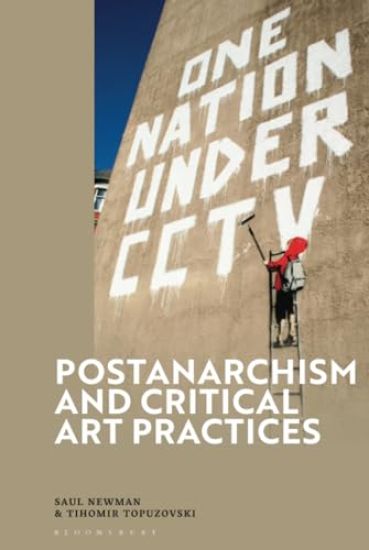
Engaging with contemporary debates about the political role of art in an era of total market subsumption, this book shows how artists respond to the challenges of political authoritarianism, police violence, right-wing populism, ‘post-truth’ discourse, economic inequality, pandemics, and the environmental crisis, transforming the public sphere in new and unexpected ways. Going beyond sterile debates about identity politics, diversity and representation that beset the mainstream media, university campuses and other cultural domains, the volume illustrates the ways in which artists are opening up alternative sites of contestation, occupation, and autonomous political thought and action. Newman and Topuzovski examine here the artistic practices of multiple collectives and individuals deeply engaged with social and political activities such as Grupo de Arte Callejero (GAC) and Voina, arguing that the best way to understand these new critical discourses and practices is through an updated political theory of anarchism - or what we call postanarchism - where the insurrection against power and the politics of singularity are central. Featuring, for instance, an examination of significant movements such as Black Lives Matter, as well as its use of artistic tactics such as graffiti, graphic design and movement art, the book launches itself into a vibrant discussion of the extent to which art can produce a multiplicity of practices through the deconstruction of existing legal, political, and cultural identities.By developing an alternative way of exploring the nexus between art and politics through the idea of postanarchism, this book bridges the gap between the two, promoting an understanding of the political role that art can play today and introduces a theory of postanarchism to a non-specialist audience of artists, activists and those generally interested in new sites and directions for radical politics.
Engaging with contemporary debates about the political role of art in an era of total market subsumption, this book shows how artists respond to the challenges of political authoritarianism, police violence, right-wing populism, ‘post-truth’ discourse, economic inequality, pandemics, and the environmental crisis, transforming the public sphere in new and unexpected ways. Going beyond sterile debates about identity politics, diversity and representation that beset the mainstream media, university campuses and other cultural domains, the volume illustrates the ways in which artists are opening up alternative sites of contestation, occupation, and autonomous political thought and action. Newman and Topuzovski examine here the artistic practices of multiple collectives and individuals deeply engaged with social and political activities such as Grupo de Arte Callejero (GAC) and Voina, arguing that the best way to understand these new critical discourses and practices is through an updated political theory of anarchism - or what we call postanarchism - where the insurrection against power and the politics of singularity are central. Featuring, for instance, an examination of significant movements such as Black Lives Matter, as well as its use of artistic tactics such as graffiti, graphic design and movement art, the book launches itself into a vibrant discussion of the extent to which art can produce a multiplicity of practices through the deconstruction of existing legal, political, and cultural identities.By developing an alternative way of exploring the nexus between art and politics through the idea of postanarchism, this book bridges the gap between the two, promoting an understanding of the political role that art can play today and introduces a theory of postanarchism to a non-specialist audience of artists, activists and those generally interested in new sites and directions for radical politics.
When might an anarchist need a good lawyer? Why do radical activists committed to revolutionary change often have to work within the limits of the law? Can a judge also be an anarchist? This book is an exploration of a paradoxical, yet necessary, encounter between anarchism and the law. Anarchism offers the most radical critique of the principle of legal authority and, as such, poses essential questions that legal philosophy must respond to regarding political obligation and the legitimacy of coercion. At a time when the law is in a state of crisis, it becomes crucial to interrogate its founding principles and ethical limits. Through an exploration of the anarchist tradition, and engaging with contemporary continental and analytical approaches to questions of jurisprudence, state sovereignty, violence, civil disobedience and human rights, this book develops an original anarchist theory of legal institutionalism and a concept of law without authority and coercion.
When might an anarchist need a good lawyer? Why do radical activists committed to revolutionary change often have to work within the limits of the law? Can a judge also be an anarchist? This book is an exploration of a paradoxical, yet necessary, encounter between anarchism and the law. Anarchism offers the most radical critique of the principle of legal authority and, as such, poses essential questions that legal philosophy must respond to regarding political obligation and the legitimacy of coercion. At a time when the law is in a state of crisis, it becomes crucial to interrogate its founding principles and ethical limits. Through an exploration of the anarchist tradition, and engaging with contemporary continental and analytical approaches to questions of jurisprudence, state sovereignty, violence, civil disobedience and human rights, this book develops an original anarchist theory of legal institutionalism and a concept of law without authority and coercion.
Can human rights protect the stateless? Or are they permanently excluded from politics? We are living in world in which human rights are violated on an unprecedented scale, often by the very sovereign states who claim to protect them. According to Giorgio Agamben, this is no coincidence: he argues that human rights are actually a sign of our growing powerlessness and political alienation in the face of a sovereign state of exception that has become global. Taking Agamben's critique as their starting point, Lechte and Newman reveal the paradoxes central to the politics of human rights by exploring questions of statelessness, exclusion, the violence of security and the visual representation of refugees and illegal migrants in the media. They propose a radical rethinking of human rights: as disengaged from humanitarianism, biopolitics, sovereignty and the society of the spectacle; as becoming genuinely political.