Kirjojen hintavertailu. Mukana 11 342 296 kirjaa ja 12 kauppaa.

Kirjahaku

Etsi kirjoja tekijän nimen, kirjan nimen tai ISBN:n perusteella.

1000 tulosta hakusanalla Savina Priami

La fatica di vivere nel groviglio

La fatica di vivere nel groviglio

Savina Priami

Independently Published
2014
pokkari
Questo la storia della vita di Savina Priami. Il libro, "La fatica di vivere nel groviglio" Parla della sua odissea, nata e cresciuta con il deficit di attenzione e iperattivit , chiamato ADHD. E' guarita completamente da, traumi, abbandoni ripetuti, ossessioni e fobie. Savina Priami riuscita ad uscire dalla "Fatica di vivere nel groviglio" Grazie ad'una tecnica Hawaiana, chiamata; Ho' oponopono. Nella seconda parte troverete tante testimonianze con Ho'oponopono.
Il Bacio della Contessa Savina

Il Bacio della Contessa Savina

Antonio Caccianiga; Antonio Caccianiga

Antigonos Verlag
2025
pokkari
Riproduzione dell'originale del 1888. La casa editrice Antigonos specializzata nella pubblicazione di ristampe di libri storici. Ci assicuriamo che queste opere siano messe a disposizione del pubblico in buone condizioni, al fine di preservare il patrimonio culturale.
Il Bacio della Contessa Savina

Il Bacio della Contessa Savina

Antonio Caccianiga; Antonio Caccianiga

Antigonos Verlag
2025
sidottu
Riproduzione dell'originale del 1888. La casa editrice Antigonos specializzata nella pubblicazione di ristampe di libri storici. Ci assicuriamo che queste opere siano messe a disposizione del pubblico in buone condizioni, al fine di preservare il patrimonio culturale.
Le Baiser de la Comtesse Savina

Le Baiser de la Comtesse Savina

Antonio Caccianiga

Hachette Livre - BNF
2016
pokkari
Le baiser de la comtesse Savina / par A. Caccianiga; roman traduit de l'italien par Leon DieuDate de l'edition originale: 1877Collection: Bibliotheque des meilleurs romans etrangersCe livre est la reproduction fidele d'une oeuvre publiee avant 1920 et fait partie d'une collection de livres reimprimes a la demande editee par Hachette Livre, dans le cadre d'un partenariat avec la Bibliotheque nationale de France, offrant l'opportunite d'acceder a des ouvrages anciens et souvent rares issus des fonds patrimoniaux de la BnF.Les oeuvres faisant partie de cette collection ont ete numerisees par la BnF et sont presentes sur Gallica, sa bibliotheque numerique.En entreprenant de redonner vie a ces ouvrages au travers d'une collection de livres reimprimes a la demande, nous leur donnons la possibilite de rencontrer un public elargi et participons a la transmission de connaissances et de savoirs parfois difficilement accessibles.Nous avons cherche a concilier la reproduction fidele d'un livre ancien a partir de sa version numerisee avec le souci d'un confort de lecture optimal. Nous esperons que les ouvrages de cette nouvelle collection vous apporteront entiere satisfaction.Pour plus d'informations, rendez-vous sur www.hachettebnf.fr
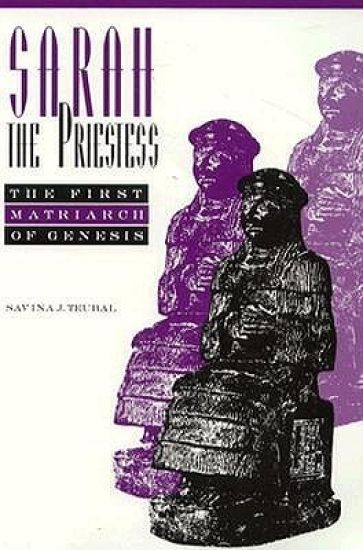
Sarah the Priestess

Sarah the Priestess

Savina J. Teubal

Swallow Press
1984
pokkari
The only source in which Sarah is mentioned is the Book of Genesis, which contains very few highly selective and rather enigmatic stories dealing with her. On the surface, these stories tell us very little about Sarah, and what they do tell is complicated and confused by the probability that it represents residue surviving from two different written sources based on two independent oral traditions. Nevertheless, the role which Sarah plays, in the Genesis narratives, apears to be a highly energetic one, a role so active, in fact, that it repeatedly overshadows that of her husband. In a patriarchal environment such as the Canaan of Genesis, the situation is discordant and problematic. Dr. Teubal suggests that the difficulty is eliminated, however, if we understand that Sarah and the other matriarchs mentioned in the narratives acted within the established, traditional Mesopotamian role of priestess, of a class of women who retained a highly privileged position vis-a-vis their husbands. Dr. Teubal shows that the "Sarah tradition" represents a nonpatriarchal system struggling for survival in isolation, in the patriarchal environment of what was for Sarah a foreign society. She further indicates that the insistence of Sarah and Rebekah that their sons and heirs marry wives from the old homeland had to do not so much with preference for endogamy and cousin marriage as with their intention of ensuring the continuation of their old kahina-tradition against the overwhelming odds represented by patriarchal Canaan.
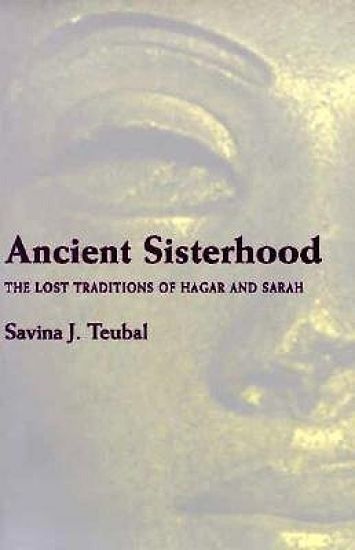
Ancient Sisterhood

Ancient Sisterhood

Savina J. Teubal

Swallow Press
1997
pokkari
In this fascinating piece of scholarly detective work, biblical scholar Savina J. Teubal peels away millenia of patriarchal distortion to reveal the lost tradition of biblical matriarchs. In Ancient Sisterhood: The Lost Traditions of Hagar and Sarah (originally published as Hagar the Egyptian), she shows that Hagar, the mother of Ishmael, was actually lady-in-waiting to the priestess Sarah and participated in an ancient Near Eastern custom of surrogate motherhood. Ancient Sisterhood cites evidence that Hebrew women actually enjoyed the privileges and sanctity of their own religious practices. These practices, however, were gradually eroded and usurped by the establishment of patriarchal monarchies that were based on militaristic conquest and power. Teubal examines the figures of Hagar and Sarah from a feminist perspective that combines thorough scholarship with an informed and detailed understanding of the cultural and religious influences from which the mysterious biblical figure of Hagar emerged. She looks at Hagar's important role in the genesis of Hebrew culture, her role as mother of the Islamic nations, and her power as a matriarch as opposed to her apparent status as a concubine. Teubal posits two distinct sources for the Hagar episodes: Hagar as companion to Sarah and an unknown woman whom she refers to as the desert matriarch. She explores whether Hagar was a slave to Abraham or Sarah, the differences between Hagar and the desert matriarch, and the obscurantism of these important elements in biblical texts. Teubal sheds considerable light on two central figures of these world religions and "the disassociation of woman from her own female religious experience."
Starting Over

Starting Over

Savina Joyce

Savina Joyce
2020
pokkari
When Jia's marriage falls apart, she had no where to go but her home town. She planned on making a fresh start, without men. It was going well until her high school ex turned up. Jia tried to brush him off, but there was a high school reunion coming up. Plus, he was too gorgeous for words.
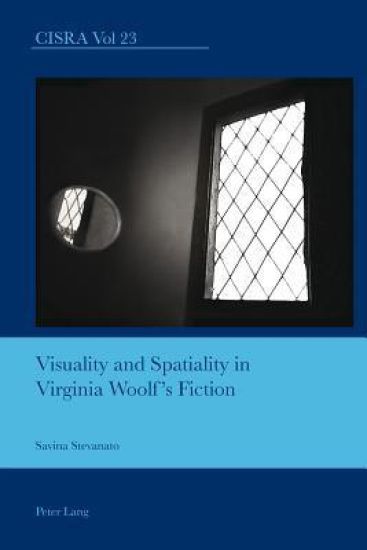
Visuality and Spatiality in Virginia Woolf’s Fiction

Visuality and Spatiality in Virginia Woolf’s Fiction

Savina Stevanato

Peter Lang AG, Internationaler Verlag der Wissenschaften
2012
nidottu
This book offers an interpretative key to Virginia Woolf’s visual and spatial strategies by investigating their nature, role and function. The author examines long-debated theoretical and critical issues with their philosophical implications, as well as Woolf’s commitment to contemporary aesthetic theories and practices. The analytical core of the book is introduced by a historical survey of the interart relationship and significant critical theories, with a focus on the context of Modernism. The author makes use of three investigative tools: descriptive visuality, the widely debated notion of spatial form, and cognitive visuality. The cognitive and remedial value of Woolf’s visual and spatial strategies is demonstrated through an inter-textual analysis of To the Lighthouse, The Waves and Between the Acts (with cross-references to Woolf’s short stories and Jacob’s Room). The development of Woolf’s literary output is read in the light of a quest for unity, a formal attempt to restore parts to wholeness and to rescue Being from Nothingness.