Kirjojen hintavertailu. Mukana 11 377 993 kirjaa ja 12 kauppaa.

Kirjahaku

Etsi kirjoja tekijän nimen, kirjan nimen tai ISBN:n perusteella.

630 tulosta hakusanalla Sayyid Rizwan Ali

Sultan Al 'Ulama Al-Izz Ibn Abdussalam - A great Muslim Jurist and Reformer of the 13th Century A.D
Sultan Al-'Ulama' Al-Izz ibn Abdussalam was one of the extraordinary individuals who left an indelible mark on their era. He emerged as a prominent religious reformer during the seventh century A.H. (13th A.D.). His unwavering commitment to righteousness and his remarkable moral courage in challenging and rebuffing the mighty Sultans and influential viziers of his time left scholars and admirers in awe.Born as Abu Muhammad Izz al-Din 'Abd al-'Aziz bin 'Abd al-Salam bin Abi 'I-Qasim b. al-Hassan b. Muhammad b. al-Muhadhdhab Al-Sulami al-Shafi'i, he is more widely recognized as Imam 'Izz ibn 'Abd al-Salam. His reputation as the "Sultan of Scholars" is well-deserved. He was born in Damascus in 577 A.H. (1181 A.D.), and he had the privilege of studying under several eminent scholars of his time, including Fakhr ud-din ibn 'Asakir, Saif ud-din Amedi, and Hafiz Abu Mohammad al-Qasim.While some accounts suggest that he began his education relatively late, he quickly attained such a mastery of the sciences of his time that his contemporaries heaped praise upon his deep learning and brilliance of mind. Ibn Daqiq al-Eid even referred to him as the "Sultan ul-Ulema" (the king of scholars) in some of his writings.When Izz ud-din migrated to Egypt in 639 A.H., his influence was so profound that Hafiz Abdul Azim al-Munziri, the author of "al-Targhib wat-Tarhib," ceased to provide legal opinions. When asked about his decision, he explained, "It is not appropriate for any jurist to issue legal opinions when Izz ud-din is present." Another renowned scholar, Sheikh Jamal ud-din ibn al-Hajib, believed that Izz ud-din's expertise in Fiqh (jurisprudence) even surpassed that of al-Ghazali. As Al-Zahabi wrote in his book titled "al-Ebar," "In his knowledge of Fiqh, devotion to religion, and awe of God, he had achieved the level of perfection that enables one to engage in Ijtihad-interpreting God's revealed law and deducing new laws from it."
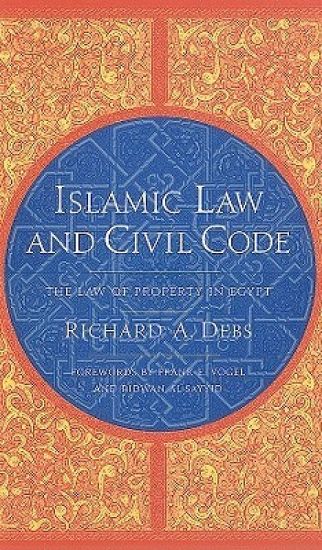
Islamic Law and Civil Code

Islamic Law and Civil Code

Richard A. Debs; Frank E. Vogel; Ridwan Al-Sayyid

Columbia University Press
2010
sidottu
Richard A. Debs analyzes the classical Islamic law of property based on the Shari'ah, traces its historic development in Egypt, and describes its integration as a source of law within the modern format of a civil code. He focuses specifically on Egypt, a country in the Islamic world that drew upon its society's own vigorous legal system as it formed its modern laws. He also touches on issues that are common to all such societies that have adopted, either by choice or by necessity, Western legal systems. Egypt's unique synthesis of Western and traditional elements is the outcome of an effort to respond to national goals and requirements. Its traditional law, the Shari'ah, is the fundamental law of all Islamic societies, and Debs's analysis of Egypt's experience demonstrates how Islamic jurisprudence can be sophisticated, coherent, rational, and effective, developed over centuries to serve the needs of societies that flourished under the rule of law.
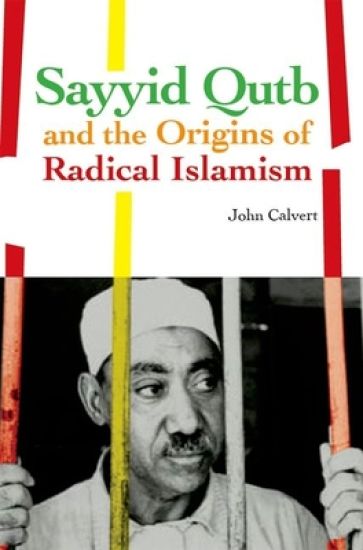
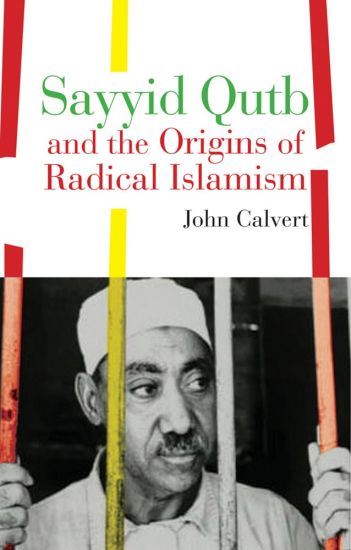
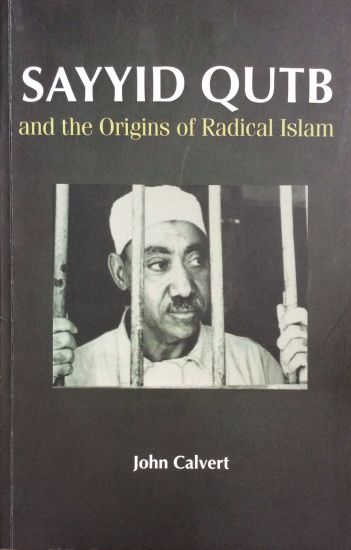
Sayyid Qutb and the Origins of Radical Islamism

Sayyid Qutb and the Origins of Radical Islamism

John Calvert

Oxford University Press, USA
2018
nidottu
Sayyid Qutb (1906-1966) was an influential Egyptian ideologue credited with establishing the theoretical basis for radical Islamism in the post colonial Sunni Muslim world. Lacking a pure understanding of the leader's life and work, the popular media has conflated Qutb's moral purpose with the aims of bin Laden and al-Qaeda. He is often portrayed as a terrorist, Islamo-Fascist, and advocate of murder. This book rescues Qutb from misrepresentation, tracing the evolution of his thought within the context of his time. An expert on social protest and political resistance in the modern Middle East, as well as Egyptian nationalism, John Calvert recounts Qutb's life from the small village in which he was raised to his execution at the behest of Abd al-Nasser's regime. His study remains sensitive to the cultural, political, social, and economic circumstances that shaped Qutb's thought-major developments that composed one of the most eventful periods in Egyptian history. These years witnessed the full flush of Britain's tutelary regime, the advent of Egyptian nationalism, and the political hegemony of the Free Officers. Qutb rubbed shoulders with Taha Husayn, Naguib Mahfouz, and Abd al-Nasser himself, though his Islamism originally had little to do with religion. Only in response to his harrowing experience in prison did Qutb come to regard Islam and kufr (infidelity) as oppositional, antithetical, and therefore mutually exclusive. Calvert shows how Qutb repackaged and reformulated the Islamic heritage to pose a challenge to authority, including those who claimed (falsely, he believed) to be Muslim.
Sayyid Qutb

Sayyid Qutb

James Toth

Oxford University Press Inc
2013
sidottu
Sayyid Qutb is considered by many to be the founder of radical Islamism -- the "Philospher of Islamic Terror," in the words of Paul Berman. Many draw a direct line from Qutb through Ayman al-Zawahiri to Osama bin Laden. Qutb first gained notice as a novelist, literary critic, and poet but then began writing religious and political criticism aimed at the Egyptian government and Muslims he deemed insufficiently pious. Under pressure from the authorities, Qutb left Egypt in 1948 for a two-year visit to the United States, during which he grew even more radical. He returned to Egypt and joined the Muslim Brotherhood, eventually taking charge of its propaganda operation. After members of the Brotherhood attempted to assassinate Egyptian President Gamal Abdel Nasser, the group was outlawed and Qutb was thrown in jail. He was executed in 1966 -- becoming, in effect, the first martyr to the Islamist cause. In this book, James Toth traces the life and thought of Qutb, giving attention not only to his well-known Signposts on the Road, but also to his less-studied works like Social Justice in Islam and his 30-volume Quranic commentary. By returning to these sources, Toth draws a complex portrait of Qutb: one that moves beyond the cartoonish depictions of him as the evil genius lurking behind today's terrorists.
Sayyid Qutb

Sayyid Qutb

Giedre Šabaseviciute

Syracuse University Press
2021
nidottu
No Arab historical figure is more demonized than the Egyptian literati-turned-Islamist Sayyid Qutb. A poet and literary critic in his youth, Qutb is known to have abandoned literature in the 1950s in favor of Islamism, becoming its most prominent ideologist to this day. In a sharp departure from this common narrative, Šabaseviciute offers a fresh perspective on Qutb's life that examines his Islamist commitment as a continuation of his literary project. Contrary to the notion of Islam's incompatibility with literature, the book argues that Islamism provided as Qutb with a novel way to pursue his metaphysical quest at a time when the rising anti-colonial movement brought the Romantic models of literature to their demise. Drawing upon unexplored material on Qutb's life - book reviews, criticism, intellectual collaborations, memoirs, and personal interviews with his former acquaintances - Šabaseviciute traces the development of Qutb's thought in line with his shifting networks of friendship and patronage. In a distinct sociological take on Arab intellectual and literary history, this book unveils the unexplored dimensions of Qutb's involvement in Cairo's burgeoning cultural scene.
Sayyid Qutb

Sayyid Qutb

Giedre Šabaseviciute

Syracuse University Press
2021
sidottu
No Arab historical figure is more demonized than the Egyptian literati-turned-Islamist Sayyid Qutb. A poet and literary critic in his youth, Qutb is known to have abandoned literature in the 1950s in favor of Islamism, becoming its most prominent ideologist to this day. In a sharp departure from this common narrative, Šabaseviciute offers a fresh perspective on Qutb's life that examines his Islamist commitment as a continuation of his literary project. Contrary to the notion of Islam's incompatibility with literature, the book argues that Islamism provided as Qutb with a novel way to pursue his metaphysical quest at a time when the rising anti-colonial movement brought the Romantic models of literature to their demise. Drawing upon unexplored material on Qutb's life - book reviews, criticism, intellectual collaborations, memoirs, and personal interviews with his former acquaintances - Šabaseviciute traces the development of Qutb's thought in line with his shifting networks of friendship and patronage. In a distinct sociological take on Arab intellectual and literary history, this book unveils the unexplored dimensions of Qutb's involvement in Cairo's burgeoning cultural scene.
Sayyid Qutb's Radical Islamism and the Comparative Political Theology
Sayyid Qutb’s Radical Islamism and The Comparative Political Theology argues that Sayyid Qutb’s radical critique of secular modernity, seen as a product of a great theft of sovereignty that usurps the monopoly of God over the entire world of creation, is not idiosyncratic or incoherent but a quintessential expression and an extreme type of a specific tradition of political theology that until now has been exclusively the province of the Western thought. Dragos Stoica claims that Sayyid Qutb’s political theology of Hakimiyyah (God’s Sovereignty) is better understood by integrating it in a wider context of the antimodern political theology. Thus, throughout this book he compares Qutb’s critique of modernity with the Pakistani Islamist thinker Abu al-A?la Mawdudi (1903–1979), the Spanish Catholic counter-revolutionary political theologian Juan Donoso Corte´s (1809–1853), as well as the Protestant political theologians: Abraham Kuyper (1837–1920) and Rousas J. Rushdoony (1916–2001). This book employs a family resemblance, cross-cultural comparative method and applies a cross-disciplinary analytical model that combines comparative political theology with critical discourse analysis. Employing these analytical instruments this book compares Qutb and his counterparts via the category of anti-modern political theology—more precisely, through a set of shared antitheses organized around the master concept of God’s Sovereignty. The ultimate objective is to augment the understanding of the Qutbian critique of secular modernity as an essential dimension of anti-modern political theology. Thus, by recasting Sayyid Qutb as an essential Muslim political theologian of God’s Sovereignty placed within a larger, cross-cultural paradigm, this book contributes as well to the necessary process of decolonization of political theology.
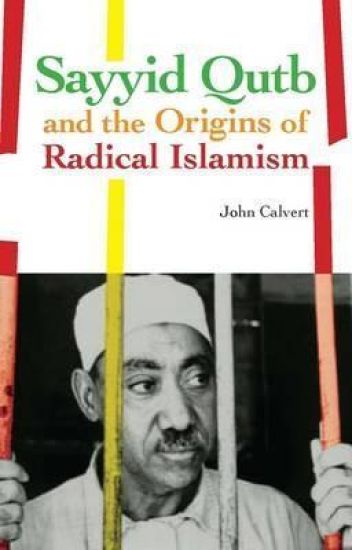
Sayyid Qutb and the Origins of Radical Islamism

Sayyid Qutb and the Origins of Radical Islamism

John Calvert

C Hurst Co Publishers Ltd
2009
sidottu
Sayyid Qutb (1906-1966) was an influential Egyptian ideologue credited with establishing the theoretical basis for radical Islamism in the post colonial Sunni Muslim world. Lacking a pure understanding of the leader's life and work, the popular media has conflated Qutb's moral purpose with the aims of bin Laden and al-Qaeda. He is often portrayed as a terrorist, Islamo-Fascist, and advocate of murder. This book rescues Qutb from misrepresentation, tracing the evolution of his thought within the context of his time. An expert on social protest and political resistance in the modern Middle East, as well as Egyptian nationalism, John Calvert recounts Qutb's life from the small village in which he was raised to his execution at the behest of Abd al-Nasser's regime. His study remains sensitive to the cultural, political, social, and economic circumstances that shaped Qutb's thought-major developments that composed one of the most eventful periods in Egyptian history. These years witnessed the full flush of Britain's tutelary regime, the advent of Egyptian nationalism, and the political hegemony of the Free Officers. Qutb rubbed shoulders with Taha Husayn, Naguib Mahfouz, and Abd al-Nasser himself, though his Islamism originally had little to do with religion. Only in response to his harrowing experience in prison did Qutb come to regard Islam and kufr (infidelity) as oppositional, antithetical, and therefore mutually exclusive. Calvert shows how Qutb repackaged and reformulated the Islamic heritage to pose a challenge to authority, including those who claimed (falsely, he believed) to be Muslim.
Sayyid Qutb and the Origins of Radical Islamism

Sayyid Qutb and the Origins of Radical Islamism

John Calvert

C Hurst Co Publishers Ltd
2018
nidottu
Sayyid Qutb (1906–1966) was an influential Egyptian ideologue credited with establishing the theoretical basis for radical Islamism in the postcolonial Sunni Muslim world. Lacking a pure understanding of the leader’s life and work, the popular media has conflated Qutb’s moral purpose with the aims of bin Laden and al-Qaeda. He is often portrayed as a terrorist, Islamo-Fascist, and advocate of murder. This book rescues Qutb from misrepresentation, tracing the evolution of his thought within the context of his time. An expert on social protest and political resistance in the modern Middle East, as well as Egyptian nationalism, John Calvert recounts Qutb’s life from the small village in which he was raised to his execution at the behest of Abd al-Nasser’s regime. His study remains sensitive to the cultural, political, social, and economic circumstances that shaped Qutb’s thought—major developments that composed one of the most eventful periods in Egyptian history. These years witnessed the full flush of Britain’s tutelary regime, the advent of Egyptian nationalism, and the political hegemony of the Free Officers. Qutb rubbed shoulders with Taha Husayn, Naguib Mahfouz, and Abd al-Nasser himself, though his Islamism originally had little to do with religion. Only in response to his harrowing experience in prison did Qutb come to regard Islam and kufr (infidelity) as oppositional, antithetical, and therefore mutually exclusive. Calvert shows how Qutb repackaged and reformulated the Islamic heritage to pose a challenge to authority, including those who claimed (falsely, he believed) to be Muslim.
Sayyid Abul Hasan Ali Nadwi, Life and Legacy
The Volume presents a comprehensive study of the life and works of Sayyid Abul Hasan Ali Nadwi (1913-1999). Sayyid Abul Hasan Ali Nadwi is seen as an important scholar in the modern Islamic resurgence who has made significant contributions to contemporary Islamic thought. He was one of the few Indian 'ulema to have taken seriously the dynamic role of Islam in a multireligious society. The book discusses the early life, family and education of the scholar and his major writings that are concerned with the themes of the primacy of the Qur'ān and the sunnah as harbingers of world civilisation, islāh (reform) and tajdīd (revival) as anchors of Islamic resurgence, the methodological approach of da'wah, Islam and the West, and Islamic order in an Indian setting. With quotations and references from published translations of his Urdu and Arabic works including his autobiography, it details the importance of his coherent approach to the diversity of issues in the twentieth century and the importance of his autobiography Kārwān in this context. It deals with his participative role in the Indian mainstream activities by examining the social and spiritual crises facing Muslims. With an overview of contemporary Islamic movements it illustrates Sayyid Nadwi's major contribution towards the dynamic of the revivalist trends.
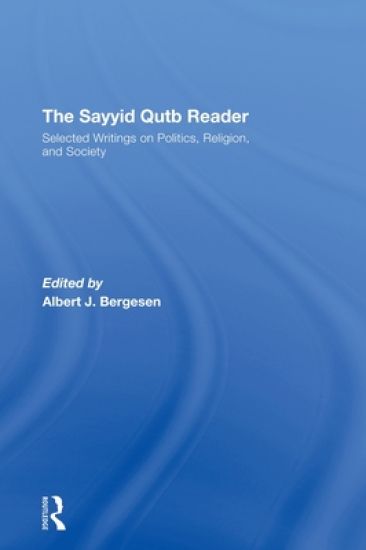
The Sayyid Qutb Reader
Anyone who wants to understand what militant Muslims think has to understand what they read—and they read Sayyid Qutb, the intellectual father of Islamic fundamentalism. Qutb, an Egyptian literary critic and philosopher who was appalled by American decadence, gained prominence in the Muslim Brotherhood, was imprisoned by Nasser, and hanged in 1966. Through his death and prolific writings he became a martyr for the cause of political Islam. His work is virtually unknown outside the Muslim world, but Qutb is at the heart of the intellectual rationale for jihad and violence in the name of Islam. The Sayyid Qutb Reader is the first collection of his selected works available to the general public. As such, this valuable introduction to Qutb’s core intellectual ideas should be read by anyone who wants to understand one of the most important conflicts of our age.