Kirjojen hintavertailu. Mukana 11 244 527 kirjaa ja 12 kauppaa.

Kirjahaku

Etsi kirjoja tekijän nimen, kirjan nimen tai ISBN:n perusteella.

1000 tulosta hakusanalla Scott David Dokey

Hellish Book Three

Hellish Book Three

Scott David Dokey

Okey Dokey Publishing
2024
pokkari
In the heart of a quaint town lies a sanctuary steeped in centuries of sacred tradition. Father Gideon, a recently ordained priest, is drawn to its hallowed halls by a calling he cannot ignore. But beneath the tranquil surface lies a sinister secret-a hidden chamber pulsating with the echoes of an ancient evil.When Father Gideon stumbles upon this forbidden enclave, he unwittingly unleashes a force beyond comprehension. The darkness seeps into his soul, igniting a primal thirst for power and knowledge. As he delves deeper into the mysteries of the chamber, he is consumed by a seductive promise of enlightenment, blurring the lines between salvation and damnation.As the tendrils of darkness tighten their grip, Father Gideon finds himself on a harrowing descent into madness. Haunted by visions of death and destruction, he becomes a reluctant harbinger of doom, his once-pure intentions twisted by the corrupting influence of unholy forces.Now, with the fate of his congregation hanging in the balance, Father Gideon must confront the demons within himself before they consume everything he holds dear. But in a battle between faith and darkness, can he find the strength to resist the temptation of ultimate power, or will he succumb to the insidious lure of an unholy religion?
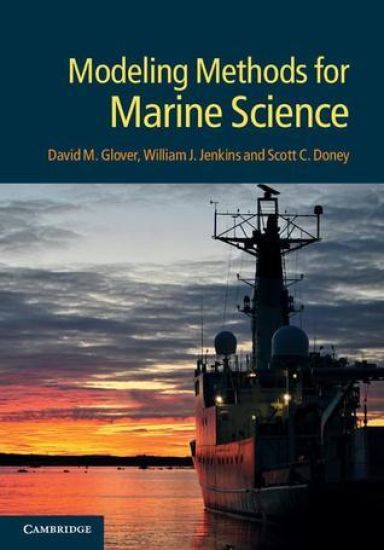
Modeling Methods for Marine Science

Modeling Methods for Marine Science

David M. Glover; William J. Jenkins; Scott C. Doney

Cambridge University Press
2011
sidottu
This advanced textbook on modeling, data analysis and numerical techniques for marine science has been developed from a course taught by the authors for many years at the Woods Hole Oceanographic Institute. The first part covers statistics: singular value decomposition, error propagation, least squares regression, principal component analysis, time series analysis and objective interpolation. The second part deals with modeling techniques: finite differences, stability analysis and optimization. The third part describes case studies of actual ocean models of ever increasing dimensionality and complexity, starting with zero-dimensional models and finishing with three-dimensional general circulation models. Throughout the book hands-on computational examples are introduced using the MATLAB programming language and the principles of scientific visualization are emphasised. Ideal as a textbook for advanced students of oceanography on courses in data analysis and numerical modeling, the book is also an invaluable resource for a broad range of scientists undertaking modeling in chemical, biological, geological and physical oceanography.
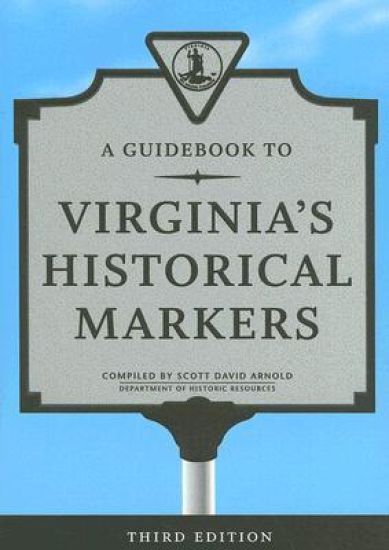
A Guidebook to Virginia's Historical Markers

A Guidebook to Virginia's Historical Markers

Scott David Arnold

University of Virginia Press
2007
nidottu
Including nearly nine hundred new and replacement markers that have been installed along the commonwealth's roadways since the last edition was published in 1994, this third edition of ""A Guidebook to Virginia's Historical Markers"" brings together and updates the texts of more than 1,850 official state historical markers placed along Virginia's highways since 1927. Divided for the first time into six geographic-cultural regions, this edition contains maps and three individual indexes that assist the reader in locating markers by title, number, or subject matter. The subject index covers African American, Native American, and women's history; maps out key places in such areas as European exploration and settlement, industry and agriculture, and transportation and communication; and canvasses the American Revolution, the War of 1812, the Civil War, and such notable sites as courthouses, houses of worship, educational institutions, forts, and famous homes and homesites. Vacationers and those simply out for a drive will stumble across sites as diverse as Jamestown and the birthplace of Booker T. Washington, the graves of country music's Carter family and the original locations of northern Virginia's Nike missile installations, the places where paramount chief Powhatan first met with the English and where the artist Georgia O'Keeffe taught art, and Langley Field, which played a significant role in the history of manned space flight. Virginia has one of the oldest marker systems in the country, established in 1927. The markers are no longer state funded, and so the program illustrates a collaborative effort between committed sponsors who offer financial support, the Virginia Department of Historic Resources, and the Virginia Department of Transportation. The network holds great appeal for tourists and serves as a source of pride for local citizens. Travelers along Virginia's highways will find this guide both useful and informative. The great legacy of Virginia's past is revealed on these markers, making the book both a handy reference and a stimulus to greater study of the history of the commonwealth. It is published in association with the Virginia Department of Historic Resources.
Why Social Justice Is Not Biblical Justice: An Urgent Appeal to Fellow Christians in a Time of Social Crisis
"Highly recommended "- Wayne Grudem, PhD, Distinguished Research Professor of Theology and Biblical Studies, Phoenix Seminary"I urge you to read and share this book immediately and widely "- Kelly Monroe Kullberg, author of Finding God Beyond Harvard: The Quest for Veritas"We have long needed a book like this. Every serious Christian-especially every pastor-should read and heed the wisdom it contains."- Tom Ascol, Senior pastor of Grace Baptist Church (Cape Coral, Florida), President of Founders Ministries"We are a wounded nation now, and Christians need to bind up wounds and not make new ones. Instead of scorning those who push for social justice, we should recognize that leftist ideologues have twisted the concept of social justice, and some Christians have naively gone along with the distortion. Scott Allen offers an alternative that's crucial to consider."- Marvin Olasky, Editor in chief of WORLD magazinePrepare yourself to defend the truth against the greatest worldview threat of our generation.In recent years, a set of ideas rooted in postmodernism and neo-Marxist critical theory have merged into a comprehensive worldview. Labeled "social justice" by its advocates, it has radically redefined the popular understanding of justice. It purports to value equality and diversity and to champion the cause of the oppressed.Yet far too many Christians have little knowledge of this ideology, and consequently, don't see the danger. Many evangelical leaders confuse ideological social justice with biblical justice. Of course, justice is a deeply biblical idea, but this new ideology is far from biblical.It is imperative that Christ-followers, tasked with blessing their nations, wake up to the danger, and carefully discern the difference between Biblical justice and its destructive counterfeit.This book aims to replace confusion with clarity by holding up the counterfeit worldview and the Biblical worldview side-by-side, showing how significantly they differ in their core presuppositions. It challenges Christians to not merely denounce the false worldview, but offer a better alternative-the incomparable Biblical worldview, which shapes cultures marked by genuine justice, mercy, forgiveness, social harmony, and human dignity.
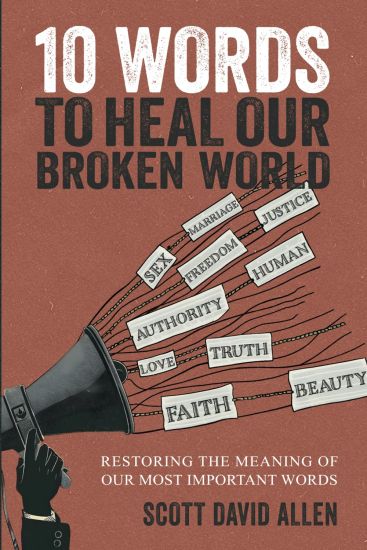
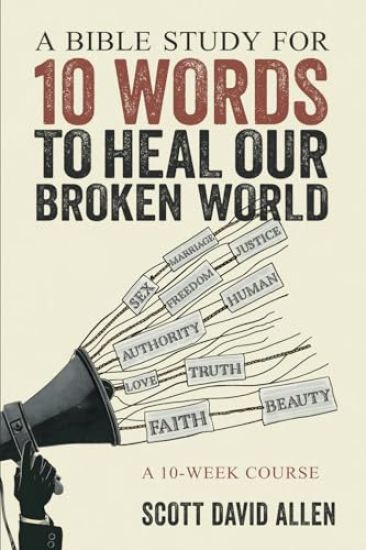
10 Words to Heal Our Broken World

10 Words to Heal Our Broken World

Scott David Allen

Credo House Publishers
2024
pokkari
"The battle for a culture always involves a fight for hearts and minds, and the fight for hearts and minds is always a fight for words, especially the power of defining words. In this important book, Scott Allen has provided an essential handbook for our most significant cultural conflict: the words that matter most, how they are being redefined, and the definitions we must fight for."John StonestreetPresident of Colson Center and host of Breakpoint IF YOU WANT TO CHANGE CULTURE, YOU BEGIN BY CHANGING LANGUAGE. The enemies of the gospel know this all too well. They've been cunningly at work redefining our most fundamental words, embedding them in our institutions and school curriculum, all to transform society to reflect their harmful, anti-Christian beliefs. As followers of Jesus Christ, how should we respond? By clearly knowing and defending the true biblical definitions of at least ten critical words: truth, human, sex, marriage, freedom, justice, authority, faith, beauty, and love. If we long to see a revival in the church and a reformation of culture, we must recover the true definition of these ten foundational words. SCOTT D. ALLEN is president of Disciple Nations Alliance, disciplenations.org.
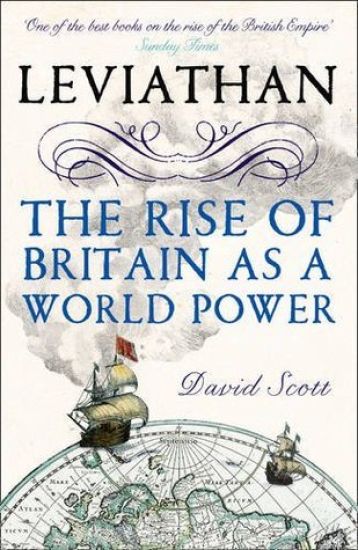
Leviathan

Leviathan

David Scott

Harpercollins Publishers
2014
pokkari
In this paperback of his acclaimed and wide-ranging study, David Scott challenges traditional assumptions about how Britain achieved her global might.
Refuge beyond Reach

Refuge beyond Reach

David Scott Fitzgerald

Oxford University Press Inc
2019
sidottu
Media pundits, politicians, and the public are often skeptical or ambivalent about granting asylum. They fear that asylum-seekers will impose economic and cultural costs and pose security threats to nationals. Consequently, governments of rich, democratic countries attempt to limit who can approach their borders, which often leads to refugees breaking immigration laws. In Refuge beyond Reach, David Scott FitzGerald traces how rich democracies have deliberately and systematically shut down most legal paths to safety. Drawing on official government documents, information obtained via WikiLeaks, and interviews with asylum seekers, he finds that for ninety-nine percent of refugees, the only way to find safety in one of the prosperous democracies of the Global North is to reach its territory and then ask for asylum. FitzGerald shows how the US, Canada, Europe, and Australia comply with the letter of law while violating the spirit of those laws through a range of deterrence methods -- first designed to keep out Jews fleeing the Nazis -- that have now evolved into a pervasive global system of "remote control." While some of the most draconian remote control practices continue in secret, Fitzgerald identifies some pressure points and finds that a diffuse humanitarian obligation to help those in need is more difficult for governments to evade than the law alone. Refuge beyond Reach addresses one of the world's most pressing challenges -- how to manage flows of refugees and other types of migrants -- and helps to identify the conditions under which individuals can access the protection of their universal rights.
Refuge beyond Reach

Refuge beyond Reach

David Scott FitzGerald

OXFORD UNIVERSITY PRESS INC
2022
nidottu
Refuge beyond Reach shows how rich democracies deliberately and systematically shut down most legal paths to safety. Media pundits, politicians, and the public are often skeptical or ambivalent about granting asylum. They fear that asylum-seekers will impose economic and cultural costs and pose security threats to nationals. Consequently, governments of rich, democratic countries attempt to limit who can approach their borders, which often leads to refugees breaking immigration laws. In Refuge beyond Reach, David Scott FitzGerald traces how rich democracies have deliberately and systematically shut down most legal paths to safety. Drawing on official government documents, information obtained via WikiLeaks, and interviews with asylum seekers, he finds that for ninety-nine percent of refugees, the only way to find safety in one of the prosperous democracies of the Global North is to reach its territory and then ask for asylum. FitzGerald shows how the US, Canada, Europe, and Australia comply with the letter of law while violating the spirit of those laws through a range of deterrence methods--first designed to keep out Jews fleeing the Nazis--that have now evolved into a pervasive global system of "remote control." While some of the most draconian remote control practices continue in secret, Fitzgerald identifies some pressure points and finds that a diffuse humanitarian obligation to help those in need is more difficult for governments to evade than the law alone. Refuge beyond Reach addresses one of the world's most pressing challenges--how to manage flows of refugees and other types of migrants--and helps to identify the conditions under which individuals can access the protection of their universal rights.
A Will to Believe

A Will to Believe

David Scott Kastan

Oxford University Press
2016
nidottu
On 19 December 1601, John Croke, then Speaker of the House of Commons, addressed his colleagues: "If a question should be asked, What is the first and chief thing in a Commonwealth to be regarded? I should say, religion. If, What is the second? I should say, religion. If, What the third? I should still say, religion." But if religion was recognized as the "chief thing in a Commonwealth," we have been less certain what it does in Shakespeare's plays. Written and performed in a culture in which religion was indeed inescapable, the plays have usually been seen either as evidence of Shakespeare's own disinterested secularism or, more recently, as coded signposts to his own sectarian commitments. Based upon the inaugural series of the Oxford-Wells Shakespeare Lectures in 2008, A Will to Believe offers a thoughtful, surprising, and often moving consideration of how religion actually functions in them: not as keys to Shakespeare's own faith but as remarkably sensitive registers of the various ways in which religion charged the world in which he lived. The book shows what we know and can't know about Shakespeare's own beliefs, and demonstrates, in a series of wonderfully alert and agile readings, how the often fraught and vertiginous religious environment of Post-Reformation England gets refracted by the lens of Shakespeare's imagination.
A European Elizabethan

A European Elizabethan

David Scott Gehring

Oxford University Press
2024
sidottu
Robert Beale (15411601) was a diplomat and administrator who worked at the heart of Elizabethan governance and international policymaking. In spite or perhaps because of the voluminous record he left behind, he has never been the subject of a dedicated biography, and his remarkable life and influence have therefore remained hidden. By thoroughly investigating Beales personal reference archive, which remains largely intact at the British Library, and additional material from archives across the UK, mainland Europe, and the USA, this book brings Beales life into sharp focus: from his shadowy upbringing in Coventry and London, through his first trips to the European mainland in the 1550s, and to his prominent roles in Queen Elizabeths government. By reconstructing the complex web of transnational connections he forged throughout Europe, David Scott Gehring demonstrates for the first time the extent to which these networks and his experiences abroad made him an invaluable agent of the Elizabethan regime. In the process, Gehring reveals Beales broader significance for our understanding of the workings of Elizabethan government, especially the role of second- and third-level players within it, and he recognizes the impossibility of truly understanding Elizabethan England without considering its interactions with and connections to the rest of Europe. The book makes a range of novel contributions, including to understandings of Elizabethan foreign policy, the succession, religion, political life, and intelligence gathering.
A Will to Believe

A Will to Believe

David Scott Kastan

Oxford University Press
2014
sidottu
On 19 December 1601, John Croke, then Speaker of the House of Commons, addressed his colleagues: "If a question should be asked, What is the first and chief thing in a Commonwealth to be regarded? I should say, religion. If, What is the second? I should say, religion. If, What the third? I should still say, religion." But if religion was recognized as the "chief thing in a Commonwealth," we have been less certain what it does in Shakespeare's plays. Written and performed in a culture in which religion was indeed inescapable, the plays have usually been seen either as evidence of Shakespeare's own disinterested secularism or, more recently, as coded signposts to his own sectarian commitments. Based upon the inaugural series of the Oxford-Wells Shakespeare Lectures in 2008, A Will to Believe offers a thoughtful, surprising, and often moving consideration of how religion actually functions in them: not as keys to Shakespeare's own faith but as remarkably sensitive registers of the various ways in which religion charged the world in which he lived. The book shows what we know and can't know about Shakespeare's own beliefs, and demonstrates, in a series of wonderfully alert and agile readings, how the often fraught and vertiginous religious environment of Post-Reformation England gets refracted by the lens of Shakespeare's imagination.