Kirjojen hintavertailu. Mukana 11 244 527 kirjaa ja 12 kauppaa.

Kirjahaku

Etsi kirjoja tekijän nimen, kirjan nimen tai ISBN:n perusteella.

1000 tulosta hakusanalla Scott L. Waugh

England in the Reign of Edward III

England in the Reign of Edward III

Scott L. Waugh

Cambridge University Press
1991
pokkari
The reign of Edward III is usually remembered for his stirring victories over the French and Scots. Yet these triumphs occurred against a domestic backdrop of economic upheaval, crime, high taxation and the Black Death. Edward's ability to pursue his ambitions amid such challenges shows the effectiveness of his leadership and the resilience of English institutions. This book examines the strains on English life in this remarkable era, and shows how an interlocking network of hierarchies at each level enabled Edward to reach into local communities to get what he needed. Compliance, however, required hard bargaining as subjects chafed under incessant taxes and royal demands and, during Edward's reign, parliament became the primary arena for negotiations between the king and the community. Professor Waugh's incisive account of these tumultuous events also contains an extensive guide to further reading, in addition to a glossary of the more abstruse medieval terms.
The Lordship of England

The Lordship of England

Scott L. Waugh

Princeton University Press
2014
pokkari
This thorough examination of the feudal powers of English kings in the thirteenth and early fourteenth centuries is the only study to analyze the actual pattern of royal grants and the grantees' use of their rights, and to place them in the social context of marriage, kinship, and landholding within the English elite. The royal rights, known as feudal incidents, included custody of a tenant's lands when he died leaving minor heirs, the arrangement of the heir's marriage, and consent to the widow's remarriage. Scott Waugh shows how the king exercised those rights and how his use of feudal incidents affected his relations with the tenants-in-chief. He concludes that royal lordship was of fundamental importance in reinforcing the power and prestige of the monarchy and in offering the king a valuable source of patronage. English kings, therefore, devoted considerable effort to defining and institutionalizing their feudal authority in the thirteenth century. It is also clear that families living under royal lordship were profoundly concerned about these rights, especially since marriage was of such critical importance in providing for the smooth transfer of lands from one generation to another. Given the hazards of life in the Middle Ages, inheritance by minors was a frequent occurrence, and the king's distribution of feudal incidents was therefore a delicate political problem. It raised issues not only about royal finances and favoritism but also about the fate of families. Originally published in 1988. The Princeton Legacy Library uses the latest print-on-demand technology to again make available previously out-of-print books from the distinguished backlist of Princeton University Press. These editions preserve the original texts of these important books while presenting them in durable paperback and hardcover editions. The goal of the Princeton Legacy Library is to vastly increase access to the rich scholarly heritage found in the thousands of books published by Princeton University Press since its founding in 1905.
The Lordship of England

The Lordship of England

Scott L. Waugh

Princeton University Press
2016
sidottu
This thorough examination of the feudal powers of English kings in the thirteenth and early fourteenth centuries is the only study to analyze the actual pattern of royal grants and the grantees' use of their rights, and to place them in the social context of marriage, kinship, and landholding within the English elite. The royal rights, known as feudal incidents, included custody of a tenant's lands when he died leaving minor heirs, the arrangement of the heir's marriage, and consent to the widow's remarriage. Scott Waugh shows how the king exercised those rights and how his use of feudal incidents affected his relations with the tenants-in-chief. He concludes that royal lordship was of fundamental importance in reinforcing the power and prestige of the monarchy and in offering the king a valuable source of patronage. English kings, therefore, devoted considerable effort to defining and institutionalizing their feudal authority in the thirteenth century. It is also clear that families living under royal lordship were profoundly concerned about these rights, especially since marriage was of such critical importance in providing for the smooth transfer of lands from one generation to another. Given the hazards of life in the Middle Ages, inheritance by minors was a frequent occurrence, and the king's distribution of feudal incidents was therefore a delicate political problem. It raised issues not only about royal finances and favoritism but also about the fate of families. Originally published in 1988. The Princeton Legacy Library uses the latest print-on-demand technology to again make available previously out-of-print books from the distinguished backlist of Princeton University Press. These editions preserve the original texts of these important books while presenting them in durable paperback and hardcover editions. The goal of the Princeton Legacy Library is to vastly increase access to the rich scholarly heritage found in the thousands of books published by Princeton University Press since its founding in 1905.
An Equal Place

An Equal Place

Scott L. Cummings

Oxford University Press Inc
2021
sidottu
An Equal Place is a monumental study of the role of lawyers in the movement to challenge economic inequality in one of America's most unequal cities: Los Angeles. Breaking with the traditional focus on national civil rights history, the book turns to the stories of contemporary lawyers, on the front lines and behind the scenes, who use law to reshape the meaning of low-wage work in the local economy. Covering a transformative period of L.A. history, from the 1992 riots to the 2008 recession, Scott Cummings presents an unflinching account of five pivotal campaigns in which lawyers ally with local movements to challenge the abuses of garment sweatshops, the criminalization of day labor, the gentrification of downtown retail, the incursion of Wal-Mart groceries, and the misclassification of port truck drivers. Through these campaigns, lawyers and activists define the city as a space for redefining work in vital industries transformed by deindustrialization, outsourcing, and immigration. Organizing arises outside of traditional labor law, powered by community-labor and racial justice groups using levers of local government to ultimately change the nature of labor law itself. Cummings shows that sophisticated legal strategy — engaging yet extending beyond courts, in which lawyers are equal partners in social movements — is an indispensable part of the effort to make L.A. a more equal place. Challenging accounts of lawyers' negative impact on movements, Cummings argues that the L.A. campaigns have achieved meaningful reform, while strengthening the position of workers in local politics, through legal innovation. Dissecting the reasons for failure alongside the conditions for success, this groundbreaking book illuminates the crucial role of lawyers in forging a new model of city-building for the twenty-first century.
Lawyers and Movements

Lawyers and Movements

Scott L. Cummings

OXFORD UNIVERSITY PRESS INC
2026
nidottu
An innovative approach for understanding how law matters in contemporary social movements that rise to meet the twin challenges of American democracy: promoting liberal values of equality and inclusion, while fortifying the rule of law itself. Fifty years after the Civil Rights Movement, America confronts a new democratic reckoning. What role do-and should-lawyers play in strengthening collective action at this pivotal moment? In Lawyers and Movements, Scott L. Cummings offers an innovative answer to this age-old question, breaking from the legacy of legal liberalism to reveal the essential, yet underappreciated, work of lawyers in social struggle-redefining legal mobilization in transformative times. Building from a sweeping analysis of progressive legal theory and practice, Cummings challenges foundational critiques of lawyers as inaccurate and ill-suited to the current context. In response, he advances a new theory of legal mobilization in which control over law is at the heart of movements rising to meet the twin challenges of contemporary liberalism: promoting inclusion and equity, while fortifying democratic institutions. A call to radically rethink how lawyers contribute to progressive change, Lawyers and Movements asserts a timely challenge to democracy in crisis.
The Chicago Guide to Communicating Science

The Chicago Guide to Communicating Science

Scott L. Montgomery

University of Chicago Press
2017
nidottu
For more than a decade, The Chicago Guide to Communicating Science has been the go-to reference for anyone who needs to write or speak about their research. Whether a student writing a thesis, a faculty member composing a grant proposal, or a public information officer crafting a press release, Scott Montgomery's advice is perfectly adaptable to any scientific writer's needs. This new edition has been thoroughly revised to address crucial issues in the changing landscape of scientific communication, with an increased focus on those writers working in corporate settings, government, and nonprofit organizations as well as academia. Half a dozen new chapters tackle the evolving needs and paths of scientific writers. These sections address plagiarism and fraud, writing graduate theses, translating scientific material, communicating science to the public, and the increasing globalization of research.The Chicago Guide to Communicating Science recognizes that writers come to the table with different needs and audiences. Through solid examples and concrete advice, Montgomery sets out to help scientists develop their own voice and become stronger communicators. He also teaches readers to think about their work in the larger context of communication about science, addressing the roles of media and the public in scientific attitudes as well as offering advice for those whose research concerns controversial issues such as climate change or emerging viruses. More than ever, communicators need to be able to move seamlessly among platforms and styles. The Chicago Guide to Communicating Science's comprehensive coverage means that scientists and researchers will be able to expertly connect with their audiences, no matter the medium.
Science in Translation

Science in Translation

Scott L. Montgomery

University of Chicago Press
2000
sidottu
Throughout recorded history, the exchange of scientific knowledge across cultures has been crucial in shaping human civilization. For instance, without the Greek and Roman works that were translated into Arabic and later reintroduced into Europe, the Renaissance as we know it would not have occured. Yet, until now, the enormous importance of translation to the history of science has remained largely unexamined. In this innovative work, Scott L. Montgomery explores the diverse roles that translation has played in the development of Western science from antiquity to the present. Beginning with an in-depth consideration of astronomy, he presents case histories of science in translation from a variety of disciplines and cultural contexts, both Western and non-Western (such as the origin and evolution of modern science in Japan). Montgomery highlights key historical and philosophical issues, including the instability of the scientific text, what is lost and gained in the process of translating science, and the impossibility of a truly universal technical language.
Science in Translation

Science in Translation

Scott L. Montgomery

University of Chicago Press
2002
nidottu
Throughout recorded history, the exchange of scientific knowledge across cultures has been crucial in shaping human civilization. For instance, without the Greek and Roman works that were translated into Arabic and later reintroduced into Europe, the Renaissance as we know it would not have occured. Yet, until now, the enormous importance of translation to the history of science has remained largely unexamined. In this innovative work, Scott L. Montgomery explores the diverse roles that translation has played in the development of Western science from antiquity to the present. Beginning with an in-depth consideration of astronomy, he presents case histories of science in translation from a variety of disciplines and cultural contexts, both Western and non-Western (such as the origin and evolution of modern science in Japan). Montgomery highlights key historical and philosophical issues, including the instability of the scientific text, what is lost and gained in the process of translating science, and the impossibility of a truly universal technical language.
The Powers That Be

The Powers That Be

Scott L. Montgomery

University of Chicago Press
2010
sidottu
Gasoline prices are high and rapidly climbing. Oil and natural gas reserves are dwindling, while demand is poised to skyrocket, as developing nations around the world lead their citizens into the modern energy economy. Meanwhile, the grave threat of catastrophic climate change looms ever larger, and energy worries are at an all-time high-just how will we power our future? With "The Powers That Be", Scott L. Montgomery cuts through the hype, alarmism, and confusion to give us a straightforward, informed account of where we are now, and a map of where we're going. Starting with the inescapable fact of our current dependence on fossil fuels - which supply 80 percent of all our energy needs today - Montgomery clearly and carefully lays out the many alternative energy options available, ranging from the familiar, like water and solar, to such nascent but promising sources as hydrogen and geothermal power. What is crucial, he explains, is understanding that our future will depend not on some single, wondrous breakthrough; instead, we should focus on developing a more diverse, adaptable energy future, one that draws on a variety of sources - and is thus less vulnerable to disruption or failure. An admirably evenhanded and always realistic guide, Montgomery enables readers to understand the implications of energy funding, research, and politics on a global scale. At the same time, he doesn't neglect the ultimate connection between those decisions and the average citizen flipping a light switch or sliding behind the wheel of a car, making "The Powers That Be" indispensable for our ever-more energy-conscious age.
Does Science Need a Global Language?

Does Science Need a Global Language?

Scott L. Montgomery; David Crystal

University of Chicago Press
2013
sidottu
In early 2012, the global scientific community erupted with news that the elusive Higgs boson had likely been found, providing potent validation for the Standard Model of how the universe works. Scientists from more than one hundred countries contributed to this discovery-proving, beyond any doubt, that a new era in science had arrived, an era of multinationalism and cooperative reach. Globalization, the Internet, and digital technology all play a role in making this new era possible, but something more fundamental is also at work. In all scientific endeavors lies the ancient drive for sharing ideas and knowledge, and now this can be accomplished in a single tongue - English. But is this a good thing? In "Does Science Need a Global Language?", Scott L. Montgomery seeks to answer this question by investigating the phenomenon of global English in science, how and why it came about, the forms in which it appears, what advantages and disadvantages it brings, and what its future might be. He also examines the consequences of a global tongue, considering especially emerging and developing nations, where research is still at a relatively early stage and English is not yet firmly established.
War and Peace in the Taiwan Strait

War and Peace in the Taiwan Strait

Scott L. Kastner

Columbia University Press
2022
sidottu
As tensions continue to rise between the People’s Republic of China and Taiwan, numerous analysts and officials have warned of a growing risk of military conflict, which could potentially draw in the United States. How worried should we be about a war in the Taiwan Strait?Scott L. Kastner offers a comprehensive analytical account of PRC-Taiwan relations that sheds new light on the prospects for cross-strait military conflict. He examines several key regional trends that have complex implications for stability, including deepening economic integration, the shifting balance of military power, uncertainty about the future of U.S. commitment, and domestic political changes in both the PRC and Taiwan. Kastner argues that the risks of conflict are real but should not be exaggerated. Several distinct pathways could lead to the breakout of hostilities, and the mechanisms that might allay one type of conflict do not necessarily apply to others—yet war is anything but inevitable. Although changes to the balance of power introduce risks, powerful mitigating factors remain in place and there are plausible steps to reduce the likelihood of military conflict.Drawing on both international relations theory and close empirical analysis of regional trends, this book provides vital perspective on how a war in the Taiwan Strait could occur—and how one could be avoided.
War and Peace in the Taiwan Strait

War and Peace in the Taiwan Strait

Scott L. Kastner

Columbia University Press
2022
pokkari
As tensions continue to rise between the People’s Republic of China and Taiwan, numerous analysts and officials have warned of a growing risk of military conflict, which could potentially draw in the United States. How worried should we be about a war in the Taiwan Strait?Scott L. Kastner offers a comprehensive analytical account of PRC-Taiwan relations that sheds new light on the prospects for cross-strait military conflict. He examines several key regional trends that have complex implications for stability, including deepening economic integration, the shifting balance of military power, uncertainty about the future of U.S. commitment, and domestic political changes in both the PRC and Taiwan. Kastner argues that the risks of conflict are real but should not be exaggerated. Several distinct pathways could lead to the breakout of hostilities, and the mechanisms that might allay one type of conflict do not necessarily apply to others—yet war is anything but inevitable. Although changes to the balance of power introduce risks, powerful mitigating factors remain in place and there are plausible steps to reduce the likelihood of military conflict.Drawing on both international relations theory and close empirical analysis of regional trends, this book provides vital perspective on how a war in the Taiwan Strait could occur—and how one could be avoided.
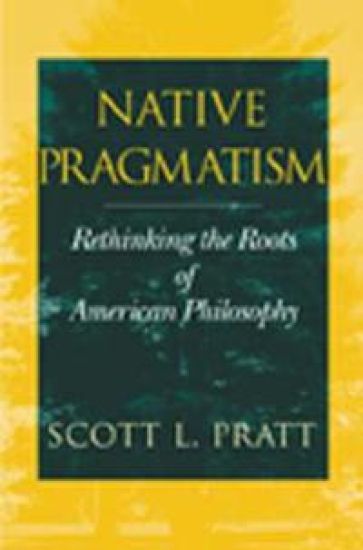
Native Pragmatism

Native Pragmatism

Scott L. Pratt

Indiana University Press
2002
pokkari
Pragmatism is America's most distinctive philosophy. Generally it has been understood as a development of European thought in response to the "American wilderness." A closer examination, however, reveals that the roots and central commitments of pragmatism are indigenous to North America. Native Pragmatism recovers this history and thus provides the means to re-conceive the scope and potential of American philosophy. Pragmatism has been at best only partially understood by those who focus on its European antecedents. This book casts new light on pragmatism's complex origins and demands a rethinking of African American and feminist thought in the context of the American philosophical tradition. Scott L. Pratt demonstrates that pragmatism and its development involved the work of many thinkers previously overlooked in the history of philosophy.
Blue and Green

Blue and Green

Scott L. Cummings

MIT Press
2018
sidottu
How an alliance of the labor and environmental movements used law as a tool to clean up the trucking industry at the nation's largest port.In Blue and Green, Scott Cummings examines a campaign by the labor and environmental movements to transform trucking at America's largest port in Los Angeles. Tracing the history of struggle in an industry at the epicenter of the global supply chain, Cummings shows how an unprecedented "blue-green" alliance mobilized to improve working conditions for low-income drivers and air quality in nearby communities. The campaign for "clean trucks," Cummings argues, teaches much about how social movements can use law to challenge inequality in a global era.Cummings shows how federal deregulation created interrelated economic and environmental problems at the port and how the campaign fought back by mobilizing law at the local level. He documents three critical stages: initial success in passing landmark legislation requiring port trucking companies to convert trucks from dirty to clean and drivers from contractors to employees with full labor rights; campaign decline after industry litigation blocked employee conversion; and campaign resurgence through an innovative legal approach to driver misclassification that realized a central labor movement goal-unionizing port truckers.Appraising the campaign, Cummings analyzes the tradeoffs of using alternative legal frameworks to promote labor organizing, and explores lessons for building movements to regulate low-wage work in the "gig" economy. He shows how law can bind coalitions together and split them apart, and concludes that the fight for legal reform never ends, but rather takes different turns on the long road to justice.
Blue and Green

Blue and Green

Scott L. Cummings

MIT Press
2018
pokkari
How an alliance of the labor and environmental movements used law as a tool to clean up the trucking industry at the nation's largest port.In Blue and Green, Scott Cummings examines a campaign by the labor and environmental movements to transform trucking at America's largest port in Los Angeles. Tracing the history of struggle in an industry at the epicenter of the global supply chain, Cummings shows how an unprecedented "blue-green" alliance mobilized to improve working conditions for low-income drivers and air quality in nearby communities. The campaign for "clean trucks," Cummings argues, teaches much about how social movements can use law to challenge inequality in a global era.Cummings shows how federal deregulation created interrelated economic and environmental problems at the port and how the campaign fought back by mobilizing law at the local level. He documents three critical stages: initial success in passing landmark legislation requiring port trucking companies to convert trucks from dirty to clean and drivers from contractors to employees with full labor rights; campaign decline after industry litigation blocked employee conversion; and campaign resurgence through an innovative legal approach to driver misclassification that realized a central labor movement goal-unionizing port truckers.Appraising the campaign, Cummings analyzes the tradeoffs of using alternative legal frameworks to promote labor organizing, and explores lessons for building movements to regulate low-wage work in the "gig" economy. He shows how law can bind coalitions together and split them apart, and concludes that the fight for legal reform never ends, but rather takes different turns on the long road to justice.
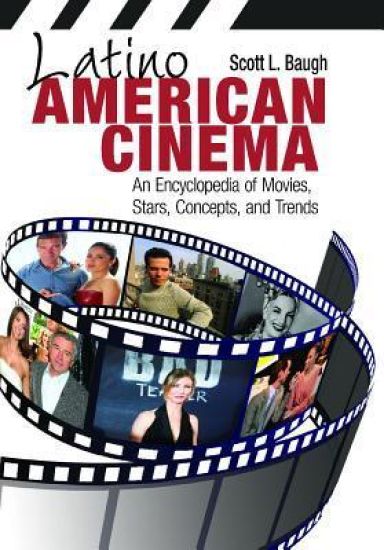
Latino American Cinema

Latino American Cinema

Scott L. Baugh

Greenwood Press
2012
sidottu
Latino American cinema is a provocative, complex, and definitively American topic of study. This book examines key mainstream commercial films while also spotlighting often-underappreciated documentaries, avant-garde and experimental projects, independent productions, features and shorts, and more.Latino American Cinema: An Encyclopedia of Movies, Stars, Concepts, and Trends serves as an essential primary reference for students of the topic as well as an accessible resource for general readers. The alphabetized entries in the volume cover the key topics of this provocative and complex genre—films, filmmakers, star performers, concepts, and historical and burgeoning trends—alongside frequently overlooked and crucially ignored items of interest in Latino cinema. This comprehensive treatment bridges gaps between traditional approaches to U.S.-Latino and Latin American cinemas, placing subjects of Chicana and Chicano, Puerto Rican, Cuban and diasporic Cuban, and Mexican origin in perspective with related Central and South American and Caribbean elements. Many of the entries offer compact definitions, critical discussions, overviews, and analyses of star artists, media productions, and historical moments, while several foundational entries explicate concepts, making this single volume encyclopedia a critical guide as well.
A History of Science in World Cultures

A History of Science in World Cultures

Scott L. Montgomery; Alok Kumar

Routledge
2015
sidottu
To understand modern science, it is essential to recognize that many of the most fundamental scientific principles are drawn from the knowledge of ancient civilizations. Taking a global yet comprehensive approach to this complex topic, A History of Science in World Cultures uses a broad range of case studies and examples to demonstrate that the scientific thought and method of the present day is deeply rooted in a pluricultural past. Covering ancient Egypt, Mesopotamia, India, Greece, China, Islam, and the New World, this volume discusses the scope of scientific and technological achievements in each civilization and how the knowledge it developed came to impact the European Renaissance. Themes covered include the influence these scientific cultures had upon one another, the power of writing and its technologies, visions of mathematical order in the universe and how it can be represented, and what elements of the distant scientific past we continue to depend upon today. Topics often left unexamined in histories of science are treated in fascinating detail, such as the chemistry of mummification and the Great Library in Alexandria in Egypt, jewellery and urban planning of the Indus Valley, hydraulic engineering and the compass in China, the sustainable agriculture and dental surgery of the Mayas, and algebra and optics in Islam.This book shows that scientific thought has never been confined to any one era, culture, or geographic region. Clearly presented and highly illustrated, A History of Science in World Cultures is the perfect text for all students and others interested in the development of science throughout history.
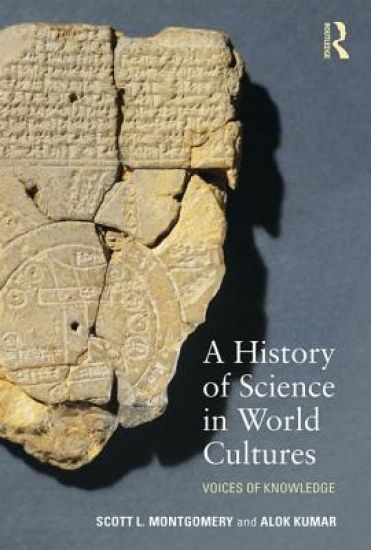
A History of Science in World Cultures

A History of Science in World Cultures

Scott L. Montgomery; Alok Kumar

Routledge
2015
nidottu
To understand modern science, it is essential to recognize that many of the most fundamental scientific principles are drawn from the knowledge of ancient civilizations. Taking a global yet comprehensive approach to this complex topic, A History of Science in World Cultures uses a broad range of case studies and examples to demonstrate that the scientific thought and method of the present day is deeply rooted in a pluricultural past. Covering ancient Egypt, Mesopotamia, India, Greece, China, Islam, and the New World, this volume discusses the scope of scientific and technological achievements in each civilization and how the knowledge it developed came to impact the European Renaissance. Themes covered include the influence these scientific cultures had upon one another, the power of writing and its technologies, visions of mathematical order in the universe and how it can be represented, and what elements of the distant scientific past we continue to depend upon today. Topics often left unexamined in histories of science are treated in fascinating detail, such as the chemistry of mummification and the Great Library in Alexandria in Egypt, jewellery and urban planning of the Indus Valley, hydraulic engineering and the compass in China, the sustainable agriculture and dental surgery of the Mayas, and algebra and optics in Islam.This book shows that scientific thought has never been confined to any one era, culture, or geographic region. Clearly presented and highly illustrated, A History of Science in World Cultures is the perfect text for all students and others interested in the development of science throughout history.
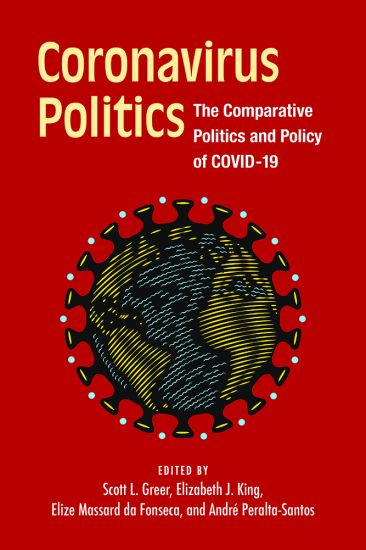
Coronavirus Politics

Coronavirus Politics

Scott L. Greer; Elizabeth J King; Elize Massard da Fonseca; Andre Peralta-Santos

The University of Michigan Press
2021
nidottu
COVID-19 is the most significant global crisis of any of our lifetimes. The numbers have been stupefying, whether of infection and mortality, the scale of public health measures, or the economic consequences of shutdown. Coronavirus Politics identifies key threads in the global comparative discussion that continue to shed light on COVID-19 and shape debates about what it means for scholarship in health and comparative politics. Editors Scott L. Greer, Elizabeth J. King, Elize Massard da Fonseca, and André Peralta-Santos bring together over 30 authors versed in politics and the health issues in order to understand the health policy decisions, the public health interventions, the social policy decisions, their interactions, and the reasons. The book’s coverage is global, with a wide range of key and exemplary countries, and contains a mixture of comparative, thematic, and templated country studies. All go beyond reporting and monitoring to develop explanations that draw on the authors' expertise while engaging in structured conversations across the book.