Kirjahaku
Etsi kirjoja tekijän nimen, kirjan nimen tai ISBN:n perusteella.
1000 tulosta hakusanalla Scott M Campbell
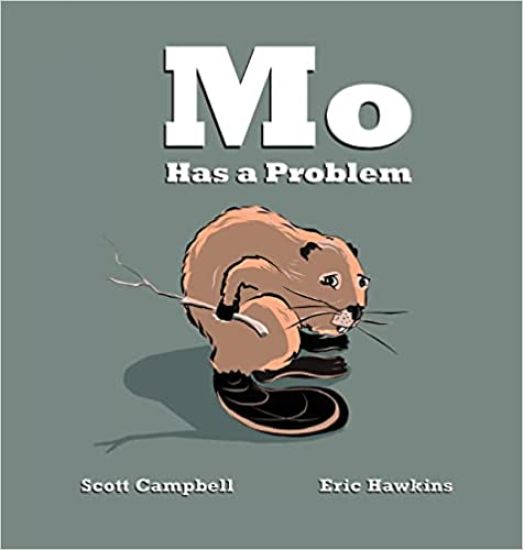
Sometimes a tiny itch can grow into a BIG problem Follow Mo, a shy, sneaker-loving Beaver, on a quest around the lake to solve his growing problem. As a diverse group of woodland friends offer remedies to Mo's troubles, Mo discovers a valuable lesson about listening and the true essence of friendship - presence. Mo Has a Problem, a children's picture book by Scott Campbell, illustrated by Eric Hawkins, offers young readers a whimsical introduction to Social Emotional Learning (SEL). Designed for Early Readers and to be read aloud by parents and teachers.Includes 22 adorable illustrations and a Bonus Map Check out Mo's Instagram page @book_of_mo
Sometimes a tiny itch can grow into a BIG problem Follow Mo, a shy, sneaker-loving Beaver, on a quest around the lake to solve his growing problem. As a diverse group of woodland friends offer remedies to Mo's troubles, Mo discovers a valuable lesson about listening and the true essence of friendship - presence.Mo Has a Problem, a children's picture book by Scott Campbell, illustrated by Eric Hawkins, offers young readers a whimsical introduction to Social Emotional Learning (SEL). Intended for Early Readers and to be read aloud by teachers and parents.
In his early lecture courses, Martin Heidegger exhibited an abiding interest in human life. He believed that human life has philosophical import while it is actually being lived; language has philosophical import while it is being spoken. In this book, Scott Campbell traces the development of Heidegger's ideas about factical life through his interest in Greek thought and its concern with Being. He contends that Heidegger's existential concerns about human life and his ontological concerns about the meaning of Being crystallize in the notion of Dasein as the Being of factical human life. Emphasizing the positive aspects of everydayness, Campbell explores the contexts of meaning embedded within life; the intensity of average, everyday life; the temporal immediacy of life in early Christianity; the hermeneutic pursuit of life's self-alienation; factical spatiality; the temporalizing of history within life; the richness of the world; and the facticity of speaking in Plato and Aristotle. He shows how Heidegger presents a way of grasping human life as riddled with deception but also charged with meaning and open to revelation and insight.
Makers and Molders of the Restoration Movement: Alexander Campbell, Thomas Campbell, Barton W. Stone, Walter Scott, Isaac Errett, J.W. Mcgarvey, and M
J. J. (jesse James) Haley
Cobb Publishing
2020
nidottu
An overview of the Restoration Movement--or as it was called in the 1800s, "The Current Reformation." Learn about the prominent men who helped point people back to the Bible--men like Alexander Campbell, Barton W. Stone, Walter Scott, and J.W. McGarvey--and the work that they helped accomplish to makes Christians who were united, kind, evangelistic, and true to the word of God. Cobb Publishing--Making Books Worth Reading
S.U.I.T.E. PCISTM (Process-Centric Integrated System for Transformational Methodologies) is a Treatise for the Advancement of the Project Management Discipline. PCISTM is a tool designed to take out all of the guesswork involved, and remove the confusion inherent to Project process re-engineering. PCISTM utilizes specific, front-loading requirements that allows the Advanced PM to access each component independently, select and integrate methodologies, and, transition the Project result back into the revenue stream efficiently!
Thirteen Quaint,Analytical Essay-Snippets Addressing the Politics of Business Inter-Relations - Using the Business Dynamic as a Lens for Examining Social Interaction; A Focused, Forensic Commentary on Corporate America as Derived from Entrepreneurial Business Modeling and Best-Practice Advocacy. Applies to any inter-relationship, whether personal, professional, social, cultural, or international - however, the business dynamic, which conforms peer, customer, financial and economic pressures within a contained environment, is a unique filter for understanding human connectivity.
Musical MusingsTracing through the norms, trends, expositions, implications, and assorted perspectives of melodic/rhythmic, cultural expressionFrom Medieval to Classical to Jazz to MetalFrom Scale Theory to Concept AlbumsFrom Artistic Notion to Personal Growth to Business AcumenEssays covering my musical growth, from 1998 thru 2015
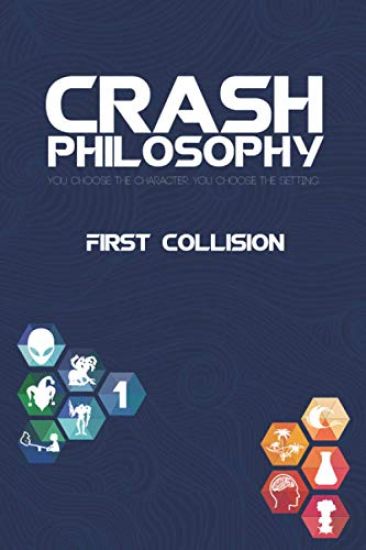
Crash Philosophy: First Collision
Scott Beckman; J. M. Butler; J. a. Campbell
Independently Published
2018
nidottu
Choose your character. Choose your setting. Choose your journey.A portal has been opened. A portal leading to an expanding universe where science fiction collides with reality, where the future includes a myriad of characters, and each story is as odd as the last. In this anthology, you're given the power to choose where you'll go and who you'll take with you With this first collision, you can choose between five characters and settings to create twenty-five fictional possibilities. With stories from authors who write in wildly different genres, each story gives you a different experience. The only question you have to ask is, "How will you crash?"First Collision characters let you select from an Alien, Clown, Imaginary Friend, Kaiju, and a Robot Assassin. Settings to place them in are an Apocalyptic Wasteland, Evil Laboratory, Human Mind, the Ocean, and the Triassic.Featuring stories by Scott Beckman, J.M. Butler, J.A. Campbell, Mike Cervantes, Beverly Coutts, Heather Cowley, Thomas A. Fowler, E. Godhand, C.L. Kagmi, Carolyn Kay, Kimberly Kennedy, Jason Kent, A.L. Kessler, Ayla Larsen, Jennifer Ogden, M.M. Ralph and T.J. Valour
Becoming an Emotionally Focused Therapist
James L. Furrow; Susan M. Johnson; Brent Bradley; Lorrie Brubacher; T. Leanne Campbell; Veronica Kallos-Lilly; Gail Palmer; Kathryn Rheem; Scott Woolley
TAYLOR FRANCIS LTD
2022
nidottu
This second edition of Becoming an Emotionally Focused Therapist: The Workbook has been fully revised by expert therapists with advances in attachment science and emotionally focused therapy (EFT) practice, the integration of the "EFT Tango"—a guide to the EFT process—and new chapters on working with both individuals and families.Suitable as a companion volume to The Practice of Emotionally Focused Couple Therapy or as a standalone learning tool, it provides an easy road-map toward mastering the ins and outs of EFT with practice exercises, review questions, and compelling clinical examples.Invaluable for clinicians and students, this workbook takes the reader on an adventure: the quest to become a competent, confident, and passionate emotionally focused therapist.
Becoming an Emotionally Focused Therapist
James L. Furrow; Susan M. Johnson; Brent Bradley; Lorrie Brubacher; T. Leanne Campbell; Veronica Kallos-Lilly; Gail Palmer; Kathryn Rheem; Scott Woolley
TAYLOR FRANCIS LTD
2022
sidottu
This second edition of Becoming an Emotionally Focused Therapist: The Workbook has been fully revised by expert therapists with advances in attachment science and emotionally focused therapy (EFT) practice, the integration of the "EFT Tango"—a guide to the EFT process—and new chapters on working with both individuals and families.Suitable as a companion volume to The Practice of Emotionally Focused Couple Therapy or as a standalone learning tool, it provides an easy road-map toward mastering the ins and outs of EFT with practice exercises, review questions, and compelling clinical examples.Invaluable for clinicians and students, this workbook takes the reader on an adventure: the quest to become a competent, confident, and passionate emotionally focused therapist.
In Calvin's Company of Pastors, Scott Manetsch examines the pastoral theology and practical ministry activities of Geneva's reformed ministers from the time of Calvin's arrival in Geneva until the beginning of the seventeenth century. During these seven decades, more than 130 men were enrolled in Geneva's Venerable Company of Pastors (as it was called), including notable reformed leaders such as Pierre Viret, Theodore Beza, Simon Goulart, Lambert Daneau, and Jean Diodati. Aside from these better-known epigones, Geneva's pastors from this period remain hidden from view, cloaked in Calvin's long shadow, even though they played a strategic role in preserving and reshaping Calvin's pastoral legacy. Making extensive use of archival materials, published sermons, catechisms, prayer books, personal correspondence, and theological writings, Manetsch offers an engaging and vivid portrait of pastoral life in sixteenth- and early seventeenth-century Geneva, exploring the manner in which Geneva's ministers conceived of their pastoral office and performed their daily responsibilities of preaching, public worship, moral discipline, catechesis, administering the sacraments, and pastoral care. Manetsch demonstrates that Calvin and his colleagues were much more than ivory tower theologians or "quasi-agents of the state," concerned primarily with dispensing theological information to their congregations or enforcing magisterial authority. Rather, they saw themselves as spiritual shepherds of Christ's Church, and this self-understanding shaped to a significant degree their daily work as pastors and preachers.
The prospect of international conflict over water has long been the subject of academic and popular concern, but subnational political conflict is considerably more common, and almost certainly imposes greater economic and environmental costs. Indeed, subnational hydropolitics are an important feature of several large countries, including the United States, India, and China. Moreover, disputes between water users in shared river basins have often persisted despite repeated attempts by central governments to resolve them through both persuasion and coercion. Yet despite the growing threat of water scarcity around the world, little research exists on subnational politics of shared water resources. This book attempts to fill the gap by explaining how and why hydropolitics play out within countries, as well as between them. Subnational Hydropolitics re-examines the issue of water conflict by examining conflicts at the subnational rather than international level. By examining several in-depth case studies of both conflict and cooperation, Scott Moore argues that increasing subnational water conflict is driven by two inter-linked forces, identity politics, which gives subnational politicians a reason to compete over shared water resources; and political decentralization, which provides them with the tools to do so. To understand politics at the subnational level, the book blends insights from both the environmental governance and comparative politics literatures. By examining the challenges many countries face in achieving cooperation over shared water resources, the book helps to shed light on different mechanisms and processes for solving cooperation problems at the regional scale lessons relevant to tackling a wide range of transboundary environmental problems, including air pollution, urbanization, and ecosystem protection. But at its core, this book promises a definitive contribution to the growing sub-field of environmental politics, centered on understanding how different countries attempt to solve the problems inherent in governing water resources in shared river basins.
From solar panels to synthetic biology, an accessible-yet-authoritative overview of how climate change, the global Covid-19 pandemic, and emerging technologies are changing China's relationship with the world, and what it means for governments, companies, and organizations across the globe. Ever since China began its ascendancy to great-power status in the 1980s, observers have focused on its growing economic, military, and diplomatic power. But in recent years, Chinese officials, businesses, and institutions have increased their visibility and influence on every major global issue, from climate change and artificial intelligence to biotechnology and the global Covid-19 pandemic. How have these newer issues changed China's relationship with the world? And, importantly, how can we prepare for a future increasingly shaped by China? In China's Next Act, Scott M. Moore re-envisions China's role in the world, with a focus on sustainability and technology. Moore argues that these increasingly pressing, shared global challenges are reshaping China's economy and foreign policy, and consequently, cannot be tackled without China. Yet sustainability and technology present opportunities for intensified economic, geopolitical, and ideological competition--a reality that Beijing recognizes. The US and other countries must do the same if they are to meet ecological and technological challenges in the decades ahead. In some areas, like clean technology development, competition can be good for the planet. But in others, it could be catastrophic--only cooperation can lower the risks of artificial intelligence and other disruptive new technologies. In this clearly written and accessible overview, Moore examines how countries like the US must balance cooperation and competition with China in response to shared challenges. With an emphasis on opportunities as well as threats, Moore addresses not only key developments in sustainability and technology within China, but also their implications for foreign countries, companies, and other organizations. China's influence on sustainability and technology is both global and granular--and twenty-first century China itself looks more like a network than a nation-state. Featuring original interviews and an in-depth look at Chinese government policy, China's Next Act provides a unique--and uniquely balanced--window into these new dimensions of China's global ascension.
On October 28, 1917, just days after the Bolsheviks seized power, the great Council of the Russian Orthodox Church voted to restore the patriarchate, which had been abolished by Peter the Great two centuries earlier. The Council chose Tikhon (Bellavin), the son of a humble village parish priest, to be head of Russia's largest religious confession. At the time, the majority of Orthodox Christians were devoutly religious. Tikhon's vision of the Church, which he began putting into practice during his years as the Orthodox bishop of North America (1898-1907), was that of an organic body which welcomed the participation of all believers. The Bolsheviks had other ideas. They aimed to create a revolution that would be carried out by the state on behalf of the people. And they sought to eradicate religion as “superstition” and not only to disestablish the Church, but to destroy it altogether. Although the alternate Russia which Tikhon represented would be crushed by the superior force of the Bolsheviks, he helped navigate the Church through immense challenges so that, in the end, the Orthodox Church outlived the Soviet experiment. The People's Patriarch tells the story of the clash of visions for the new Russia in 1917 through the lens of the humble man chosen to lead the Church, whose life exemplifies the transformations within the Orthodox Church in late Imperial Russia and its fate during the Revolution. The People's Patriarch is the first critical biography of one of the twentieth century's most important Orthodox Christian leaders, based on an exhaustive use of previously untapped primary sources, including Tikhon's letters and encyclicals, previously classified documents from the top Bolshevik leadership and Soviet secret police, and materials from a dozen archives in five countries.
Landownership in Eastern Germany Before the Great War
Scott M. Eddie
Oxford University Press
2008
sidottu
The big landlords of eastern Germany have loomed large in the country's history, but the absence of official statistics on landownership has left their position and identity confined to folklore, without satisfactory quantification. This study, making extensive use of primary sources from the seven 'core provinces' of eastern Germany-the so-called 'East Elbian' region-establishes answers to questions pivotal to our understanding of pre-war Germany: who were the biggest landowners, both by area and by the tax assessment of their land? Which social groups held land? How much land did they own and where? How did this change, especially during the last decades before the Great War? Professor Eddie demonstrates that most of the inroads into landownership by the bourgeoisie had already been made by the mid-1850s, perhaps even before the mid-1830s. However, one of the most interesting findings in this study is that, despite rapid industrialization after 1880, there was a net exodus of the nouveaux riches from the ranks of large land owners. On the eve of war, the largest landowners were the Prussian state, the royalty, and the higher nobility. Meticulously researched and thoroughly documented, this book will be the benchmark for all future work in this area.