Kirjojen hintavertailu. Mukana 11 244 527 kirjaa ja 12 kauppaa.

Kirjahaku

Etsi kirjoja tekijän nimen, kirjan nimen tai ISBN:n perusteella.

1000 tulosta hakusanalla Scott Macdonald

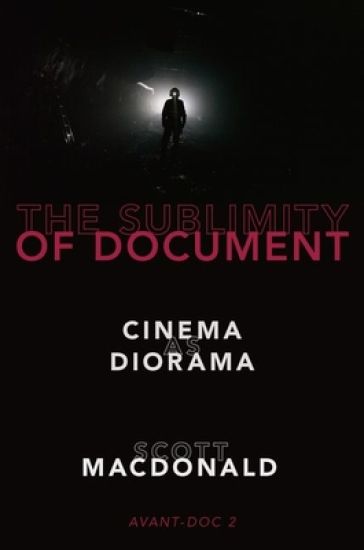
The Sublimity of Document

The Sublimity of Document

Scott MacDonald

Oxford University Press Inc
2019
sidottu
The Sublimity of Document: Cinema as Diorama is a collection of in-depth, substantive interviews with moving-image artists working "avant-doc, that is, making films that explore the territory between documentary and experimental cinema. The book uses the early history of the museum habitat diorama of animal life, specifically the Hall of African Mammals at the American Museum of Natural History, as a way of rethinking both early and modern cinema document-and especially those recent filmmakers and films that are devoted to providing viewers with panoramic documentations of places and events that otherwise they might never have opportunities to experience in person. This international collection of 27 interviews follows on MacDonald's earlier Avant-Doc: Intersections of Documentary and Avant-Garde Cinema (Oxford, 2015). The interviews, organized panoramically within the collection, are dense with information and insight, and readable by specialists and non-specialists alike. In most instances, these are the most in-depth and expansive-sometimes the first-interviews with these filmmakers. Together, these interviews offer an engaging panorama of the recent history and geography of cinema devoted to documenting the world around us, as well as an in-depth look at the challenges and accomplishments of filmmakers willing to go anywhere on the planet (or on the internet!) to document what they believe we need to see. MacDonald's general introduction provides an overall context for the collection, which includes interviews with Ron Fricke, Gustav Deutsch, Laura Poitras, Fred Wiseman, Nikolaus Geyrhalter, Bill Morrison, Brett Story, Abbas Kiarostami, Lois Patiño, Dominic Gagnon, Erin Espelie, Yance Ford, Janet Biggs, Carlos Adriano, Craig Johnson, Ben Russell, Betzy Bromberg, James Benning, Maxim Pozdorovkin, along with several veterans of Harvard's Sensory Ethnography Lab (and with the executive directors of the distributor, Documentary Educational Resources, which has served the field of independent documentary for nearly fifty years)-each interview is introduced with MacDonald's overview of the interviewee's life and work. The book includes filmographies and selected bibliographies for all the filmmakers
The Sublimity of Document

The Sublimity of Document

Scott MacDonald

Oxford University Press Inc
2019
nidottu
The Sublimity of Document: Cinema as Diorama is a collection of in-depth, substantive interviews with moving-image artists working "avant-doc, that is, making films that explore the territory between documentary and experimental cinema. The book uses the early history of the museum habitat diorama of animal life, specifically the Hall of African Mammals at the American Museum of Natural History, as a way of rethinking both early and modern cinema document-and especially those recent filmmakers and films that are devoted to providing viewers with panoramic documentations of places and events that otherwise they might never have opportunities to experience in person. This international collection of 27 interviews follows on MacDonald's earlier Avant-Doc: Intersections of Documentary and Avant-Garde Cinema (Oxford, 2015). The interviews, organized panoramically within the collection, are dense with information and insight, and readable by specialists and non-specialists alike. In most instances, these are the most in-depth and expansive-sometimes the first-interviews with these filmmakers. Together, these interviews offer an engaging panorama of the recent history and geography of cinema devoted to documenting the world around us, as well as an in-depth look at the challenges and accomplishments of filmmakers willing to go anywhere on the planet (or on the internet!) to document what they believe we need to see. MacDonald's general introduction provides an overall context for the collection, which includes interviews with Ron Fricke, Gustav Deutsch, Laura Poitras, Fred Wiseman, Nikolaus Geyrhalter, Bill Morrison, Brett Story, Abbas Kiarostami, Lois Patiño, Dominic Gagnon, Erin Espelie, Yance Ford, Janet Biggs, Carlos Adriano, Craig Johnson, Ben Russell, Betzy Bromberg, James Benning, Maxim Pozdorovkin, along with several veterans of Harvard's Sensory Ethnography Lab (and with the executive directors of the distributor, Documentary Educational Resources, which has served the field of independent documentary for nearly fifty years)-each interview is introduced with MacDonald's overview of the interviewee's life and work. The book includes filmographies and selected bibliographies for all the filmmakers
Comprehending Cinema

Comprehending Cinema

Scott MacDonald

OXFORD UNIVERSITY PRESS INC
2025
nidottu
Comprehending Cinema is a collection of in-depth interviews and panoramic essays that models a generalist approach to modern audiovisual media, prioritizing remarkable cinematic accomplishments that can get lost within our overwhelming modern mediascape. The 18 interviewees featured in this publication include Oscar-winning documentarians Daniel Lindsay and TJ Martin; Dean Fleischer Camp, whose Marcel the Shell with Shoes On was an internet smash, then an Oscar nominee; canonical filmmakers Guy Maddin and Su Friedrich, still building on remarkable careers; renowned poet (and cineaste) John Ashbery; Irish independent Tadhg O'Sullivan who is entranced by the moon; indefatigable cine-historian, Paul Cronin; LA artist Jennifer West, who collaborated with 11,500 visitors on New York City's High Line to produce a new kind of City Symphony; Penny Lane, whose documentary films continually surprise; a collaborative filmmaking team who provide an immersive motion study of a crowd taking selfies with the Mona Lisa; cine-explorers Lucien Castaing-Taylor and Véréna Paravel; master of the cine-archive Bill Morrison; cine-scientist Erin Espelie; video-essayist Chloé Galibert-Laîné; and the Alloy Orchestra, who entertained silent-film audiences for three decades. Comprehending Cinema combines engaging conversations with accomplished filmmakers and essayistic explorations of recent contributions to modern media-making by filmmakers creating a tradition of "cine-nocturnes," and by filmmakers exploring archival representations of World War 1. The book offers a reading adventure dedicated to opening the door to exciting new kinds of film experience.
Avant-Doc

Avant-Doc

Scott MacDonald

Oxford University Press Inc
2014
sidottu
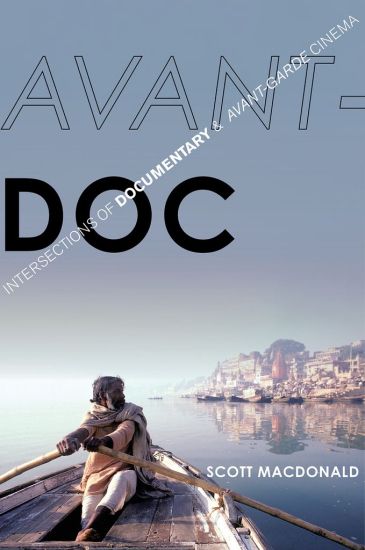
Over the past fifty years, a unique hybrid genre of nonfiction cinema called the "avant-doc" has emerged in the world of independent film. Combining the unconventional techniques of avant-garde auteurs like Stan Brakhage with the verisimilitude of traditional documentaries, the avant-doc expands the way cinema captures and chronicles events. Drawing on firsthand interviews with nineteen of the form's chief practitioners and participants, Avant-Doc constructs an oral history that provides the first insider's perspective on the phenomenon.
Avant-Doc

Avant-Doc

Scott MacDonald

Oxford University Press Inc
2014
nidottu
Over the past fifty years, a unique hybrid genre of nonfiction cinema called the "avant-doc" has emerged in the world of independent film. Combining the unconventional techniques of avant-garde auteurs like Stan Brakhage with the verisimilitude of traditional documentaries, the avant-doc expands the way cinema captures and chronicles events. Drawing on firsthand interviews with nineteen of the form's chief practitioners and participants, Avant-Doc constructs an oral history that provides the first insider's perspective on the phenomenon.
Dancing on a Volcano

Dancing on a Volcano

Scott Macdonald

Praeger Publishers Inc
1988
sidottu
This book is an informative and well written piece of research on a contemporary issues of major interest to the United States. . . . Most highly recommended. La Red/The Net Provides in one place a well written survey of the problem of the drug trade in the Americas, especially on the socio-economic and political aspects of the phenomena. The book will serve as a useful resource to persons working in Latin American drug trade. Caribbean Review This short book is an excellent introduction to the complicated history and turbulent present-day status of illegal drugs in several Latin American neighborhoods. National Catholic News ServiceThis provocative, informative book explores what is rapidly becoming a major obstacle in inter-American relations. Despite the common problems created by increasing drug addiction and drug-related violence, each side continues to blame the other for the deepening crisis. There is, MacDonald states emphatically, enough blame to go around for everyone. He puts the Latin American drug trade in much-needed perspective, providing both historical backgrund and insight on the contemporary political ramifications of drug trafficking. Because the drug trade is an inter-American phenomenon, the solution to it will have to be a joint one. Among the problems that will have to be faced, according to the author, are Cuba's role as an active middleman in the drug trade, the U.S. market for illegal drugs, the impact of the drug trade on U.S. policy in the region, and the interrelationship of the drug problem to the Latin Americn debt crisis. He warns that there will be no quick victories in the war on drugs in Latin America and the strategies used must attack both supply and demand. Whatever the approach used, its success or failure will depend on the ability of both the United Stataes and the Latin American nations to contain the drugs-insurgence nexus and to deal with the increasingly political nature of the drug trade.
Dancing on a Volcano

Dancing on a Volcano

Scott Macdonald

Praeger Publishers Inc
1988
nidottu
This provocative, informative book explores what is rapidly becoming a major obstacle in inter-American relations. Despite the common problems created by increasing drug addiction and drug-related violence, each side continues to blame the other for the deepening crisis. There is, MacDonald states emphatically, enough blame to go around for everyone. He puts the Latin American drug trade in much-needed perspective, providing both historical backgrund and insight on the contemporary political ramifications of drug trafficking. Because the drug trade is an inter-American phenomenon, the solution to it will have to be a joint one. Among the problems that will have to be faced, according to the author, are Cuba's role as an active middleman in the drug trade, the U.S. market for illegal drugs, the impact of the drug trade on U.S. policy in the region, and the interrelationship of the drug problem to the Latin Americn debt crisis. He warns that there will be no quick victories in the war on drugs in Latin America and the strategies used must attack both supply and demand. Whatever the approach used, its success or failure will depend on the ability of both the United Stataes and the Latin American nations to contain the drugs-insurgence nexus and to deal with the increasingly political nature of the drug trade.
Cannabis Crashes: Myths & Truths

Cannabis Crashes: Myths & Truths

Scott Macdonald

Lulu.com
2019
nidottu
This book is intended for students, policy makers, lawyers and experts in the field of substance use and crashes. I describe in simple terms epidemiological issues important for understanding whether conclusions from studies are justifiable and discover numerous myths and truths about cannabis and driving.
A Critical Cinema 1

A Critical Cinema 1

Scott MacDonald

University of California Press
1988
pokkari
It is widely understood that writing can discuss writing, but we rarely consider that film can be used as a means of analyzing conventions of the commercial film industry, or of theorizing about cinema in general. Over the past few decades, however, independent cinema has produced a body of fascinating films that provide intensive critiques of nearly every element of the cinematic apparatus. The experience of these films simultaneously depends on and redefines our relationship to the movies. Critical Cinema provides a collection of in-depth interviews with some of the most accomplished "critical" filmmakers. These interviews demonstrate the sophistication of their thinking about film (and a wide range of other concerns) and serve as an accessible introduction to this important area of independent cinema. Each interview is preceded by a general introduction to the filmmaker's work; detailed filmographies and bibliographies are included. Critical Cinema will be a valuable resource for all those involved in the formal study of film, and will be essential reading for film lovers interested in keeping abreast of recent developments in North American cinema. INTERVIEWEES: Hollis Frampton, Larry Gottheim, Robert Huot, Taka Iimura, Carolee Schneeman, Tom Chomont, J.J. Murphy, Beth B and Scott B, John Waters, Vivienne Dick, Bruce Conner, Robert Nelson, Babette Mangolte, George Kuchar, Diana Barrie, Manuel DeLanda, Morgan Fisher.
A Critical Cinema 2

A Critical Cinema 2

Scott MacDonald

University of California Press
1992
pokkari
This sequel to "A Critical Cinema" offers a new collection of interviews with independent filmmakers that is a feast for film fans and film historians. Scott MacDonald reveals the sophisticated thinking of these artists regarding film, politics, and contemporary gender issues. The interviews explore the careers of Robert Breer, Trinh T. Minh-ha, James Benning, Su Friedrich, and Godfrey Reggio. Yoko Ono discusses her cinematic collaboration with John Lennon, Michael Snow talks about his music and films, Anne Robertson describes her cinematic diaries, Jonas Mekas and Bruce Baillie recall the New York and California avant-garde film culture. The selection has a particularly strong group of women filmmakers, including Yvonne Rainer, Laura Mulvey, and Lizzie Borden. Other notable artists are Anthony McCall, Andrew Noren, Ross McElwee, Anne Severson, and Peter Watkins.
A Critical Cinema 3

A Critical Cinema 3

Scott MacDonald

University of California Press
1998
pokkari
"A Critical Cinema 3" continues Scott MacDonald's compilation of personal interviews and public discussions with major contributors to independent filmmaking and film awareness. An informative exchange with Amos Vogel, whose "Cinema 16 Society" drew American filmgoers into a broader sense of film history, is followed by interviews reflecting a wide range of approaches to filmmaking. Sally Potter discusses her popular feature, "Orlando", in relation to the experimental work that preceded it, and Canadian independent John Porter argues compellingly for small-gauge, Super-8 mm filmmaking. Ken Jacobs discusses the 'Nervous System' apparatus with which he transforms old film footage into new forms of motion picture art; Jordan Belson describes his "Vortex Concerts", ancestors of modern laser light shows; and Elias Merhige talks about going beneath the 'rational structure of meaning' in Begotten. "A Critical Cinema 3" presents independent cinema as an international and multiethnic phenomenon. MacDonald interviews filmmakers from Sweden, France, Italy, Austria, Armenia, India, the Philippines, and Japan and examines the work of African Americans, European Americans, Asian Americans, and Hispanics. He provides an introductory overview of each interviewee, as well as detailed film/videographies and selected bibliographies. With its predecessors, "A Critical Cinema" (California, 1988) and "A Critical Cinema 2" (California, 1992), this is the most extensive, in-depth exploration of independent cinema available in English.
The Garden in the Machine

The Garden in the Machine

Scott MacDonald

University of California Press
2001
pokkari
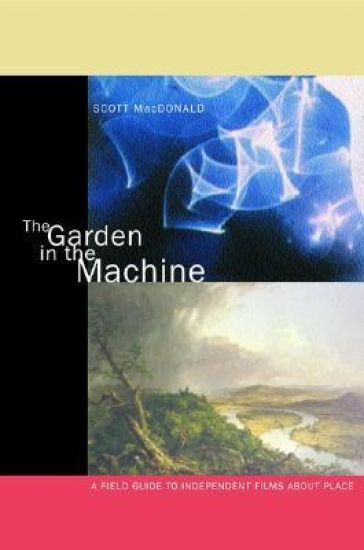
The Garden in the Machine explores the evocations of place, and particularly American place, that have become so central to the representational and narrative strategies of alternative and mainstream film and video. Scott MacDonald contextualizes his discussion with a wide-ranging and deeply informed analysis of the depiction of place in nineteenth- and twentieth-century literature, painting, and photography. Accessible and engaging, this book examines the manner in which these films represent nature and landscape in particular, and location in general. It offers us both new readings of the films under consideration and an expanded sense of modern film history. Among the many antecedents to the films and videos discussed here are Thomas Cole's landscape painting, Thoreau's Walden, Olmsted and Vaux's Central Park, and Eadweard Muybridge's panoramic photographs of San Francisco. MacDonald analyzes the work of many accomplished avant-garde filmmakers: Kenneth Anger, Bruce Baillie, James Benning, Stan Brakhage, Nathaniel Dorsky, Hollis Frampton, Ernie Gehr, Larry Gottheim, Robert Huot, Peter Hutton, Marjorie Keller, Rose Lowder, Marie Menken, J.J. Murphy, Andrew Noren, Pat O'Neill, Leighton Pierce, Carolee Schneemann, and Chick Strand. He also examines a variety of recent commercial feature films, as well as independent experiments in documentary and such contributions to independent video history as George Kuchar's Weather Diaries and Ellen Spiro's Roam Sweet Home. MacDonald reveals the spiritual underpinnings of these works and shows how issues of race, ethnicity, gender, and class are conveyed as filmmakers attempt to discover forms of Edenic serenity within the Machine of modern society. Both personal and scholarly, The Garden in the Machine will be an invaluable resource for those interested in investigating and experiencing a broader spectrum of cinema in their teaching, in their research, and in their lives.
A Critical Cinema 4

A Critical Cinema 4

Scott MacDonald

University of California Press
2005
pokkari
A Critical Cinema 4 is the fourth volume in Scott MacDonald's Critical Cinema series, the most extensive, in-depth exploration of independent cinema available in English. In this new set of interviews, MacDonald once again engages filmmakers in detailed discussions of their films and of the personal experiences and political and theoretical currents that have shaped their work. The interviews are arranged to express the remarkable diversity of modern independent cinema and the network of interconnections within the community of filmmakers. A Critical Cinema 4 includes the most extensive interview with the late Stan Brakhage yet published; a conversation with P. Adams Sitney about his arrival on the New York independent film scene; a detailed discussion with Peter Kubelka about the experience of making Our African Journey; a conversation with Jill Godmilow and Harun Farocki on modern political documentary; Jim McBride's first extended published conversation in thirty years; a discussion with Abigail Child about her evolution from television documentarian to master editor; and the first extended interview with Chuck Workman. This volume also contains discussions with Chantal Akerman about her place trilogy; Lawrence Brose on his examination of Oscar Wilde's career; Hungarian Peter Forgács about his transformation of European home movies into video operas; Iranian-born Shirin Neshat on working between two cultures; and Ellen Spiro about exploring America with her video camera and her dog. Each interview is supplemented by an introductory overview of the filmmaker's contributions. A detailed filmography and a selected bibliography complete the volume. Illustrations: 75 b/w photographs
A Critical Cinema 5

A Critical Cinema 5

Scott MacDonald

University of California Press
2006
pokkari
A "Critical Cinema 5" is the fifth volume in Scott MacDonald's "Critical Cinema" series, the most extensive, in-depth exploration of independent cinema available in English. In this new set of interviews, MacDonald engages filmmakers in detailed discussions of their films and of the personal experiences and political and theoretical currents that have shaped their work. The interviews are arranged to express the remarkable diversity of modern independent cinema and the interactive community of filmmakers that has dedicated itself to producing forms of cinema that critique conventional media.
Canyon Cinema

Canyon Cinema

Scott MacDonald

University of California Press
2008
pokkari
Bringing alive a remarkable moment in American cultural history, Scott MacDonald tells the colorful story of how a small, backyard organization in the San Francisco Bay Area emerged in the 1960s and evolved to become a major force in the development of independent cinema. Drawing from extensive conversations with men and women crucial to Canyon Cinema, from its newsletter Canyon Cinemanews, and from other key sources, MacDonald offers a lively chronicle of the life and times of this influential, idiosyncratic film exhibition and distribution collective. His book features many primary documents that are as engaging and relevant now as they were when originally published, including essays, poetry, experimental writing, and drawings.
Adventures of Perception

Adventures of Perception

Scott MacDonald

University of California Press
2009
pokkari
Over the past twenty-five years, Scott MacDonald's kaleidoscopic explorations of independent cinema have become the most important chronicle of avant-garde and experimental film in the United States. In this collection of thematically related personal essays and conversations with filmmakers, he takes us on a fascinating journey into many under-explored territories of cinema. MacDonald illuminates topics including race and avant-garde film, the political implications of the nature film, the inventive single shot films of the late 1960s and early 1970s, why men use pornography and what they are looking at when they do, poetry and the poetic in avant-garde film, the widespread failure of film studies academicians to honor those who keep film exhibition alive, and other topics. Several of the interviews - those with Korean filmmaker Gina Kim, French nature filmmakers Claude Nuridsany and Marie Perennou ("Microcosmos"), Canadian media artist Clive Holden, formalist/conceptualist David Gatten, and New York's Film Forum director Karen Cooper - are the first substantial conversations with these filmmakers available in English.
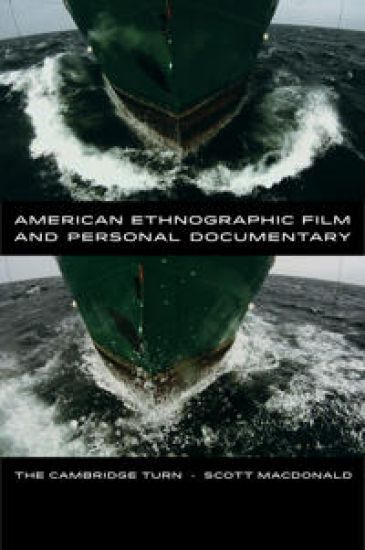
American Ethnographic Film and Personal Documentary

American Ethnographic Film and Personal Documentary

Scott MacDonald

University of California Press
2013
pokkari
"American Ethnographic Film and Personal Documentary" is a critical history of American filmmakers crucial to the development of ethnographic film and personal documentary. The Boston and Cambridge area is notable for nurturing these approaches to documentary film via institutions such as the MIT Film Section and the Film Study Center, the Carpenter Center and the Visual and Environmental Studies Department at Harvard. Scott MacDonald uses pragmatism's focus on empirical experience as a basis for measuring the groundbreaking achievements of such influential filmmakers as John Marshall, Robert Gardner, Timothy Asch, Ed Pincus, Miriam Weinstein, Alfred Guzzetti, Ross McElwee, Robb Moss, Nina Davenport, Steve Ascher and Jeanne Jordan, Michel Negroponte, John Gianvito, Alexander Olch, Amie Siegel, Ilisa Barbash, and Lucien Castaing-Taylor. By exploring the cinematic, personal, and professional relationships between these accomplished filmmakers, MacDonald shows how a pioneering, engaged, and uniquely cosmopolitan approach to documentary developed over the past half century.
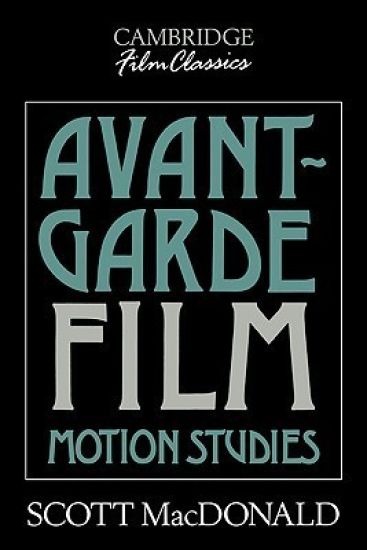
Avant-Garde Film

Avant-Garde Film

Scott MacDonald

Cambridge University Press
1993
pokkari
The past thirty years have seen the proliferation of forms of independent cinema that challenge the conventions of mass-market commercial movies from within the movie theatre. Avant-Garde Film examines fifteen of the most suggestive and useful films from this film tradition. The films discussed include No. 4 (Bottoms) by Yoko Ono, Wavelength by Michael Snow, Serene Velocity by Ernie Gehr, Print Generation by J. J. Murphy, Standard Gauge by Morgan Fisher, Zorns Lemma by Hollis Frampton, The Ties that Bind by Su Friedrich, From the Pole to the Equator by Yervant Gianikian and The Carriage Trade by Warren Sonbert. Through in-depth readings of these works, Scott MacDonald takes viewers on a critical circumnavigation of the conventions of movie going as seen by filmmakers who have rebelled against the conventions. MacDonald's discussions do not merely analyse the films; they provide a useful, accessible, jargon-free critical apparatus for viewing avant-garde film and communicate the author's pleasure in exploring 'impenetrable' works.