
Kirjahaku
Etsi kirjoja tekijän nimen, kirjan nimen tai ISBN:n perusteella.
1000 tulosta hakusanalla Sean Martin McQuade
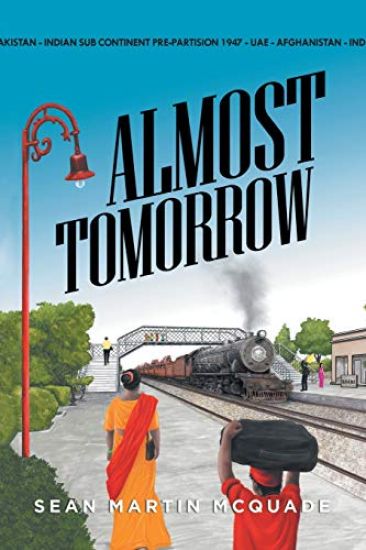
Even though this book Almost Tomorrow is fictional, it is based upon the life story of an Anglo-Indian lady from Goa prepartition of India oriented around 1947 and, there afterwards, includes tales of the lives of her extended family. Parveen and her younger sister Bulbul had, through no fault of their own, ended up trapped for life as bonded labourers in the brick-kiln industry in Pakistan. Their drama began at an early age when their family moved from Goa to a small railway town called Kamoke situated in rural Punjab. The years just after World War 2, with the partition of the Indian subcontinent and the formation of Pakistan and India as separate independent nations, came into being. An account of one single massacre in the Kamoke railway station provides the reader with a window into what might possibly have happened to a portion of approximately 1.5 million people who were murdered or killed during the mayhem. Also, that year, the mighty British Raj was preparing to finalise their occupation of the Indian subcontinent and return to Great Britain. They had repulsed a Japanese massive attempt to invade Northeast India from Burma. The British army, along with the support of a couple of Indian regiments and American air support, suppressed the advance. One of Lord Louis Mountbatten's chief contribution was to coordinate the partition on behalf of Her Majesty Queen Elizabeth. He also was responsible for drawing up the new international (Radcliffe Line) boundary between the two new countries. The agreement went ahead on the 14-15 August 1947 in the company of Prime Minister Nehru representing India and Jinnah, the 'Quaid-E-Azam' (Founder of the Nation), representing Pakistan.
Even though this book Almost Tomorrow is fictional, it is based upon the life story of an Anglo-Indian lady from Goa prepartition of India oriented around 1947 and, there afterwards, includes tales of the lives of her extended family. Parveen and her younger sister Bulbul had, through no fault of their own, ended up trapped for life as bonded labourers in the brick-kiln industry in Pakistan. Their drama began at an early age when their family moved from Goa to a small railway town called Kamoke situated in rural Punjab. The years just after World War 2, with the partition of the Indian subcontinent and the formation of Pakistan and India as separate independent nations, came into being. An account of one single massacre in the Kamoke railway station provides the reader with a window into what might possibly have happened to a portion of approximately 1.5 million people who were murdered or killed during the mayhem. Also, that year, the mighty British Raj was preparing to finalise their occupation of the Indian subcontinent and return to Great Britain. They had repulsed a Japanese massive attempt to invade Northeast India from Burma. The British army, along with the support of a couple of Indian regiments and American air support, suppressed the advance. One of Lord Louis Mountbatten's chief contribution was to coordinate the partition on behalf of Her Majesty Queen Elizabeth. He also was responsible for drawing up the new international (Radcliffe Line) boundary between the two new countries. The agreement went ahead on the 14-15 August 1947 in the company of Prime Minister Nehru representing India and Jinnah, the 'Quaid-E-Azam' (Founder of the Nation), representing Pakistan.


Catharism was the most successful heresy of the Middle Ages. Flourishing principally in the Languedoc and Italy, the Cathars taught that the world is evil and must be transcended through a simple life of prayer, work, fasting and non-violence. They believed themselves to be the heirs of the true heritage of Christianity going back to apostolic times, and completely rejected the Catholic Church and all its trappings, regarding it as the Church of Satan; Cathar services and ceremonies, by contrast, were held in fields, barns and in people's homes. Finding support from the nobility in the fractious political situation in southern France, the Cathars also found widespread popularity among peasants and artisans. And again unlike the Church, the Cathars respected women, and women played a major role in the movement. Alarmed at the success of Catharism, the Church founded the Inquisition and launched the Albigensian Crusade to exterminate the heresy. While previous Crusades had been directed against Muslims in the Middle East, the Albigensian Crusade was the first Crusade to be directed against fellow Christians, and was also the first European genocide. With the fall of the Cathar fortress of Montsegur in 1244, Catharism was largely obliterated, although the faith survived into the early fourteenth century. Today, the mystique surrounding the Cathars is as strong as ever, and Sean Martin recounts their story and the myths associated with them in this lively and gripping book.
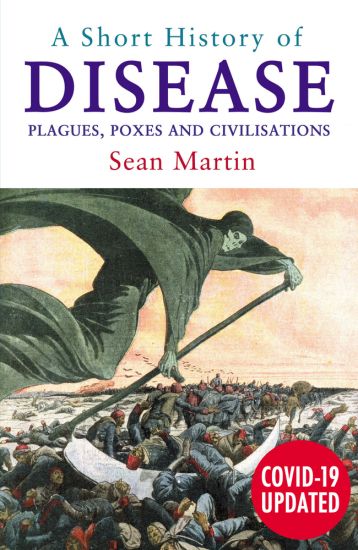
Disease has plagued human civilisations throughout history, claiming more lives than natural disasters and warfare combined. The Black Death took the lives of one third of Europe's population in the fourteenth century. The conquest of the New World was accompanied by devastating waves of smallpox. The Industrial Revolution happened in a world blighted by the diseases of urbanisation and overcrowding, typhoid and cholera, typhus and TB. New diseases such as AIDS, Ebola, and COVID-19 present further challenges to medical science and healthcare. A Short History of Disease chronicles the historical and geographical evolution of infectious and non-infectious diseases, from their prehistoric origins to the present. It offers a comprehensive guide to ailments and the medicines developed to combat them. Analysing case studies - including the Black Death, Spanish Flu, cholera, leprosy, syphilis, cancer, and Ebola - Sean Martin maps the growth of our understanding of disease. The book offers a fascinating insight into an important area of social history, providing an accessible introduction to disease and the ongoing quest to protect human health.

Andrei Tarkovsky is the most celebrated Russian filmmaker since Eisenstein, and one of the most important directors to have emerged during the 1960s and 70s. Although he made only seven features, each one was a major landmark in cinema, the most well-known of them being the mediaeval epic Andrei Rublev - widely regarded as one of the greatest films of all time - and the autobiographical Mirror, set during the Russia of Stalin's purges in the 1930s and the years of stagnation under Brezhnev. Both films landed Tarkovsky in considerable trouble with the authorities, and he gained a reputation for being a tortured - and ultimately martyred - filmmaker. Despite the harshness of the conditions under which he worked, Tarkovsky built up a remarkable body of work. He burst upon the international scene in 1962 with his debut feature Ivan's Childhood, which won the Golden Lion at Venice and immediately established him as a major filmmaker. During the 1970s, he made two classic ventures into science-fiction, Solaris, regarded at the time as being the Soviet reply to Kubrick's 2001: A Space Odyssey and later remade by Steven Soderbergh, and Stalker, which was thought to have predicted the Chernobyl disaster. Harassed at home, Tarkovsky went into exile and made his last two films in the West, where he also published his classic work of film and artistic theory, Sculpting in Time. Since his death in Paris in 1986, his reputation continued - and continues - to grow. Sean Martin considers the whole of Tarkovsky's oeuvre, from the classic student film The Steamroller and the Violin, across the full-length films, to the later stage works and Tarkovsky's writings, paintings and photographs. Martin also seeks to demystify Tarkovsky as a 'difficult' director, whilst also celebrating his radical aesthetic of long takes and tracking shots, which Tarkovsky was to dub 'imprinted' or 'sculpted' time, and to make a case for Tarkovsky's position not just as an important filmmaker, but also as an artist who speaks directly about the most important spiritual issues of our time.
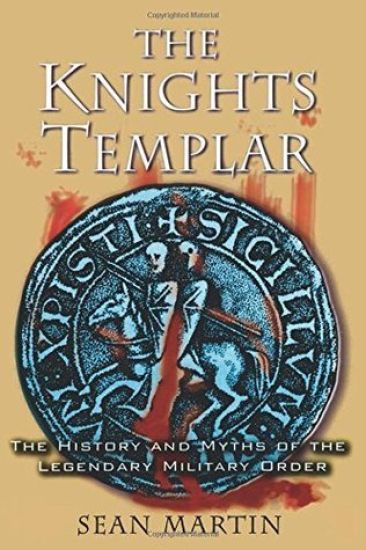
This book is an essential exploration into the history of a legendary group of Crusaders, which are prominently featured in Dan Brown's recent best seller, The Da Vinci Code. The Knights Templar rose from humble beginnings to become the most powerful military religious order of the Middle Ages. Formed to protect pilgrims in the Holy Land, they participated in the Crusades and rapidly gained wealth, lands, and influence. Seemingly untouchable for nearly two centuries, they fell from grace spectacularly after the loss of the Holy Land. In the ensuing centuries the Templars have exerted a unique influence over European history; orthodox historians see them as nothing more than soldier-monks whose arrogance was their ultimate undoing, while others see them as occultists of the first order. With clarity and ease, Martin navigates between the orthodox and the speculative, the historical and the myth, to bring alive the story of the Templars. Like those other legends of the Middle Ages--the characters of the Arthurian tales--The Knights Templar holds captive the imagination of all those intrigued by conspiracy and how history and myth intertwine to become the stuff of legend.

Tens of thousands of Jewish children were orphaned during World War I and in the subsequent years of conflict. In response, Jewish leaders in Poland established CENTOS, the Central Union of Associations for Jewish Orphan Care. Through CENTOS, social workers and other professionals cooperated to offer Jewish children the preparation necessary to survive during a turbulent period. They established new organizations that functioned beyond the authority of the recognized Jewish community and with the support of Polish officials. The work of CENTOS exemplifies the community’s goal to build a Jewish future. Translations of sources from CENTOS publications in Yiddish and Polish describe the lives of the orphaned Jewish children and the tireless efforts of adults to better the children’s circumstances.

Tens of thousands of Jewish children were orphaned during World War I and in the subsequent years of conflict. In response, Jewish leaders in Poland established CENTOS, the Central Union of Associations for Jewish Orphan Care. Through CENTOS, social workers and other professionals cooperated to offer Jewish children the preparation necessary to survive during a turbulent period. They established new organizations that functioned beyond the authority of the recognized Jewish community and with the support of Polish officials. The work of CENTOS exemplifies the community’s goal to build a Jewish future. Translations of sources from CENTOS publications in Yiddish and Polish describe the lives of the orphaned Jewish children and the tireless efforts of adults to better the children’s circumstances.

Catharism was the most successful heresy of the Middle Ages. Believing themselves to be the true heirs to the true Christian heritage, the Cathars completely rejected the Catholic Church, and held their services in barns, fields, and people's homes. As practitioners of vegetarianism, nonviolence and tolerance and through their liberal attitude towards women, the Cathars gained support from the French nobility and were popular with the peasants and artisans. Their presence moved the Church to start the Inquisition and launched the Albigensian Crusade -- the first to be directed against fellow Christians . This erased any traces of the Cathars, and it was the first instance of European genocide. This beautifully illustrated volume by the leading author on the subject unveils the mysteries surrounding the Cathars, their links with the Knights Templar, the Troubadours, and the search for the Holy Grail -- and draws stunning parallels with the present-day persecution of minorities around the world.

The Knights Templar were the most powerful military religious order of the Middle Ages. Formed to protect pilgrims in the Holy Land, they participated in the Crusades and rapidly gained wealth, lands and influence and were answerable to none save the Pope himself....

The Black Death is the name most commonly given to the pandemic of bubonic plague that ravaged the medieval world in the late 1340s. From Central Asia the plague swept through Europe, leaving millions of dead in its wake. Between a quarter and a third of Europe's population died. In England the population fell from nearly six million to just over three million. The Black Death was the greatest demographic disaster in European history. In this Pocket Essential, Sean Martin looks at the origins of the disease and traces its terrible march through Europe from the Italian cities to the far-flung corners of Scandinavia. He describes contemporary responses to the plague and makes clear how helpless was the medicine of the day in the face of it. He examines the renewed persecution of the Jews, blamed by many Christians for the spread of the disease, and highlights the bizarre attempts by such groups as the Flagellants to ward off what they saw as the wrath of God. His book is a vivid and dramatic account of one of the great catastrophes of history.

If lucky enough to have children of my own one day, my goal was to be the father tothem that I never had growing up - to be the very best father I could be. Directionlessand lacking confidence, that hope took me longer to realize than most. Years spent feeling lonely and full of sorrow delayed me from realizing my dreams...until I finally took control of my direction as I entered my forties. This happened to bejust months before I met the person, my soulmate, who would make my dream of becoming a fathercome true. Though the journey of expanding our family took us eight long years, it all worked outeventually, and our twin boys Liam and Noah were born. Being a father is the greatestjoy I have ever experienced, and I will never take it for granted. This book is comprised of a series of letters to Liam and Noah, in which I share some ofmy many life experiences (some good, and some not so good), how I have handledthings, and what I could have done better. My hope is that by being open and honestwith my sons they can learn from my mistakes, and more easily achieve their own goalsin life. I hope you, too, can take something away from the advice I share, and that you areinspired to pass along some wisdom from your own experiences to your loved ones.

Sometimes, a new best Buddy is sitting alone as they hope to meet new people. Whether it is a park bench, a table in the school cafeteria, a library, or just walking down the street, you never know when an act of kindness to others can begin a great friendship.The 3 Bulls is a story of a young boy who is new in school, who is looking to make friends to have new experiences with. Little did he know, he would meet his forever friends while sitting on a bench at the playground.If he can do it, you can too Introduce yourself to someone new and make a new friend today.1-2-3 BULLS
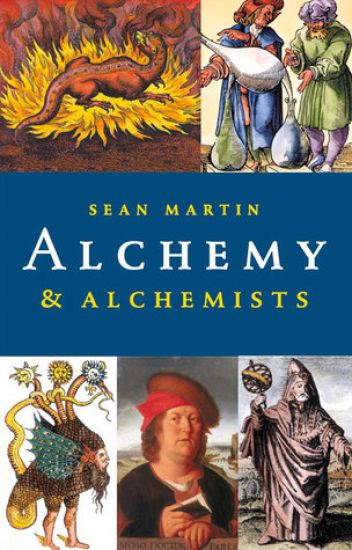
Often alchemy is seen as an example of medieval gullibility and the alchemists as a collection of eccentrics and superstitious fools. Sean Martin shows that nothing could be further from the truth. It is important to see the search for the philosopher's stone and the attempts to turn base metal into gold as metaphors for the relation of man to nature and man to God as much as seriously held beliefs. Alchemy had a self-consistent outlook on the natural world and man's place in it. Alchemists like Paracelsus and Albertus Magnus were amongst the greatest minds of their time and the history of alchemy is both the history of a spiritual search and the history of a slowly developing scientific method. Sir Isaac Newton devoted as much time to his alchemical studies as he did to his mathematical ones. This book traces the history of alchemy from ancient times to the 20th century, highlighting the interest of modern thinkers like Jung in the subject, and in the process covers a major, if neglected area of Western thought.


Fire + Wine: 75 Smoke-Infused Recipes from the Grill with Perfect Wine Pairings
Mary Cressler; Sean Martin
Sasquatch Books
2022
nidottu
" . . . a one-stop guide for anyone truly interested in elevating their BBQ experience into a culinary work of art."--San Francisco Book Review Ready to up your grilling game? This cookbook by a pitmaster and a sommelier will turn your backyard barbecue into the tastiest place to be--with recipes that celebrate smoked and grilled food (and the wines that pair best with them). Every region has its barbecue, grill, and smoking food traditions. Now the Pacific Northwest can claim its place at the table with these recipes developed by sommelier Mary Cressler and pitmaster Sean Martin from Portland, Oregon. Fire + Wine highlights the ingredients and flavors of the Pacific Northwest to create a fresh, often lighter take on smoking and grilling. They put their spin on the classics as well--brisket, ribs, steaks, pulled pork--and offer up wine pairings to complete your meal. SAMPLE RECIPES: - Pinot Noir BBQ Sauce- Wine-Braised Beef Short Ribs- Rosemary Buttermilk Grilled Chicken- Pulled Mushroom Sliders- Perfect Smoked Salmon Fillet with Beurre Blanc- Grilled Pork Chops with Dried Cherry Relish Master the fundamentals to successful grilling and smoking on any grill and discover the secret sauce (and the wine ) that will take your grilling to the next level. Get fired up though 75 recipes and the wines that love them.

Everyone loves pizza, but not everyone has the fancy equipment to make a great one at home. Finally, the creators behind Vindulge offer an invaluable resource using devices you probably have at home (a tabletop charcoal grill, even!) and give you the confidence to create endless variations—including breakfast pizza and dessert pizza—so you can customise to everyone's tastes! Authors Sean Martin and Mary Cressler bring their experience as pit master and sommelier to the art of creating the perfect pizza with your favourite outdoor grill or pizza oven, pairing dozens of delicious pizza recipes with the perfect wine every time. You'll find all the classics (hey there, Chicago Deep Dish and Margherita!), but also savoury, gluten-free, vegetarian, and even sweet pizzas, making this the only cookbook a pizza lover of any age and palate—even the one who likes pineapple on their pizza—ever needs. Recipes include: • Classic Pizzas, such as Deep-Dish Pizza and Margherita • Savoury Pizzas, such as Date-Night Steak Dinner Pizza • Veggie Pizzas, such as The Forager Pizza and The Pizza Salad • Flatbreads, such as Fennel Pollen and Hot Honey Flatbread • Breakfast Pizzas, such as Huevos Rancheros Pizza • Dessert Pizzas, such as S'Mores Pizza