Kirjojen hintavertailu. Mukana 11 244 527 kirjaa ja 12 kauppaa.

Kirjahaku

Etsi kirjoja tekijän nimen, kirjan nimen tai ISBN:n perusteella.

1000 tulosta hakusanalla Sebastiano Purgotti

Sebastiano Serlio on Architecture

Sebastiano Serlio on Architecture

Sebastiano Serlio

Yale University Press
2005
pokkari
Sebastiano Serlio (1475-1554) was the most important architectural writer and theorist of the sixteenth century; despite this, his writings have been virtually inaccessible until now. This translation of Serlio’s five-volume treatise—he died before publishing two further volumes—replaces the only other English version, one that was produced in 1611 from an inaccurate Dutch translation of the Italian original. Vaughan Hart and Peter Hicks, working directly from Serlio’s own corrected editions, here provide new access to his highly influential treatise. Serlio introduced northern Europe to the principles of classical design. When Christopher Wren was building St. Paul’s Cathedral and when John Wood designed the streets of Bath, for example, both architects had Serlio’s books on hand. Serlio begins with the rules of geometry and perspective, and continues with a description of the ornamental splendor of the baths, temples, arches, and palaces of ancient Rome. He includes advice on how to incorporate classical features into interior designs. In an innovative discussion of Tuscan, Doric, Ionic, and Corinthian columns, to which he added Composite, Serlio established a canon of Five Orders that held authority for over a century. He illustrates the use of these orders in twelve temple designs.Serlio’s attempt to codify the rules of a design language that utilized tradition while facilitating invention mirrors similar efforts by architects in the twentieth century to establish an architectural order through rules governing proportion and form. Serlio’s beautiful woodcut illustrations are reproduced in this edition, which also includes a thorough introduction, commentary, and glossary of terms.
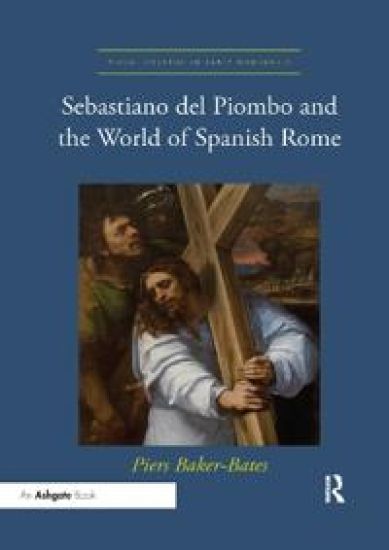
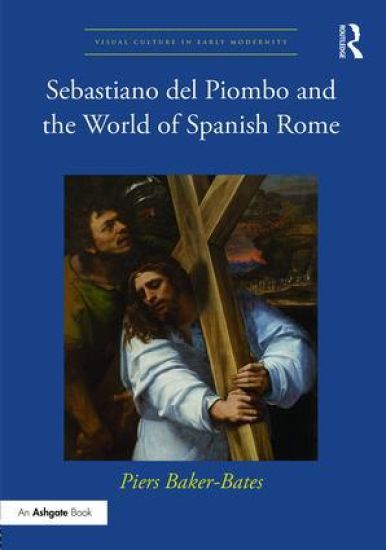
Sebastiano del Piombo and the World of Spanish Rome
Sebastiano del Piombo (c.1485-1547) was a close associate and rival of the central artistic figures of the High Renaissance, notably Michelangelo and Raphael. After the death of Raphael and the departure of Michelangelo from Rome, Sebastiano became the dominant artistic personality in the city. Despite being one of most significant artistic figures of the period, he remains the last artist of major importance in the western canon about whom no recent work has been published in English. In this study, Piers Baker-Bates approaches Sebastiano’s career through analysis of the patrons he attracted following his arrival at Rome. The first half of the book concentrates on Sebastiano’s network of patrons, predominantly Italian, who had strong factional ties to the Imperial camp; the second half discusses Sebastiano’s relationship with his principal Spanish patrons. Sebastiano is a leading example of a transcultural artist in the sixteenth century and his relationship with Spain was fundamental to the development of his careerThe author investigates the domination of Sebastiano’s career by patrons who had geographically different origins, but who were all were members of a wider network of Imperial loyalties. Thus Baker-Bates removes Sebastiano from the shadow of his contemporaries, bringing him to life for the reader as an artistic personality in his own right. Baker-Bates’ characterization of the Rome in which Sebastiano made his career differs from previous scholarly accounts, and he describes how Sebastiano was ideally suited to flourish in the environment he depicts.Sebastiano del Piombo and the World of Spanish Rome thus re-appraises not only Sebastiano’s place in the canon of Renaissance art but, using him as a lens, also the cultural worlds of Early Modern Italy and Spain in which he operated.
Sebastiano del Piombo and the World of Spanish Rome
Sebastiano del Piombo (c.1485-1547) was a close associate and rival of the central artistic figures of the High Renaissance, notably Michelangelo and Raphael. After the death of Raphael and the departure of Michelangelo from Rome, Sebastiano became the dominant artistic personality in the city. Despite being one of most significant artistic figures of the period, he remains the last artist of major importance in the western canon about whom no recent work has been published in English. In this study, Piers Baker-Bates approaches Sebastiano’s career through analysis of the patrons he attracted following his arrival at Rome. The first half of the book concentrates on Sebastiano’s network of patrons, predominantly Italian, who had strong factional ties to the Imperial camp; the second half discusses Sebastiano’s relationship with his principal Spanish patrons. Sebastiano is a leading example of a transcultural artist in the sixteenth century and his relationship with Spain was fundamental to the development of his careerThe author investigates the domination of Sebastiano’s career by patrons who had geographically different origins, but who were all were members of a wider network of Imperial loyalties. Thus Baker-Bates removes Sebastiano from the shadow of his contemporaries, bringing him to life for the reader as an artistic personality in his own right. Baker-Bates’ characterization of the Rome in which Sebastiano made his career differs from previous scholarly accounts, and he describes how Sebastiano was ideally suited to flourish in the environment he depicts.Sebastiano del Piombo and the World of Spanish Rome thus re-appraises not only Sebastiano’s place in the canon of Renaissance art but, using him as a lens, also the cultural worlds of Early Modern Italy and Spain in which he operated.
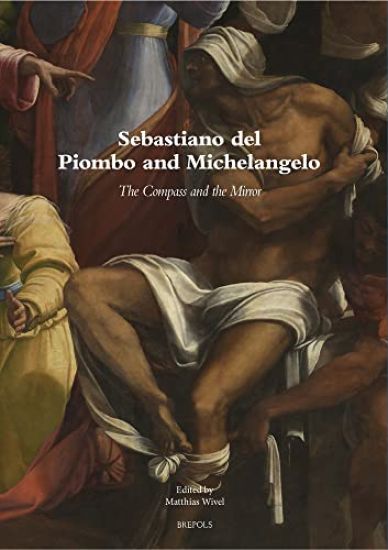
Sebastiano del Piombo and Michelangelo
The collaboration between Michelangelo Buonarroti (1475-1564) and Sebastiano del Piombo (1485-1547), is among the most extraordinary artistic partnerships of the early modern period. It produced works of startling originality, crucial to the development of the so-called High Renaissance in the first decades of the sixteenth century. It was arguably Michelangelo's most creative collaboration, helping him refine motifs and narrative strategies, and it proved determining for Sebastianos development of a monumental, spiritually invested idiom whose influence became a touchstone for religious art deep into the following century, and for principles of painterly abstraction beyond. Inspired by the exhibition Michelangelo & Sebastiano, mounted at The National Gallery in London in 2017, this book unites a group of international scholars in reflection on the two artists, their collaboration and its wider significance.
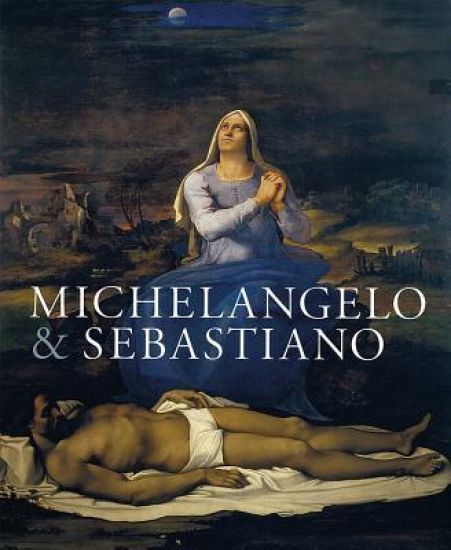
Michelangelo & Sebastiano

Michelangelo & Sebastiano

Matthias Wivel

National Gallery Company Ltd
2017
sidottu
The first publication to consider the relationship between these two major artists of the High Renaissance Through most of Michelangelo’s working life, one of his closest colleagues was the great Venetian painter Sebastiano del Piombo (1485­–1541). The two men met in Rome in 1511, shortly after Sebastiano’s arrival from his native city, and while Michelangelo was based in Florence from 1516 to 1534 Sebastiano remained one of his Roman confidants, painting several works after partial designs by him. This landmark publication is about the artists’ extraordinary professional alliance and the friendship that underpinned it. It situates them in the dramatic context of their time, tracing their evolving artistic relationship through more than three decades of creative dialogue. Matthias Wivel and other leading scholars investigate Michelangelo’s profound influence on Sebastiano and the Venetian artist’s highly original interpretation of his friend’s formal and thematic concerns. The lavishly illustrated text examines their shared preoccupation with the depiction of death and resurrection, primarily in the life of Christ, through a close analysis of drawings, paintings, and sculpture. The book also brings the austerely beautiful work of Sebastiano to a new audience, offering a reappraisal of this less famous but most accomplished artist. Published by National Gallery Company/Distributed by Yale University PressExhibition Schedule:The National Gallery, London (03/15/17–06/25/17)