
Kirjahaku
Etsi kirjoja tekijän nimen, kirjan nimen tai ISBN:n perusteella.
1000 tulosta hakusanalla Shakespeare-N


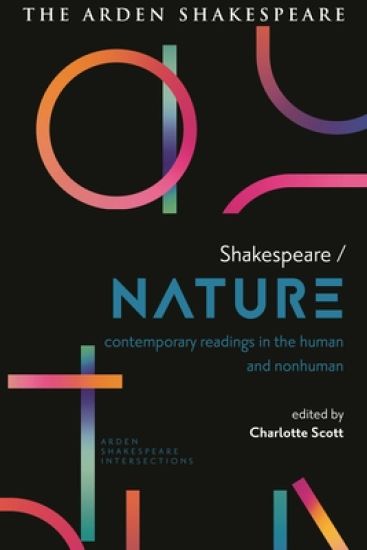
Shakespeare / Nature
BLOOMSBURY PUBLISHING PLC
2024
sidottu
Shakespeare / Nature sets new agendas for the study of nature in Shakespeare’s work. Offering a rich exploration of the intersections between the human and non-human worlds, the chapters focus on the contested and persuasive language of nature, both as organic matter and cultural conditioning.Rooted in close textual analysis and historical acuity, this collection addresses Shakespeare’s works through the many ways in which ‘nature’ performs, as a cultural category, a moral marker and a set of essential conditions through which the human may pass, as well as affect. Addressing the complex conditions of the play worlds, the chapters explore the assorted forms through which Shakespeare’s nature makes sense of its narratives and supports, upholds or contests its story-telling. Over the course of the collection, the contributors examine plays including Macbeth, Julius Caesar, The Tempest, The Taming of the Shrew, Othello, Love’s Labour’s Lost, Hamlet, Timon of Athens and many more. They discuss them through the various lenses of philosophy, historicism, psychoanalysis, gender studies, cosmography, geography, sexuality, linguistics, environmentalism, feminism and robotics, to provide new and nuanced readings of the intersectional terms of both meaning and matter.Approaching ‘nature’ in all its multiplicity, this collection sets out to examine the divergent and complex ways in which the human and non-human worlds intersect and the development of a language of symbiosis that attempts to both control and create the terms of human authority. It offers an entirely new approach to the subject of nature, bringing together disparate methods that have previously been pursued independently to offer a shared investment in the intersections between the human and non-human worlds and how these discourses shape and condition the emotional, organic, cultural and psychological landscapes of Shakespeare’s play worlds.


Shakespeare / Not Shakespeare
Springer International Publishing AG
2017
sidottu
This essay collection addresses the paradox that something may at once “be” and “not be” Shakespeare. This phenomenon can be a matter of perception rather than authorial intention: audiences may detect Shakespeare where the author disclaims him or have difficulty finding him where he is named. Douglas Lanier’s “Shakespearean rhizome,” which co-opts Deleuze and Guattari’s concept of artistic relations as rhizomes (a spreading, growing network that sprawls horizontally to defy hierarchies of origin and influence) is fundamental to this exploration. Essays discuss the fine line between “Shakespeare” and “not Shakespeare” through a number of critical lenses—networks and pastiches, memes and echoes, texts and paratexts, celebrities and afterlives, accidents and intertexts—and include a wide range of examples: canonical plays by Shakespeare, historical figures, celebrities, television performances and adaptations, comics, anime appropriations, science fiction novels, blockbuster films, gangster films, Shakesploitation and teen films, foreign language films, and non-Shakespearean classic films.
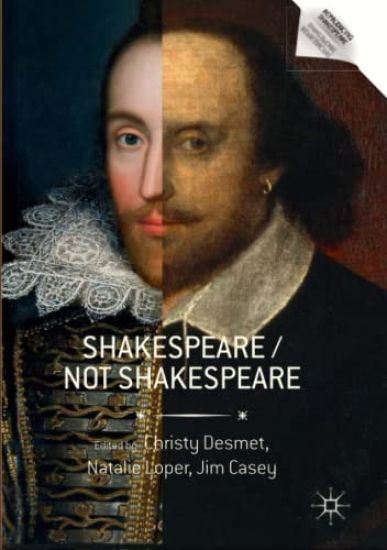
Shakespeare / Not Shakespeare
Springer International Publishing AG
2018
nidottu
This essay collection addresses the paradox that something may at once “be” and “not be” Shakespeare. This phenomenon can be a matter of perception rather than authorial intention: audiences may detect Shakespeare where the author disclaims him or have difficulty finding him where he is named. Douglas Lanier’s “Shakespearean rhizome,” which co-opts Deleuze and Guattari’s concept of artistic relations as rhizomes (a spreading, growing network that sprawls horizontally to defy hierarchies of origin and influence) is fundamental to this exploration. Essays discuss the fine line between “Shakespeare” and “not Shakespeare” through a number of critical lenses—networks and pastiches, memes and echoes, texts and paratexts, celebrities and afterlives, accidents and intertexts—and include a wide range of examples: canonical plays by Shakespeare, historical figures, celebrities, television performances and adaptations, comics, anime appropriations, science fiction novels, blockbuster films, gangster films, Shakesploitation and teen films, foreign language films, and non-Shakespearean classic films.
for english please scroll down - F r alle Freunde des klassischen Stils und edlen Vintage Designs. - Pers nlicher Begleiter, verwendbar u.a. als Notizbuch, Notizheft, Einschreibbuch, Tagebuch oder Anti-Stress Kritzelbuch. - Perfekter Ort zum Festhalten von Geistesblitzen, Action Items, Erlebnissen, Projekten, Pl nen, kreativen Ideen, Gedanken, ToDo-Listen, Kritzelleien u.v.m., einfach f r alles was man nicht vergessen will und darf - Im praktischen Pocketformat, liniert und mit gl nzendem Cover. - Super Geschenkidee - Mit einem au ergew hlichen stylischen Cover. Notebook for all friends of classy and noble vintage design Perfect as gift booklet to say thank you, or as present or for yourself. *** Notebook for fast and simple saving of instructions, prescriptions or for all things you do not want to forget *** Due to a handy format, the notebook can be comfortably used in any situation (e.g. on the way or at home or at work) *** Perfect for spontaneous collection of ideas or as a memorization tool *** Practical handling due to easy pocket format Further features: glossy cover, ruled paper, cover graphic in stylish vintage look


Shakespeare na sala de reuniões
Aliya Halim; Mushtaq Ahmad; Asik Rahaman Jamader
Edicoes Nosso Conhecimento
2025
pokkari
Shakespeare na sala de reuni es: Li es de Gest o e Estrat gia uma obra pioneira que faz a ponte entre os mundos da literatura inglesa e da gest o empresarial, demonstrando como as ideias intemporais de William Shakespeare podem iluminar as complexidades da vida organizacional moderna. Longe de estarem confinados ao palco, os personagens e narrativas de Shakespeare fornecem li es profundas sobre lideran a, tica, tomada de decis es, planeamento de sucess o, comunica o e estrat gia - os mesmos pilares sobre os quais assenta a gest o contempor nea. Atrav s de leituras atentas de pe as como Hamlet, Macbeth, Henrique V, J lio C sar, Otelo e Rei Lear, o livro estabelece paralelos entre os dilemas enfrentados pelos monarcas e generais do mundo de Shakespeare e os dilemas enfrentados pelos actuais CEOs, executivos e empres rios.

Entries provide the likely sources for a name; describe historical and mythological backgrounds; examine Shakespeare's presentation of a character or place; and suggest various interpretations of a name. Each entry contains line citations to William Shakespeare: The Complete Works. A guide to the historical, mythological, fictional, and geographic references that appear in Shakespeare's complete plays and poems, covering every name, proper adjective, official title, literary and mystical title, and place name.
The Shakespeare North Playhouse
TAYLOR FRANCIS LTD
2024
sidottu
This collection celebrates the opening of the Shakespeare North Playhouse (SNP). After discussion of its genesis and development by four people pivotal to its progress at different stages of the project, this book explores different aspects of the SNP’s purpose and functions across three broad categories: buildings and spaces, practices and performance, and community arts and education. Various chapters offer answers to fundamental questions about replica theatres, including: Why do we build them? What do they do? How do we use them? In the course of these discussions, the purposes, potential, and programming of the SNP are discussed in relation to other Globe-type replicas in the UK and beyond. Contributors to this collection analyse key academic and practice-based concerns within their fields of expertise connected to the use (and misuse) of replica theatres to suggest the ways in which they can be used to drive research and practice in contemporary Shakespearean performance, connect with young people, and serve local communities.This book will appeal to academics, students, and practitioners interested in historical and contemporary approaches to Shakespeare in the fields covered. It should also appeal to general readers with an interest in the topics, particularly in Merseyside and the North-West region.

The Shakespeare North Playhouse
TAYLOR FRANCIS LTD
2025
nidottu
This collection celebrates the opening of the Shakespeare North Playhouse (SNP). After discussion of its genesis and development by four people pivotal to its progress at different stages of the project, this book explores different aspects of the SNP’s purpose and functions across three broad categories: buildings and spaces, practices and performance, and community arts and education. Various chapters offer answers to fundamental questions about replica theatres, including: Why do we build them? What do they do? How do we use them? In the course of these discussions, the purposes, potential, and programming of the SNP are discussed in relation to other Globe-type replicas in the UK and beyond. Contributors to this collection analyse key academic and practice-based concerns within their fields of expertise connected to the use (and misuse) of replica theatres to suggest the ways in which they can be used to drive research and practice in contemporary Shakespearean performance, connect with young people, and serve local communities. This book will appeal to academics, students, and practitioners interested in historical and contemporary approaches to Shakespeare in the fields covered. It should also appeal to general readers with an interest in the topics, particularly in Merseyside and the North-West region.

The Shakespeare Name and Place Dictionary
Routledge Member of the Taylor and Francis Group
1995
sidottu
Entries provide the likely sources for a name; describe historical and mythological backgrounds; examine Shakespeare's presentation of a character or place; and suggest various interpretations of a name. Each entry contains line citations to William Shakespeare: The Complete Works, edited by Wells and Taylor, Oxford University Press, 1986.



How do names attach themselves to particular objects and people and does this connection mean anything? This is a question which goes as far back as Plato and can still be seen in contemporary society with books of Names to Give Your Baby or Reader's Digest columns of apt names and professions. For the Renaissance the vexed question of naming was a subset of the larger but equally vexed subject of language: is language arbitrary and conventional (it is simply an agreed label for a pre-existing entity) or is it motivated (it creates the entity which it names)? Shakespeare's Names is a book for language-lovers. Laurie Maguire's witty and learned study examines names, their origins, cultural attitudes to them, and naming practices across centuries and continents, exploring what it means for Shakespeare's characters to bear the names they do. She approaches her subject through close analysis of the associations and use of names in a range of Shakespeare plays, and in a range of performances. The focus is Shakespeare, and in particular six key plays: Romeo and Juliet, Comedy of Errors, The Taming of the Shrew, A Midsummer Night's Dream, All's Well that Ends Well, and Troilus and Cressida. But the book also shows what Shakespeare inherited and where the topic developed after him. Thus the discussion includes myth, the Bible, Greek literature, psychological analysis, literary theory, social anthropology, etymology, baptismal trends, puns, different cultures' and periods' social practice as regards the bestowing and interpreting of names, and English literature in the sixteenth, seventeenth, eighteenth, nineteenth, and twentieth centuries; the reader will also find material from contemporary journalism, film, and cartoons.
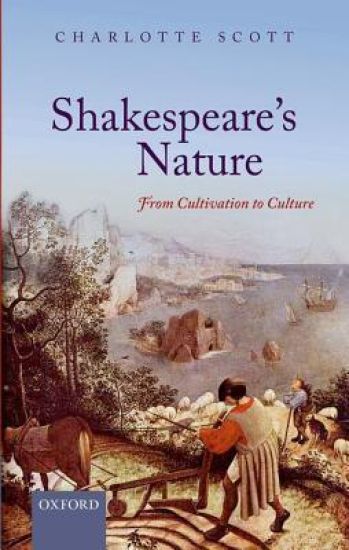
Shakespeare's Nature offers the first sustained account of the impact of the language and practice of husbandry on Shakespeare's work. It shows how the early modern discourse of cultivation changes attitude to the natural world, and traces the interrelationships between the human and the natural worlds in Shakespeare's work through dramatic and poetic models of intervention, management, prudence and profit. Ranging from the Sonnets to The Tempest, the book explains how cultivation of the land responds to and reinforces social welfare, and reveals the extent to which the dominant industry of Shakespeare's time shaped a new language of social relations. Beginning with an examination of the rise in the production of early modern printed husbandry manuals, Shakespeare's Nature draws on the varied fields of economic, agrarian, humanist, Christian and literary studies, showing how the language of husbandry redefined Elizabethan attitudes to both the human and non-human worlds. In a series of close readings of specific plays and poems, this book explains how cultivation forms and develops social and economic value systems, and how the early modern imagination was dependent on metaphors of investment, nurture and growth. By tracing this language of intervention and creation in Shakespeare's work, this book reveals a fundamental discourse in the development of early modern social, political and personal values.

Kenneth Gross explores Shakespeare's deep fascination with dangerous and disorderly forms of speaking--especially rumor, slander, insult, vituperation, and curse--and through them offers a vision of the work of words in his plays. Coriolanus's taunts or Lear's curses force us to think not just about how Shakespeare's characters speak, but also about how they hear, overhear, and mishear what is spoken, how rumor becomes tragic knowledge for Hamlet, or opens Othello to fantastic jealousies. Gross also shows how Shakespeare's preoccupation with "noisy" speech echoed and transformed a broader cultural obsession with the perils of rumor, slander, and libel in Renaissance England.