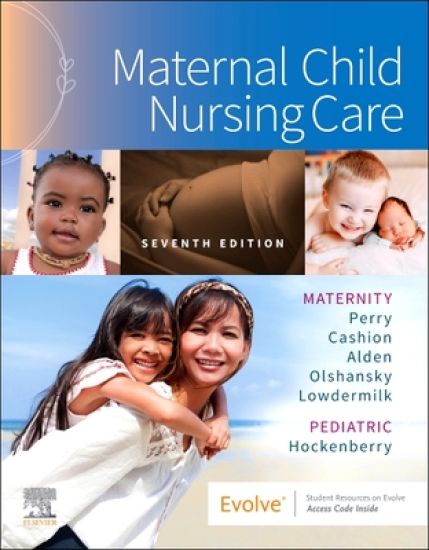
Master the essentials of maternity and pediatric nursing with this comprehensive, all-in-one text! Maternal Child Nursing Care, 7th Edition covers the issues and concerns of women during their childbearing years and children during their developing years. It uses a family-centered, problem-solving approach to patient care, with guidelines supported by evidence-based practice. New to this edition is an emphasis on clinical judgment skills and a new chapter on children with integumentary dysfunction. Written by a team of experts led by Shannon E. Perry and Marilyn J. Hockenberry, this book provides the accurate information you need to succeed in the classroom, the clinical setting, and on the Next Generation NCLEX-RN® examination. Focus on the family throughout the text emphasizes the influence of the entire family in health and illness. Expert authors of the market-leading maternity and pediatric nursing textbooks combine to ensure delivery of the most accurate, up-to-date content. Information on victims of sexual abuse as parents and human trafficking helps prepare students to handle these delicate issues. Nursing Alerts highlight critical information that could lead to deteriorating or emergency situations. Guidelines boxes outline nursing procedures in an easy-to-follow format. Evidence-Based Practice boxes include findings from recent clinical studies. Emergency Treatment boxes describe the signs and symptoms of emergency situations and provide step-by-step interventions. Atraumatic Care boxes teach students how to manage pain and provide competent care to pediatric patients with the least amount of physical or psychological stress. Community Focus boxes emphasize community issues, provide resources and guidance, and illustrate nursing care in a variety of settings. Patient Teaching boxes highlight important information nurses need to communicate to patients and families. Cultural Considerations boxes describe beliefs and practices relating to pregnancy, labor and birth, parenting, and women's health. Family-Centered Care boxes draw attention to the needs or concerns of families that students should consider to provide family-centered care. NEW and UPDATED! Next Generation NCLEX® (NGN) examination-style case studies and NGN exam-style unfolding case studies provide preparation for the NGN exam. NEW! Introduction of clinical judgment is included in the preface and in the text. NEW! COVID-19 and Zika virus content is added. NEW! New chapter on child with integumentary dysfunction provides the most up-to-date information. UPDATED clinical guidelines also include well-child care. UPDATED content includes topics such as resuscitation, contraception, breast cancer screening, and gestational diabetes. UPDATED LBGTQ+ coverage is expanded. EXPANDED! More content on spirituality is included in the family, culture, and spiritual chapters.
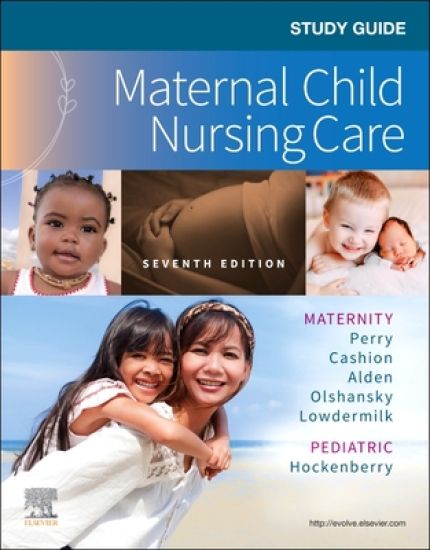
Reinforce your understanding of maternity and pediatric nursing with this practical study guide! With chapters corresponding to the chapters in Maternal Child Nursing Care, 7th Edition, this workbook provides a variety of exercises and activities to help you review essential concepts, apply your knowledge, and learn to think critically. New to this edition are clinical judgment and Next Generation NCLEX-RN® (NGN) examination-style questions to help you prepare for success on the NGN and in nursing practice. Clinical Judgment and Next Generation NCLEX® examination-style questions help students to apply concepts in solving problems, make decisions concerning care management, answer patients' questions, and prepare for the NCLEX-RN exam. Review questions help students test their level of knowledge and understanding of key concepts with matching, fill-in-the-blank, true/false, short answer, and multiple-choice questions. Learning Key Terms sections include matching and fill-in-the-blank questions, reinforcing students' ability to understand and remember important terminology. Perforated pages make it easy for students to turn in Study Guide activities as graded assignments. Answer key at the end of the book includes answers to all questions. NEW! Updated content throughout corresponds to the new features and chapters in the Maternal Child Nursing Care, 7th Edition text.
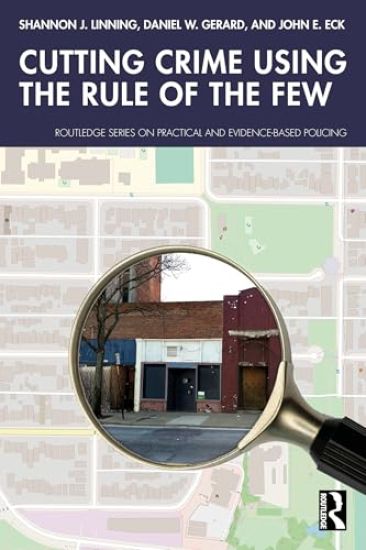
Based on decades of research, this book reveals how the rule of the few can redirect your focus to create effective crime control policies. Many crime reduction strategies fail because they apply common crime fallacies. They assume that: solutions to crime need to be complicated, crime is widespread, residents matter the most, more arrests reduce crime, and police can solve all crime problems. At the heart of each fallacy is a failure to consider an old idea: the rule of the few. The rule of the few means a tiny fraction of inputs cause most of the outcomes. Research shows that: solving problems at smaller scales can cut crime substantially, crime is highly concentrated at a few places in any city, only a few residents can usually effect change, only a few people commit most of the crime, and a few everyday people can dismantle crime opportunities. Cutting Crime Using the Rule of the Few shows that crime is not merely a police problem. It explains how those who own or manage property and design the products we use have far more power to suppress crime opportunities than they realize. Cutting Crime reveals how to use the rule of the few to identify and solve crime problems. It provides a set of tools and spells out specific strategies the police, property owners, business owners, and government agencies can use to reduce crime. Just as it only takes a few to create a lot of crime, it only takes a few to prevent those crimes.
Jane Jacobs coined the phrase 'eyes on the street' to depict those who maintain order in cities. Most criminologists assume these eyes belong to residents. In this Element we show that most of the eyes she described belonged to shopkeepers and property owners. They, along with governments, wield immense power through property ownership and regulation. From her work, we propose a Neo-Jacobian perspective to reframe how crime is connected to neighborhood function through deliberate decision-making at places. It advances three major turning points for criminology. This includes turns from: 1. residents to place managers as the primary source of informal social control; 2. ecological processes to outsiders' deliberate actions that create crime opportunities; and 3. a top-down macro- to bottom-up micro-spatial explanation of crime patterns. This perspective demonstrates the need for criminology to integrate further into economics, political science, urban planning, and history to improve crime control policies.
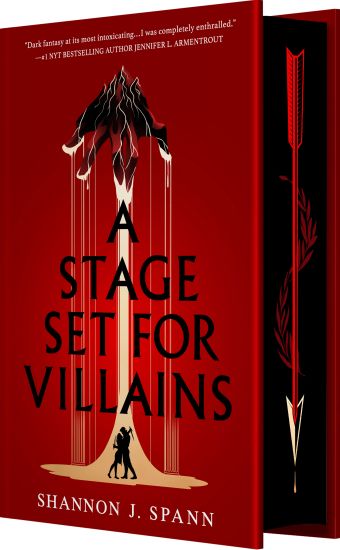
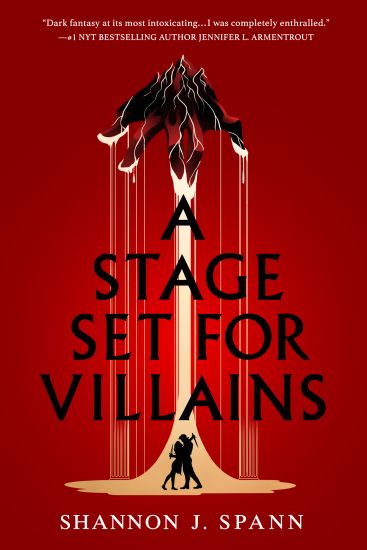
Don't miss out on the stunning DELUXE LIMITED EDITION while supplies last. This breathtaking collectible is only available on a limited first print run in the US and Canada only, a must-have for any book lover. Caraval meets The Serpent and the Wings of Night in this YA romantasy, where 18-year-old Riven Hesper infiltrates a mysterious theater run by irresistible and deadly godlike beings, and mortals compete for immortality in a ruthlessly lethal competition.
The gods are dead. All that’s left are the Players . . . The performers of the Playhouse are as worshipped as they are feared, their enchanting shows bending hearts, minds, and even reality itself. Vicious, godlike, lethal. Eighteen-year-old Riven Hesper knows the dangers better than anyone, after her own encounter with a Player resulted in a curse that is slowly killing her. When the Playhouse announces the spectacle of a lifetime – a chance for one mortal to steal a Player’s immortality – Riven sees her last chance to live. Desperate for answers, she infiltrates the competition. There, she finds Jude, the Playhouse’s brilliant, merciless Lead Player, whose charm is as dangerous as his Craft, and strikes a deadly bargain to save her life. But with time running out and the Playhouse’s secrets unraveling into a disturbing picture, Riven faces a grim possibility: she might not be the hero of her story after all. In fact, she may be the villain. Because the Playhouse doesn’t just tell stories. It rewrites them. And Riven’s might end in blood. Caraval meets One Dark Window in this lush and dark fantasy.
Based on decades of research, this book reveals how the rule of the few can redirect your focus to create effective crime control policies. Many crime reduction strategies fail because they apply common crime fallacies. They assume that: solutions to crime need to be complicated, crime is widespread, residents matter the most, more arrests reduce crime, and police can solve all crime problems. At the heart of each fallacy is a failure to consider an old idea: the rule of the few. The rule of the few means a tiny fraction of inputs cause most of the outcomes. Research shows that: solving problems at smaller scales can cut crime substantially, crime is highly concentrated at a few places in any city, only a few residents can usually effect change, only a few people commit most of the crime, and a few everyday people can dismantle crime opportunities. Cutting Crime Using the Rule of the Few shows that crime is not merely a police problem. It explains how those who own or manage property and design the products we use have far more power to suppress crime opportunities than they realize. Cutting Crime reveals how to use the rule of the few to identify and solve crime problems. It provides a set of tools and spells out specific strategies the police, property owners, business owners, and government agencies can use to reduce crime. Just as it only takes a few to create a lot of crime, it only takes a few to prevent those crimes.
This brief describes the theory and evidence of a form of social control known as place management. Created by property owners, place management is an alternative to the two other domains of social control: formally created by the state and informally created by residents. It helps explain the high concentration of crime and disorder at a relatively small proportion of addresses and facilities. This volume examines the specifics of place management and extends it in three ways: to show how high crime places may radiate crime into their surroundings; to reveal networks of places that create crime hotspot spanning blocks; to demonstrate how networks of place managers influence crime throughout neighborhoods. Finally, it shows that the policy implications of place management extend far beyond the police and should include regulatory policies.
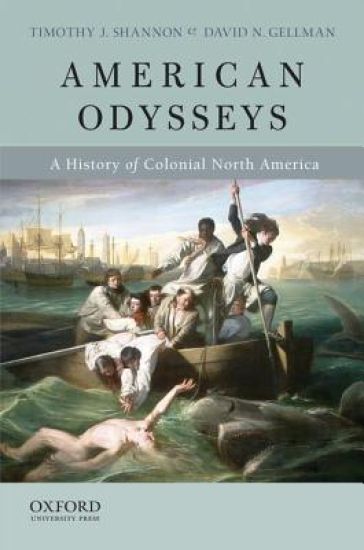
Written in an engaging and student-friendly style, American Odysseys examines the entire period between 1492 and 1763, covering important topics that shaped the colonial experience across time and in a variety of places. Authors Timothy J. Shannon and David N. Gellman use a thematic approach, focusing on colonial development and integration within a wider Atlantic world. Each chapter begins with the story of an individual who experienced the wonder and terror of colonization firsthand, so that students can feel a human connection to each of these topics and themes. Taken together, these figures--Indians, servants, slaves, explorers, planters--embody the full array of peoples and cultures that gave the colonial era a trans-Atlantic, multicultural character. Each chapter also features a chronology of events described in that chapter. Maps and images throughout the book help visually orient readers to the stories that comprise this concise yet broad-ranging narrative.