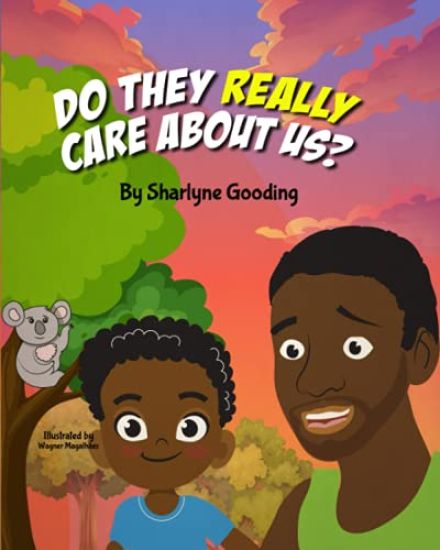
A book to teach children of color about police brutality and prejudice. With all children are seeing and hearing on T.V and the web they need help understanding it all.
The phrase "critical thinking" is not found in the Holy Bible. However, one who is guided by biblical principles is not exempt from applying, or at least considering, the practical worldview critical thinking process that leads to making good decisions. It is understood that although Believers are in this world, "they are not of the world" (John 17:14) but can most certainly glean from diverse sources of wisdom. The Biblical Guide to Critical Thinking will explore how Believers can make good decisions from a biblical perspective while benefiting from business-based critical thinking methods.
The Lord encourages us to "fear not" in over 60 verses in the King James Version of the Holy Bible. Why, you ask? Perhaps it's because our faith in Him should always have a permanent, primary role in our lives to overshadow any fear that rears its ugly head. You may have heard the common phrase, 'faith over fear.' Being fearless simply means to fear less. Of course, there are some people, places and things that we should have a healthy fear of; but it's up to us to be courageous in any other circumstance. So whose report will you believe: the Word or the world? It's time to manifest the Holy Ghost power that resides inside of you Learn how to bravely look the enemy straight in the eye and say, "Fear? NOT "
Grab This Deal For The Comics Artist In Your Life For Less Than $10See that girl always doodling and dreaming up stories and plots? She's gonna LOVE the What Happens Next Comic Book For Budding Artists edition, created especially for young artists between 9 and 14 years of age.Bokkaku Dojinshi has created this book as a 6 by 9 inch, perfect pocket book form. Plenty of different templates to explore as well as loads of room to keep track of plot ideas.There is even space for special expression studies of the main characters so the budding artist hits the right emotion in her images every single time.This book is perfect for: mangagraphic novelsSunday funniesanimefan fictionParents and teachers love What Happens Next Comics series for these reasons: helps speech developmentincreases literacydevelops a sense of sequencecreates confidencedevelops an appreciation for artboots creativityOnce you get this book, notice how handy it is - perfect pocket book size means no bulky bags on summer trips or lazy afternoons under a willow tree. All you need is your pencil and ink pen Can't wait to see what you make of your And then... comic book
Publisher's Note: Products purchased from Third Party sellers are not guaranteed by the publisher for quality, authenticity, or access to any online entitlements included with the product.EVERYTHING YOU NEED TO ACE THE ARRT® COMPUTED TOMOGRAPHY EXAM (CT) EXAM IN ONE COMPLETE PACKAGE!Written by an experienced program director who knows what it takes to excel, LANGE Review: Computed Tomography Examination is designed to boost confidence, test-taking skills, and knowledge for anyone preparing for the exam. Bolstered by nearly 500 registry-style questions with detailed answer explanations, this essential guide also includes valuable background material – covering everything from eligibility requirements to test-taking tips. You will also find two comprehensive practice exams within the text and online. It all adds up to the single-best way to increase your chance of success on the CT Exam.· A thorough review of patient care, imaging procedures, and physics and instrumentation distills core concepts on the registry exam· Chapter-ending practice questions assess your knowledge of essential concepts· Two comprehensive practice exams —in the book and online--to improve your confidence· Includes 495 registry-style questions with complete explanations for each answer·
The second edition of Working Women in America: Split Dreams highlights current research on critical issues affecting American women in today's global workplace. It features updated information and examples, including extended discussions of women's activism within and outside of the workplace, the impact of globalization, the effects of the glass ceiling and sexual harassment, and women's roles in the U.S. labor movement. Retaining the focus of the first edition, this text emphasizes the continuity of women's work experience. It seeks to dispel the misconception that women's work is a recent phenomenon, when in fact women have been working throughout history. The book also addresses the constant tension and multiple roles that women must manage. The lives of working women are indeed characterized by "split dreams": most women who work are constantly juggling their work and family dreams. It is therefore misleading to concentrate solely on the workplace when seeking to understand women's position at work. Rather, one must pay attention to the connections among societal institutions. To this end, the authors argue for and utilize a structural approach-one that examines the ways in which the economy, education, the family, and the polity reflect and influence one another and help reinforce women's subordination. Only when these connections are brought to light is it possible to begin to formulate alternatives to conventional ideas concerning work, family, and gender roles. The authors begin by situating their research in opposition to dominant sociological models of work. They then provide a thorough historical overview of women at work, carefully examining the diversity of women's experiences by race, ethnicity, class, and age. Economic, legal, political, familial, and educational institutions are also analyzed to show the ways in which they help produce and maintain inequality for women in the workplace. Working Women in America: Split Dreams intersperses first-person accounts throughout the book and provides a number of vignettes of women employed in a variety of occupations. It is an ideal text for courses in women's studies, sociology, economics, social work, and history, and fascinating reading for anyone interested in women and their work.
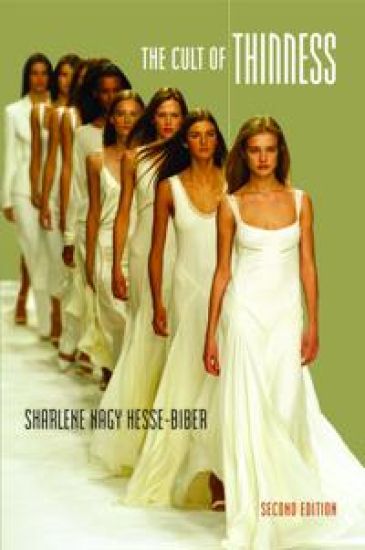
Whether they are rich or poor, liberal or conservative, religious or atheist, thriving or stagnant, most American women have one thing in common--they want to be thin--or thinner. And they are willing to go to extraordinary lengths to get that way, even to the point of starving themselves. Why are America's women so preoccupied with weight? Is there more to this preoccupation than weight alone? What has caused record numbers of young women--even before they reach their teenage years--to suffer from weight obsession, poor body image, and disordered eating? Why are some young women able to resist cultural pressures to be thin when others are not? Are there factors within American society that have fueled current outbreaks of anorexia and bulimia? The Cult of Thinness, Second Edition--a revised and expanded version of Sharlene Nagy Hesse-Biber's award-winning book, Am I Thin Enough Yet? (OUP, 1996)--answers these questions and more. Hesse-Biber goes beyond traditional psychological explanations of eating disorders to level a powerful indictment against the social, political, and economic pressures women face in a weight-obsessed society--a society that is, ironically, becoming increasingly more fat while worshipping a progressively more thin ideal. She examines the profit motives of corporate America that promote this paradox. Moreover, a new chapter on preteens, masculinity, ethnicity, gay and lesbian body image, and the globalization of body image issues align a refined cultural study of body image with the trends found in current research studies, demographic data, and popular culture. Using the metaphor of a cult, Hesse-Biber conveys the intense, day-to-day involvement that the pursuit of thinness demands. Examining the testimonies of young women concerning the practice of body rituals, she observes the extent to which these women sacrifice their bodies and minds to the pursuit of the ultra-slender ideal. She looks at pressures coming from their families and friends that perpetuate their cult-like practices and evaluates a range of therapies and personal and collective actions available to help women overcome their weight obsessions and eating problems. Hesse-Biber provides new frameworks for envisioning femininity and personal power, overcoming body insecurity, strengthening the inner self, and changing the cultural environment itself. Along the way, the reader is provided with important self-help tips to tackle the growing number of body image issues young women and new recruits to the "Cult of Thinness" continue to encounter. There are alternatives to the Cult of Thinness and this book provides a strong antidote.
Offering a variety of innovative methods and tools, The Oxford Handbook of Multi- and Mixed-Methods Research Inquiry provides the most comprehensive and up-to-date presentation on multi- and mixed-methods research available. Written in clear and concise language by leading scholars in the field, it enhances and disrupts traditional ways of asking and addressing complex research questions. Topics include an overview of theory, paradigms, and scientific inquiry; a guide to conducting a multi- and mixed-methods research study from start to finish; current uses of multi- and mixed-methods research across academic disciplines and research fields; the latest technologies and how they can be incorporated into study design; and a presentation of multiple perspectives on the key remaining debates. Each chapter in the volume is structured to include state-of-the-art research examples that cross a range of disciplines and interdisciplinary research settings. In addition, the Handbook offers multiple quantitative and qualitative theoretical and interdisciplinary visions and praxis. Researchers, faculty, graduate students, and policy makers will appreciate the exceptional, timely, and critical coverage in this Handbook, which deftly addresses the interdisciplinary and complex questions that a diverse set of research communities are facing today.
• Interactive, discussion and personal reflection activities help children to build values, develop and practise life skills • Case studies, mini stories and illustrations which provide contexts for learning and help children to integrate new knowledge into their own experiences • Group, pair and individual activities using different learning styles to help children develop healthy attitudes and behaviours • Colourful illustrations which help to bring each topic to life • Playful characters which will appeal to young learners• Teacher's Books for each level are freely available to download online
Waiting for Cancer to Come tells the stories of women who are struggling with their high risk for cancer. Based on interviews and surveys of dozens of women, this book pieces together the diverse yet interlocking experiences of women who have tested positive for the BRCA 1/2 gene mutations, which indicate a higher risk of developing breast and ovarian cancer. Sharlene Hesse-Biber brings these narratives to light and follows women’s journeys from deciding to get screened for BRCA, to learning the test has come back positive, to dealing with their risk. Many women already know the challenges of a family history riddled with cancer and now find themselves with the devastating knowledge of their own genetic risk. Using the voices of the women themselves to describe the under-explored BRCA experience, Waiting for Cancer to Come looks at the varied emotional, social, economic, and psychological factors at play in women’s decisions about testing and cancer prevention.
Waiting for Cancer to Come tells the stories of women who are struggling with their high risk for cancer. Based on interviews and surveys of dozens of women, this book pieces together the diverse yet interlocking experiences of women who have tested positive for the BRCA 1/2 gene mutations, which indicate a higher risk of developing breast and ovarian cancer. Sharlene Hesse-Biber brings these narratives to light and follows women’s journeys from deciding to get screened for BRCA, to learning the test has come back positive, to dealing with their risk. Many women already know the challenges of a family history riddled with cancer and now find themselves with the devastating knowledge of their own genetic risk. Using the voices of the women themselves to describe the under-explored BRCA experience, Waiting for Cancer to Come looks at the varied emotional, social, economic, and psychological factors at play in women’s decisions about testing and cancer prevention.
This is a book about an American woman's investigation into a past life in Egypt as Iput, daughter of the last 5th Dynasty pharaoh Unas of the Old Kingdom, and her role as an initiate of Hathor at the temple of Dendera. Sara's original fascination with Saqqara and the Pyramid Texts found in the pyramids there lead her into a fascinating discovery of a past life that also includes Sara's guide Amir and her husband Thomas. Sara returns to Egypt to get to the bottom of her reoccurring visions as Iput. Actual experiences in real time, as well as dreams, meditations, and visions lead Sara through this spiritual sojourn. This is a story about the healing power of forgiveness when unresolved issues from past lives bleed into the present and even the future. This is also a story of how a woman rediscovers her own lost meaning and joy through her resolve to face what is happening to her, as unusual as it is, and takes it seriously. The healing power of the ancient sites and monuments of ancient Egypt also play a role as many travelers to Egypt have similar experiences when they visit these places built on thousands of years of spiritual activity. This is also a story that points to the future and the work we are asked to take on to keep our planet safe and whole. The surprising ending and a scroll called the Book of Light that Sara dreams of hold a warning for the future about the second return of Sekhmet, the fierce lioness goddess. This changes everything and moves Sara, Amir, and Thomas towards healing as they heal the past, and work together towards the future.