Kirjahaku
Etsi kirjoja tekijän nimen, kirjan nimen tai ISBN:n perusteella.
1000 tulosta hakusanalla Sharon F Rallis; Goldring Ellen B.
`A major contribution. The administrative accompaniment to the school restructuring and teacher empowerment movement' - Robert L Crowson, University of Illinois, Chicago, IL In this newly updated edition, Sharon Rallis and Ellen Goldring describes and illustrates good school leadership practices, drawing on the authors' case studies and surveys, and the research of others.
Leading With Inquiry and Action
Militello Matthew C.; Sharon F Rallis; Goldring Ellen B.
SAGE Publications Inc
2009
nidottu
'This essential guide for educational leaders skillfully blends scholarship with practice and integrates theory with real-world examples. Through case studies, the authors show the reader how to develop, support, and improve a collaborative, inquiry-action process for improving teaching and learning. If we are going to have schools that successfully educate all students to high standards, then we need principals who translate the lessons of this book into practice' - Andrew Lachman, Executive Director, Connecticut Center for School Change Enhance learning with a collaborative, inquiry-based system of leadership! With sociopolitical forces prompting calls for school improvement, school leaders look for ways to expand their expertise in instructional leadership and strengthen their role in shaping classroom practice. Leading With Inquiry and Action presents a systematic, ongoing process for collecting information, making decisions, and taking action to improve instruction and raise student achievement. The authors illustrate this collaborative inquiry-action cycle with a running vignette of an experienced principal and offer questions and exercises to guide individual reflection and group discussion. Thoroughly grounded in research, this book helps administrators: - Identify areas for instructional improvement - Determine community-supported solutions and build stakeholder commitment - Articulate an action plan based on multiple data sources - Take steps that support teacher development - Systematically evaluate programme results Educational improvement requires informed leadership. This practical guide provides an efficient and functional framework for transforming current or aspiring principals into inquiry-minded, action-oriented instructional leaders.
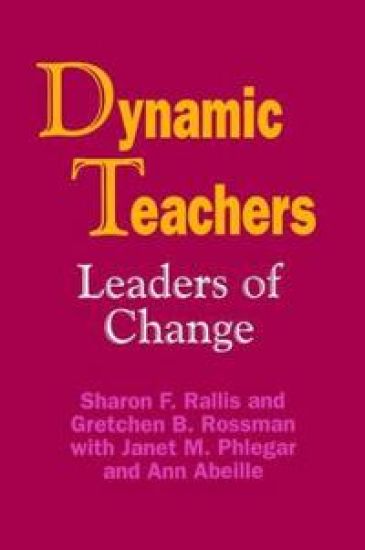
Dynamic Teachers
Sharon F Rallis; Gretchen B Rossman; Brackett Ann
SAGE PUBLICATIONS INC
1995
nidottu
The role of the teacher is no longer confined to the classroom or to interactions with students. The authors of this book illustrate through case studies the emerging roles of `dynamic' teachers which incorporate: seeing themselves as professionals and making a commitment to professional behaviours; challenging student thinking through appropriate questioning strategies; extending the classroom into the community, and bringing the community into the classroom; and becoming agents of change, advocating school reform.
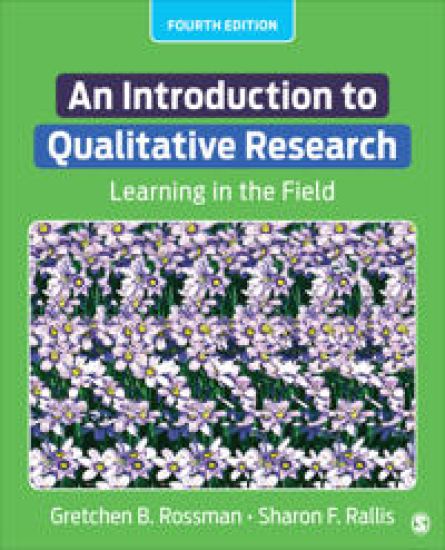
An Introduction to Qualitative Research
Gretchen B Rossman; Sharon F Rallis
SAGE Publications Inc
2016
nidottu
The updated Fourth Edition of Rossman and Rallis’s popular introductory text leads the new researcher into the field by explaining the core concepts through theory, research, and applied examples. Woven into the chapters are three themes that are the heart of the book: first, research is about learning; second, research can and should be useful; and finally, a researcher should practice the highest ethical standards to ensure that a study is trustworthy. The Fourth Edition includes an elaborate discussion of systematic inquiry as well as a nuanced discussion of developing a conceptual framework.
Leading Dynamic Schools
Rallis Sharon F.; Gretchen B Rossman; Cobb Casey D.; Reagan Timothy G.; Kuntz Aaron M.
SAGE Publications Inc
2007
sidottu
Leading Dynamic Schools: How to Create and Implement Ethical Policies is a policy book for people who work in and with schools: teachers, building level leaders, central office administrators, board members, and parent boards. In accessible language, the authors deconstruct the conceptions and understandings of educational policy. This volume serves as a companion volume to Principals of Dynamic Schools (Rallis and Goldring, Corwin Press, 2000) and Dynamic Teachers (Rallis and Rossman, Corwin Press, 1995), books that introduced the construct of dynamic schools. This book also draws on work from Becoming a Reflective Educator (Reagan, Case and Brubacher, Corwin Press, 2000). Policy is an often overused and more often misunderstood concept. The authors bring to life the making and enacting of educational policy in schools, and help readers develop a more sophisticated and complex understanding of the purposes, evaluation, creation, and implementation of school policies at all levels. As in the earlier books, the authors use vignettes and cases, as well as research and relevant theories, to illustrate important concepts. The theme of power within policy permeates the text. The authors recognize that policy tends to represent dominant voices, and that power can be appropriate and legitimate. Dynamic schools are places where multiple voices contribute to the policy-making and implementing process.
Leading Dynamic Schools
Rallis Sharon F.; Gretchen B Rossman; Cobb Casey D.; Reagan Timothy G.; Kuntz Aaron M.
SAGE Publications Inc
2007
nidottu
Leading Dynamic Schools: How to Create and Implement Ethical Policies is a policy book for people who work in and with schools: teachers, building level leaders, central office administrators, board members, and parent boards. In accessible language, the authors deconstruct the conceptions and understandings of educational policy. This volume serves as a companion volume to Principals of Dynamic Schools (Rallis and Goldring, Corwin Press, 2000) and Dynamic Teachers (Rallis and Rossman, Corwin Press, 1995), books that introduced the construct of dynamic schools. This book also draws on work from Becoming a Reflective Educator (Reagan, Case and Brubacher, Corwin Press, 2000). Policy is an often overused and more often misunderstood concept. The authors bring to life the making and enacting of educational policy in schools, and help readers develop a more sophisticated and complex understanding of the purposes, evaluation, creation, and implementation of school policies at all levels. As in the earlier books, the authors use vignettes and cases, as well as research and relevant theories, to illustrate important concepts. The theme of power within policy permeates the text. The authors recognize that policy tends to represent dominant voices, and that power can be appropriate and legitimate. Dynamic schools are places where multiple voices contribute to the policy-making and implementing process.
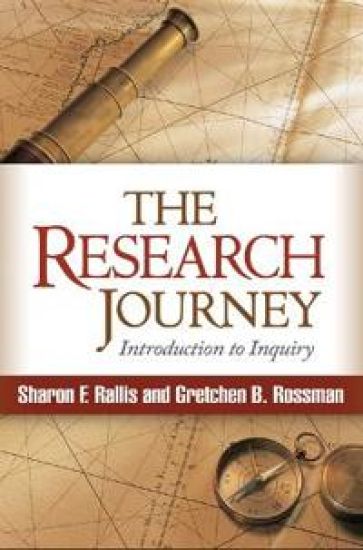
Designed to foster "inquiry-mindedness," this book prepares graduate students to develop a conceptual framework and conduct inquiry projects that are linked to ongoing conversations in a field. The authors examine different ways of knowing and show how to identify a research question; build arguments and support them with evidence; make informed design decisions; engage in reflective, ethical practices; and produce a written proposal or report. Each chapter opens with a set of critical questions, followed by a dialogue among five fictional graduate students exploring questions and concerns about their own inquiry projects; these issues are revisited throughout the chapter. Other useful features include end-of-chapter learning activities for individual or group use.Useful pedagogical features include: *Framing questions for exploration and reflection. *Chapter-opening dialogues that bring in perspectives from multiple disciplines. *Example boxes with detailed cases and questions for the reader. *End-of-chapter activities and experiential exercises that guide readers to develop their own inquiry projects. *Suggestions for further reading.
African-American art has made an increasingly vital contribution to the art of the United States from the time of its origins in early-eighteenth-century slave communities. Folk and decorative arts such as ceramics, furniture, and quilts are discussed alongside fine art -- sculpture, painting, and photography -- produced by African Americans, both enslaved and free, throughout the nineteenth century. Twentieth-century developments are given full coverage, particularly the New Negro Movement of the 1920s, the Era of Civil Rights and Black Nationalism through the 1960s and 1970s, and the emergence of new black artists and theorists in the 1980s and 1990s. New evidence has provided an exciting myriad of perspectives about African-American art, confirming that it represents the culture and society from which it emerges. Professor Patton explores significant issues such as the relationship of art and politics, the influence of galleries and museums, the growth of black universities, critical theory, the impact of artists' collectives, and the assortment of art practices since the 1960s. African-American Art shows that in its cultural diversity and synthesis of cultures it mirrors those in American society as a whole. `African-American Art should be read by teachers, students, and writers, and on the shelves of every library. Professor Patton begins this impressive book with the slave ships that brought Africans to this country and gives evidence of the fine metalworking, carving, carpentry, basketry, weaving, and clay building skills passed from Africa through the works of valued but nameless slave-artisans. She tells how we learned accidentally about a few named artists like the slave, Scipio Moorhead, who in 1773 engraved the only surviving image of poet, Phyllis Wheatley. She describes the portraitists, furniture makers and highly skilled artisans. Sharon Patton follows a path leading from great African formal styles, which, mixed with the powerful expressive force of struggle and opposition, led to distinctive new ideasfrom the quilts of Harriet Powers in the late 1800s to the paintings of Jean Michel Basquiat in the 1980s. She helps the reader to think and search for the evidence of the art-making skills that not only survived the Middle Passage, but the many erasings of the auction block and racism's lack, little and denial. In a fine survey of contemporary African-American art and ideas complete with words from the artists themselvesPatton takes us first through its foundations and the through the movements, people and ideas that surrounded and generated this art. An art historian, curator, and scholar, Patton has produced a volume which, like no other, can be used both as an unusual reference book and a good read on an important part of American art. The illustrations are a special treat.' Emma Amos, Artist Professor of Art, Rutgers University `For a long period of time there has been an acknowledged need for a comprehensive text that integrates the full range of African American artistry, the building crafts, slave craftsmanship, the decorative and the fine arts tradition into one scholarly document. Professor Patton has brought those elements of history into her text that are often omitted in the available texts on the subject of African-American art and much of what she has written is primary information not previously recorded outside the context of social history. The cultural context in which Professor Patton has written accounts of the artistry of African-American artists and craftsmen from the period of American slavery to the present is illuminating, analytically sound, and well documented. She has brought to the attention of the reader a number of topics such as 'Art Institutions and the Artist's Groups' that have not been thoroughly discussed in previous texts on the subject. A subject such as 'The Plantation House', the place where many decorative arts originated in the slave society is a welcomed addition to Professor Patton's historical overview.' David Driskell, Artist Distinguished University Professor of Art, University of Maryland `Sharon Patton has written a much needed text which surveys the broad scope of the history of African-American art from slavery to the present. She has followed a different tack, tracing art themes and their development throughout the history, rather than the influences of specific artists or periods. Thus, she shows how ideas such as crafts, formal painting and sculpture, or architecture, co-existed with equal importance to the culture from the times of the Colonies. In so doing, she breaks down the barrier between folk and formal art, and articulates an interrelationship of both concepts to African-American people and their culture. Her book expands the framework for the visual arts in the United States in the last two centuries.' Professor Keith Morrison, Dean, College of Creative Arts, San Francisco State University
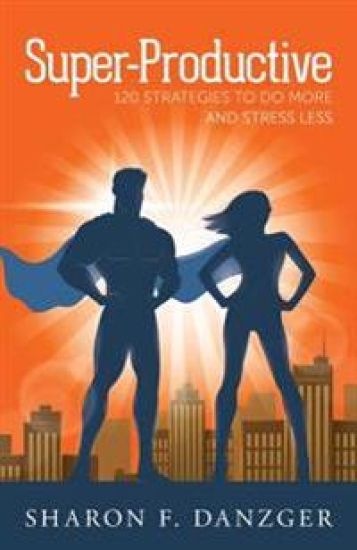
Super-Productive: 120 Strategies to Do More and Stress Less
Sharon F. Danzger
Lane 5 Press
2017
nidottu
Using information-filled rhymes illustrated with incredible photos, the life stories of three Falkland penguins are told in unforgettable detail. This nonfiction book is sure to add to any young reader's knowledge and understanding of this extraordinary seabird. And, adults can enjoy it too .
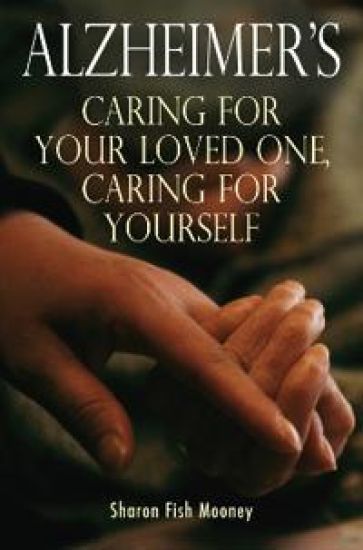
The unthinkable has become a day-to-day reality: your loved one has Alzheimer's disease. How can you cope and where can you turn for help and information? This new edition of Alzheimer's has been updated to cover the most recent developments in our knowledge of this heartrending disease. Drawing on her professional and personal background in caring for people suffering from Alzheimer's, the author offers practical, intelligent advice for caregivers searching for hope.
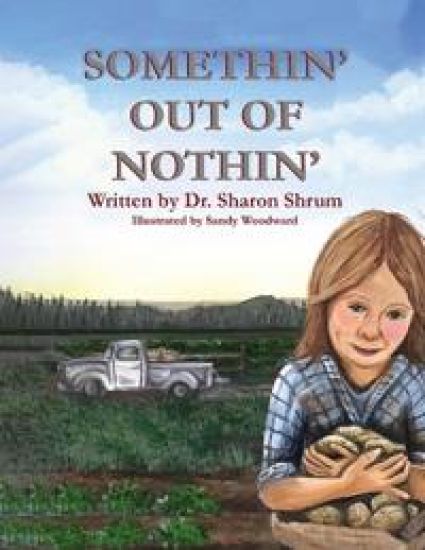
Growing up in poverty a middle school girl had to overcome the opinions of others. The shame she felt when she overheard her teachers talking about her ended up giving her strength and perseverance that she uses to help people in poverty today. Somethin' Out of Nothin' is a much needed story for children living in poverty and for teachers to know how to support students living in poverty.
Último Aliento: Last Breath
Sharon F. Marschall
Createspace Independent Publishing Platform
2014
nidottu