Kirjojen hintavertailu. Mukana 11 244 527 kirjaa ja 12 kauppaa.

Kirjahaku

Etsi kirjoja tekijän nimen, kirjan nimen tai ISBN:n perusteella.

1000 tulosta hakusanalla Sharon L. Johnson

Therapist's Guide to Posttraumatic Stress Disorder Intervention
Sharon Johnson is the author of the best selling Therapist's Guide to Clinical Intervention now in its second edition. In this new book on PTSD, she lends her practical outline format to understanding PTSD assessment, treatment planning, and intervention. The book begins with a summary information on PTSD definition, and prevalence, assessment, and the evidence basis behind different treatment options. The book offers adjunctive skill building resources to supplement traditional therapy choices as well as forms for use in clinical practice. This clinician's guide to diagnosing and treating PTSD is written in a concise format with much of the material in outline or bullet point format, allowing easy understanding of complex material for the busy therapist. The book includes a definition of the disorder, diagnostic criteria, the neurobiology of the disorder, tools and information for diagnosing clients, information on functional impairment, interventions, treatment planning, skill building, and additional clinician resources.
Therapist's Guide to Clinical Intervention

Therapist's Guide to Clinical Intervention

Sharon L. Johnson

Academic Press Inc
2003
nidottu
Therapist's Guide to Clinical Intervention, Second Edition is a must-have reference for clinicians completing insurance forms, participating in managed care, or practicing in treatment settings requiring formalized goals and treatment objectives. This practical, hands-on handbook outlines treatment goals and objectives for each type of psychopathology as defined by the diagnostic and statistical manual by the American Psychiatric Association, identifies skill-building resources, and provides samples of all major professional forms.With over 30% new information, this new edition covers a variety of new special assessments including domestic violence, phobias, eating disorders, adult ADHD, and outpatient progress. New skill-building resources focus on surviving holiday blues, improving communication, overcoming shyness, teaching couples to fight "fair", surviving divorce, successful stepfamilies, managing anger, coping with post traumatic stress, and more. Additional professional forms have been added including treatment plans, a brief mental health evaluation, parent's questionnaire, and a contract for providing service for people with no insurance.
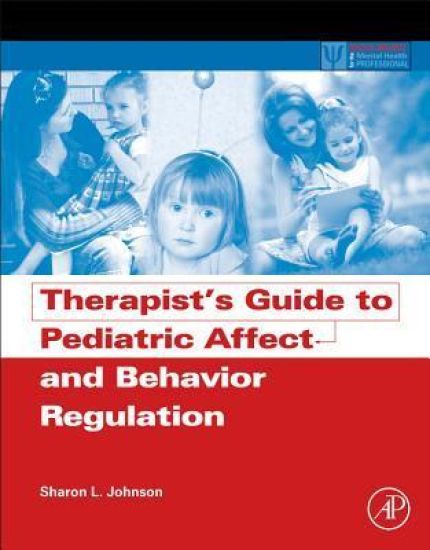
Therapist's Guide to Pediatric Affect and Behavior Regulation
Modeled on the author's bestselling Therapist’s Guide to Clinical Intervention, this new book on child clinical intervention presents much of the material in outline or bullet point format, allowing easy understanding of complex material for the busy therapist. This clinician’s guide to diagnosing and treating disorders in children includes definitions of the disorder, diagnostic criteria, the neurobiology of the disorder, information on functional impairment, treatment planning, and evidence-based interventions. The book additionally offers adjunctive skill building resources to supplement traditional therapy choices as well as forms for use in clinical practice.
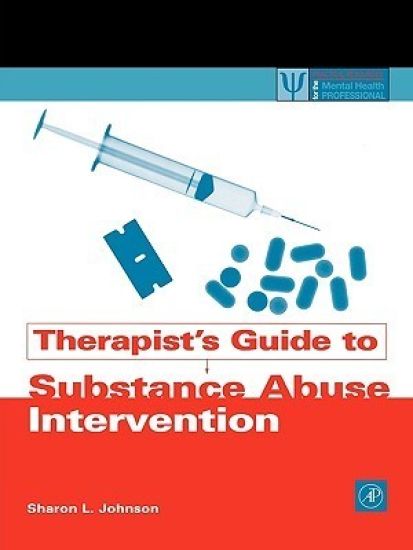
Therapist's Guide to Substance Abuse Intervention

Therapist's Guide to Substance Abuse Intervention

Sharon L. Johnson

Academic Press Inc
2003
nidottu
Author of AP's bestselling "Therapist's Guide to Clinical Intervention" now turns her attention to substance abuse intervention. The book will follow a similar format to her previous book, presenting information in easy to read outline form, with relevant forms, patient questionnaires, checklists, business documents, etc. Part I discusses the social impact of substance abuse and provides a general overview of the physiological and psychological characteristics of abuse, DSM IV definition of abuse, and classifications of the varying types of drugs. Part II is the main section of the book and covers assessment, different stages of abuse/recovery, and treatment choices. Coverage includes the discussion of myriad self help choices (e.g. AA), group therapy, brief therapy, and more. Discussion will also include making a determination of treatment as inpatient or outpatient, and issues relevant to special populations (teenagers, geriatrics, comorbidity patients, etc.). Part III presents skill building resources. Part IV covers prevention, quality assurance, and also includes a glossary.
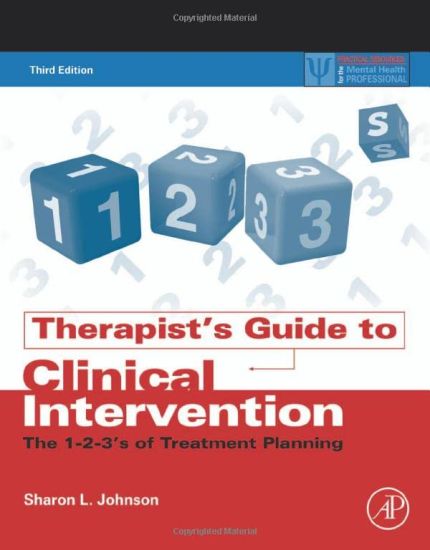
Therapist's Guide to Clinical Intervention

Therapist's Guide to Clinical Intervention

Sharon L. Johnson

Academic Press Inc
2017
nidottu
Therapist’s Guide to Clinical Intervention, Third Edition, is an essential reference for providing clinical services and associated case formulations requiring formalized goals and objectives. It is ideal for use in assessment, treatment, consultation, completing insurance forms, and/or participating in managed care. This practical, hand-on book, outlines treatment goals and objectives for each type of psychopathology as defined by the diagnostic and statistical manual by the American Psychiatric Association. It additionally provides skill-building resources and samples of all major professional forms likely to be used in clinical treatment.The third edition conveniently maps individualized treatment plans utilizing evidence-based best practices and standards of care. Diagnostic information is presented by associated disorder or theme for easier access. New special assessments and skill-building entries are included. Also new are numerous website/URLs associated with research articles, and consumer resources have been provided to complement clinical information and patient education.
Please Hear My Cry: Silent Abuse At The Hands of A Christian Narcissist
I pray each word from the front to the back of this book blesses, inspires, and encourages you. I pray it will also be a resource full of information. I pray you become more aware and understand the real importance of making sure God is in every piece of the equation when it comes to your asking, seeking, pursuing, and waiting on the right mate. Please consult God about everything in your life before you do anything, especially when it comes to covenant and relationship partners. "Trust in the Lord with all thine heart; and lean not unto thine own understanding. In all thy ways acknowledge him, and he shall direct thy paths." (Proverbs 3:5-6). (KJV)
Tooth and Claw

Tooth and Claw

Robert M. Johnson; Sharon L. Gilman; Daniel Abel

PRINCETON UNIVERSITY PRESS
2023
sidottu
A marvelously illustrated look at the most deadly predators on the planetTooth and Claw presents the world’s top predators as you have never seen them before, from big cats and wild dogs to sharks, reptiles, and killer whales. Blending gorgeous photos and illustrations with spellbinding storytelling, this book is packed with the latest facts about these fearsome but often misunderstood animals. It covers apex and other top predators in each major vertebrate family, discussing where and how they live, how they are faring in the modern world, and why they matter. Along the way, the authors share informative and entertaining anecdotes from their decades in the field learning about predators and reveal hard truths about the role humans continue to play in their fate. Tooth and Claw also describes conservation successes and lays out some simple but crucial steps each of us can take to protect these magnificent beasts. Are humans top predators, too? Read this amazing book and find out.Offers an unparalleled look at a side of nature rarely witnessed up closeStunningly illustrated throughout and brimming with fun factsDescribes ultimate vertebrate predators ranging from sharks and reptiles to raptors, cats, dogs, bears, and marine mammalsProvides rare insights into the biology, ecology, and conservation of top predatorsDraws on the latest findings from habitats around the worldConveys the wonders of the natural world with engaging storytelling and lively personal anecdotes
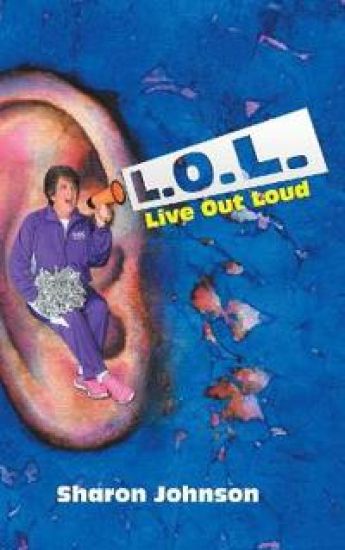
L.O.L.

L.O.L.

Sharon Johnson

Authorhouse
2018
sidottu
Usually, when we see or use this, we are referring to laugh out loud. Funny how we can take a dig at someone and then put LOL. This book (short) will give you a whole new meaning for LOLfunny but true stories (short). My LOL to me means live out loud. My life has been just thatliving out loud with family, in worship, at ball games, and even shopping Sometimes thats good; sometimes its very annoying to others. But as my grandson Peyton as a sixth grader said, Nana, live loud and proud or quiet and dead Because my grandchildren (blessings) have encouraged me to do this book, I ask you: What does your LOL mean in your life?
L.O.L.

L.O.L.

Sharon Johnson

Authorhouse
2018
pokkari
Usually, when we see or use this, we are referring to laugh out loud. Funny how we can take a dig at someone and then put LOL. This book (short) will give you a whole new meaning for LOLfunny but true stories (short). My LOL to me means live out loud. My life has been just thatliving out loud with family, in worship, at ball games, and even shopping Sometimes thats good; sometimes its very annoying to others. But as my grandson Peyton as a sixth grader said, Nana, live loud and proud or quiet and dead Because my grandchildren (blessings) have encouraged me to do this book, I ask you: What does your LOL mean in your life?
Humanity Over Comfort

Humanity Over Comfort

Sharone Brinkley-Parker; Tracey L. Durant; Kendra V. Johnson; Kandice Wilson Taylor; Johari Toe; Lisa N. Jefferson Williams

SAGE PUBLICATIONS INC
2022
nidottu
Increase your racial equity capacity for transformational change The years 2020 - 2021 will be remembered for COVID-19 and racial injustice. COVID illuminated long-standing structural inequities. Increased media focus on police brutality helped fuel a protest movement that underscored the urgency of the moment. In schools, non-profits, and various business sectors, conversations about race and institutional racism are becoming increasingly common. However, most of these conversations are performative and do little to disrupt the status quo. The authors of Humanity Over Comfort aim to move beyond the transactional response of using only conversations to respond to structural inequalities. Alternatively, the authors advance tools that promote transformational change that eliminates the access and opportunity gaps for Black and Brown individuals. Written to cultivate awareness that increases racial equity capacity, this book will help readers Understand historical context and the influence of racism in shaping realityEngage in reflections that connect learning to personal experience Understand the Conscious Anti-Racist Engendering Framework (CARE), which draws from adult learning theory to build community in organizationsLeverage one’s span of control to implement practices that incrementally work to dismantle systems of oppressionsDirect their increased capacity towards dismantling racially predictable policies and practices Transactional responses to racism perpetuate marginalizing narratives and outcomes and do little to support the humanity of a community, including White members. This book will guide readers towards transformational change to build a system that supports the restoration of our collective humanity.
Coping with Breast Cancer

Coping with Breast Cancer

Sharon L. Manne; Jamie S. Ostroff

Oxford University Press Inc
2008
nidottu
Early stage breast cancer can be stressful and upsetting for both the woman dealing with the disease and her partner. This illness can also place a strain on a couple's relationship. However, couples who are able to provide effective support to one another are more likely to adapt well. Focusing on the couple as a unit can promote effective coping for both patients and their partners. This couples-focused group program aims to improve a couple's functioning as a "team" and provides a supportive environment for couples facing similar breast cancer-related issues. Over the course of six sessions, couples learn support and communication skills, as well as techniques to manage stress and enhance intimacy. Modelling by group leaders and other couples facilitates skill acquisition. With continued use, the skills learned in group can have long-term benefits for couples. This guide, along with the corresponding workbook, provides all the information needed to implement this group program. It contains step-by-step instructions for running the group, as well as sample group leader dialogues, in-session activities, and homework assignments. The couple's workbook is designed to be shared by both partners as they work together through the program. By the end of the six weeks, couples will be better equipped as a team to cope with the stresses of cancer and the challenges that may lie ahead.
Coping with Breast Cancer: Workbook for Couples

Coping with Breast Cancer: Workbook for Couples

Sharon L. Manne; Jamie S. Ostroff

Oxford University Press Inc
2008
nidottu
As a couple coping with early stage breast cancer, it is important that you face the stresses and challenges together. To support each other during this difficult time, you and your partner may benefit from enhancing your relationship and stress management skills. This couples-focused group program will help you and your partner become an effective coping "team". To strengthen your relationship, you and your partner will learn how to better support and communicate with one another using proven relationship-enhancing techniques. You will also learn to strengthen emotional intimacy by taking the time to discover each other's needs and engaging in "wish list" activities to bring you closer together. Relaxation techniques will help you and your partner manage stress so you are better able to deal with the challenges of cancer. The group format provides a supportive environment and gives you a chance to learn from other couples dealing with similar issues. This workbook is designed to be shared by you and your partner, as you work together as a team. It includes all the forms and information you will need during the six-week program. Exercises will help you apply what you learned in group to coping with cancer and your life as a couple. By the end of the program you will have acquired many useful skills that will benefit you, your partner, and your relationship for a lifetime.
Cultural Locations of Disability

Cultural Locations of Disability

Sharon L. Snyder; David T. Mitchell

University of Chicago Press
2005
sidottu
In "Cultural Locations of Disability", Sharon L. Snyder and David T. Mitchell trace how disabled people came to be viewed as biologically deviant. The eugenics era pioneered techniques that managed "defectives" through the application of therapies, invasive case histories, and acute surveillance techniques, turning disabled persons into subjects for a readily available research pool. In its pursuit of normalization, eugenics implemented disability regulations that included charity systems, marriage laws, sterilization, institutionalization, and even extermination. Enacted in enclosed disability locations, these practices ultimately resulted in expectations of segregation from the mainstream, leaving today's disability politics to focus on reintegration, visibility, inclusion, and the right of meaningful public participation. Snyder and Mitchell reveal cracks in the social production of human variation as aberrancy. From our modern obsessions with tidiness and cleanliness to our desire to attain perfect bodies, notions of disabilities as examples of human insufficiency proliferate. These disability practices infuse more general modes of social obedience at work today. Consequently, this important study explains how disabled people are instrumental to charting the passage from a disciplinary society to one based upon regulation of the self.
Cultural Locations of Disability

Cultural Locations of Disability

Sharon L. Snyder; David T. Mitchell

University of Chicago Press
2005
nidottu
In "Cultural Locations of Disability", Sharon L. Snyder and David T. Mitchell trace how disabled people came to be viewed as biologically deviant. The eugenics era pioneered techniques that managed "defectives" through the application of therapies, invasive case histories, and acute surveillance techniques, turning disabled persons into subjects for a readily available research pool. In its pursuit of normalization, eugenics implemented disability regulations that included charity systems, marriage laws, sterilization, institutionalization, and even extermination. Enacted in enclosed disability locations, these practices ultimately resulted in expectations of segregation from the mainstream, leaving today's disability politics to focus on reintegration, visibility, inclusion, and the right of meaningful public participation. Snyder and Mitchell reveal cracks in the social production of human variation as aberrancy. From our modern obsessions with tidiness and cleanliness to our desire to attain perfect bodies, notions of disabilities as examples of human insufficiency proliferate. These disability practices infuse more general modes of social obedience at work today. Consequently, this important study explains how disabled people are instrumental to charting the passage from a disciplinary society to one based upon regulation of the self.
University and College Women's Centers

University and College Women's Centers

Sharon L. Davie

Greenwood Press
2001
sidottu
Women's centers in universities and colleges in the United States are flourishing as they transform individuals and institutions, providing education that combines the academic and activist, and develop leadership that is rooted in collaboration. This handbook provides insights from women's center directors at institutions across the country on how best to build a women's center that can improve the quality of women's experiences in college. The best centers aid universities and colleges in responding to particularly difficult challenges in higher education related to gender. Practical information is included on specific programs, providing an overview of successful centers. The institutional environments examined are diverse, ranging from research universities to community colleges, from large state-supported land grant institutions to small private liberal arts colleges. Chapters focusing on the structural issues of creating and transforming a center explore how to create crucial components of women's centers, such as leadership development programs, distinguished artists and scholars series, information and referral services for non-traditional students, women-centered counseling services, resource libraries, publications, and internship programs that involve both academic and experiential learning. Other chapters focus on social issues and the intransigent and wide-ranging challenges facing centers, including for example, sexual harassment, racial divisions among students, the climate for women in the sciences, and the need to build a stronger sense of intellectual community outside the classroom. The directors of women's centers around the country respond to these and other problems, and provide an overview of some of the best practices related to responding to a number of very difficult challenges in higher education.