

Kirjahaku
Etsi kirjoja tekijän nimen, kirjan nimen tai ISBN:n perusteella.
1000 tulosta hakusanalla Sharon R M Johnson


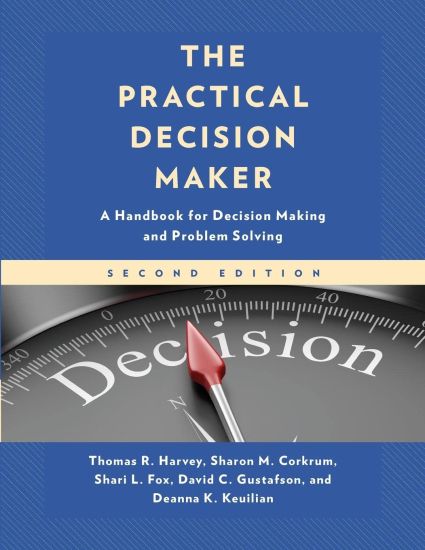
The Practical Decision Maker
Thomas R. Harvey; Sharon M. Corkrum; Shari L. Fox; David C. Gustafson; Deanna K. Keuilian
BLOOMSBURY PUBLISHING PLC
2022
nidottu
Are you lacking confidence in your decision-making abilities? Leaders often have to make challenging decisions, such as how do we improve employee morale? How do we decrease employee turnover? What needs to happen to ensure employees and stakeholders feel safe to return to work during a pandemic? Great leaders understand how to balance emotion with reason and to make decisions that positively impact their organizations. Making good decisions in difficult situations is no small feat. Change, uncertainty, stress, and anxiety all contribute to this dilemma. The Practical Decision Maker: A Handbook for Decision Making and Problem Solving, 2nd edition will help you achieve a high level of confidence and give you practical tools to make faster and more effective practical decisions. Decision-making has never been more critical, especially for today’s leaders. Updates to this new edition include additions to reflect 21st century technology and the divisive times leaders are in today.
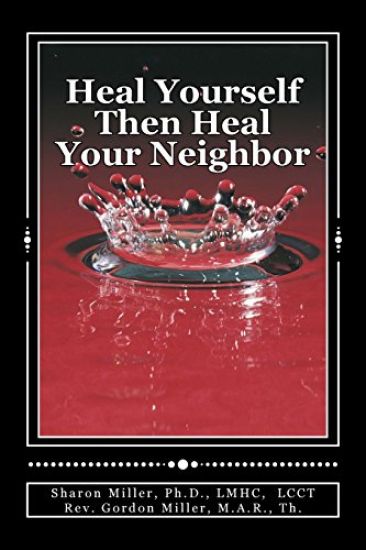
Heal Yourself Then Heal Your Neighbor: A Five-Step Approach to Emotional Healing
M. a. R. Th Gordon S. Miller; Sharon L. Miller Ph. D.
Heritage Ink Publishing
2016
nidottu
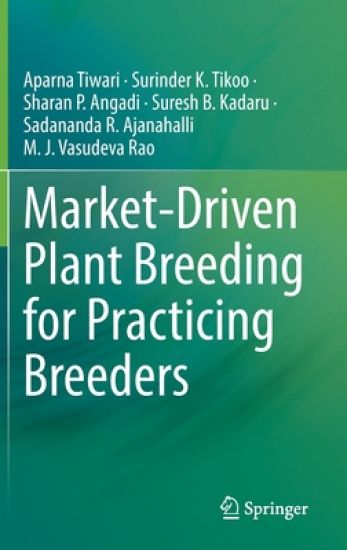
Market-Driven Plant Breeding for Practicing Breeders
Aparna Tiwari; Surinder K. Tikoo; Sharan P. Angadi; Suresh B. Kadaru; Sadananda R. Ajanahalli; M. J. Vasudeva Rao
SPRINGER VERLAG, SINGAPORE
2023
sidottu
This book highlights the technicalities of plant breeding in a seed-business environment and explains the crucial aspects of the value chain. It educates the readers on how to initiate, participate, sustain national and international agreements for material transfer, how consortia work to facilitate germplasm accessibility, and how to set visionary goals to develop a superior plant varieties. The book covers the aspects such as how to conduct disease screening trials at hot spots, preparing an operational budget, and how to accelerate product advancement. Plant breeding is broadly defined as manipulation of plant genotypes to create phenotypes that are beneficial to mankind. It helps to achieve food security and sustainability by developing high yielding, climate-resilient, nutritious varieties of crops and hence is able to address unprecedented challenges like rising global population, diminishing genetic biodiversity, and uncertainties of the weather . This book is an extraordinary source of information starting from goal-genesis to market-oriented product-profiling and help readers to accelerate/enhance? their work/professional performance more effectively. This book will be very useful to practicing plant breeders at various levels in the public and private sectors. It is a must-have book for potential plant breeders who enter plant breeding profession just after the completion of their formal plant breeding education.
Market-Driven Plant Breeding for Practicing Breeders
Aparna Tiwari; Surinder K. Tikoo; Sharan P. Angadi; Suresh B. Kadaru; Sadananda R. Ajanahalli; M. J. Vasudeva Rao
SPRINGER VERLAG, SINGAPORE
2024
nidottu
This book highlights the technicalities of plant breeding in a seed-business environment and explains the crucial aspects of the value chain. It educates the readers on how to initiate, participate, sustain national and international agreements for material transfer, how consortia work to facilitate germplasm accessibility, and how to set visionary goals to develop a superior plant varieties. The book covers the aspects such as how to conduct disease screening trials at hot spots, preparing an operational budget, and how to accelerate product advancement. Plant breeding is broadly defined as manipulation of plant genotypes to create phenotypes that are beneficial to mankind. It helps to achieve food security and sustainability by developing high yielding, climate-resilient, nutritious varieties of crops and hence is able to address unprecedented challenges like rising global population, diminishing genetic biodiversity, and uncertainties of the weather . This book is an extraordinary source of information starting from goal-genesis to market-oriented product-profiling and help readers to accelerate/enhance? their work/professional performance more effectively. This book will be very useful to practicing plant breeders at various levels in the public and private sectors. It is a must-have book for potential plant breeders who enter plant breeding profession just after the completion of their formal plant breeding education.
What does it mean to be free? We invoke the word frequently, yet the freedom of countless Americans is compromised by social inequalities that systematically undercut what they are able to do and to become. If we are to remedy these failures of freedom, we must move beyond the common assumption, prevalent in political theory and American public life, that individual agency is best conceived as a kind of personal sovereignty, or as self-determination or control over one's actions. In Freedom Beyond Sovereignty, Sharon R Krause shows that individual agency is best conceived as a non-sovereign experience because our ability to act and affect the world depends on how other people interpret and respond to what we do. The intersubjective character of agency makes it vulnerable to the effects of social inequality, but it is never in a strict sense socially determined. The agency of the oppressed sometimes surprises us with its vitality. Only by understanding the deep dynamics of agency as simultaneously non-sovereign and robust can we remediate the failed freedom of those on the losing end of persistent inequalities and grasp the scope of our own responsibility for social change. Freedom Beyond Sovereignty brings the experiences of the oppressed to the center of political theory and the study of freedom. It fundamentally reconstructs liberal individualism and enables us to see human action, personal responsibility, and the meaning of liberty in a totally new light.
Over the past thirty years, the way Americans experience death has been dramatically altered. The advent of medical technology capable of sustaining life without restoring health has changed where, when, and how we die. In this revelatory study, medical anthropologist Sharon R. Kaufman examines the powerful center of those changes: the hospital, where most Americans die today. She deftly links the experiences of patients and families, the work of hospital staff, and the ramifications of institutional bureaucracy to show the invisible power of the hospital system in shaping death and our individual experience of it. In doing so, Kaufman also speaks to the ways we understand what it means to be human and to be alive. “An act of courage and a public service.”—San Francisco Chronicle “This beautifully synthesized and disquieting account of how hospital patients die melds disciplined description with acute analysis, incorporating the voices of doctors, nurses, social workers, and patients in a provocative analysis of the modern American quest for a ‘good death.’”—Publishers Weekly “Kaufman exposes the bureaucratic and ethical quandaries that hover over the modern deathbed.”—Psychology Today “Kaufman’s analysis illuminates the complexity of the care of critically ill and dying patients [and] the ambiguity of slogans such as ‘death with dignity,’ ‘quality of life,’ and ‘stopping life support.’ . . . Thought-provoking reading for everyone contemplating the fate of us all.”—New England Journal of Medicine

Among the many studies of aging and the aged, there is comparatively little material in which the aged speak for themselves. In this compelling study, Sharon Kaufman encourages just such expression, recording and presenting the voices of a number of old Americans. Her informants tell their life stories and relate their most personal feelings about becoming old. Each story is unique, and yet, presented together, they inevitable weave a clear pattern, one that clashes sharply with much current gerontological thought. With this book, Sharon Kaufman allows us to understand the experience of the aging by listening to the aged themselves.Kaufman, while maintaining objectivity, is able to draw an intimate portrait of her subjects. We come to know these people as individuals and we become involved with their lives. Through their words, we find that the aging process is not merely a period of sensory, functional, economic, and social decline. Old people continue to participate in society, and—more important—continue to interpret their participation in the social world. Through themes constructed from these stories, we can see how the old not only cope with losses, but how they create new meaning as they reformulate and build viable selves. Creating identity, Kaufman stresses, is a lifelong process.Sharon Kaufman's book will be of interest and value not only to students of gerontology and life span development, and to professionals in the field of aging, but to everyone who is concerned with the aging process itself. As Sharon Kaufman says, "If we can find the sources of meaning held by the elderly and see how individuals put it all together, we will go a long way toward appreciating the complexity of human aging and the ultimate reality of coming to terms with one's whole life.

There are many important questions raised in this book. The fragmentation of medical values, whether a good doctor requires as much knowledge of the person as of the disease, the claims created by a scientific medicine dependent upon the largesse of government grants, the conversion of medicine from ""cottage industry"" to entrepreneurial endeavour, all had their beginnings in medicine's Golden Age. Their heirs, today's practitioners, may have mistaken technology for their task, science for their religion, and business for their creed, but if the spirit of the physicians in this book wins out, medicine's Golden Age is yet in the future.

Faith and Reason Unified in the World of Faith Phenomena
Sharon R Bradley-Munn
Lulu.com
2019
pokkari
"Sex Seen" provides a complex and intriguing account of the changes that have taken place in the social construction of sexuality during the past century. Focusing on Sacramento, California, at the dawn of the twentieth century, Sharon Ullman juxtaposes early cinema, vaudeville performances, and popular newspapers and magazines with insights drawn from close interpretations of transcripts from Sacramento court cases. She demonstrates how attitudes that emerged in the popular discourse - ideas about gender roles, female desire, prostitution, divorce, and homosexuality - often found complex and contradictory expression in the courts. As judges, prosecutors, defense attorneys, and juries all weighed in with differing opinions, the courtroom itself became a site of multiple discourses that attempted to make sense of a growing sexual chaos. In tracing the birth of modern sexuality, Ullman chronicles the dynamics of social change during a unique cultural moment and explains the shifts in the sexual ethos of turn-of-the-century America. Instead of telling the familiar story of steadily increasing liberation of sexual urges, Ullman chronicles the complex confusions and negotiations of an increasingly public sexual discourse. She relates how laws against cross-dressing gained force at the same time that female impersonation became popular in vaudeville acts, how images of prostitutes were changed by the commercialization of the female body in advertising and film, and how visible expression of female desire was submerged in rape and divorce proceedings. Ullman blends social history, textual analysis, and film and performance criticism to explain how sexuality and desire became an essential part of personal identity in this century. Her keen, accessible account of a community on the brink of the modern era offers a provocative interpretation of the seeds of our sexual present.

Histories of local African American Houses of Worship in Buffalo and throughout Western New York

Without Permission - A Spiritual Journey to Healing
Sharon R. Wells
Angel Wings Publications, LLC
2011
nidottu
Why do men and women sometimes risk everything to defend their liberties? What motivates principled opposition to the abuse of power? In Liberalism with Honor, Sharon Krause explores honor as a motive for risky and difficult forms of political action. She shows the sense of honor to be an important source of such action and a spring of individual agency more generally.Krause traces the genealogy of honor, including its ties to conscientious objection and civil disobedience, beginning in old-regime France and culminating in the American civil rights movement. She examines the dangers intrinsic to honor and the tensions between honor and modern democracy, but demonstrates that the sense of honor has supported political agency in the United States from the founders to democratic reformers such as Elizabeth Cady Stanton and Martin Luther King, Jr.Honor continues to hold interest and importance today because it combines self-concern and personal ambition with principled higher purposes, and so challenges the disabling dichotomy between self-interest and self-sacrifice that currently pervades both political theory and American public life.

Must we put passions aside when we deliberate about justice? Can we do so? The dominant views of deliberation rightly emphasize the importance of impartiality as a cornerstone of fair decision making, but they wrongly assume that impartiality means being disengaged and passionless. In Civil Passions, Sharon Krause argues that moral and political deliberation must incorporate passions, even as she insists on the value of impartiality. Drawing on resources ranging from Hume's theory of moral sentiment to recent findings in neuroscience, Civil Passions breaks new ground by providing a systematic account of how passions can generate an impartial standpoint that yields binding and compelling conclusions in politics. Krause shows that the path to genuinely impartial justice in the public sphere--and ultimately to social change and political reform--runs through moral sentiment properly construed. This new account of affective but impartial judgment calls for a politics of liberal rights and democratic contestation, and it requires us to reconceive the meaning of public reason, the nature of sound deliberation, and the authority of law. By illuminating how impartiality feels, Civil Passions offers not only a truer account of how we deliberate about justice, but one that promises to engage citizens more effectively in acting for justice.
Must we put passions aside when we deliberate about justice? Can we do so? The dominant views of deliberation rightly emphasize the importance of impartiality as a cornerstone of fair decision making, but they wrongly assume that impartiality means being disengaged and passionless. In Civil Passions, Sharon Krause argues that moral and political deliberation must incorporate passions, even as she insists on the value of impartiality. Drawing on resources ranging from Hume's theory of moral sentiment to recent findings in neuroscience, Civil Passions breaks new ground by providing a systematic account of how passions can generate an impartial standpoint that yields binding and compelling conclusions in politics. Krause shows that the path to genuinely impartial justice in the public sphere--and ultimately to social change and political reform--runs through moral sentiment properly construed. This new account of affective but impartial judgment calls for a politics of liberal rights and democratic contestation, and it requires us to reconceive the meaning of public reason, the nature of sound deliberation, and the authority of law. By illuminating how impartiality feels, Civil Passions offers not only a truer account of how we deliberate about justice, but one that promises to engage citizens more effectively in acting for justice.
The case for an eco-emancipatory politics to release the Earth from human domination and free us all from lives that are both exploitative and exploitedHuman domination of nature shapes every aspect of our lives today, even as it remains virtually invisible to us. Because human beings are a part of nature, the human domination of nature circles back to confine and exploit people as well—and not only the poor and marginalized but also the privileged and affluent, even in the world’s most prosperous societies. Although modern democracy establishes constraints intended to protect people from domination as the arbitrary exercise of power, it offers few such protections for nonhuman parts of nature. The result is that, wherever we fall in human hierarchies, we inevitably find ourselves both complicit in and entrapped by a system that makes sustainable living all but impossible. It confines and exploits not only nature but people too, albeit in different ways. In Eco-Emancipation, Sharon Krause argues that we can find our way to a better, freer life by constraining the use of human power in relation to nature and promoting nature’s well-being alongside our own, thereby releasing the Earth from human domination and freeing us from a way of life that is both exploitative and exploited, complicit and entrapped. Eco-emancipation calls for new, more-than-human political communities that incorporate nonhuman parts of nature through institutions of representation and regimes of rights, combining these new institutional arrangements with political activism, a public ethos of respect for nature, and a culture of eco-responsibility.
The case for an eco-emancipatory politics to release the Earth from human domination and free us all from lives that are both exploitative and exploitedHuman domination of nature shapes every aspect of our lives today, even as it remains virtually invisible to us. Because human beings are a part of nature, the human domination of nature circles back to confine and exploit people as well—and not only the poor and marginalized but also the privileged and affluent, even in the world’s most prosperous societies. Although modern democracy establishes constraints intended to protect people from domination as the arbitrary exercise of power, it offers few such protections for nonhuman parts of nature. The result is that, wherever we fall in human hierarchies, we inevitably find ourselves both complicit in and entrapped by a system that makes sustainable living all but impossible. It confines and exploits not only nature but people too, albeit in different ways. In Eco-Emancipation, Sharon Krause argues that we can find our way to a better, freer life by constraining the use of human power in relation to nature and promoting nature’s well-being alongside our own, thereby releasing the Earth from human domination and freeing us from a way of life that is both exploitative and exploited, complicit and entrapped. Eco-emancipation calls for new, more-than-human political communities that incorporate nonhuman parts of nature through institutions of representation and regimes of rights, combining these new institutional arrangements with political activism, a public ethos of respect for nature, and a culture of eco-responsibility.