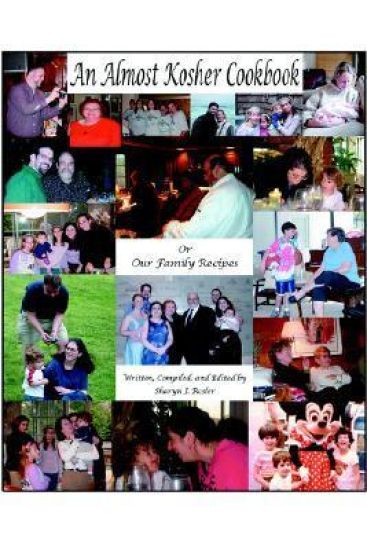
"An Almost Kosher Cookbook" is for anyone who wants to prepare good food that is usually Kosher or Kosher-style. Author Sharyn J. Rosler brings a new dimension to Jewish cuisine by reconstructing some old recipes and adding new recipes to bring diversity to the Jewish kitchen. She has utilized recipes from family, friends, and her own repertoire and offers them for enjoyment and years of tasty delights. Rosler presents a unique array of recipes that will prove useful to everyone who wishes to expand their knowledge of cooking.
Thomas F. DeFrantz; Lynn Garafola; Dakin Hart; Constance Valis Hill; Analisa Leppanen-Guerra; Valerie J. Mercer; Jacqueline Shea Murphy; Kenneth John Myers; E. Bruce Robertson; Sharyn Rohlfsen Udall
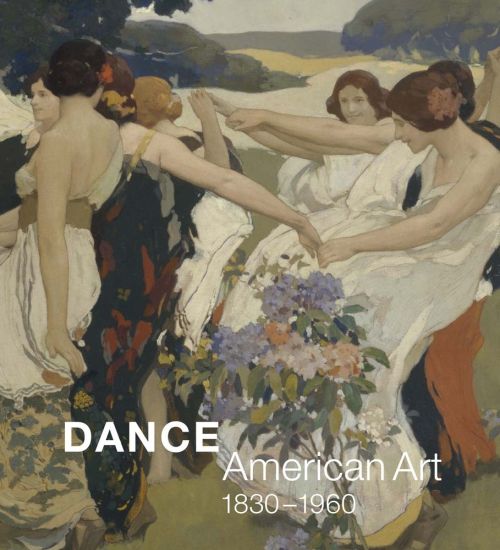
A landmark examination of the art and artists inspired by American dance from 1830 to 1960 As an enduring wellspring of creativity for many artists throughout history, dance has provided a visual language to express such themes as the bonds of community, the allure of the exotic, and the pleasures of the body. This book is the first major investigation of the visual arts related to American dance, offering an unprecedented, interdisciplinary overview of dance-inspired works from 1830 to 1960. Fourteen essays by renowned historians of art and dance analyze the ways dance influenced many of America’s most prominent artists, including George Caleb Bingham, William Sidney Mount, Winslow Homer, John Singer Sargent, Cecilia Beaux, Isamu Noguchi, Aaron Douglas, Malvina Hoffman, Edward Steichen, Arthur Davies, William Johnson, and Joseph Cornell. The artists did not merely represent dance, they were inspired to think about how Americans move, present themselves to one another, and experience time. Their artwork, in turn, affords insights into the cultural, social, and political moments in which it was created. For some artists, dance informed even the way they applied paint to canvas, carved a sculpture, or framed a photograph. Richly illustrated, the book includes depictions of Irish-American jigs, African-American cakewalkers, and Spanish-American fandangos, among others, and demonstrates how dance offers a means for communicating through an aesthetic, static form. Distributed for the Detroit Institute of ArtsExhibition Schedule:Detroit Institute of Arts (03/20/16–06/12/16)Denver Art Museum (07/10/16-10/02/16)Crystal Bridges Museum of American Art (10/22/16-01/16/17)
Sharon's book is detailed, organized, and easy-to-follow. She wrote her "How-To" book because she wanted to help others enjoy first time success with resin. In addition to her step-by-step presentation, she also provides her readers with a humorous look at her own personal ups and downs using resin. "It's so important to take oneself lightly", she says, "I've enjoyed life more, I think, because I'm able to laugh at myself". Sharon is a life-long artist, but her journey with resin jewelry, has just begun. She shares how, and why she decided to explore this medium during the first chapter of her book. In the beginning, Sharon experimented with many different materials and techniques, taking photographs of her acrylic paintings, and then downsizing them to fit into various jewelry styles, shapes and sizes. Sharon's husband writes "The Business Bonus Chapter". Lyle has over 40 years of successful business experience. He provides a brief overview into marketing your handcrafted jewelry.
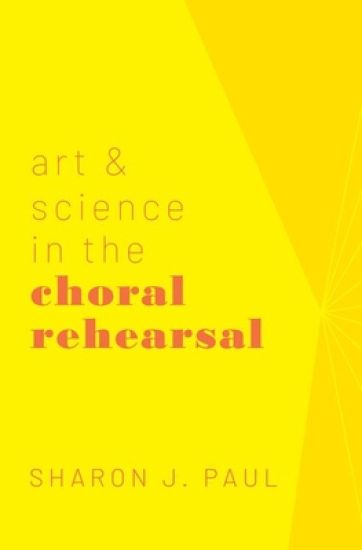
In recent decades, cognitive neuroscience research has increased our understanding of how the brain learns, retains, and recalls information. At the same time, social psychologists have developed insights into group dynamics, exploring what motivates individuals in a group to give their full effort, or conversely, what might instead inspire them to become free loaders. Art and Science in the Choral Rehearsal explores the idea that choral conductors whobetter understand how the brain learns, and how individuals within groups function, can lead more efficient, productive, and enjoyable rehearsals. Armed with this knowledge, conductors can create rehearsal techniques which take advantage of certain fundamental brain and social psychology principles. Through suchapproaches, singers will become increasingly engaged physically and mentally in the rehearsal process. Art and Science in the Choral Rehearsal draws from a range of scientific studies to suggest and encourage effective, evidence-based techniques, and can help serve to reset and inspire new approaches toward teaching. Each chapter outlines exercises and creative ideas for conductors and music teachers, including the importance of embedding problem solving into rehearsal, the use of multiple entry points for newly acquired information, techniques to encourage an emotional connection tothe music, and ways to incorporate writing exercises into rehearsal. Additional topics include brain-compatible teaching strategies to complement thorough score study, the science behind motivation, the role imagination plays in teaching, the psychology of rehearsal, and conducting tips and advice. All of thesebrain-friendly strategies serve to encourage singers' active participation in rehearsals, with the goal of motivating beautiful, inspired, and memorable performances.
In recent decades, cognitive neuroscience research has increased our understanding of how the brain learns, retains, and recalls information. At the same time, social psychologists have developed insights into group dynamics, exploring what motivates individuals in a group to give their full effort, or conversely, what might instead inspire them to become free loaders. Art and Science in the Choral Rehearsal explores the idea that choral conductors whobetter understand how the brain learns, and how individuals within groups function, can lead more efficient, productive, and enjoyable rehearsals. Armed with this knowledge, conductors can create rehearsal techniques which take advantage of certain fundamental brain and social psychology principles. Through suchapproaches, singers will become increasingly engaged physically and mentally in the rehearsal process. Art and Science in the Choral Rehearsal draws from a range of scientific studies to suggest and encourage effective, evidence-based techniques, and can help serve to reset and inspire new approaches toward teaching. Each chapter outlines exercises and creative ideas for conductors and music teachers, including the importance of embedding problem solving into rehearsal, the use of multiple entry points for newly acquired information, techniques to encourage an emotional connection tothe music, and ways to incorporate writing exercises into rehearsal. Additional topics include brain-compatible teaching strategies to complement thorough score study, the science behind motivation, the role imagination plays in teaching, the psychology of rehearsal, and conducting tips and advice. All of thesebrain-friendly strategies serve to encourage singers' active participation in rehearsals, with the goal of motivating beautiful, inspired, and memorable performances.
Using a consistent theoretical orientation, Families Across Time explores the "life course" approach to family life--including parent-child, spousal, and sibling relationships. It reflects the diversity represented in contemporary families as they grapple with changes and transitions in family relationships during the life cycle. This volume of seventeen original essays is unique in its integration of research, theory, and application in a variety of topic areas related to family life. The contributors to this volume, which include prominent and established scholars as well as young professionals, address a diversity of family forms as well as all stages of family life--in contrast to the traditional emphasis on early stages. The essays in this book represent a breadth of content and scholarship; at the same time, they are student-friendly and highly readable. Extensive case scenarios and other examples augment the content of each essay, serving as examples to enhance the reader's ability to understand the challenges families face over the life course. The book's approach emphasizes transitions and tasks in lieu of focusing on the characteristics of stages associated with family development. Different aspects of family life are examined up-close and across the life span for each topic covered. Editors Sharon J. Price, Patrick C. McKenry, and Megan J. Murphy offer introductions to each section, which frame each set of essays and provide context for the reader. Discussion questions are included at the end of each chapter.
In the past ten years, China has rapidly emerged as South Korea's most important economic partner. With the surge of goods and resources between the two countries, large waves of Korean migrants have opened small ethnic firms in Beijing's Koreatown, turning a once barren wasteland into the largest Korean enclave in the world. The Cost of Belonging: An Ethnography of Solidarity and Mobility in Beijing's Koreatown fills a critical gap in East Asian and migration studies through an investigation of how the rise of transnationalism has impacted the social and economic lives of South Koreans searching for wealth and stability in China. Based off in-depth ethnographic fieldwork, this book studies the tensions, relationships, and perceptions in the ethnic enclave of Wangjing between Korean Chinese cultural brokers and South Koreans starting out as entrepreneurs. Expanding upon classic anthropological theories of community and space, Yoon broadens our understanding of the migrant middle class in the era of global capitalism and neoliberal markets. The transnational enclave was once an incubator of the middle class dream, but does it continue to provide its inhabitants with the emotional resources to achieve both wealth and community? The Cost of Belonging challenges theoretical assumptions that transnationalism leads to a renaissance of ethnic identity and greater opportunities for migrants, unpacking how these entrepreneurs and dreamers coexist and evolve, both emotionally and financially, in the era of globalization. The Cost of Belonging is a volume in the series ISSUES OF GLOBALIZATION: CASE STUDIES IN CONTEMPORARY ANTHROPOLOGY, which examines the experiences of individual communities in our contemporary world. Each volume offers a brief and engaging exploration of a particular issue arising from globalization and its cultural, political, and economic effects on certain peoples or groups.
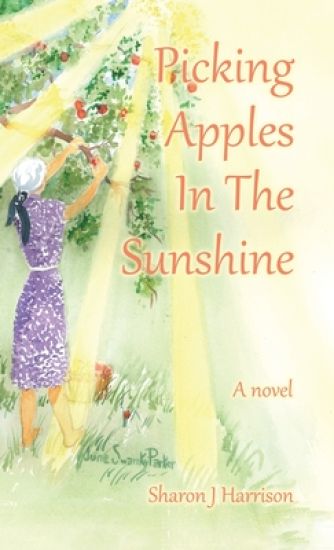
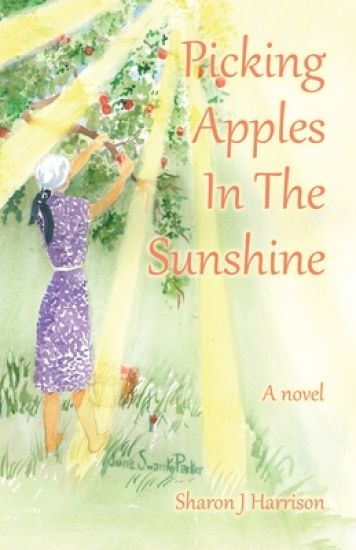
Wake up You cannot get out of your life These thoughts arose in Laura Bennett's mind and startled her into wakefulness. Her mind and body come alive as she repeats the words to herself. The feelings of despair and hopelessness, over the sudden death of her husband, temporarily lessened, giving her clarity and motivation. Determined to take responsibility for her life, Laura seizes her fledgling courage and makes a decision that shocks and surprises her family and friends. She quits her long-term job, leases her home, and sets out on a new journey. Optimism, tempered with a dash of apprehension accompanies Laura along the way. But will a brief encounter, with a motorcyclist that September day, be a catalyst that shakes both their lives? Jacob Wieter, on his journey, wants to make peace with a painful past, Will his intentions to start over and fulfill the longings of his heart, come to fruition? Engaged in her new adventure, Laura discovers life is full of possibilities and satisfaction. There is sunshine everywhere when she is willing to look at life differently and to face the fact she is the shadow that obscures her happiness. Experience comes from living, but when faced with a choice, will her doubts overtake her and the unlived future? Will her newfound courage fail her? In a long slow waltz and neither, Laura nor Jacob are sure how it will end.
Wake up You cannot get out of your life These thoughts arose in Laura Bennett's mind and startled her into wakefulness. Her mind and body come alive as she repeats the words to herself. The feelings of despair and hopelessness, over the sudden death of her husband, temporarily lessened, giving her clarity and motivation. Determined to take responsibility for her life, Laura seizes her fledgling courage and makes a decision that shocks and surprises her family and friends. She quits her long-term job, leases her home, and sets out on a new journey. Optimism, tempered with a dash of apprehension accompanies Laura along the way. But will a brief encounter, with a motorcyclist that September day, be a catalyst that shakes both their lives? Jacob Wieter, on his journey, wants to make peace with a painful past, Will his intentions to start over and fulfill the longings of his heart, come to fruition? Engaged in her new adventure, Laura discovers life is full of possibilities and satisfaction. There is sunshine everywhere when she is willing to look at life differently and to face the fact she is the shadow that obscures her happiness. Experience comes from living, but when faced with a choice, will her doubts overtake her and the unlived future? Will her newfound courage fail her? In a long slow waltz and neither, Laura nor Jacob are sure how it will end.
This book examines the relationship between race and class and considers how these two concepts articulate to determine class relationships in British society. Daye argues that race in the form of structural racism, plays a significant role at two levels. Firstly, it serves to determine the class position of black labour and secondly, determines the type of race, class and political consciousness generated by black labour in Britain. Using empirical data this volume provides an important contribution to the race/class debate.
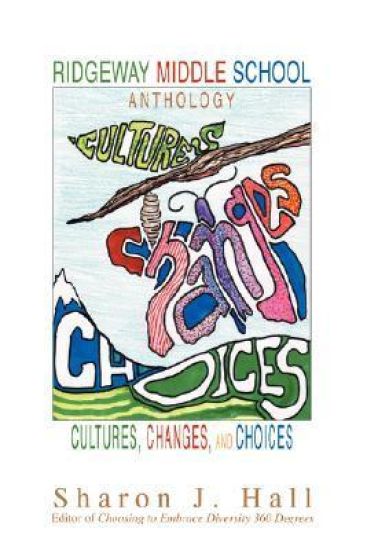
Mississippi Middle School Anthology is a collection of students’ writings completed during the 2001-2002 school year at Horn Lake Middle School, Horn Lake, Mississippi. Eighty-three eighth grade English students, a number from Hispanic and African-American backgrounds, were given the opportunity to submit poems, short stories, and personal essays for publication. The teacher and editor, Mrs. Sharon Hall, M. S. Ed, selected the best of these and, after, proofreading and editing and arranging them by genre, sent them to a publisher. The project turned out to be a unique learning experience for both the students and their teacher. Obviously, the finished book will be of great interest to school libraries, teachers, college students enrolled in teacher education programs, middle schoolers the world over, and child psychologists. And because Sharon Hall is convinced that MMS Anthology is a creative teaching device for all levels, she has this to say to other educators: "It is very important for students to see their work displayed in some attractive way, and those teachers who require their students to turn in written work would do well to consider this quite inexpensive motivational device. For specific information on how to publish student anthologies, send an email to me at [email protected]."
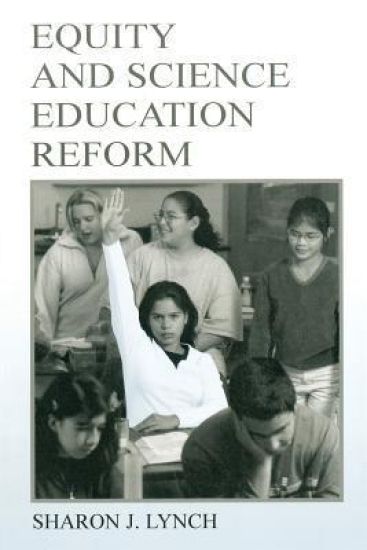
This lucid, accessible, thought-provoking discussion of issues related to equity in science education reform is for science educators, including idealists and exacting pragmatists, who are dedicated to exploring what it means to put into practice rallying cries like "science literacy for all," "equity and excellence," and "standards-based reform." Intended as an enjoyable and stimulating read, as opposed to a comprehensive summary of everything ever written about equity in science education, it is a response to the new science education standards and reforms, with their goal of science literacy for all. If this goal is to be taken seriously, the implications are immense. A central purpose of this book is to project and discuss how achieving this goal would affect science education reform and vice versa. The work is research based, using statistics, tables, and figures drawn primarily from NSF reports and other public information documents to provide a foundation for equity concerns. However, these statistics are not the main focus of the book. Rather, they are used to make a case, backed by pertinent research, the literature on best practice, and provocative examples from schools and classrooms. Charts, tables, and graphic organizers provide visual evidence and enhance the arguments presented. Moving from research-based studies to classroom stories, Equity and Science Education Reform encourages readers to think about the complexity of the issues. No easy answers or quick fixes are offered. Researching across "identity" areas and attempting to unite them in a discussion that recognizes both the common elements as well as important distinctions, it provides a comprehensive picture of equity concerns across ethnicity, class, gender, and location. Encompassing a broad literature in science education, reform and policy, and equity issues, it offers an "equity schema" as a unifying concept to guide discussion throughout. This book is based, in part, on a series of nine background papers that were commissioned by the American Association for the Advancement of Science's Project 2061 and the summary document, which was written by the author of this book. But it goes far beyond the original study to provide a consistent, coherent, and lively discussion that vividly illustrates the issues raised by the experiences of teachers and students who are struggling with equity principles in the context of science education reform.
This lucid, accessible, thought-provoking discussion of issues related to equity in science education reform is for science educators, including idealists and exacting pragmatists, who are dedicated to exploring what it means to put into practice rallying cries like "science literacy for all," "equity and excellence," and "standards-based reform." Intended as an enjoyable and stimulating read, as opposed to a comprehensive summary of everything ever written about equity in science education, it is a response to the new science education standards and reforms, with their goal of science literacy for all. If this goal is to be taken seriously, the implications are immense. A central purpose of this book is to project and discuss how achieving this goal would affect science education reform and vice versa. The work is research based, using statistics, tables, and figures drawn primarily from NSF reports and other public information documents to provide a foundation for equity concerns. However, these statistics are not the main focus of the book. Rather, they are used to make a case, backed by pertinent research, the literature on best practice, and provocative examples from schools and classrooms. Charts, tables, and graphic organizers provide visual evidence and enhance the arguments presented. Moving from research-based studies to classroom stories, Equity and Science Education Reform encourages readers to think about the complexity of the issues. No easy answers or quick fixes are offered. Researching across "identity" areas and attempting to unite them in a discussion that recognizes both the common elements as well as important distinctions, it provides a comprehensive picture of equity concerns across ethnicity, class, gender, and location. Encompassing a broad literature in science education, reform and policy, and equity issues, it offers an "equity schema" as a unifying concept to guide discussion throughout. This book is based, in part, on a series of nine background papers that were commissioned by the American Association for the Advancement of Science's Project 2061 and the summary document, which was written by the author of this book. But it goes far beyond the original study to provide a consistent, coherent, and lively discussion that vividly illustrates the issues raised by the experiences of teachers and students who are struggling with equity principles in the context of science education reform.