

Kirjahaku
Etsi kirjoja tekijän nimen, kirjan nimen tai ISBN:n perusteella.
1000 tulosta hakusanalla Shawn M. Allen

The Allen-Shaw Reading Room: Budding Writers Anthology Volume 1
D. M. Clark T. McLean K. Johnson
Createspace Independent Publishing Platform
2018
nidottu
The Budding Writers Anthology is a compilation of prose and poetry submitted to the Allen-Shaw Foundation's yearly Creative Writing Competition. Aspiring writers from the island of Jamaica shared their personal and authentic pieces in stirring, emotive and rhythmic verses.
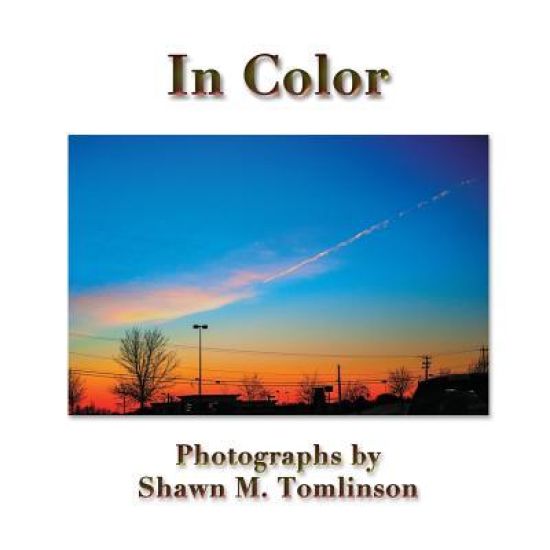
I seem to be writing a lot of books lately. I guess it is because I did not have the opportunity to do so until this year, 2015. This particular collection is a group of photographs rather than an actual written book. It came about because of a desire to have some of my photographic work in print outside of newspapers. Thousands of my images have been published in newspapers over the years as part of my work as an editor, reporter and photographer. But, as we used to say in newspapers, it has to be perfect today, but tomorrow it's fish wrap. Not exactly permanent. The photos in this book span a period of 10 years, from 2005 to 2015 and none of them appeared in newspapers. - Shawn M. Tomlinson, Oct. 18, 2015
METAPHYSICS 1 WORKBOOK (for Shawn M. Cohen's 12 week Metaphysics Course)
Shawn Margaret Cohen
Blurb
2018
pokkari
Shawn M. Cohen's Metaphysics 1 Workbook has 12 weeks of classes in Psychic Development, Spiritual Awakening and the many tools along the Path, such as Meditation, Meet Your Guide, Candle Magic, Seeing Auras, Laying on the Hands for Healing, Dream Work, Palmistry, Dowsing with a Pendulum, Inner development and Holistic Health via Accupressure, Iridology for Diagnosis and Reflexology and more This book is available for all Students in Metaphysics 1, and those who would like to learn these tools for personal, psychic and spiritual growth. Shawn M. Cohen is a Psychic, Medium, Metaphysician, Tarot Reader and Author of "The Tarot, The Tarot Workbook," a Past Life Regressionist, a Blogger, Artist, Poet and Creator/ Host of Cafe Esoterica Radio on Blog Talk Radio.com airing every Thursday from 7-9:00pm UK, 2-4pm EST. If you would like to study with Shawn please email her at: [email protected] Her 12 week Metaphysics classes are available worldwide on Zoom media. Please get in touch for information and when the next class begins. Tarot and Astrology Classes also available.

Do You See What I'm Saying; Walking by Faith. Our goal is for the reader to take away this spiritual and biblical fact, Faith Must be Released in WORDS. For years faith has been taught in the church. People have been encouraged to believe. But we have not heard many teachings about WORDS or saying what you believe. Faith Equals the Word of God Hebrews 11:1 reads, "Now faith is the substance of things...." Therefore, all things were made by faith. In other words, "everything that you see around you was made by faith." Do You See What I'm Saying? I wrote this book, Do You See What I'm Saying? To help reduce barriers, that may prevent you from reaching your purpose. To encourage all people who are struggling emotionally, physically, spiritually, or even mentally and are looking for helpful information and resources to assist with their spiritual journey towards purpose. Child of God, you can overcome every negative circumstance in life by getting the Word in your spirit and speaking the promises of God. You see, faith is more than just believing. To have the God kind of faith you must believe, trust, and rely on His Word. In God's Word, you'll find the wisdom necessary to accomplish the Lord's will for your life.
I'm Not Famous But My Life Is: 90% Mostly True Stories Of My Famous Life
Shawn M. Hardwick
Createspace Independent Publishing Platform
2011
nidottu

Contemporary discussion surrounding the role of the internet in society is dominated by words like: internet freedom, surveillance, cybersecurity, Edward Snowden and, most prolifically, cyber war. Behind the rhetoric of cyber war is an on-going state-centered battle for control of information resources. Shawn Powers and Michael Jablonski conceptualize this real cyber war as the utilization of digital networks for geopolitical purposes, including covert attacks against another state's electronic systems, but also, and more importantly, the variety of ways the internet is used to further a state's economic and military agendas. Moving beyond debates on the democratic value of new and emerging information technologies, The Real Cyber War focuses on political, economic, and geopolitical factors driving internet freedom policies, in particular the U.S. State Department's emerging doctrine in support of a universal freedom to connect. They argue that efforts to create a universal internet built upon Western legal, political, and social preferences is driven by economic and geopolitical motivations rather than the humanitarian and democratic ideals that typically accompany related policy discourse. In fact, the freedom-to-connect movement is intertwined with broader efforts to structure global society in ways that favor American and Western cultures, economies, and governments. Thought-provoking and far-seeing, The Real Cyber War reveals how internet policies and governance have emerged as critical sites of geopolitical contestation, with results certain to shape statecraft, diplomacy, and conflict in the twenty-first century.

Contemporary discussion surrounding the role of the internet in society is dominated by words like: internet freedom, surveillance, cybersecurity, Edward Snowden and, most prolifically, cyber war. Behind the rhetoric of cyber war is an on-going state-centered battle for control of information resources. Shawn Powers and Michael Jablonski conceptualize this real cyber war as the utilization of digital networks for geopolitical purposes, including covert attacks against another state's electronic systems, but also, and more importantly, the variety of ways the internet is used to further a state's economic and military agendas. Moving beyond debates on the democratic value of new and emerging information technologies, The Real Cyber War focuses on political, economic, and geopolitical factors driving internet freedom policies, in particular the U.S. State Department's emerging doctrine in support of a universal freedom to connect. They argue that efforts to create a universal internet built upon Western legal, political, and social preferences is driven by economic and geopolitical motivations rather than the humanitarian and democratic ideals that typically accompany related policy discourse. In fact, the freedom-to-connect movement is intertwined with broader efforts to structure global society in ways that favor American and Western cultures, economies, and governments. Thought-provoking and far-seeing, The Real Cyber War reveals how internet policies and governance have emerged as critical sites of geopolitical contestation, with results certain to shape statecraft, diplomacy, and conflict in the twenty-first century.
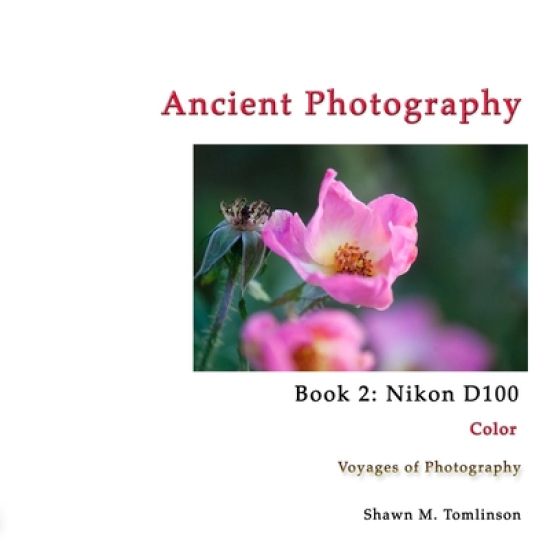
The D100 was Nikon's first "consumer-level" DSLR, in fact only its second solo DSLR outing. As with the D1, the company got some things wrong on the D100. It's OK, they fixed the problems in the followup Nikon D70. The Nikon D100 is a good camera with a resolution of 6.1 megapixels. You don't need more than 6 megapixels to get really good images. I started working with the D100 the moment I got it. I wanted to find out what all the fuss was about. See, a kind of cult has grown up around the D100. As I went through all of the D100 images I shot from the day I got it to the present, I kind-of understood why. Some of these images I would swear were shot with much newer cameras. The sharpness and color are pretty damned good. I'm certainly happy with them. And with the Nikon D100
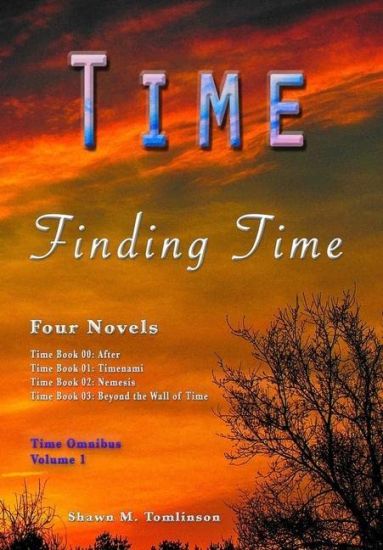
It all began with the end of the world. Martin Fahy and friends made it out of the cities, past earthquakes, hurricanes, people with guns, to the Adirondacks where they hoped to sit out The Fall. The world became very dangerous. Some of them stepped up, often reluctantly, to fight for a future. Martin and his friends became heroes, legends, despite not really wanting to be. He had been a failed, well, everything, but he became a legendary leader. He left the sanctuary to live quietly in the desert. Instead, he found blasted to the 1800s, facing a cataclysm bigger than The Fall. It wasn't his mission. It should have been the Time Agents handling it. It wasn't. Martin Fahy again stepped up. It wasn't all bad. He met the love of his life, a girl named Chloe, born in 1829. Once the two of them were together, they formed a force - with the Time Agents and Martin's colleagues - that took on Time itself. This first omnibus collects the first four novels in the Time series. The mission continues...
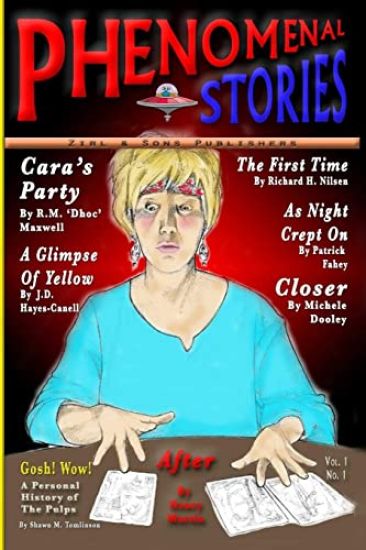
There's nothing like holding a pulp magazine; smelling that wonderful smell of the decaying acidic paper, seeing the garish brightly colored cover, looking for the names that became legends. Since 1978, I always wanted to create, edit, design and publish my own "pulp" speculative fiction - science fiction, fantasy, horror, weird, cyberpunk, etc. - magazine. I've tried many times. I know it's a ridiculous pursuit, especially since magazines themselves virtually are extinct as of 2018. Reading the non-fiction in the pulps is a glimpse into how scientists and writers thought the future would happen. The way the future was. This is an attempt to feel a little of that. It may or may not be a one-off, depending upon how many writers I can get to contribute. At least one issue, the one you hold in your hands, of Phenomenal Stories does exist, and that's one more pulp magazine than existed before. Perhaps one day, you can read this and think, hmm, that's the way the future was.

In this second issue of Phenomenal Stories, we continue the Cyberpunk serial 'Closer' and the more traditional science fiction serial 'After: The End of the World's Not All It's Cracked Up To Be.' Richard H. Nilsen returns with a horror story in collaboration with Shawn M. Tomlinson titled "The 9 Corners." It takes place at Nine Corners Lake in the Adirondacks. J.D. Hayes-Canell is back, too, with another horror tale, this one titled, "Julie in a Jar." The story of Robert and Cara continues with "A Visitor in Arkham." Over on the non-fiction side, there's Gosh Wow A Personal History of the Pulps Chapter 2: The Start of It All. And Shawn M. Tomlinson rounds out the issue with his Hitchhiker in Time column, The Lurking Fear, about H.P. Lovecraft and the need to write.
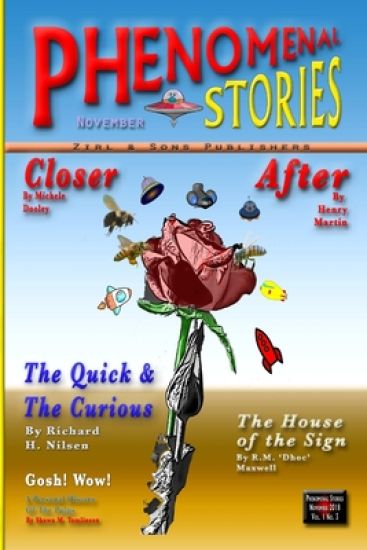
This third issue of Phenomenal Stories features the conclusion of the three-part cyberpunk short novel, 'Closer, ' and continues the science fiction end of the world novel, 'After.' In the short story department, Richard H. Nilsen tells the odd tale of "The Quick & the Curious," and the saga of Robert & Cara continues in the Robert W. Chambers-inspired tale, "The House of the Sign." The editor takes a look at "That Lovecraft Bunch," and 'Gosh Wow A Personal History of the Pulps' continues with part 3. Phenomenal Stories is a modern-day tribute to the science fiction/horror/fantasy/speculative pulp magazines of the 1920s, 1930s and 1940s.

Phenomenal Stories, Vol. 1, No. 2 - Special Collectors' Edition
Shawn M Tomlinson
Lulu.com
2018
sidottu
In this second issue of Phenomenal Stories, we continue the Cyberpunk serial 'Closer' and the more traditional science fiction serial 'After: The End of the World's Not All It's Cracked Up To Be.' Richard H. Nilsen returns with a horror story in collaboration with Shawn M. Tomlinson titled "The 9 Corners." It takes place at Nine Corners Lake in the Adirondacks. J.D. Hayes-Canell is back, too, with another horror tale, this one titled, "Julie in a Jar." The story of Robert and Cara continues with "A Visitor in Arkham." Over on the non-fiction side, there's Gosh Wow A Personal History of the Pulps Chapter 2: The Start of It All. And Shawn M. Tomlinson rounds out the issue with his Hitchhiker in Time column, The Lurking Fear, about H.P. Lovecraft and the need to write.
Phenomenal Stories, Vol. 1, No. 3 - Special Collectors' Edition
Shawn M Tomlinson
Lulu.com
2018
sidottu
This third issue of Phenomenal Stories features the conclusion of the three-part cyberpunk short novel, 'Closer, ' and continues the science fiction end of the world novel, 'After.' In the short story department, Richard H. Nilsen tells the odd tale of "The Quick & the Curious," and the saga of Robert & Cara continues in the Robert W. Chambers-inspired tale, "The House of the Sign." The editor takes a look at "That Lovecraft Bunch," and 'Gosh Wow A Personal History of the Pulps' continues with part 3. Phenomenal Stories is a modern-day tribute to the science fiction/horror/fantasy/speculative pulp magazines of the 1920s, 1930s and 1940s.
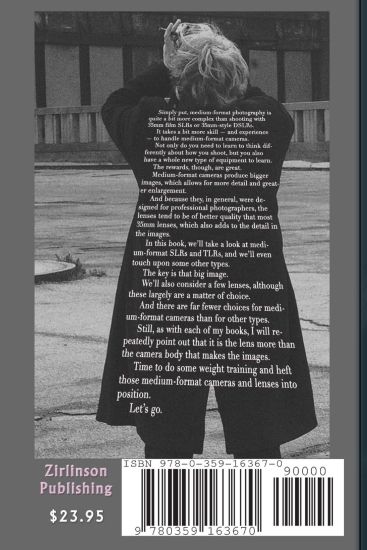
Simply put, medium-format photography is quite a bit more complex than shooting with 35mm film SLRs or 35mm-style DSLRs. It takes a bit more skill - and experience - to handle medium-format cameras. Not only do you need to learn to think differently about how you shoot, but you also have a whole new type of equipment to learn. Medium-format cameras produce bigger images, which allows for more detail and greater enlargement. And because they, in general, were designed for professional photographers, the lenses tend to be of better quality that most 35mm lenses, which also adds to the detail in the images. In this book, we'll take a look at medium-format SLRs and TLRs, and we'll even touch upon some other types. We'll also consider a few lenses, although these largely are a matter of choice. And there are far fewer choices for medium-format cameras than for other types. Time to do some weight training and heft those medium-format cameras and lenses into position. Let's go.
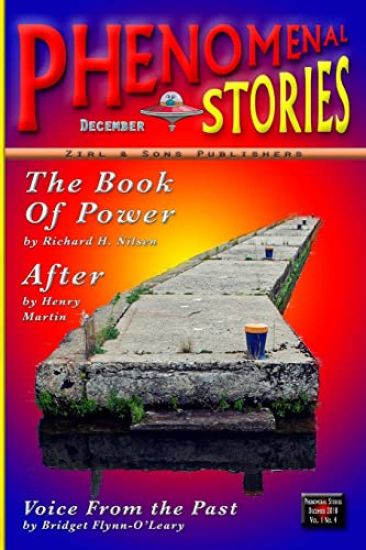
This fourth issue of Phenomenal Stories features the beginning of the six-part young adult fantasy novel, 'The Book of Power, ' by Richard H. Nilsen with illustrations by Linda Naske and a frontispiece by Richard's daughter, Cara Nilsen. The science fiction end of the world novel, 'After, ' continues and we start two new columns in this issue. The first is a travel log by put-upon reporter/columnist J.D. Hayes-Canell titled Dunces & Dragons. The second column is all about writer by Richard H. Nilsen titled The Write Stuff. The first installment is a general guide to writing, but future parts will go into specifics to help the budding writer write. The editor takes a look at Isaac Asimov's three laws of robotics, and 'Gosh Wow A Personal History of the Pulps' continues with part 4. Phenomenal Stories is a modern-day tribute to the science fiction/horror/fantasy/speculative pulp magazines of the 1920s, 1930s and 1940
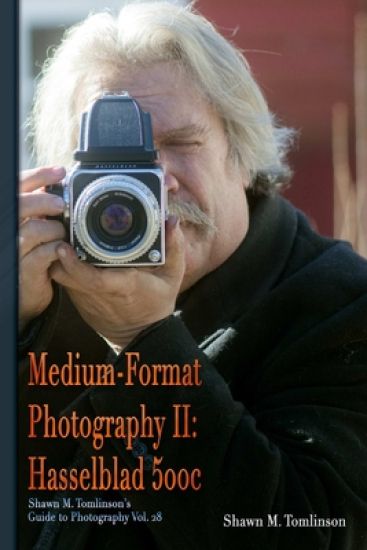
It always was The Dream: The Hasselblad 500c Never mind that it was impractical for a photographer without a studio, or that it cost a bundle, or that the odds against ever owning one were big. There it was, a monolith above all other cameras. It was in the pages of the photo magazines, as advertisements occasionally, as part of an article occasionally. The two beacons of perfection, allegedly, were the Hasselblad 500c and the Leica whatever. For some reason, the Leica never caused a spark in me back then. Now, sure, but not then. Canon, Minolta, Nikon and Olympus cameras also were dreams, at the top of many of my wish lists. The Hasselblad 500c, though... that was on a level all its own. Then, suddenly, digital photography dawned and everyone was ditching their film gear. A fellow photographer said, "Hey, do you still want a Hasselblad because a friend of mine's selling one." It still was more than two weeks' salary, but it was cheaper than it had been. I had to have it. And it is an amazing camera.

Phenomenal Stories features the start of the 4-part fantasy serial, 'The Red Wizard' by J.D. Hayes-Canell. Sequels are in the works. PS presents the 2nd part of the fantasy seroal, 'The Book of Power, ' by Richard H. Nilsen. The science fiction apocalyptic serial, 'After, ' continues, racing to the dramatic end next month. Dunces & Dragons continues its exhausted and exhaustive adventures of put-upon reporter/columnist J.D. Hayes-Canell. Richard H. Nilsen's column, The Write Stuff, is designed to help novice writers out there to get writing. The first installment was a general guide to writing, but in this issue, Richard starts getting into character. Future parts will go into other specifics to help the budding writer write. The editor takes a look at the science fictional world of today, and 'Gosh Wow A Personal History of the Pulps' continues with part 5. Phenomenal Stories is a modern-day tribute to the science fiction/horror/fantasy/speculative pulp magazines of the 1920s, 1930s and 1940

Every sighted person learns to see, to make mental connections with what images come into the eyes, and interpret them as reality. It happens starting pretty much at birth, continues through adolescence and into adulthood. At some point, though, the growth kind a stops. The process continues, but most people make rapid assumptions upon what they see and move on. It's normal and natural. For a photographer, the process is the same to a certain point, but then, to really learn to be a photographer each person must learn to see all over again. This process takes place, no matter the innate talent level. Certainly, some people have more natural abilities to see photographic possibilities than others, but even they must learn to, ahem, focus the ability. This magazine is, again ahem, focused upon the ability to see photographically. It's for both photographers and non-photographers who appreciate the art.