Kirjojen hintavertailu. Mukana 11 244 527 kirjaa ja 12 kauppaa.

Kirjahaku

Etsi kirjoja tekijän nimen, kirjan nimen tai ISBN:n perusteella.

1000 tulosta hakusanalla Shaykh Al-Mufid

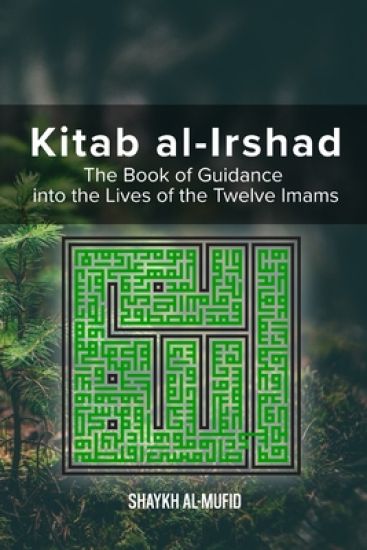
Kitab Al-Irshad

Kitab Al-Irshad

Shaykh Al-Mufid

TAHRIKE TARSILE QUR'AN INC.,U.S.
1982
nidottu
Kitab Al-Irshad: the Book of Guidance into the Lives of the Twelve Imams, is the earliest surviving history of the Shi'ite Imams (as). It briefly describes the circumstances of Imamate, giving an outline of the nass (nomination) of each Imam, the miracle that each performed as evidence of his Imamate, the virtue of each one, the circumstances of his death, and of the disappearance of the last Imam (aj). The first half is devoted to the life of the first Imam, Ali ibn Abi Talib (as). It concentrates particularly on his actions and bravery during the lifetime of the Prophet Muhammad (s) and his family. The second half deals with the other Imams (as).
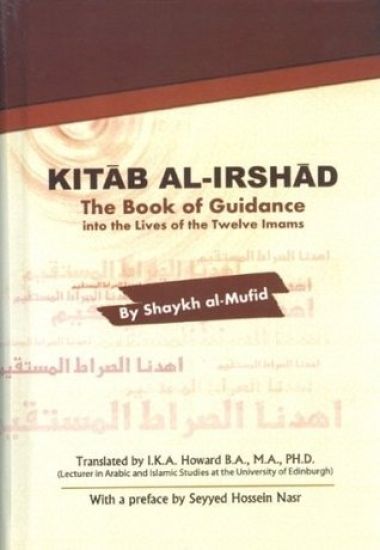
Kitab Al-Irshad

Kitab Al-Irshad

Shaykh Al-Mufid

al-Bura¯q
1982
sidottu
Kitab Al-Irshad: the Book of Guidance into the Lives of the Twelve Imams, is the earliest surviving history of the Shi'ite Imams (as). It briefly describes the circumstances of Imamate, giving an outline of the nass (nomination) of each Imam, the miracle that each performed as evidence of his Imamate, the virtue of each one, the circumstances of his death, and of the disappearance of the last Imam (aj). The first half is devoted to the life of the first Imam, Ali ibn Abi Talib (as). It concentrates particularly on his actions and bravery during the lifetime of the Prophet Muhammad (s) and his family. The second half deals with the other Imams (as).
Shaykh al-Sulami's Wasiyyah

Shaykh al-Sulami's Wasiyyah

Abu Abd Al-Rahman Al-Sulami; Musa Furber

Islamosaic
2020
pokkari
The Wasiyyah of Shaykh Abū ʿAbd al-Raḥmān al-Sulamī contains forty-six counsels. Each counsel concerns actions Allah and His Messenger (may Allah bless him and give him peace) have commanded us to perform or avoid. Each of the actions in the counsels impacts one's physical, moral, and spiritual well-being and development. The book is a lighter, kinder, and gentler companion to his Infamies of the Soul and Their Treatments. Read together, these two provide a practical toolkit and plan for self-care and development.
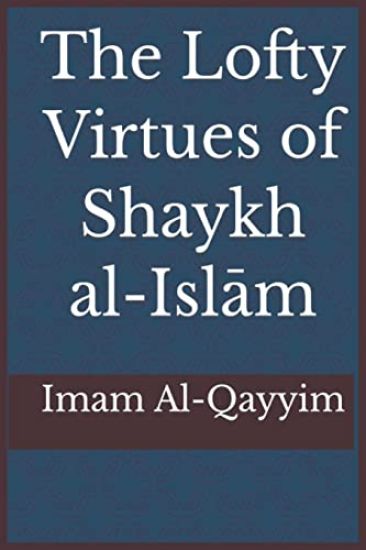
The Lofty Virtues of Shaykh al-Islam Ibn Taymiyyah
If I had to swear standing between the corner of the Ka'bah and the spot of Ibrahim, I would swear that I have not laid my two eyes on anyone like him, nor has he seen anyone as knowledgeable as himself. The author said: When I learned of the death of the scholar and educator of this Ummah - the Imam, the mujtahid, the defender of the pure Shariah and Prophetic Sunnah, Shaykh al-Islam Taqi ad-Din Abi al-Abbas Ahmad bin Abd al-Halim bin Abd as-Salam bin Taymiyyah (may Allah sanctify his soul and brighten his grave) - some of the scholars and those who loved good for the Muslims said to me: You saw and befriended the Shaykh, and you came to know him and his characteristics. If only you could write a few words regarding what you saw in order to benefit whoever of this Ummah comes across them, since mercy descends when we remember the righteous people. So, I responded: I only accompanied him for a few days, and I only know few of this many virtues However, I saw that they intended good and that what they were requesting of me was a right and obligation upon me, as the scholar should be keen to spread and distribute what he thinks will be of value to the Muslims. So, I produced a small effort describing his virtues which will give the intelligent reader an idea of the honor and excellence of this man. I divided it into sections in order that it be a guide to those who reflect, and I included all that I could remember under each one...
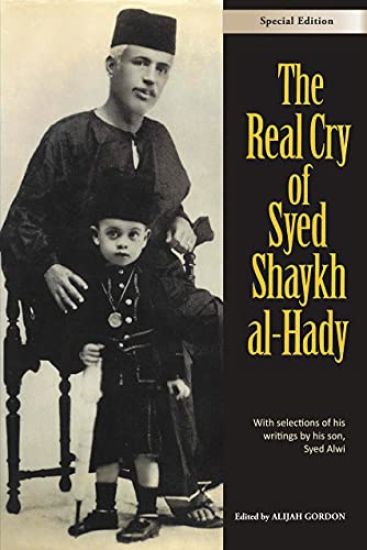
The Real Cry of Syed Shaykh al-Hady

The Real Cry of Syed Shaykh al-Hady

Syed Alwi

Islamic Renaissance Front
2021
pokkari
Thinkers, who within Islamic tradition known as Mujtahid, have played an important role in shaping the great events and changes in history in every part of the world. The extent of their influences went beyond generations, and the spark that was ignited in their writings has inspired a series of rigorous debates and academic studies that last until today.What makes their independent reasoning, or Ijtihad, so dynamic is its polemical nature; so polemical that it has initiated debates and discussions from both camps - the supporters and the detractors - that has lasted for centuries. This makes one of the key criteria for one to be known as a Mujtahid, for their ideas must travel across time and remains relevant long after their own demise. Syed Shaykh al-Hady has definitely met all those criteria and has secured a place as one of the greatest Mujtahid in the history of this land; a man that has a strong root in Islamic tradition and a profound clarity over the socio-political condition of his people.Syed Shaikh al-Hady lived in a period where the hegemonic position of Traditionalist Islam in the Malay-Muslim society was challenged by modernization. The traditionalist ulama' perceived modernity as an ideological enemy; but on the other hand Syed Shaikh al-Hady worked and preached for a synthesis between the two. He believed that Islam and modernization are not antagonistic to each other. Instead, both are useful combination to revive the rational and scientific approach within the Islamic discourse hence making it very attractive to the younger generation of his time. And even until today, Syed Shaykh al-Hady remains as an inspiring figure and an icon for the various contemporary Islamic reformist movements that have resumed the work of islah (reform) and tajdid (renewal) for the betterment of the Muslim society.
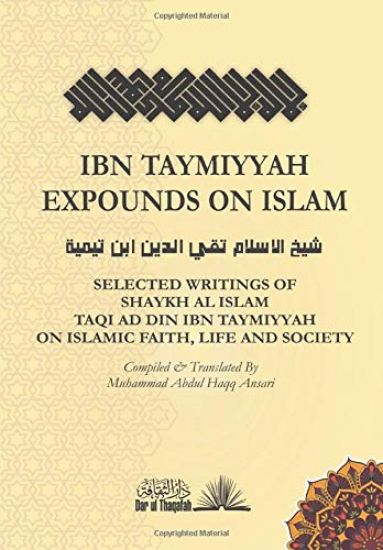
Ibn Taymiyyah Expounds on Islam: Selected Writings of Shaykh Al Islam Taqi Ad Din Ibn Taymiyyah on Islamic Faith, Life and Society
For various reasons the West has not been able to appreciate Ibn Taymiyyah's place in Islam. His criticism of Ash'ari Kalam, Greek logic and philosophy, monistic Sufism, Shi'i doctrines, and Christian faith have proved great obstacles to appreciating his contribution. His way of writing has also been to an extent responsible. Most of his writings are short or long responsa (fatawa) to particular questions, often recurring, put to him by different men at different times, rather than planned, systematic works on particular subjects. This makes the appreciation of his contribution somewhat difficult. Henri Laoust in France was the first to take serious notice of him. Since the publication of his Essay on the Social and Political Doctrines of Ibn Taymiyyah (1939), a few articles and books have appeared on Ibn Taymiyyah's thought, but they are far from giving any clear idea of his overall contribution to Islam, even less of assessing his role in its revival and renewal (tajdid). In fact, there has been little understanding of the concept of tajdid in Islam. This volume consists of selections from various writings of Ibn Taymiyyah included in Majmu' Fatawa Shaykh Al Islam (37 volumes) as well as some of his major works such as Minhaj as Sunnah An Nabawiyyah, Dar Ta'arud al Aql wa-An Naql, kitab Ar Rad alaa Mantaqayyin, Al-Istiqamah, and Iqtida As Sirat Al Mustaqeem. These selections will present a clearer and complete view of Ibn Taymiyyah's concept of Islamic faith, life and society. They are primarily intended to highlight his positive position and mention his criticisms and refutations of other positions only to the extent needed.
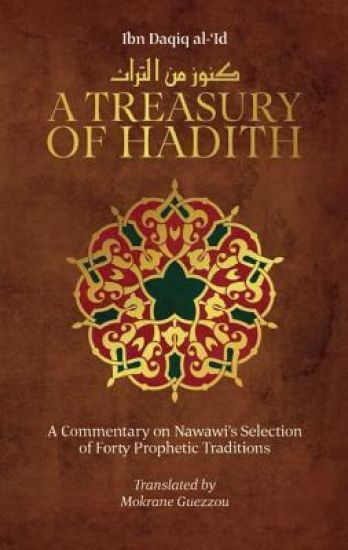
A Treasury of Hadith

A Treasury of Hadith

Shaykh al-Islam Ibn Daqiq al-'Id; Imam Nawawi

Kube Publishing Ltd
2014
sidottu
Imam Nawawi's collection of 42 hadith brings together some of the most important and pivotal Prophetic traditions. Each tradition encapsulates a great rule of the religion of Islam, described by Islamic religious scholars as an 'axis' in Islam. The commentary of the great hadith master Shaykh al-Islam Ibn Daqiq al-'Id is simple but erudite.
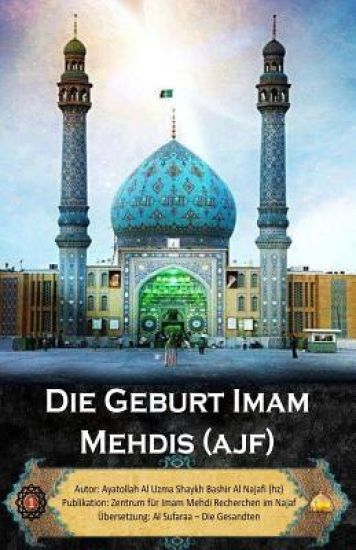
Die Geburt Imam Mehdis (ajf)

Die Geburt Imam Mehdis (ajf)

Ayatollah Al Uzma Shaykh Al Najafi (Hz)

Createspace Independent Publishing Platform
2016
nidottu
Im Buch "Die Geburt Imam Mehdis" von Ayatollah Al Uzma Shaykh Bashir Al Najafi (hz) - der einer der vier gr ten Maraji' unserer Zeit im Najaf ist-, geht es, wie der Titel schon vermuten l sst, um die Geburt des erwarteten 12. Imams (ajf). Hierbei werden Zweifel aufgeworfen, sei es konstruktiver Art oder die blo e Bek mpfung der Akzeptanz seiner (ajf) Existenz seitens seiner Feinde. In diesem Buch wird anschaulich dargestellt, welche sogenannten "Zweifel" simpler Ignoranz, Sturheit, Missinterpretationen und L gen entspringen und l st diese auf. Durch das ganze Buch ziehen sich entsprechende Fragen in Bezug auf seine Geburt, seine Verborgenheit und die Verpflichtungen, die wir Schia mit uns tragen, wenn wir unserem verborgenen Imam (ajf) unterst tzen wollen. Doch nicht nur Zweifel der Gegenseite werden erw hnt, nein, auch Fragen, die sich ein jeder von uns stellen k nnte, werden beantwortet.
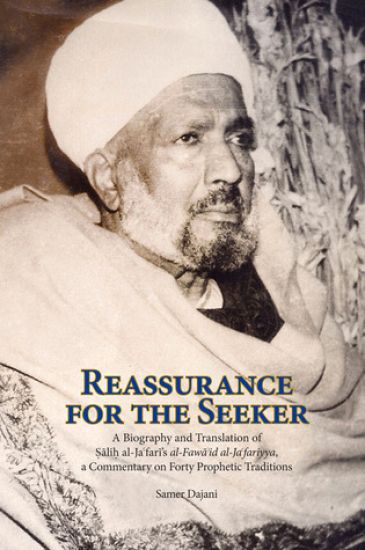
Reassurance for the Seeker

Reassurance for the Seeker

Samer Dajani; Salih Shaykh al-Jafari

Fons Vitae,US
2014
nidottu
This book is a unique collection of 40 Prophetic Traditions by one of the most celebrated teachers and spiritual masters of the Azhar Mosque, Sunni Islam's leading institution of knowledge and its most authoritative voice. It provides a glimpse into the scholarly and spiritual traditions of Islam carried forth into our day. Some may have concluded that the saints and sages of Islam ended with such names as Rumi and Ibn Arabi. The knowledge and spiritual depth reached in past centuries does, in fact, continue into the present day. The book includes a biography of the author, a description of his main teachers, and a beautiful treatise by the author's main teacher on a single Prophetic statement in which the Prophet summarizes his own spiritual states. This volume also deals with death, the afterlife, the waking visions of the Prophet, his ability to pray for and intercede for those alive, and nearness to and friendship with God.
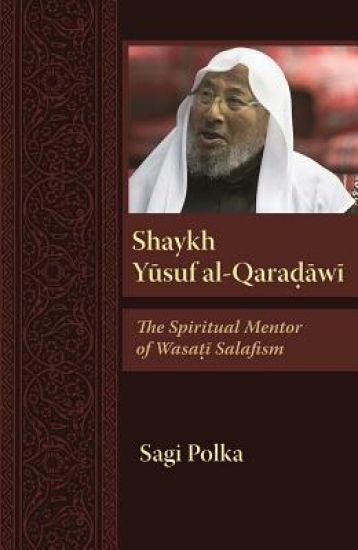
Shaykh Yusuf al-Qaradawi

Shaykh Yusuf al-Qaradawi

Sagi Polka

Syracuse University Press
2019
sidottu
One of the most prominent Sunni clerics in the Muslim world today, Shaykh Yusuf al-Qaradawi influences the discourse around matters central to the Islamic faith and to Islam's relationship with Western culture. As the spiritual leader of the wasat.iyya movement, he is the voice of the moderate current in contemporary Islam. In this volume, Polka explores al-Qaradawi's life and development as a Muslim scholar and likewise examines the philosophy of the wasat.iyya movement. In so doing, Polka compares wasat.iyya to two rival schools of contemporary Islamic thought—jihadist Salafism and secularliberalism—creating a thorough analysis of the Islamic tradition. Polka offers abroad panoramic view of these three trends and their positions on core issues debated in the Muslim world: Islamic reform, democracy and human rights, feminism, the concept of jihad, and suicide attacks and the killing of civilians. Through his writing and preaching, al-Qaradawi has become the Islamic legal authority for Hamas and for the current generation of the Muslim Brotherhood but remains a controversial figure. While his many students admire him as their spiritual mentor, others have accused him of exploiting his pulpit and his media stardom in order to promote terrorism and violence toward both Muslims and non-Muslims. Polka helpfully explores this duality, providing a much-needed comprehensive analysis of al-Qaradawi's philosophy and the centrist approach within Islamic thought.
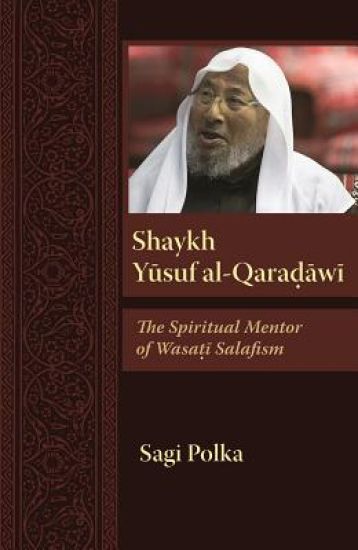
Shaykh Yusuf al-Qaradawi

Shaykh Yusuf al-Qaradawi

Sagi Polka

Syracuse University Press
2019
nidottu
One of the most prominent Sunni clerics in the Muslim world today, Shaykh Yusuf al-Qaradawi influences the discourse around matters central to the Islamic faith and to Islam's relationship with Western culture. As the spiritual leader of the wasat.iyya movement, he is the voice of the moderate current in contemporary Islam. In this volume, Polka explores al-Qaradawi's life and development as a Muslim scholar and likewise examines the philosophy of the wasat.iyya movement. In so doing, Polka compares wasat.iyya to two rival schools of contemporary Islamic thought—jihadist Salafism and secularliberalism—creating a thorough analysis of the Islamic tradition. Polka offers abroad panoramic view of these three trends and their positions on core issues debated in the Muslim world: Islamic reform, democracy and human rights, feminism, the concept of jihad, and suicide attacks and the killing of civilians. Through his writing and preaching, al-Qaradawi has become the Islamic legal authority for Hamas and for the current generation of the Muslim Brotherhood but remains a controversial figure. While his many students admire him as their spiritual mentor, others have accused him of exploiting his pulpit and his media stardom in order to promote terrorism and violence toward both Muslims and non-Muslims. Polka helpfully explores this duality, providing a much-needed comprehensive analysis of al-Qaradawi's philosophy and the centrist approach within Islamic thought.
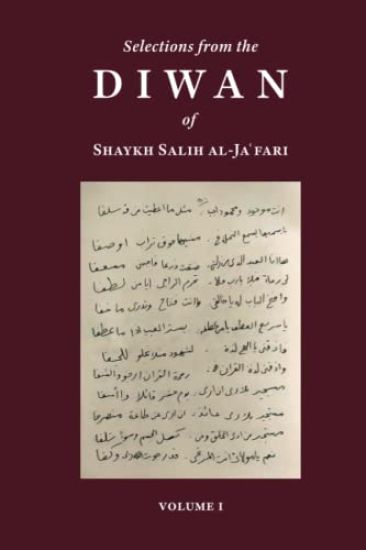
Selections from the Diwan of Shaykh Salih Al-Ja'fari, Volume 1 (Bilingual Edition)
The illustrious Imam and erudite scholar of al-Azhar, Shaykh Salih al-Ja'fari, authored an extraordinary amount of poetry on many subjects. The Shaykh's poems comprise twelve volumes, which grouped according to their subject matter, ranging from the remembrance and glorification of Allah, advice for the one traversing the spiritual path to Allah, exalting the excellence of the Beloved ﷺ and the Ahl al-Bayt, and the virtues of the Path's litanies and salawat.This book contains selected poems from the first of those twelve volumes. These selections focus on the relationship between the shaykh and murid, as well as the virtues of the spiritual path. These poems were specifically selected by Shaykh Muhammad Salih al-Ja'fari, the grandson of Shaykh Salih al-Ja'fari. The core of these selected poems, just as in the shaykh's poetry overall, are from the genre of what is known as madih (praise poetry), in praise of the Messenger of Allah ﷺ and the Ahl al-Bayt.Regarding the methodology of his father, Shaykh 'Abd-al-Ghani al-Ja'fari said the following: "This door of spiritual openings, which our Shaykh traveled, is a clear opening, and whoever traverses it will arrive, and whoever arrives will be connected, and whoever is connected will see and witness, and whoever has witnessed, has intimate discourse, and becomes acquainted, and whoever becomes acquainted, is guided to the Muḥammadan Reality, thus he multiplies love by love. As he ﷺ has said: 'A man is with the one he loves.'"These poems are truly transformative, both for the one who recites them and the one who listens, and represent acceptance and invitation to the presence of the Prophet and his household.This bilingual edition contains the original fully-vowelized Arabic text with an easy-to-read English translation directly following each line, and has been designed for use in regular gatherings of remembrance.Author: Shaykh Salih al-Ja'fariTranslators: Ahmad Ali al-Adani230 pagesISBN: 978-1-8384776-5-3Publisher: Imam Ghazali Publishing
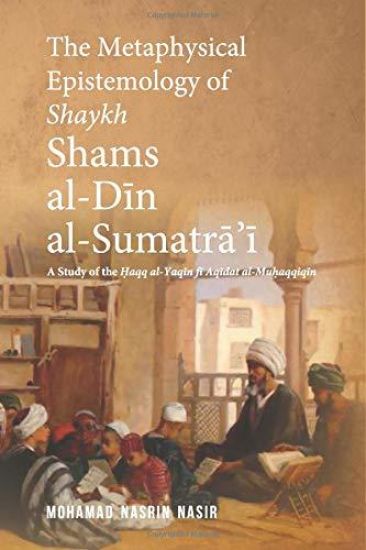
The Metaphysical Epistemology of Shaykh Shams al-Din al-Sumatra'i: A Study of the Haqq al-Yaqin fi Aqidat al-Muhaqqiqin
The last major study on Shams al-Din was in 1946. Since then scholars have shied away from discussing this enigmatic scholar. The reason being he has always been seen as a mere follower of Hamzah Fansuri. This book challenges this view as we attempt to show that Shams al-Din was indeed a scholar of his own right. Where Fansuri was inclined to teach with poetry and a few prose works, Sumatra'I was a master of prose and the Haqq al-Yaqin is a testament to that fact. Quoting from many Sufi authors from the school of Ibn 'Arabi and earlier Sufis, the text is hereby studied and interpreted to easeunderstanding for the modern reader. Though at times difficult the text testifies to the advanced and complex nature of discussion achieved in Malay Sufi literature. The book also provides the historical connections in Acheh that provides the setting for such advanced metaphysical discussion to flourish. This book would be of interest to persons interested in Sufi literature in Malay as well as those working in the academia most particularly the field of Sufism and Islam in Southeast Asia."Mohamad Nasrin's work counts as a major contribution to the study of Sufism in the Malay world, combining a historical approach with an examination of the metaphysics. He exhaustively covers and analyzes all the relevant secondary literature and the historical background; of particular interest is the discussion of links with the Persian and Turkish speaking worlds."Prof. Hamid Algar, Emeritus Professor of Islamic Studies, University of California Berkel