Grab This Deal For The Comics Artist In Your Life For Less Than $10See that girl always doodling and dreaming up stories and plots? She's gonna LOVE the What Happens Next Comic Book For Budding Artists edition, created especially for young artists between 9 and 14 years of age.Bokkaku Dojinshi has created this book as a 6 by 9 inch, perfect pocket book form. Plenty of different templates to explore as well as loads of room to keep track of plot ideas.There is even space for special expression studies of the main characters so the budding artist hits the right emotion in her images every single time.This book is perfect for: mangagraphic novelsSunday funniesanimefan fictionParents and teachers love What Happens Next Comics series for these reasons: helps speech developmentincreases literacydevelops a sense of sequencecreates confidencedevelops an appreciation for artboots creativityOnce you get this book, notice how handy it is - perfect pocket book size means no bulky bags on summer trips or lazy afternoons under a willow tree. All you need is your pencil and ink pen Can't wait to see what you make of your And then... comic book
Lovely Can is a story about how a nine year old girl named Lovely sets up a food drive at school once she discovers that her friend Lupe's family doesn't have food to eat. Lovely becomes discouraged when her fellow classmates do not share her interest or enthusiasm. Lovely's interest to help those in need inspires assistance from her mom, school officials and community members. Lovely discovers her love is her superpower Her soft heart and hard work motivates and engages other students while secretly helping Lupe and her family in the process Lovely Can is part of the Lovely World Series inspiring children to love their neighbor as they love themselves. These books help children discover the importance of planting, cultivating and developing seeds of compassion and service. Lovely World books encourage parents and family members to nurture their children's gifts in love as they grow and give them back to their community. For more about Lovely World visit www.missiontomobilization.com/lovely-world
A unique contribution to library management, this book provides practical advice on making wise decisions about the physical processing of nonprint materials, such as videotapes, computer disks, three-dimensional artifacts, and graphic materials. By drawing on the expertise of librarians around the country, the authors have created an analytical and practical guide for making processing decisions and for carrying out the physical processing of nonprint items.Diverse formats of nonprint materials are common in libraries today, but they present library managers and catalogers with many questions and dilemmas as how best to integrate them into the overall library collection. This professional reference provides practical advice on making wise decisions about the physical processing of nonprint materials such as videotapes, computer disks, three-dimensional artifacts, and graphic materials.The volume sets forth a methodology for informed decision making, presents general options for physical processing that can be applied to any type of nonprint material, and offers practical examples of how to process individual media formats. While the book is broad enough to give general guidance that can be applied to any library and circumstance, it also details particular processing practices for the readers convenience.
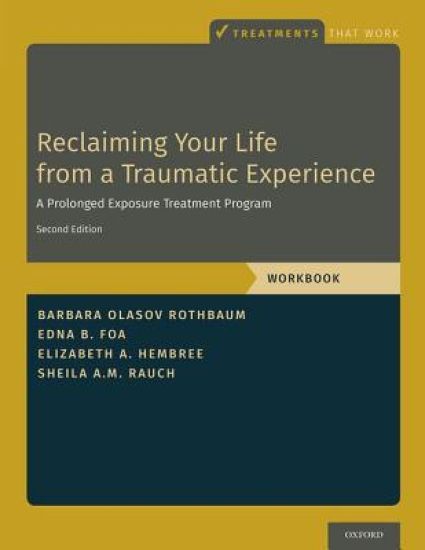
Those who have experienced a traumatic event and are having trouble moving past feelings of fear, shame and guilt, or helplessness may be diagnosed with Posttraumatic Stress Disorder (PTSD). Reclaiming Your Life from a Traumatic Experience: A Prolonged Exposure Treatment Program can help readers to overcome and reclaim their lives from PTSD. Best used in combination with treatment by a mental health professional, the second edition of this Workbook, along with the accompanying Therapist Guide, will help readers work through PTSD regardless of the type of trauma experienced-be it a motor vehicle accident, physical or sexual assault, or combat-related event. The program outlined in this book will reduce anxiety and distress, teaching readers to face memories of trauma while processing their emotions about the event using a scientifically tested and proven technique called Prolonged Exposure Therapy. Instead of avoiding or escaping situations that provoke anxiety and other negative emotions, readers will learn how to reevaluate feelings and beliefs to think differently about their traumatic experiences. Complete with information on PTSD, as well as case examples, self-assessment tools, and homework assignments, Reclaiming Your Life from a Traumatic Experience is an invaluable tool on the road to recovery from PTSD.
Om du har upplevt en eller flera traumatiska händelser och utvecklat posttraumatiskt stressyndrom, ptsd, så kan du behöva hjälp med att återhämta dig från symtom som flashbacks, mardrömmar och lättskrämdhet. Behandlingsmetoden prolonged exposure, en form av kognitiv beteendeterapi, har visat sig vara en hjälpsam behandling för alla former av trauman. Den är vetenskapligt prövad under de senaste 30 åren och rekommenderas som förstahandsval vid ptsd. Författarna till denna arbetsbok har alla en djupgående kunskap om och klinisk erfarenhet av området.Ta tillbaka ditt liv riktar sig direkt till dig som varit med om en eller flera traumatiska händelser och fått diagnosen ptsd. Boken ska användas i en behandling där du samarbetar med din terapeut. Arbetsboken vägleder dig i att under trygga förhållanden stegvis möta minnesbilder och bearbeta de upplevelser som är kopplade till traumat – och att successivt återta ditt liv. På bokens hemsida finns formulär och arbetsblad för nedladdning.Svensk fackgranskning av Maria Bragesjö, leg. psykolog, leg. psykoterapeut, specialist i klinisk psykologi och utbildare i prolonged exposure.Barbara Olasov Rothbaum är professor i psykiatri vid Emory University School of Medicine.Edna B. Foa är professor i klinisk psykologi med inriktning mot psykiatri vid University of Pennsylvania.Elizabeth A. Hembree är biträdande professor i psykologi med inriktning mot psykiatri vid University of Pennsylvania, Perelman School of Medicine.Sheila A.M. Rauch är professor i psykiatri vid vid Emory University School of Medicine.
Prolonged Exposure for PTSD in Intensive Outpatient Programs (PE-IOP) presents an innovative PTSD treatment model for the use of prolonged exposure (PE) in residential and intensive outpatient programs, which increases access to care and retention in care while providing transformational symptom outcomes. Drs. Rauch, Rothbaum, Smith, and Foa present the elements of the PE protocol along with all the logistics for how to provide PE in an intensive outpatient program. PE is the most widely studied treatment for PTSD, with over 100 studies showing its efficacy for PTSD and comorbid patient populations-from single incident and multiple incident traumas of all types (e.g., combat, sexual assault, etc.) Variations and considerations for implementation are presented to allow providers designing programs to consider what best fits their patient population and setting. Patient and provider forms are included for use. As leaders in clinical practice, training, and research in the field of PTSD treatment, Drs. Rauch, Rothbaum, Smith, and Foa provide concise but thorough description of the key components of the program, how to implement them, and when and how to consider adaptations.
Feel it, stay with it, share it, and let it go. Take your life back from stress and trauma using self-help versions of proven treatments. Up to 90% of adults in the US will experience one or more traumatic events in their lifetimes, including interpersonal violence, traffic collisions, and sexual assault. Traumatic events and other difficult experiences (such as miscarriage, job loss, and divorce) can have a long-lasting impact on mental health and well-being. While most who suffer a trauma naturally recover over time, for others difficulties continue, and may lead to full-blown depression, posttraumatic stress disorder (PTSD), substance use, anxiety disorders, and other problems that interfere with healthy daily functioning. Making Meaning of Difficult Experiences is a self-guided mental health resource for people who have had potentially traumatic experiences and who wish to work through them independently, outside of a formal therapeutic setting. Based on psychological treatments with strong scientific support, this book introduces readers to several useful tools that will help them to emotionally process difficult experiences, with the goal of moving on from the event and building future resilience. Many years of research (much of which has been conducted by the authors of this volume) have shown that people who try to avoid memories and reminders of difficult experiences are more likely to develop PTSD, depression, and other problems. Conversely, those who work to process the memory gradually regain a general sense of wellbeing, experiencing fewer mental health issues over time. This program is unique in that it is intended to be wholly self-directed. Readers can learn about and then immediately practice the strategies described, moving through and then past difficult experiences--whether they happened last week or years ago. The program takes the reader step-by-step through four skill sets to facilitate emotional processing of difficult experiences: Memory Exposure and Processing, Behavioral Activation, Social Connection, and Self-Care. Each set begins with a short description, followed by a self-assessment. Readers use this self-evaluation to determine what is working or not working for them, enabling them to focus more on certain skills, or to complete the full program based on their needs.
No country feels China's rise more deeply than Japan. Through intricate case studies of visits by Japanese politicians to the Yasukuni Shrine, conflicts over the boundaries of economic zones in the East China Sea, concerns about food safety, and strategies of island defense, Sheila A. Smith explores the policy issues testing the Japanese government as it tries to navigate its relationship with an advancing China. Smith finds that Japan's interactions with China extend far beyond the negotiations between diplomats and include a broad array of social actors intent on influencing the Sino-Japanese relationship. Some of the tensions complicating Japan's encounters with China, such as those surrounding the Yasukuni Shrine or territorial disputes, have deep roots in the postwar era, and political advocates seeking a stronger Japanese state organize themselves around these causes. Other tensions manifest themselves during the institutional and regulatory reform of maritime boundary and food safety issues. Smith scrutinizes the role of the Japanese government in coping with contention as China's influence grows and Japanese citizens demand more protection. Underlying the government's efforts is Japan's insecurity about its own capacity for change and its waning status as the leading economy in Asia. For many, China's rise means Japan's decline, and Smith suggests how Japan can maintain its regional and global clout as confidence in its postwar diplomatic and security approach diminishes.
No country feels China's rise more deeply than Japan. Through intricate case studies of visits by Japanese politicians to the Yasukuni Shrine, conflicts over the boundaries of economic zones in the East China Sea, concerns about food safety, and strategies of island defense, Sheila A. Smith explores the policy issues testing the Japanese government as it tries to navigate its relationship with an advancing China. Smith finds that Japan's interactions with China extend far beyond the negotiations between diplomats and include a broad array of social actors intent on influencing the Sino-Japanese relationship. Some of the tensions complicating Japan's encounters with China, such as those surrounding the Yasukuni Shrine or territorial disputes, have deep roots in the postwar era, and political advocates seeking a stronger Japanese state organize themselves around these causes. Other tensions manifest themselves during the institutional and regulatory reform of maritime boundary and food safety issues. Smith scrutinizes the role of the Japanese government in coping with contention as China's influence grows and Japanese citizens demand more protection. Underlying the government's efforts is Japan's insecurity about its own capacity for change and its waning status as the leading economy in Asia. For many, China's rise means Japan's decline, and Smith suggests how Japan can maintain its regional and global clout as confidence in its postwar diplomatic and security approach diminishes.
Reinforce your understanding and review essential concepts and procedures in this chapter-by-chapter companion to Mosby's Textbook for Medication Assistants. A wide variety of exercises and activities help you evaluate your strengths and weaknesses and ensure success in medication administration. Chapter-by-chapter lessons review textbook content to enhance your understanding. Exercises in each chapter help you practice what you've learned. Checklists for each procedure provide valuable self-evaluation.
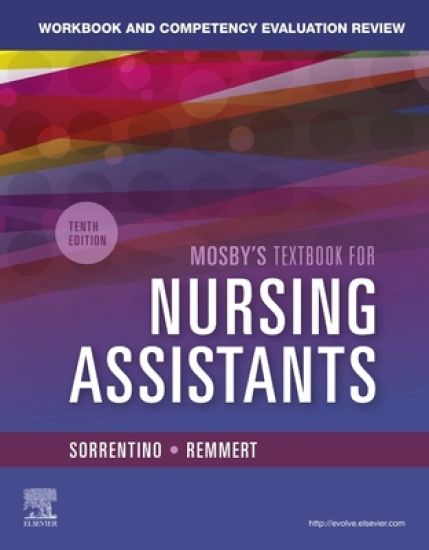
Known for its comprehensive coverage, readability, and visual presentation, Mosby's Textbook for Nursing Assistants, 10th Edition helps prepare you to work in long-term care, acute care, and subacute care settings - and includes a practice scenario in each chapter to enhance clinical judgment skills. It is the most comprehensive text for CNA programs, packed with step-by-step instructions for over 100 procedures and perfect for programs that are 80 hours or longer. The lifespan coverage includes skills not only for adults and older residents, but also for maternity and pediatric patients, so you are comfortable in a variety of care settings. New chapter organization allows you to learn in manageable portions and a revitalized art program clarifies important concepts and procedural steps A clear writing style at a 7th grade reading level ensures accessibility for low-level learners. Over 100 skills outlined in pre- procedure, procedure, and post-procedure sections ensure you learn all the necessary steps to pass the skills portion of the certification exam. Complete coverage of the knowledge and skills needed to pass the state certification exam and engage in safe practice. Focus on Practice: Problem Solving provides scenarios that stimulate critical thinking about common situations encountered during practice. Focus on Math feature reviews mathematical calculations needed in various care measures and procedures. Focus on Surveys feature highlights the nursing assistant's role during state inspections. Getting a Job chapter covers the soft skills needed to seek and obtain employment. Focus on PRIDE: The Person, Family, and Yourself boxes build on chapter concepts to help promote pride in the nursing assistant, the resident, and the resident's family. Promoting Safety and Comfort boxes emphasize the importance of the patient's or resident's safety and comfort. Delegation Guidelines detail the specifics of accepting delegated tasks. Focus on Children and Older Person boxes provide age-specific information about special needs, considerations, and circumstances of children and older persons. Focus on Long-Term Care and Home Care boxes highlight information vital to providing competent care in the long-term and home care settings. Focus on Communication boxes provide guidelines for how to clearly communicate with residents and avoid comments that might make them uncomfortable. Caring About Culture boxes contain information to help you learn about the various practices of other cultures. Teamwork and Time Management boxes provide specific guidelines to help nursing assistants work most efficiently whether independently or as part of the nursing team. Chapter review questions are a useful study guide found at the end of each chapter. UPDATED! Shorter, more focused chapters help you retain important concepts and skills covered in the NATCEP certification exam. NEW and UPDATED! New chapter organization breaks material into manageable portions, improving your ability to retain important information. UPDATED! Enhanced art program illustrates important content and procedures.
It's an essential workbook and exam review all in one! Corresponding to the chapters in Sorrentino and Remmert's comprehensive text, the Workbook and Competency Evaluation Review for Mosby's Textbook for Nursing Assistants, 10th Edition reinforces your understanding with numerous exercises and review questions - including matching, multiple-choice, labeling, crosswords, and mini case studies. Checklists for each of the 100+ procedures in the text help you study key skills. The?Competency Evaluation Review?section prepares you for the CNA exam with a review of content, a skills evaluation review, and two practice exams. Competency Evaluation Review provides content review, quizzes, and sample exams to help you prepare for certification. A wide variety of exercises, including matching, multiple-choice, labeling, crosswords, and mini case studies, reinforce learning. Procedure checklists prepare you for the skills demonstration portion of the certification exam. UPDATED! New chapter organization breaks material into manageable portions, improving your ability to retain important information.
Autonomy is often said to be the dominant ethical principle in modern bioethics, and it is also important in law. Respect for autonomy is said to underpin the law of consent, which is theoretically designed to protect the right of patients to make decisions based on their own values and for their own reasons. The notion that consent underpins beneficent and lawful medical intervention is deeply rooted in the jurisprudence of countries throughout the world. However, Autonomy, Consent and the Law challenges the relationship between consent rules and autonomy, arguing that the very nature of the legal process inhibits its ability to respect autonomy, specifically in cases where patients argue that their ability to act autonomously has been reduced or denied as a result of the withholding of information which they would have wanted to receive. Sheila McLean further argues that the bioethical debate about the true nature of autonomy – while rich and challenging – has had little if any impact on the law. Using the alleged distinction between the individualistic and the relational models of autonomy as a template, the author proposes that, while it might be assumed that the version ostensibly preferred by law – roughly equivalent to the individualistic model – would be transparently and consistently applied, in fact courts have vacillated between the two to achieve policy-based objectives. This is highlighted by examination of four specific areas of the law which most readily lend themselves to consideration of the application of the autonomy principle: namely refusal of life-sustaining treatment and assisted dying, maternal/foetal issues, genetics and transplantation.This book will be of great interest to scholars of medical law and bioethics.
Autonomy is often said to be the dominant ethical principle in modern bioethics, and it is also important in law. Respect for autonomy is said to underpin the law of consent, which is theoretically designed to protect the right of patients to make decisions based on their own values and for their own reasons. The notion that consent underpins beneficent and lawful medical intervention is deeply rooted in the jurisprudence of countries throughout the world. However, Autonomy, Consent and the Law challenges the relationship between consent rules and autonomy, arguing that the very nature of the legal process inhibits its ability to respect autonomy, specifically in cases where patients argue that their ability to act autonomously has been reduced or denied as a result of the withholding of information which they would have wanted to receive. Sheila McLean further argues that the bioethical debate about the true nature of autonomy – while rich and challenging – has had little if any impact on the law. Using the alleged distinction between the individualistic and the relational models of autonomy as a template, the author proposes that, while it might be assumed that the version ostensibly preferred by law – roughly equivalent to the individualistic model – would be transparently and consistently applied, in fact courts have vacillated between the two to achieve policy-based objectives. This is highlighted by examination of four specific areas of the law which most readily lend themselves to consideration of the application of the autonomy principle: namely refusal of life-sustaining treatment and assisted dying, maternal/foetal issues, genetics and transplantation.This book will be of great interest to scholars of medical law and bioethics.
The river is within me. It is the life force that sustains me. For years...my grief, my rage, and other demons, kept the flow of my life force stagnant. It led me to some very dark and terrifying places. I didn't think I'd ever get off the merry-go-round of addiction and codependency. My PTSD was so severe I feared I'd never have a normal life...a life free of suicide attempts and overwhelming panic. But as I began the difficult work of healing and facing my demons, I came to see the value of having lived horrific life events. I truly believe that my life was spared, many times over, so that I could tell you my story. We are...all of us...here for a reas