Kirjahaku
Etsi kirjoja tekijän nimen, kirjan nimen tai ISBN:n perusteella.
1000 tulosta hakusanalla Shiela L Sowards

This is a story about a poodle who has other animal friends, loves to travel and have adventures. In this first story, he travels back to his homeland of Germany, does a lot of walking to see the country side and makes new friends along the way.


How do you make a bird's nest? It's easy if you are a bird; not so easy if you're a poodle. Skipper's friends try to help him do just that when he stumbles upon three baby robins that had fallen from their nest during the bad storm from the night before. The nest was ripped to pieces and could no longer be a home for the birds. Mama and Papa bird could do nothing but watch in fear for the safety of their babies. How can Skipper and his three friends, Chin, Yorky, and Leone help and what part does the neighborhood bully, Cedric play?

How do you make a bird's nest? It's easy if you are a bird; not so easy if you're a poodle. Skipper's friends try to help him do just that when he stumbles upon three baby robins that had fallen from their nest during the bad storm from the night before. The nest was ripped to pieces and could no longer be a home for the birds. Mama and Papa bird could do nothing but watch in fear for the safety of their babies. How can Skipper and his three friends, Chin, Yorky, and Leone help and what part does the neighborhood bully, Cedric play?

How do you make a bird's nest? It's easy if you are a bird; not so easy if you're a poodle. Skipper's friends try to help him do just that when he stumbles upon three baby robins that had fallen from their nest during the bad storm from the night before. The nest was ripped to pieces and could no longer be a home for the birds. Mama and Papa bird could do nothing but watch in fear for the safety of their babies. How can Skipper and his three friends, Chin, Yorky, and Leone help and what part does the neighborhood bully, Cedric play?

This is an unusual and fascinating biography of William Franklin, Benjamin Franklin's illegitimate son, who, with the onset of Independence, became a visible spokesman for the Loyalist cause. This biography sheds light on imperial issues and personalities in the Revolution period and explores with great understanding the complicated relationships between William Franklin and his father.
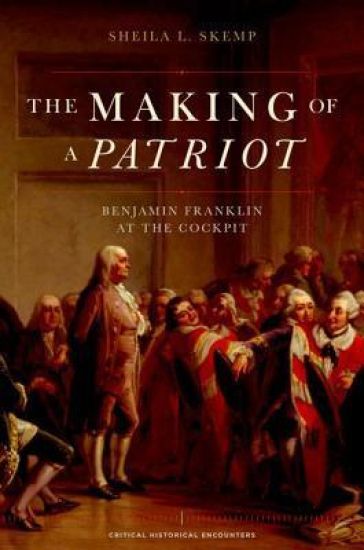
Making of a Patriot: Benjamin Franklin at the Cockpit
Sheila L. Skemp
Oxford University Press
2013
nidottu
On January 29, 1774, Benjamin Franklin was called to appear before the Privy Council--a select group of the king's advisors--in an octagonal-shaped room in Whitehall Palace known as the Cockpit. Spurred by jeers and applause from the audience in the Cockpit, Solicitor General Alexander Wedderburn unleashed a withering tirade against Franklin. Though Franklin entered the room as a dutiful servant of the British crown, he left as a budding American revolutionary. In The Making of a Patriot, renowned Franklin historian Sheila L. Skemp presents an insightful, lively narrative that goes beyond the traditional Franklin biography--and behind the common myths--to demonstrate how Franklin's ultimate decision to support the colonists was by no means a foregone conclusion. In fact, up until the Cockpit ordeal, he was steadfastly committed to achieving "an accommodation of our differences." The Making of a Patriot sheds light on the conspiratorial framework within which actors on both sides of the Atlantic moved toward revolution. It highlights how this event ultimately pitted Franklin against his son, suggesting that the Revolution was, in no small part, also a civil war.
Experts translate the latest findings on embodied cognition from neuroscience, psychology, and cognitive science to inform teaching and learning pedagogy. Embodied cognition represents a radical shift in conceptualizing cognitive processes, in which cognition develops through mind-body environmental interaction. If this supposition is correct, then the conventional style of instruction--in which students sit at desks, passively receiving information--needs rethinking. Movement Matters considers the educational implications of an embodied account of cognition, describing the latest research applications from neuroscience, psychology, and cognitive science and demonstrating their relevance for teaching and learning pedagogy. The contributors cover a range of content areas, explaining how the principles of embodied cognition can be applied in classroom settings. After a discussion of the philosophical and theoretical underpinnings of embodied cognition, contributors describe its applications in language, including the areas of handwriting, vocabulary, language development, and reading comprehension; STEM areas, emphasizing finger counting and the importance of hand and body gestures in understanding physical forces; and digital learning technologies, including games and augmented reality. Finally, they explore embodied learning in the social-emotional realm, including how emotional granularity, empathy, and mindfulness benefit classroom learning. Movement Matters introduces a new model, translational learning sciences research, for interpreting and disseminating the latest empirical findings in the burgeoning field of embodied cognition. The book provides an up-to-date, inclusive, and essential resource for those involved in educational planning, design, and pedagogical approaches. ContributorsDor Abrahamson, Martha W. Alibali, Petra A. Arndt, Lisa Aziz-Zadeh, Jo Boaler, Christiana Butera, Rachel S. Y. Chen, Charles P. Davis, Andrea Marquardt Donovan, Inge-Marie Eigsti, Virginia J. Flood, Jennifer M. B. Fugate, Arthur M. Glenberg, Ligia E. G mez, Daniel D. Hutto, Karin H. James, Mina C. Johnson-Glenberg, Michael P. Kaschak, Markus Kiefer, Christina Krause, Sheila L. Macrine, Anne Mangen, Carmen Mayer, Amanda L. McGraw, Colleen Megowan-Romanowicz, Mitchell J. Nathan, Antti Pirhonen, Kelsey E. Schenck, Lawrence Shapiro, Anna Shvarts, Yue-Ting Siu, Sofia Tancredi, Chrystian Vieyra, Rebecca Vieyra, Candace Walkington, Christine Wilson-Mendenhall, Eiling Yee
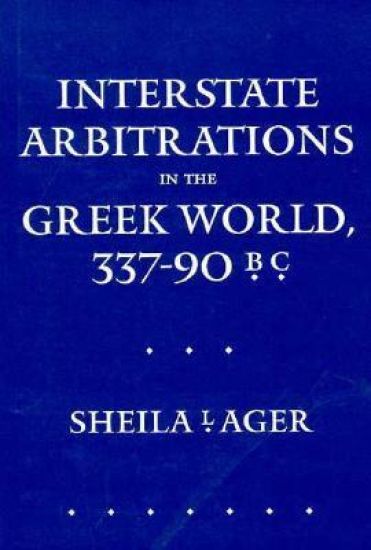
Interstate Arbitrations in the Greek World, 337–90 B.C.
Sheila L. Ager
University of California Press
1997
sidottu
A great deal of information has come to light over the past several decades about the role of arbitration between the Greek states. Arbitration and mediation were, in fact, central institutions in Hellenistic public life. In this comprehensive study, Sheila Ager brings together the scattered body of literary and epigraphical sources on arbitration, together with up-to-date bibliographic references, and commentary. The sources collected here range widely; Ager presents an exhaustive record of documents ranging from the settlement of a minor territorial squabble between two tiny city-states to the resolution of major conflicts separating the great powers of the day. In addition, Ager's introduction sets the documents in historical context and outlines distinctions among categories of arbitration. The work also includes indices to literary passages, inscriptions, persons, places, subjects, and Greek and Latin terms in the documents. This collection of many previously inaccessible texts will become a primary resource for any scholar or student working in the field of Hellenistic history.
The Ajanta caves in Maharashtra, India, have been a subject of considerable fascination since their discovery by British officers in 1819. These thirty-one rock-cut caves, located along a dramatic ravine above the Waghora River, are known for their intricate Buddhist art spanning several centuries. The caves include monastic dwellings (viharas) and prayer halls (caitya halls), some elaborately decorated with murals and sculptures. As these caves were carved out of the rock rather than being naturally occurring formations, they required immense effort and coordination to construct. Despite the number assigned to each cave by archaeologists, the order of their excavation remains uncertain, and many of them are left incomplete. This unfinished state, combined with stylistic diversity within individual caves, suggests the artists might have worked across different caves at varying times, possibly following the natural light throughout the day to guide their progress. Ajanta is distinctive in the history of Indian art because it uniquely combines painting, sculpture, and architecture to showcase Buddhist art evolution from the early Hinayana aniconic tradition through to the Mahayana phase, where Buddha images and Bodhisattvas appear prominently. The artistic themes in Ajanta revolve around narrative portrayals and worship-focused iconography, with shrine figures embodying a massive, spiritual weightiness, in contrast to the more graceful or dwarfish depictions of demigods and figures in the Jataka tales. This study explores the origins of this iconographic duality at Ajanta, examining how the artistic and religious traditions that shaped it developed internally and in relation to other sites, illuminating how the evolution of Buddhism itself is mirrored in its art and monuments. Divided into three main parts, the study analyzes historical, architectural, and stylistic progressions that influenced Ajanta's art. The first section delves into historical contexts relevant to Buddhist development in the area, while the second investigates the architectural evolution of caitya halls and viharas and the emergence of the Buddha image. The third section focuses on the stylistic progression of the narrative art at Ajanta, tracking the evolution of both the Buddha image and the surrounding decorative forms. Through synthesizing historical, paleographic, and iconographic evidence, the study aims to provide a cohesive understanding of Buddhist art’s evolution, specifically at Ajanta, over several centuries. This title is part of UC Press's Voices Revived program, which commemorates University of California Press’s mission to seek out and cultivate the brightest minds and give them voice, reach, and impact. Drawing on a backlist dating to 1893, Voices Revived makes high-quality, peer-reviewed scholarship accessible once again using print-on-demand technology. This title was originally published in 1977.

The Ajanta caves in Maharashtra, India, have been a subject of considerable fascination since their discovery by British officers in 1819. These thirty-one rock-cut caves, located along a dramatic ravine above the Waghora River, are known for their intricate Buddhist art spanning several centuries. The caves include monastic dwellings (viharas) and prayer halls (caitya halls), some elaborately decorated with murals and sculptures. As these caves were carved out of the rock rather than being naturally occurring formations, they required immense effort and coordination to construct. Despite the number assigned to each cave by archaeologists, the order of their excavation remains uncertain, and many of them are left incomplete. This unfinished state, combined with stylistic diversity within individual caves, suggests the artists might have worked across different caves at varying times, possibly following the natural light throughout the day to guide their progress. Ajanta is distinctive in the history of Indian art because it uniquely combines painting, sculpture, and architecture to showcase Buddhist art evolution from the early Hinayana aniconic tradition through to the Mahayana phase, where Buddha images and Bodhisattvas appear prominently. The artistic themes in Ajanta revolve around narrative portrayals and worship-focused iconography, with shrine figures embodying a massive, spiritual weightiness, in contrast to the more graceful or dwarfish depictions of demigods and figures in the Jataka tales. This study explores the origins of this iconographic duality at Ajanta, examining how the artistic and religious traditions that shaped it developed internally and in relation to other sites, illuminating how the evolution of Buddhism itself is mirrored in its art and monuments. Divided into three main parts, the study analyzes historical, architectural, and stylistic progressions that influenced Ajanta's art. The first section delves into historical contexts relevant to Buddhist development in the area, while the second investigates the architectural evolution of caitya halls and viharas and the emergence of the Buddha image. The third section focuses on the stylistic progression of the narrative art at Ajanta, tracking the evolution of both the Buddha image and the surrounding decorative forms. Through synthesizing historical, paleographic, and iconographic evidence, the study aims to provide a cohesive understanding of Buddhist art’s evolution, specifically at Ajanta, over several centuries. This title is part of UC Press's Voices Revived program, which commemorates University of California Press’s mission to seek out and cultivate the brightest minds and give them voice, reach, and impact. Drawing on a backlist dating to 1893, Voices Revived makes high-quality, peer-reviewed scholarship accessible once again using print-on-demand technology. This title was originally published in 1977.


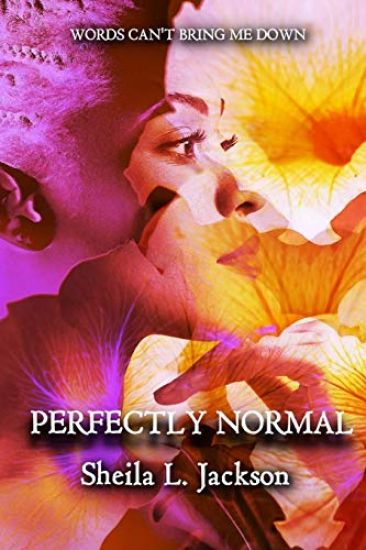
Have you been told that you are worthless, ugly, no good, and will never amount to anything? Has it caused feelings of loneliness, depression, and even self-hatred? With all the mixed messages from society, and social media, seeing oneself as perfectly normal has become a personal struggle. Stop allowing others to validate you, due to your socioeconomic background, weight, race, class, and gender. God has called you out for so much more. See yourself, in a better, more positive light. Come out of the darkness, into God's marvelous light, so that you can see that God has created you perfectly normal.
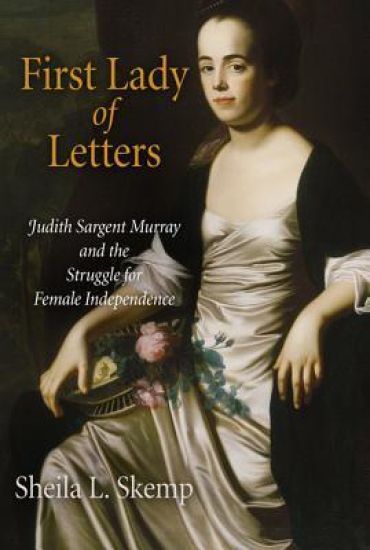
Judith Sargent Murray (1751-1820), poet, essayist, playwright, and one of the most thoroughgoing advocates of women's rights in early America, was as well known in her own day as Abigail Adams or Martha Washington. Her name, though, has virtually disappeared from the public consciousness. Thanks to the recent discovery of Murray's papers-including some 2,500 personal letters-historian Sheila L. Skemp has documented the compelling story of this talented and most unusual eighteenth-century woman. Born in Gloucester, Massachussetts, Murray moved to Boston in 1793 with her second husband, Universalist minister John Murray. There she became part of the city's literary scene. Two of her plays were performed at Federal Street Theater, making her the first American woman to have a play produced in Boston. There as well she wrote and published her magnum opus, The Gleaner, a three-volume "miscellany" that included poems, essays, and the novel-like story "Margaretta." After 1800, Murray's output diminished and her hopes for literary renown faded. Suffering from the backlash against women's rights that had begun to permeate American society, struggling with economic difficulties, and concerned about providing the best possible education for her daughter, she devoted little time to writing. But while her efforts diminished, they never ceased. Murray was determined to transcend the boundaries that limited women of her era and worked tirelessly to have women granted the same right to the "pursuit of happiness" immortalized in the Declaration of Independence. She questioned the meaning of gender itself, emphasizing the human qualities men and women shared, arguing that the apparent distinctions were the consequence of nurture, not nature. Although she was disappointed in the results of her efforts, Murray nevertheless left a rich intellectual and literary legacy, in which she challenged the new nation to fulfill its promise of equality to all citizens.

From racial disturbances in Miami has emerged the image that Blacks, Hispanics and Anglos are pitted against one another for resources. This text explores the construction of ethnic identities and ethnic group conflict, including interviews with politicians, journalists and business people.
From racial disturbances in Miami has emerged the image that Blacks, Hispanics and Anglos are pitted against one another for resources. This text explores the construction of ethnic identities and ethnic group conflict, including interviews with politicians, journalists and business people.