Kirjahaku
Etsi kirjoja tekijän nimen, kirjan nimen tai ISBN:n perusteella.
542 tulosta hakusanalla Shireen T. Hunter
Three years after the departure of the Ayatollah Rouhallah Khomeini, Iran's political future remains uncertain. This volume explores the directions the Islamic regime and, more importantly, the Iranian society and nation are likely to take in the 1990s.The study begins with a brief historical survey of Iran's political institutions, its sociocultural traits, and its economic and military conditions, as well as its foreign policy orientation at the time of the revolution. It follows with a summary of the political, social, and economic changes the Islamic revolution introduced. These serve as benchmarks against which to measure the changes and reforms of the last three years and provide a basis for sketching the potential future directions of Iran's domestic evolution and foreign relations.
When the Soviet Union officially ended in December 1991 and was replaced by the Commonwealth of Independent States, the five Central Asian republics—Kazakstan, Kyrgystan, Tajikistan, Turkmenistan, and Uzbekistan—also became independent. This study examines the course of nationalist, ethnic, and pro-independence movements in the Central Asian region since 1991, as well as the geopolitical situation surrounding and involving these new states. Because of differences in size, ethnic composition, historical and cultural characteristics, resource base, and geographical location, these countries' patterns of evolution during the post-independence period have varied greatly. Nevertheless, during the last few years, certain basic common patterns have emerged, both in the political and economic development of the Central Asian states and in their external relations. These patterns and developments are analyzed here by a noted expert in Eurasian studies.
Shireen Hunter provides a pragmatic analysis of relations between Islam and the West, marked by specific cases from the contemporary Islamic/Western divide. Her book gives a realistic and accurate assessment of the relative role of civilizational factors in determining the nature of the state and the prospects for Muslim-Western relations (i.e., whether they will be conflictual or cooperative). Hunter answers the question: Can an accommodation between Islam and the West take place in a gradual and evolutionary manner or will it happen only after conflict and confrontation? And, contrary to Huntington's vaunted thesis in The Clash of Civilizations and the Remaking of World Order (Simon & Schuster, 1996), she finds that the reality of modern Islam offers room for hope.Hunter challenges many of the prevailing Western views of the Muslim world. For example, despite the widespread belief on the specificity of Islam because of an assumed fusion of politics and religion, in reality the fusion—of the spiritual and the temporal—has not been greater in Islam than in other religions. Therefore, Hunter asserts, the slower pace of secularization in Muslim countries can not be attributed to Islam's specificity. This is a major study that will be of interest to concerned citizens as well as scholars and students of the Middle East and Islam.
Today there are at least 15 million people in Western Europe who adhere to the Muslim faith or have close cultural or other affiliations with the Islamic world. Indeed, in the course of a few decades, Islam has emerged as Europe's second religion, after Christianity. What is remarkable about this phenomenon is that it has occurred gradually, generally peacefully, and, in some measure, as a consequence of the economic needs of European countries.Despite some difficulties, Islam is slowly but inexorably becoming part of Europe's social, cultural, and, to some degree, political landscape. The question today is not can Islam be uprooted and expelled from European soil, as was done six centuries ago during the period of Reconquista in Spain, but rather what is the best way of accommodating Islam in Europe and establishing cooperative relations between Muslims and the followers of other religious and/or secular value systems. This volume examines the situation and attempts to provide answers to these questions through a country-by-country analysis by recognized experts from each of the Western European nations examined. An invaluable resource and text for scholars, students, and other researchers involved with Islamic and European Studies.
A comprehensive exploration of postrevolution Iranian foreign policy analyzes the country's relations with key nations and regions and the impact of both Iran's domestic situation and the developing global system. Iran's Foreign Policy in the Post-Soviet Era: Resisting the New International Order provides the first truly comprehensive, in-depth survey of Iranian foreign policy, issue by issue and country by country, since the Islamic Revolution. To help readers understand both the what and the why of Iran's role in the world and formulate useful responses to that role, the author provides a detailed analysis of Iranian foreign policy in all its dimensions. The first part of the book places Iranian actions, particularly its relations with the United States and other key players, within the context of the emerging international system, while also showing how domestic developments impact foreign policy. The second part surveys Iranian relations with specific actors, notably the United States and Russia, and with key regions, including Europe, Central Asia, the Arab world, Latin America, and Africa. Providing an antidote to existing preconceptions, this incisive analysis lays an analytically sound basis for shaping policies toward Iran—policies with potentially high payoff in terms of regional security and stability.
Iranian politics has been marked by sharp ideological divisions and infighting. These divides, kept largely out of public view until the 1990s, came to greater light with the contested 2009 presidential elections. To explain the diverse and complex forces that led to this event and that animate Iran’s current fractured society and polity, author Shireen T. Hunter looks beyond the battle between the forces of reform and reaction, democracy and dictatorship, and considers the historic forces that created the conditions faced by Iran since the revolution. Iran Divided: The Historic Roots of Iranian Debates on Identity, Culture, and Governance in the 21st Century explains historical and political factors and their relevance to Iran today, shedding light on the forces behind Iranian politics and society. This book discusses: ·historical roots of Iran’s current divisions and debates; ·Iran versus Islam; ·secularism versus religion; ·constitutionalism versus Islamic government; ·fundamental issues of identity, culture, and governance; ·aging of the revolutionary coalition; ·development of new elites; ·experiences of the Islamic republic; ·and new international conditions moving the country beyond old divides and ideological rifts toward a new national consensus. A comprehensive survey, the book will be an indispensable tool to any student seeking to understand the Islamic Republic of Iran and its standing in the world today.
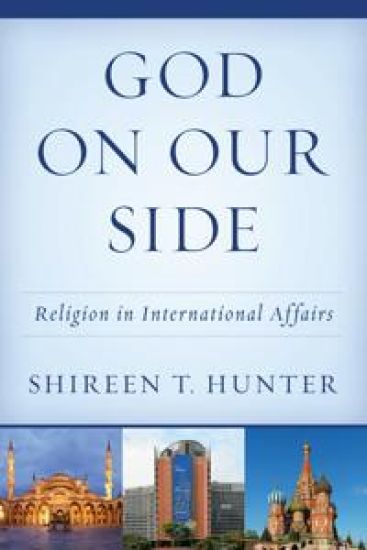
This timely book offers an accessible introduction to religion in international affairs. Shireen T. Hunter highlights the growing importance of religion in politics and analyzes its nature, role, and significance. She places the question of religion’s impact on global affairs in the broader context of state and nonstate actors, weighing the factors that most affect their actions. Through the lens of three compelling and distinctive case studies—Russia’s response to the Yugoslav crisis, Turkey’s reaction to the Bosnian war, and Europe’s policy toward Turkish membership in the EU—Hunter demonstrates that religion increasingly shapes international affairs in significant and diverse ways. Her book is essential reading for anyone needing a better understanding of why and, more important, how, religion influences the behavior of international actors and thus the character of world politics.
This textbook helps students and readers navigate the various factors ranging from the legacy of the past, ethnic, sectarian differences, and cultural rivalry to the impact of colonial rule, modernization and state building, plus the evolving nature of the international political system and great power policies in shaping Arab-Iranian relations in the last seven decades. The first part of this book looks into factors such as history, ethnic, sectarian and cultural issues that have shaped Iran’s relations with Arab states. It explores the impact of the process of modernization and state-building in the Arab world on these relations, plus the legacy of colonialism and the shifting dynamics of international politics and the evolution key global players’ policies towards Iran and the Arab states. The second part examines case studies in the evolution of Iran’s relations with several key Arab states, including Egypt, Syria and Lebanon, Iraq, Saudi Arabia and the smaller Persian Gulf Arab states. By highlighting the complex set of factors and their interactions that have shaped Arab-Iranian relations, the book hopes to be a corrective to the simplistic and reductionist interpretations of these relations. This approach shows how a variety of factors and their interactions have shaped these relations; sometimes they have exacerbated the conflictual aspects of these relations and at other times have fostered accommodation and even cooperation.
The Great Powers, and Iran's Social and Political Evolution
Shireen T. Hunter
Springer International Publishing AG
2024
sidottu
This book is a personal narrative chronicling the life and experiences of Shireen Hunter, an Iranian woman who came of age during a transformative era in Iran’s history. It begins by spanning the tumultuous aftermath of World War II to the pivotal 1979 revolution, providing a poignant account of the profound impact of these historical events on the author’s life. The book delves into the multifaceted consequences of the reformist period that began in the 1960s. They enabled Shireen to enter the diplomatic service, but also cast a shadow of adversity over her family. Ultimately, the reforms contributed to internal divisions that ignited the 1979 revolution. The book then explores Shireen’s immigrant experience in the USA, where she assumed the role of an “ethnic expert” in the volatile arena of Middle East politics. It candidly recounts challenges she faced in maintaining intellectual integrity while earning a livelihood, highlighting the precariousness of being on the right side of controversial issues. The book does not offer definitive solutions to specific problems. Yet it resonates with contemporary international security and developmental challenges and offers insights that remain relevant in today’s complex global landscape. With its multifaceted narrative encompassing Iran’s social and political history, women’s studies, immigrant experiences, and a personal perspective on critical junctures in U.S.-Iranian relations, this book appeals to a diverse readership. It provides a unique window into “lived” experiences and analytical reflections of an individual who has traversed the intersections of history, identity, and diplomacy, offering invaluable insights into both past and present.
In recent years, Islamic fundamentalist, revolutionary, and jihadist movements have overshadowed more moderate and reformist voices and trends within Islam. This compelling volume introduces the current generation of reformist thinkers and activists, the intellectual traditions they carry on, and the reasons for the failure of reformist movements to sustain broad support in the Islamic world today. Richly detailed regionally focused chapters cover Iran, the Arab East, the Maghreb, South Asia, Indonesia, Malaysia, Turkey, Europe, and North America. The editor's introductory chapter traces the roots of reformist thinking both in Islamic tradition and as a response to the challenge of modernity for Muslims struggling to reconcile the requirements of modernization with their cultural and religious values. The concluding chapter identifies commonalities, comparisons, and trends in the modernizing movements.
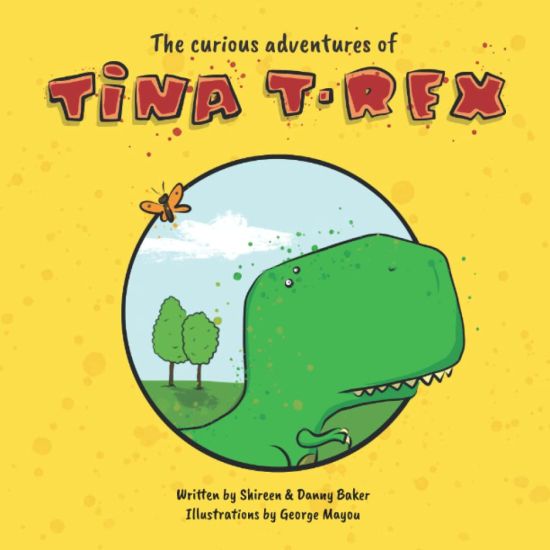
The Curious Adventures of Tina T-Rex
Shireen & Danny Baker
Learning Toolkit Productions
2021
pokkari
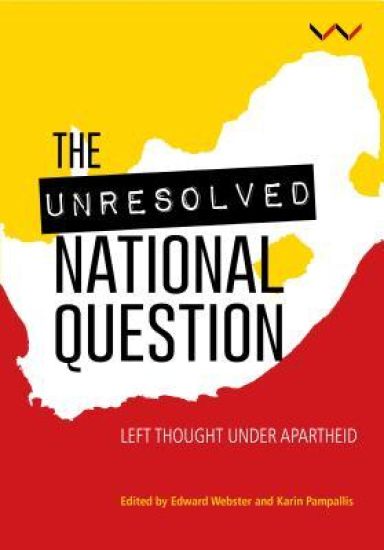
The Unresolved National Question in South Africa
Webster Edward; John Mawbey; Cronin Jeremy; Alex Mohubetswane Mashilo Mohubetswane Mashilo; Robert van Niekerk van Niekerk; Luli Callinicos Callinicos; B G Brown; M P Giyose; H. J. Peterson; C A Thomas; A R Zinn; Zondi Siphamandla; T Dunbar Moodie; Motala Enver; Vally Salim; Gerhard Maré; Mangcu Xolela; Hassim Shireen; Erwin Alec; Sian Byrne; Nicole Ulrich; Walt Lucien; Legassick Martin; Glaser Daryl
Wits University Press
2017
nidottu
The re-emergence of debates on the decolonisation of knowledge has revived interest in the National Question, which began over a century ago and remains unresolved. Tensions that were suppressed and hidden in the past are now being openly debated. Despite this, the goal of one united nation living prosperously under a constitutional democracy remains elusive. This volume examines the way in which various strands of left thought have addressed the National Question, especially during the apartheid years, and goes on to discuss its relevance for South Africa today and in the future. Contributors have defined the question as they believe appropriate, which has resulted in a rich tapestry of interweaving perceptions about the unresolved National Question. The volume is structured in two parts. The first examines four foundational traditions – Marxism-Leninism (the Colonialism of a Special Type thesis); the Congress tradition; the Trotskyist tradition; and Africanism. The second part explores the various shifts in the debate from the 1960s onwards, and includes chapters on Afrikaner nationalism, ethnic issues, Black Consciousness, feminism, workerism and constitutionalism. By revisiting these debates, the volume will become a catalyst for an enriched debate on our identity and our future.
Varför resulterade invasionen av Irak 2003 i en sådan kulturell förödelse och så många mord på intellektuella? Det konventionella svaret är att det var en följd av dålig planering och otursamma omständigheter i ett krig som hade till avsikt att befria irakierna. Författarna till den här boken hävdar att verkligheten är en helt annan. De visar att invasionen syftade till att rasera den irakiska staten för att omvandla den till en västvänlig lydstat. Det kaos som uppstod efter invasionen var ingen olycklig tillfällighet utan en medveten avsikt. En situation skulle skapas så att statens själva grundvalar underminerades. Författarna redogör noggrant för ockupanternas kallhamrade overksamhet, som ledde till ödeläggelsen av en av världens äldsta bevarade kulturer. Förutom förstörandet av oskyddade museer och bibliotek dokumenteras de riktade morden på närmare 500 akademiker, de omfattande kidnappningarna och fördrivningen av tusentals läkare, jurister, konstnärer och andra intellektuella. De visar att Irak utsatts för en systematisk kulturell rensning, som varit en del av en medveten strategi för att försvaga och slutgiltigt upplösa den irakiska staten. Detta viktiga verk vederlägger påståendet att invasionen hade för avsikt att befria ett folk med en stor medelklass, som själv skulle kunna utveckla en demokratisk kultur.
Hearts Don't Lie - Book Six, MacLarens of Fire Mountain Contemporary Romance Series "If you like cowboys, gritty heroes and heroines, all mixed with passion and suspense, you'll love the MacLarens of Fire Mountain." Mitch MacLaren has reasons for avoiding relationships, and in his opinion, they're pretty darn good. As the new president of RTC Bucking Bulls, difficult challenges occur daily. He certainly doesn't need another one in the form of a fiery, blue-eyed, redhead. Dana Ballard's new job forces her to work with the one MacLaren who can't seem to get over himself and lighten up. Their verbal sparring is second nature and entertaining until the night of Mitch's departure when he surprises her with a dare she doesn't refuse. With his assignment in Fire Mountain over, Mitch is free to return to Montana and run the business his father helped start. The glitch in his enthusiasm has to do with one irreversible mistake-the dare Dana didn't ignore. Now, for reasons that confound him, he just can't let it go. Working together is a circumstance neither wants, but both must accept. As their attraction grows, so do the accidents and strange illnesses of the animals RTC depends on to stay in business. Mitch's total focus should be on finding the reasons and people behind the incidents. Instead, he finds himself torn between his unwanted desire for Dana and the business which is his life. In his mind, a simple proposition can solve one problem. Will Dana make the smart move and walk away? Or take the gamble and expose her heart? Hearts Don't Lie, Book Six in the MacLarens of Fire Mountain Contemporary series. From the Author Join Shirleen Davies' Newsletter to Receive Notice of: - New Releases - Contests - Free Reads & Sneak Peeks To sign up copy and paste this site address into your browser's address bar: http: //bit.ly/1KqhKwm